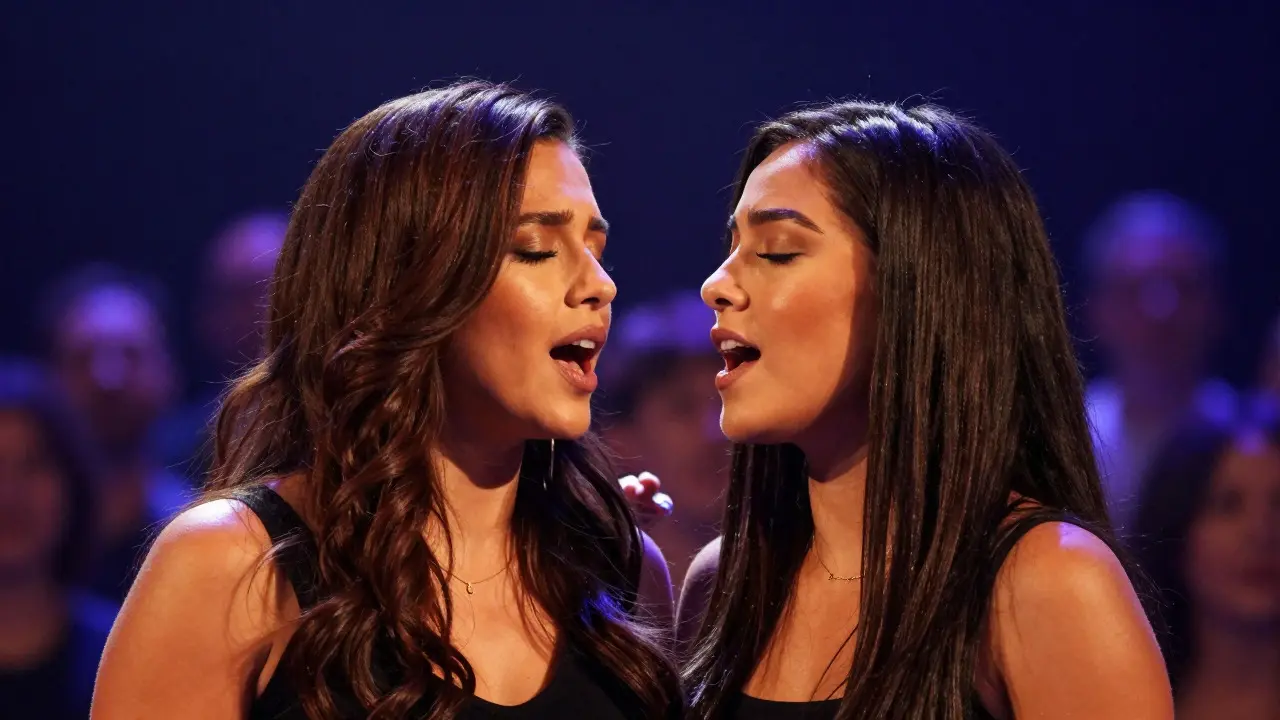
There is a specific electricity that hits a room when two voices lock in perfectly. It isn't just about hitting the same note; it is about the shared breath, the subtle timing shifts, and the trust required to let another human being occupy your sonic space. For Alli Starr is a contemporary vocalist known for her dynamic range and collaborative stage presence, this connection is the core of her artistic identity. When she steps on stage for a live duet, the goal is never just to sing together. The goal is to create a third entity-a blended sound that feels larger than the sum of its parts.
Audiences often wonder how artists achieve such seamless harmony without looking at each other constantly. The answer lies in preparation, non-verbal communication, and a deep understanding of vocal mechanics. This guide breaks down the tactical approach used by professional vocalists to master these interactions, focusing on the practical skills that turn two separate performances into one cohesive experience.
The Anatomy of a Successful Vocal Blend
Before you can blend with someone else, you need to understand what blending actually means acoustically. A Vocal Blend is a harmonic technique where two or more voices adjust their timbre and pitch to create a unified sound. It is not simply singing in unison. In unison, both singers hit the exact same frequency. In a blend, they might be a third or a fifth apart, but they adjust their tone color so that the frequencies align smoothly without clashing.
This requires active listening. If you are singing high notes while your partner is singing low, you cannot just focus on your own comfort zone. You have to listen to the resonance of their voice and adjust yours to match it. This is often called "matching the tone." If your partner has a bright, forward-placed sound, a dark, reedy voice will cut through harshly. By softening your attack and placing your sound slightly further back in the throat, you create a warmer, more integrated texture. This adjustment happens in real-time during a live performance, making it one of the most demanding skills in choral and pop music.
Non-Verbal Communication Strategies
On stage, you cannot shout instructions like "hold it" or "come up faster." Instead, you rely on a vocabulary of body language. Professional partners develop a shorthand over time, but even new collaborators can use basic cues effectively.
- Eye Contact: Maintaining eye contact signals engagement. Looking away can sometimes be interpreted as a cue to end a phrase or take a solo, depending on the context. Consistent eye contact during a blend reinforces the connection.
- Breathing Synchronization: Audible breathing is a powerful tool. Taking a visible, synchronized breath before a difficult passage tells your partner exactly when to prepare. It removes the guesswork from entry points.
- Facial Expressions: A slight nod can indicate a key change or a modulation. A relaxed face suggests a softer dynamic, while a tensed jaw might signal a build-up in intensity.
- Hand Gestures: Subtle hand movements can guide phrasing. An open palm might mean "let it ring," while a closed fist could mean "cut it short." These gestures must be consistent between rehearsals and the live show.
The key to effective non-verbal communication is consistency. If you use a head tilt to mean "start now" in rehearsal, you must use the same head tilt on stage. Any deviation creates confusion, which leads to timing errors. Partners who practice these cues repeatedly build a muscle memory that allows them to react instinctively, even under the pressure of live lighting and crowd noise.

Tactical Rehearsal Methods
You cannot wing a complex duet. The magic on stage is actually the result of boring, repetitive work off-stage. Effective rehearsal involves isolating specific technical challenges rather than just running through the song from start to finish.
- Isolate the Transitions: Find the moments where the melody jumps between voices. Practice these transitions in isolation. Slow them down if necessary. Focus on the exact moment the lead changes. Who holds the note? Who enters? Who exits?
- Remove the Music: Sing the duet without accompaniment. This forces you to rely entirely on each other for rhythm and pitch. It highlights any weaknesses in your internal clock or listening skills.
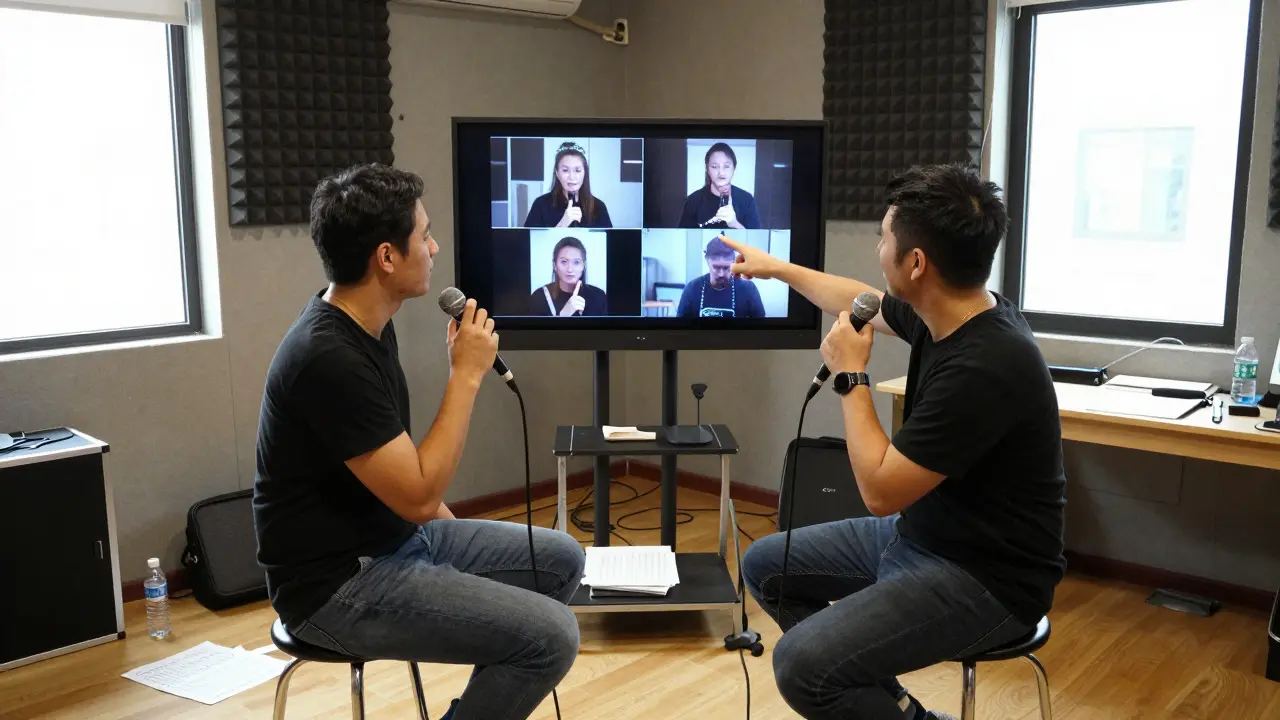
- Record and Review: Record video of your rehearsal. Watch it back critically. Are you looking at each other? Is your posture slouching? Does the blend look as good as it sounds? Video reveals physical habits that you don't notice while performing.
- Simulate Stage Conditions: Wear the shoes you will perform in. Use the microphone stands if available. Change the lighting. These environmental factors affect your balance and visibility, so getting comfortable with them reduces anxiety on show day.
Rehearsing with different partners can also be beneficial. It prevents you from relying too heavily on one specific person's quirks. It makes you a more adaptable musician, capable of blending with a variety of vocal styles and personalities.
Managing Stage Dynamics and Space
Physical positioning matters more than many singers realize. Where you stand relative to your partner affects both the acoustic balance and the visual narrative of the performance.
| Positioning Style | Acoustic Effect | Visual Impact | Best Used For |
|---|---|---|---|
| Shoulder-to-Shoulder | Equal projection, risk of masking | Intimate, connected | Ballads, emotional peaks |
| Diagonal Offset | Better separation, clearer lines | Dynamic, movement-oriented | Up-tempo songs, solos |
| Face-to-Face | Direct interaction, potential feedback | High engagement, storytelling | Narrative duets, call-and-response |
When standing shoulder-to-shoulder, be mindful of microphone placement. If both microphones are angled toward the center, you might pick up bleed from the other singer's mic, causing phase issues or unwanted noise. Diagonal offsets allow each singer to project into their own space while still maintaining visual connection. This setup is particularly useful for songs with distinct melodic lines where clarity is paramount.
Handling Live Mistakes Gracefully
No matter how much you rehearse, something will go wrong. A word will be missed. A pitch will waver. The audience rarely notices these small errors unless the performers make a big deal out of them. The tactic here is resilience.
If you miss a line, do not stop. Keep moving. Your partner should cover for you if possible, or you can seamlessly re-enter at the next phrase. The worst thing you can do is freeze or apologize mid-song. Confidence carries a performance far more than perfection does. Audiences connect with authenticity. If you stumble but recover with a smile and steady rhythm, it adds a layer of humanity to the show. It shows that you are alive and present, not just playing a recording.
Trust is the foundation of this recovery. If you trust your partner to catch you, you will relax. If you are worried about failing alone, you will tense up, which affects your vocal production. Building that trust takes time, but it pays off in every live interaction.
How long does it take to learn vocal blending techniques?
Basic blending skills can be developed in a few weeks of focused practice. However, mastering the nuance of matching timbre and dynamics across different genres typically takes several months of regular rehearsal with various partners. Consistency is more important than duration.
What is the biggest mistake beginners make in live duets?
The most common mistake is focusing too much on their own part instead of listening to their partner. Beginners often worry about hitting their own notes perfectly, which causes them to ignore the harmonic context. Active listening is essential for a successful blend.
Do I need to know my partner's songbook inside out?
Yes, knowing the entire structure of the song, including intros, outros, and ad-libs, is crucial. You need to anticipate where your partner will go, especially during improvisational sections. Surprises are only fun if they are planned or mutually understood.
How can I improve my ear for harmonies?
Practice singing along with recordings where you can hear the harmony clearly. Try to identify the interval (third, fifth, etc.) and replicate it. Using apps or online tools that isolate vocals can also help train your ear to distinguish between lead and support lines.
Is it better to stand close or far apart on stage?
It depends on the song's energy. Close proximity works well for intimate ballads, creating a sense of unity. Greater distance helps with projection and clarity for upbeat tracks. Experiment with different distances during rehearsal to see what works best for the specific material.