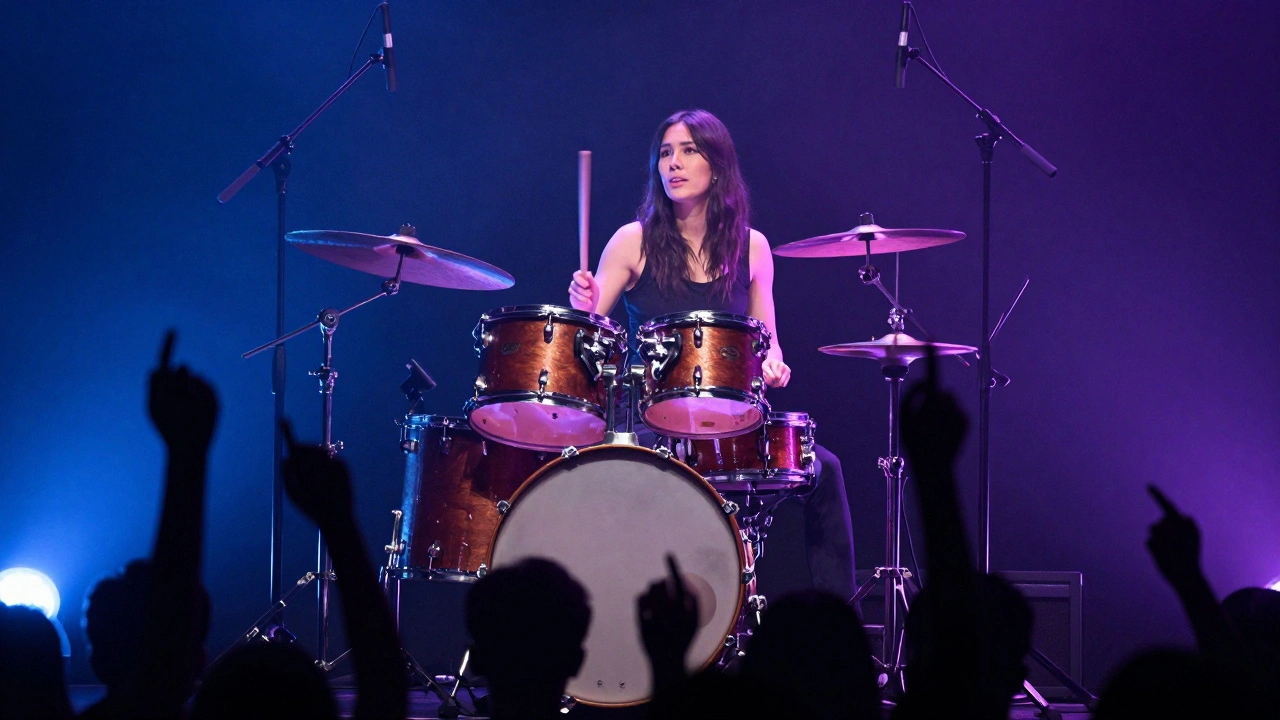
The Psychology of the High-Impact Closer
Most musicians make the mistake of playing their fastest song last. They think speed equals energy. But true impact comes from tension and release. In the world of Soul music is a genre originating in the 60s that combines gospel-influenced call-and-response with R&B rhythms, the goal isn't just to be loud; it's to create a shared visceral reaction. Alli Starr utilizes a technique where she builds the rhythmic density throughout the final arc. She starts the closing sequence with a mid-tempo groove that allows the audience to breathe, then gradually introduces more syncopation and volume. By the time the final song hits, the audience has been conditioned to crave the climax. It's like a slow boil that ends in a flash fire. Have you ever noticed how the best shows feel like they are leaning forward? That's intentional rhythmic acceleration.Rhythmic Anchoring and the Pocket
To make a closer work, the foundation has to be bulletproof. In Stagecraft is the art of managing a live performance, including lighting, movement, and sonic pacing to maximize audience engagement, the drummer acts as the heartbeat. Alli focuses on what drummers call 'the pocket'-that sweet spot where the beat feels inevitable and heavy. For a high-impact closer, she employs a specific set of rhythmic tools:- Ghost Notes: Using subtle, quiet snare hits to fill the gaps and keep the momentum moving forward.
- Linear Drumming: A style where no two drums or cymbals hit at the same time, creating a flowing, sophisticated texture that prevents the sound from becoming a muddy wall of noise.
- Dynamic Shifts: Dropping the volume to a whisper during a bridge to make the final chorus feel ten times louder.
Structuring the Encore Arc
An encore isn't just a 'bonus' song; it's the final memory the fan takes home. Alli's strategy involves a three-act structure for the closing sequence. First, she chooses a 're-entry' song-something with a recognizable hook that welcomes the crowd back after the break. Second, she builds the intensity with a track that allows for improvisation and musical dialogue between the band members. Finally, she hits the 'Peak Song.' This isn't always the fastest track, but it is the one with the most emotional weight. She uses a strategy of extending the outro, turning the final few minutes into a celebratory jam. This is where she utilizes Call and Response is a musical pattern where a phrase is played by one instrument or voice and echoed by another, often used in gospel and soul to engage the audience. By inviting the crowd to clap or sing back, she breaks the fourth wall, making the audience part of the band.| Phase | Rhythmic Focus | Emotional Goal | Crowd Interaction |
|---|---|---|---|
| The Re-entry | Steady, mid-tempo groove | Relief and excitement | Clapping along |
| The Build | Increasing syncopation | Anticipation | Cheering/Dancing |
| The Peak | Heavy backbeat / Power | Catharsis / Euphoria | Call and Response |
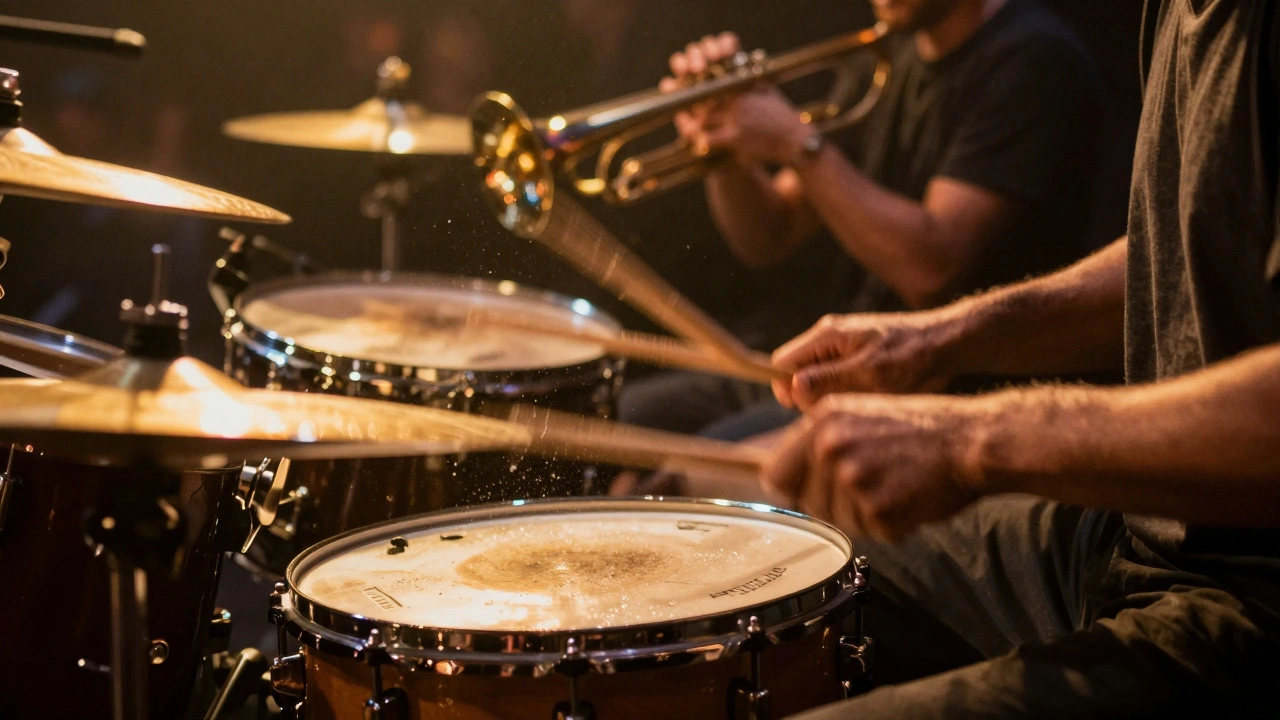
Gear and Sonic Texture for Maximum Impact
You can't achieve a high-impact close with a thin sound. The choice of gear is a critical part of the encore strategy. Alli isn't just about hitting hard; she's about tonal quality. To cut through a loud horn section and a screaming crowd, she uses specific drum tuning and cymbal choices. She often relies on larger, deeper shells to provide a low-end punch that the audience can feel in their chests. Her crash cymbals are chosen for their sustain, allowing the final hit of a song to ring out and decay naturally, leaving a lingering sense of resolution. This attention to sonic detail ensures that the climax doesn't just sound loud, but feels rich and professional.Handling the Transition: The 'Fake-Out'
One of the most effective moves in a high-impact set is the 'fake-out.' This is when a performer pretends the show is over, only to return with a level of energy that exceeds the rest of the night. Alli masters this by managing the silence between the final song and the encore. Silence is a tool. By stretching the gap just long enough to make the crowd wonder if they're actually finished, the eventual return feels like a reward. When she finally hits that first crash cymbal of the encore, the release of tension creates an immediate surge of adrenaline. It's a psychological trick that elevates the music from a performance to an event.
Common Pitfalls to Avoid in Soul Closers
Many bands ruin their momentum by talking too much during the finale. The biggest mistake is killing the energy with long stories or thank-you speeches right before the final peak. Alli keeps the chatter minimal during the closing arc. She lets the music do the talking. Another trap is 'over-playing.' Some drummers feel the need to play a thousand fills per minute to show off their skill. However, in soul music, the space between the notes is where the groove lives. If you fill every gap with noise, there's nowhere for the music to grow. The secret is to save the most complex fills for the very end, creating a sense of escalation rather than a constant plateau of noise.Why is the 'pocket' so important for a closing song?
The pocket is the consistent, deep rhythmic feel that makes people want to dance. In a closer, a strong pocket acts as a gravitational pull, locking the audience into the rhythm and making the eventual climax feel more satisfying because it's built on a stable foundation.
How does Alli Starr use call-and-response in her sets?
She uses it to turn the audience into an active participant. By playing a rhythmic pattern and having the crowd clap it back, she creates a feedback loop of energy that increases the emotional intensity of the performance.
What is the best way to structure an encore for a high-energy show?
Follow a three-act structure: start with a welcoming, catchy re-entry song, move into a build-up track that allows for improvisation, and finish with a 'Peak Song' that maximizes emotional and sonic power.
Can a slow song be a high-impact closer?
Yes, provided it has a massive emotional payoff. A slow-burn song that builds from a whisper to a roar can often be more impactful than a fast song because it demonstrates a wider dynamic range.
How does gear choice affect the finale of a soul set?
Deeply tuned drums and high-sustain cymbals ensure the sound is 'fat' and cutting. This prevents the drums from being drowned out by horns and ensures the final notes ring out with a professional, polished finish.