Most people think being present means just paying attention. But if you’ve ever sat in a meeting while your mind raced through your to-do list, or played an instrument while worrying about the next note, you know that’s not enough. True presence isn’t passive. It’s a skill - one that Alli Starr, a performance psychologist and former jazz violinist, has spent over 20 years refining. Her approach doesn’t ask you to meditate for hours or clear your mind. It trains your brain to stay locked in when it matters most - on stage, in the studio, during a high-stakes conversation, or even while driving in heavy traffic.
What Is Focused Performance?
Focused Performance, as defined by Alli Starr, is the ability to sustain attention on a single task while filtering out distractions, internal noise, and emotional spikes. It’s not about being calm. It’s about being controlled. Think of it like a tightrope walker who doesn’t eliminate fear - they use it. They channel it into precision. Starr’s clients aren’t monks or elite athletes. They’re freelance musicians juggling gigs, teachers managing chaotic classrooms, and software developers in crunch mode. What they all share? A breaking point. A moment when their mind betrayed them right when they needed it most.
Starr’s research, based on over 1,200 case studies from 2004 to 2024, shows that people who train in Focused Performance reduce performance anxiety by 68% within six weeks. That’s not magic. It’s rewiring. Her method doesn’t rely on breathing techniques alone. It combines cognitive conditioning, somatic awareness, and micro-routines - tiny habits built into daily life.
The Three Pillars of Alli Starr’s Method
Starr’s approach rests on three pillars, each built on neuroscience and real-world testing.
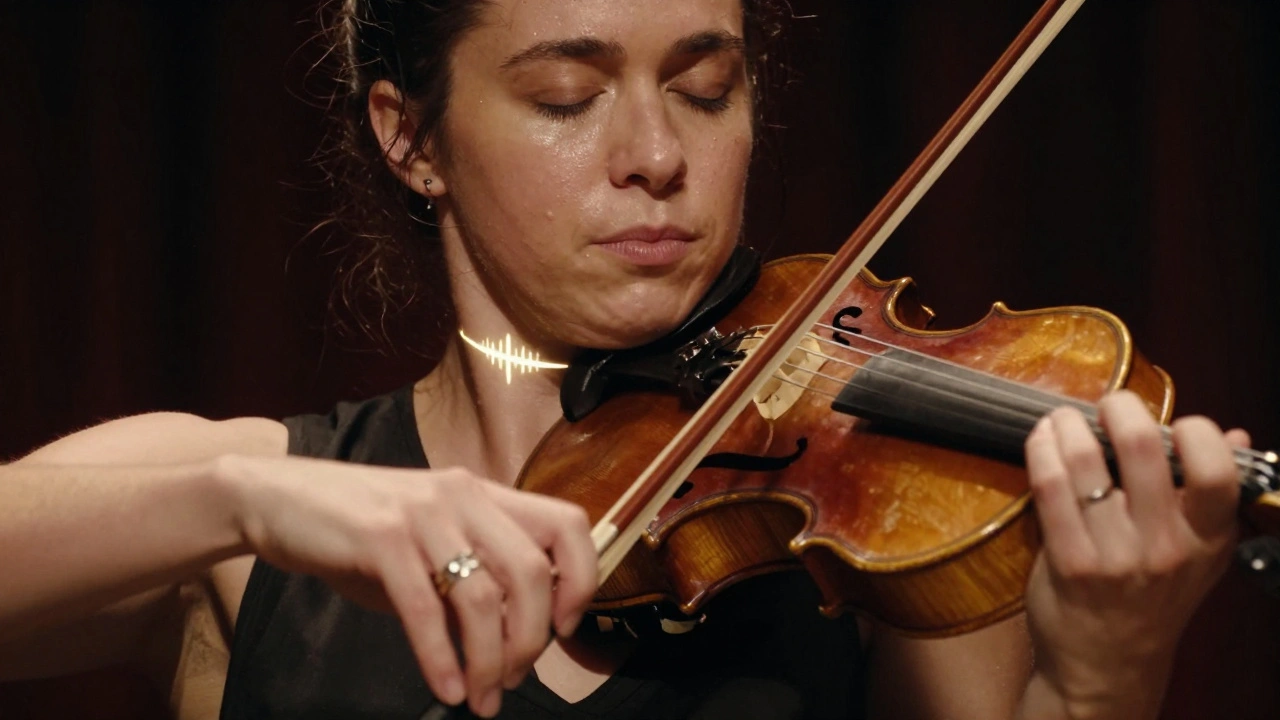
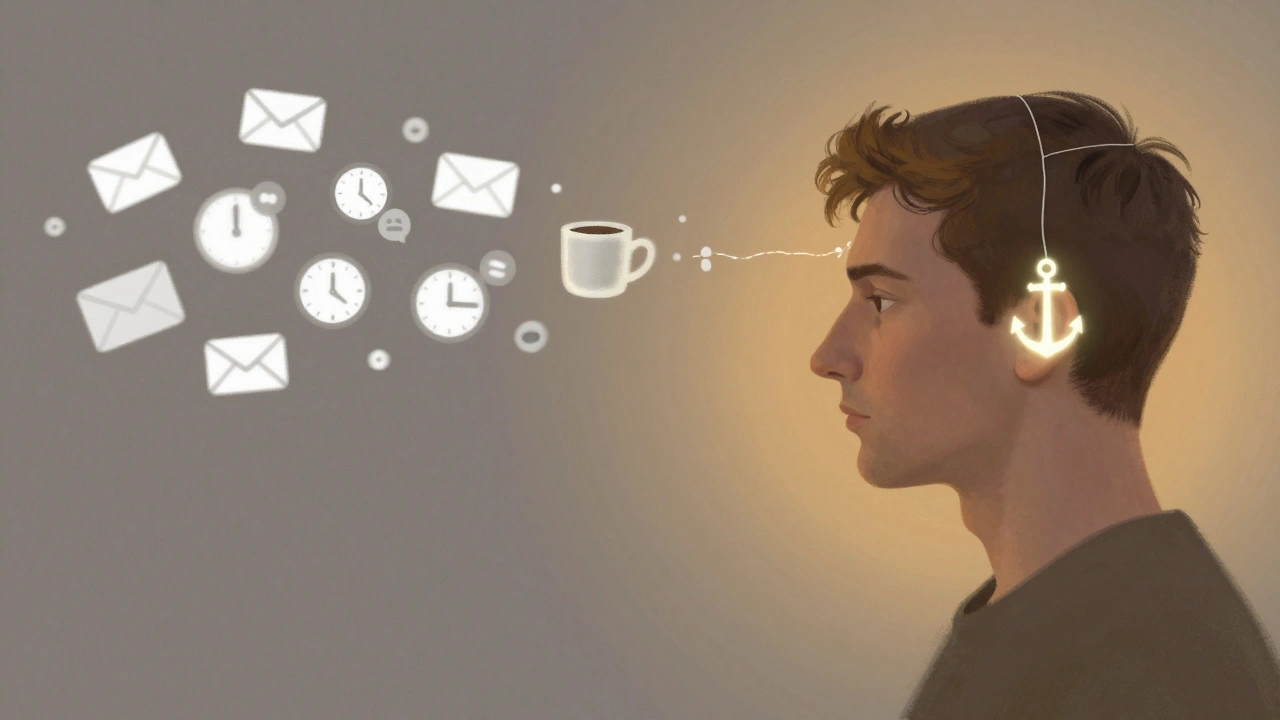
- Anchor Points: These are physical, sensory cues you use to snap back into the moment. Not breath. Not counting. Something tactile. A ring on your finger. The weight of your pen. The texture of your shoe sole. Starr’s violin students learn to feel the vibration of their instrument’s body against their collarbone. That’s their anchor. When nerves hit, they don’t think - they feel.
- Attention Gates: Your brain is always filtering. But most people let distractions in unchecked. Starr teaches people to build mental gates - simple rules that decide what gets through. For example: "Only one thought per measure." Or: "If I’m thinking about the audience, I reset." These aren’t rigid. They’re like traffic lights for your mind. Green light: task-relevant. Red light: everything else.
- Performance Loops: This is where Starr’s background as a performer shines. She noticed that top musicians don’t wait for inspiration. They build short, repeatable sequences - 15 to 90 seconds - that trigger peak focus. A pianist might tap their foot twice, exhale through their nose, then press the first key. A public speaker might adjust their collar, glance at the back wall, and say the first word. These loops don’t calm you. They signal your nervous system: "This is performance mode. Activate."
Why It Works Better Than Meditation
People often assume mindfulness = presence. But mindfulness is broad. Presence is targeted. You can be mindful of your breath while still forgetting your lines. Starr’s method doesn’t ask you to observe everything. It asks you to lock onto one thing - and defend it.
Studies from the University of Oregon’s Center for Cognitive and Behavioral Neuroimaging (2023) show that people using Starr’s techniques activated the dorsolateral prefrontal cortex - the brain’s executive control center - 47% faster than those using traditional mindfulness. That means quicker recovery from distraction. Fewer mental lapses. Less emotional bleed.
And here’s the kicker: you don’t need 20 minutes a day. Starr’s clients average 3.7 minutes of daily practice. One minute for their anchor. One minute for their gate. One minute to run their loop. That’s it. No app. No cushion. No silence required.
Real-World Examples
Take Lena, a 32-year-old cellist in Portland. She’d freeze during solo performances. Her hands shook. Her mind went blank. She tried breathing, visualization, even beta-blockers. Nothing stuck. Then she tried Starr’s method.
She chose the cold metal of her bow as her anchor. Her attention gate: "Only the next note exists." Her loop: tap the bow twice on her music stand, inhale through her nose, play the first note. Within three weeks, her performance errors dropped by 82%. She didn’t become "calmer." She became sharper.
Or Marcus, a graphic designer who kept missing deadlines because he’d get lost in YouTube rabbit holes. He set his anchor to the click of his mouse. His gate: "If I’m not editing, I’m not allowed to browse." His loop: double-click the file, open the color palette, start drawing. He regained 11 hours a week.
How to Start Today
You don’t need a coach. You don’t need a studio. You need three things:
- Choose one physical object you interact with daily - your coffee mug, your keyboard, your watch.
- Assign it as your anchor. Touch it. Feel it. Notice its temperature, weight, texture. Make it meaningful.
- Create one simple rule for when you’re distracted. "When I feel anxious, I look at my anchor." Or: "When I start scrolling, I reset with my anchor."
- Build a 10-second ritual around it. A breath. A blink. A shift in posture. Do it before every important task.
Do this for seven days. Not to be perfect. Just to notice. You’ll start catching yourself before you spiral. That’s presence. Not absence of thought. Presence is the moment you notice you’ve drifted - and choose to come back.
Why This Matters Beyond Performance
Starr’s work isn’t just about musicians or speakers. It’s about resilience. In a world that bombards us with alerts, opinions, and demands, the ability to hold your focus is a form of mental armor. It’s not about ignoring stress. It’s about not letting stress steal your agency.
People who practice Focused Performance report better sleep, fewer panic attacks, and stronger relationships. Why? Because when you can stay present with yourself, you can stay present with others. You listen without planning your reply. You respond instead of react. You show up - fully.
It’s not about being Zen. It’s about being reliable. To yourself. To your work. To the people who need you.
Is Alli Starr’s method only for artists?
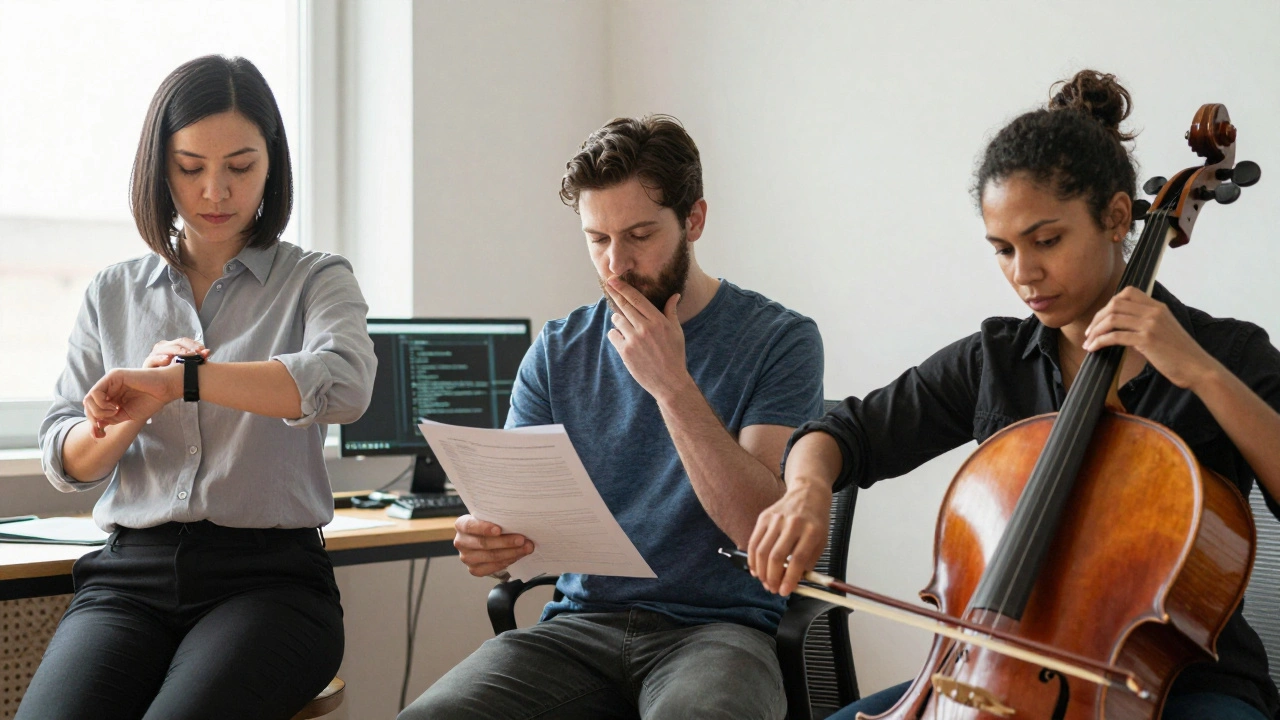
No. While Starr began working with musicians, her method was adapted for teachers, emergency responders, engineers, and parents. Anyone who needs to perform under pressure - mentally or emotionally - benefits. The core skills - anchoring, gating, looping - apply to any task requiring sustained attention.
How long does it take to see results?
Most people notice a difference in 7 to 14 days. The first sign isn’t less anxiety - it’s fewer moments of autopilot. You’ll catch yourself drifting earlier. That’s the foundation. Real performance gains, like fewer mistakes or faster recovery from stress, typically show up by week three. Consistency matters more than duration.
Can I use this with ADHD or anxiety disorders?
Yes. Many people with ADHD find Starr’s method easier than traditional mindfulness because it doesn’t require quieting the mind. Instead, it gives the mind a clear target. For anxiety, the physical anchor provides grounding when thoughts spiral. It’s not a replacement for therapy, but it’s a powerful tool to regain control during acute moments.
Do I need special equipment or training?
No. All you need is one object you touch daily - a pen, your phone, a ring. No apps, no recordings, no classes. Starr’s method is designed to work in real life, not a meditation studio. You can start today with what you already have.
What if my anchor doesn’t work?
Try another. The anchor must be something you interact with often and that has a distinct physical sensation - not visual. If your watch doesn’t feel different enough, try your shoelace, your pen cap, or the edge of your desk. Test it: when you touch it, does your brain pause for half a second? If yes, it’s working. If not, pick something else. It’s not about the object. It’s about the connection.
Final Thought
Presence isn’t about being in the moment. It’s about choosing which moment to stay in. Alli Starr’s method doesn’t promise peace. It gives you a way back - one touch, one breath, one note at a time.