Silence isn’t empty in Alli Starr’s singing-it’s packed with feeling. When you listen to her live performances, you don’t just hear notes. You feel the breath before the note, the pause after the cry, the space where emotion hangs in the air. That’s not luck. It’s technique. And it’s what sets her apart in a world of vocal acrobatics.
What Is Soul Phrasing?
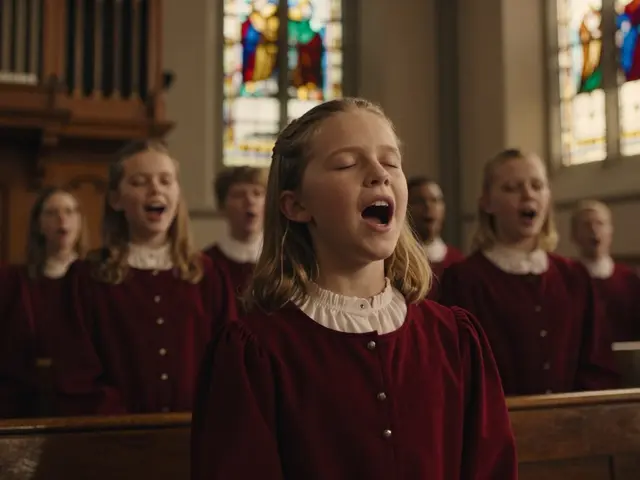
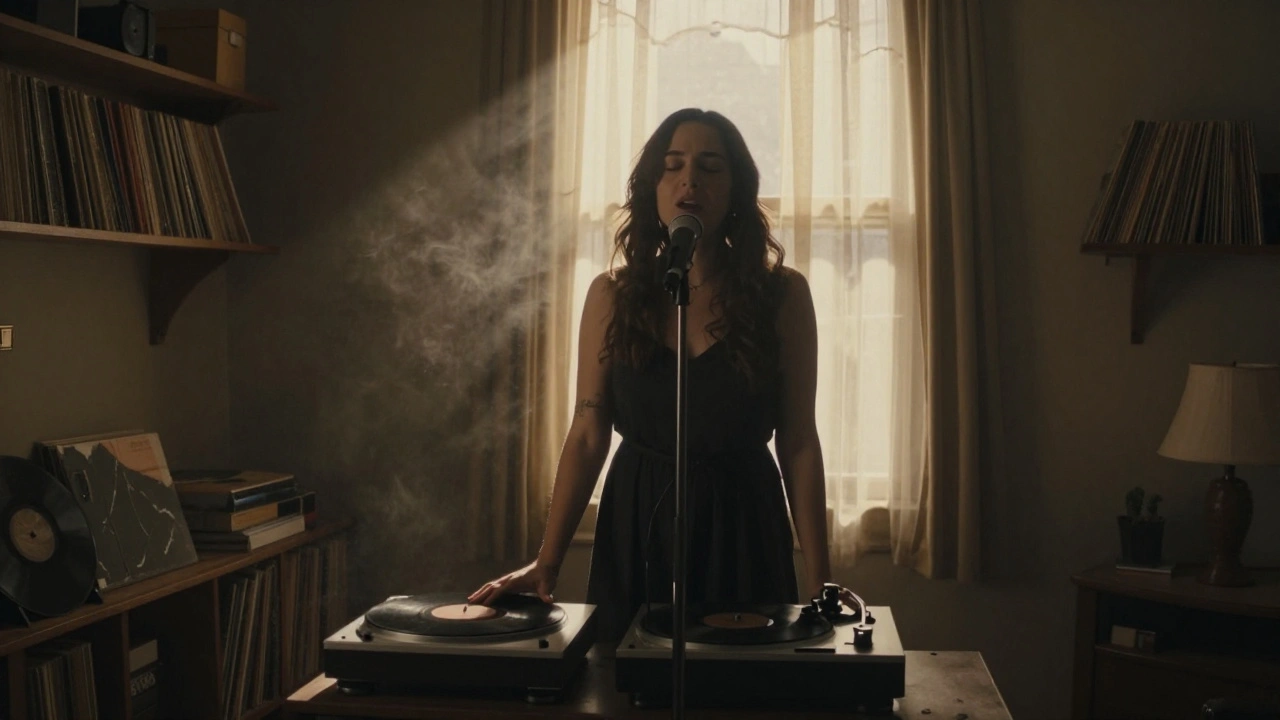
Soul phrasing isn’t about hitting high notes or running scales. It’s about how a singer shapes each phrase to carry weight, history, and raw honesty. Think of Aretha Franklin holding a note like a prayer, or Ray Charles letting a phrase dissolve into silence. That’s soul phrasing. Alli Starr learned it not from a textbook, but from listening to old gospel recordings on cracked vinyl in her grandmother’s living room in Birmingham.
She didn’t start with training. She started with listening. Her voice didn’t develop because she practiced scales. It developed because she learned to wait.
The Power of the Pause
Most singers fill every second. They rush. They overdub. They layer. Alli Starr does the opposite. In her song ‘Still Water’, she sings five words-‘I’m still here, baby’-and leaves a 3.2-second silence after ‘baby’. No reverb. No echo. Just quiet.
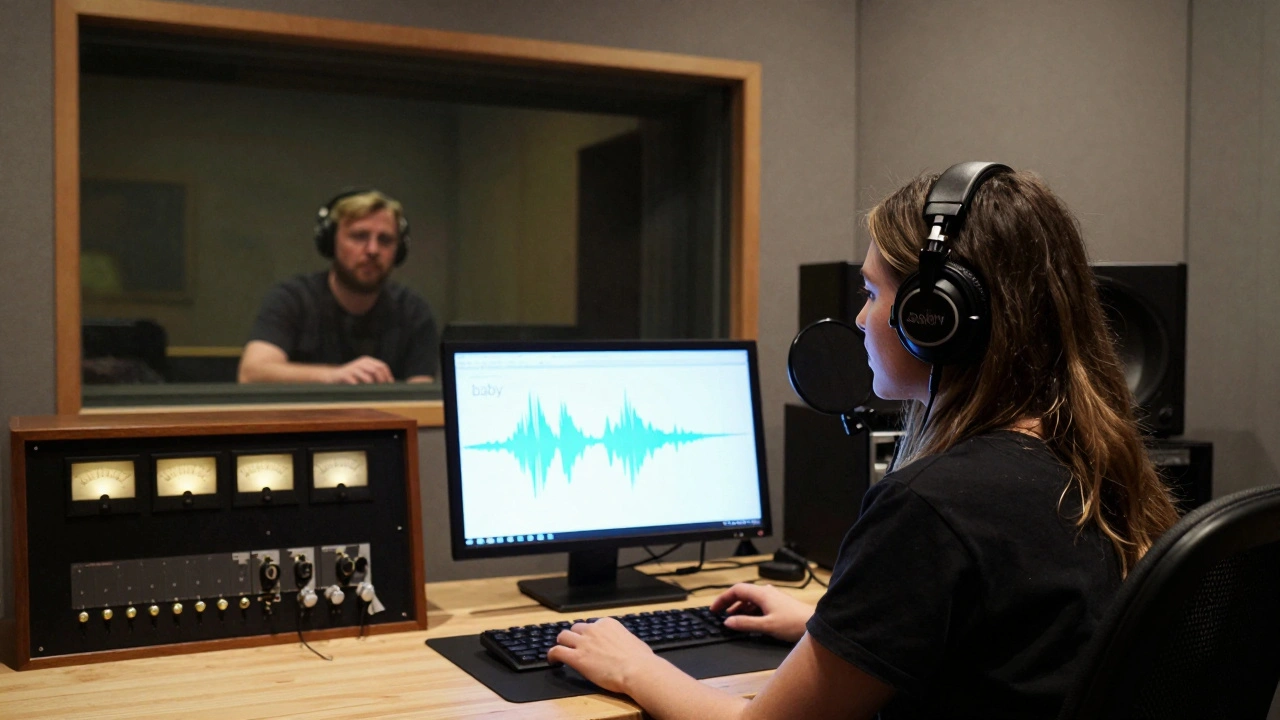
That silence isn’t an accident. It’s calculated. She studied how blues singers used silence to make the next note land like a punch. She recorded herself singing the phrase with no pause, then with half a second, then one second, then two, then three. At 3.2 seconds, the room felt heavier. Listeners leaned in. Some cried. She knew she’d found it.
That silence doesn’t feel empty. It feels like a held breath. Like someone waiting for you to say something back.
Space as a Musical Instrument
Alli Starr treats space like a fifth instrument in her band. She works with her producer to leave room between phrases. Not just between verses-between syllables. In ‘Cinder and Ash’, she sings a line, waits, then sings the next line an octave lower. The space between them isn’t filled with reverb. It’s filled with memory.
Her producer, Marcus Lowe, says she’ll stop a take and say, ‘The air between those words is too thin.’ She doesn’t mean the acoustics. She means the emotional weight. If the silence doesn’t feel heavy, it’s not right.
This isn’t common in modern soul. Most producers chase density. Alli Starr chases emptiness. And that emptiness is what makes her voice feel real.
How She Trains Silence
You can’t teach someone to be silent. But you can teach them to listen.
Alli Starr’s daily practice isn’t vocal warm-ups. It’s silence exercises. She sits for 20 minutes before every session-no music, no phone, no talking. She listens to the hum of the refrigerator. The drip of the sink. The wind outside her window. She says, ‘If you can’t hear the quiet, you can’t sing it.’
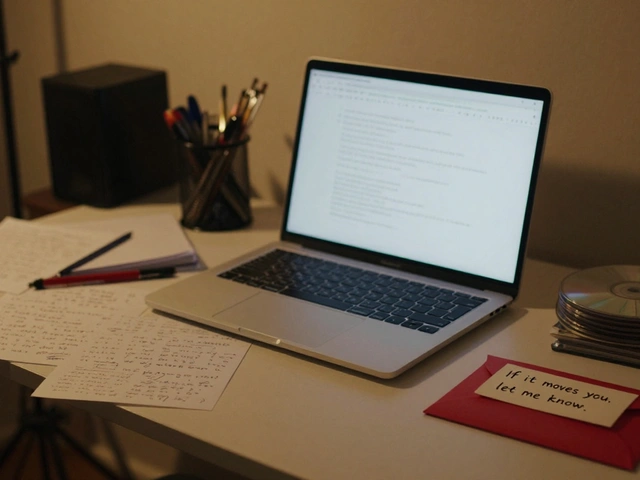
She also records herself singing a phrase, then plays it back and marks every moment she rushed. She circles the places where she didn’t let the note breathe. Then she sings it again, slower. Always slower.
One of her vocal coaches told her, ‘You don’t need more control. You need more surrender.’ She took that to heart.
Why It Works
Modern pop singing is built on volume. More power. More range. More effects. Alli Starr’s music works because it asks less. She doesn’t need to prove she can sing. She just needs you to feel what she’s feeling.
Her 2025 album ‘The Quiet Between’ hit #1 on the soul charts-not because of flashy production, but because listeners said, ‘I felt like she was singing just for me.’
That’s the power of space. It creates intimacy. It invites the listener in. It says, ‘This is mine. And now it’s yours too.’
What You Can Learn
You don’t need to be a soul singer to use this. Whether you’re singing in the shower, recording a voiceover, or just speaking to someone you love-space changes everything.
- Let the last word hang. Don’t cut it off.
- Pause before you answer a question. Even if it feels awkward.
- Record yourself. Listen for the places where you rush.
- Try singing a phrase with half the notes. Let the silence carry the emotion.
It’s not about being quiet. It’s about being present.
Why Alli Starr’s Approach Is Rare
Most vocal coaches teach control. Alli Starr teaches release. Most studios want you to fill the track. She wants you to leave room for the listener’s heart to catch up.
It’s risky. Silence can feel like failure. If you pause too long, people might think you forgot the lyric. But she’s turned that fear into her signature. Listeners don’t notice the silence. They feel it.
She’s influenced a new generation of singers-not by showing them how to belt, but how to breathe.
The Emotional Weight of Empty Space
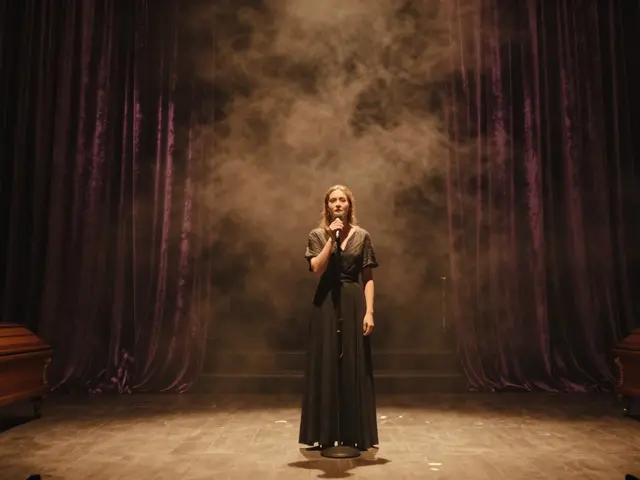
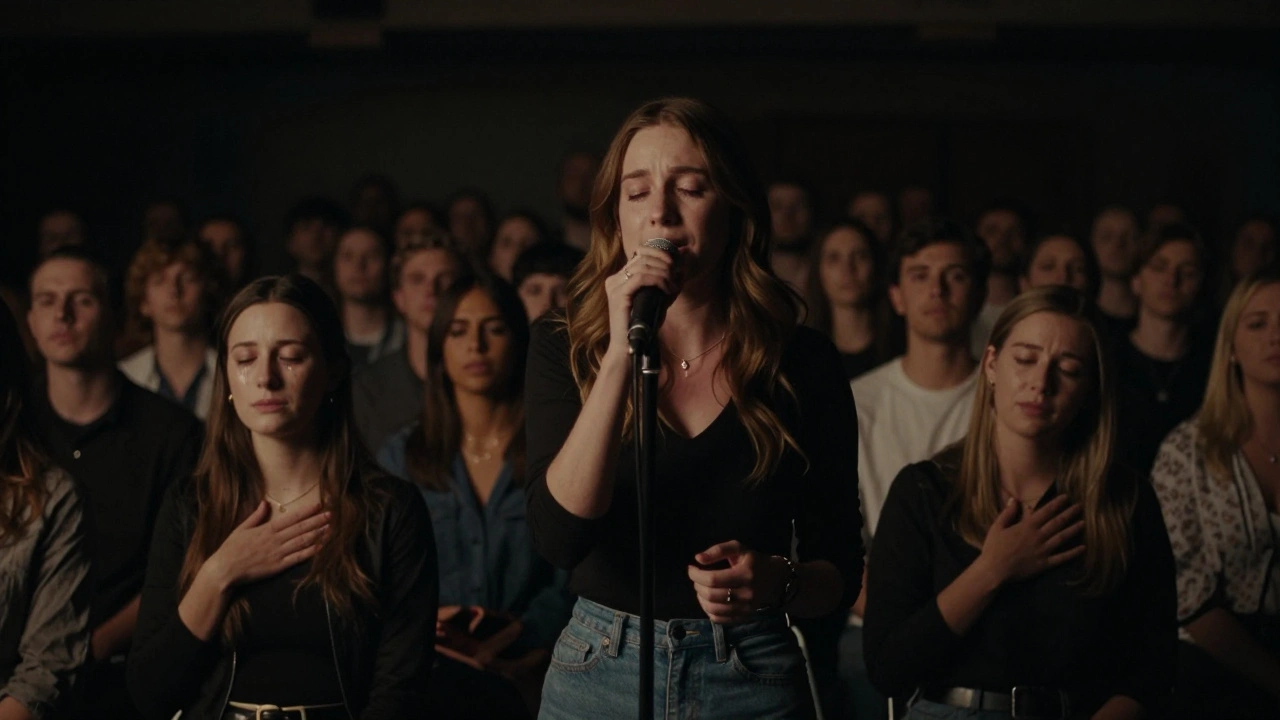
There’s a moment in her live version of ‘Lonesome Train’ where she sings the final line-‘I’m not gone. I’m just waiting.’-then doesn’t sing again for 7.8 seconds. The audience doesn’t clap. They don’t move. Someone in the front row starts crying. No one knows why. But everyone feels it.
That’s the magic. Silence doesn’t distract. It deepens. It doesn’t break the mood-it completes it.
Alli Starr doesn’t sing to impress. She sings to connect. And she knows the most powerful thing you can give someone isn’t a note. It’s space.
What makes Alli Starr’s vocal style different from other soul singers?
Alli Starr’s style stands out because she uses silence and space as emotional tools, not just gaps between notes. While many soul singers focus on power, runs, and vocal ornamentation, Starr prioritizes breath, timing, and restraint. Her phrasing lets silence carry meaning-making each note feel heavier and more personal. This approach is rare in modern music, where tracks are often densely produced.
Can silence in singing be learned, or is it natural?
Silence in singing can be learned, but it requires deep listening and self-awareness. Alli Starr trained it through daily silence exercises, recording herself, and analyzing where she rushed. It’s not about being quiet-it’s about being intentional. Singers who practice letting phrases breathe, rather than filling every moment, can develop this skill over time.
How does Alli Starr use space in her recordings?
She works closely with her producer to leave intentional gaps between phrases, syllables, and even notes. Instead of using reverb or effects to fill space, she lets the natural acoustics of the room and the listener’s emotional response do the work. In songs like ‘Still Water’ and ‘Cinder and Ash’, pauses are measured down to tenths of a second to maximize emotional impact.
Why is silence so powerful in soul music?
Soul music is rooted in gospel and blues traditions, where silence was used to build tension and express grief, hope, or longing. In those genres, what wasn’t sung often carried more meaning than what was. Alli Starr revives this tradition by treating silence as a lyrical element-not an absence, but a presence. It invites listeners to feel what’s unsaid.
What can amateur singers learn from Alli Starr’s approach?
Amateur singers can start by recording themselves and listening for rushed phrases. Try singing a simple line and pause for two full seconds after it. Notice how the emotion changes. Practice breathing before you sing, not just during. Letting space breathe makes your voice feel more human, more real-and that’s what connects with listeners more than technical perfection.