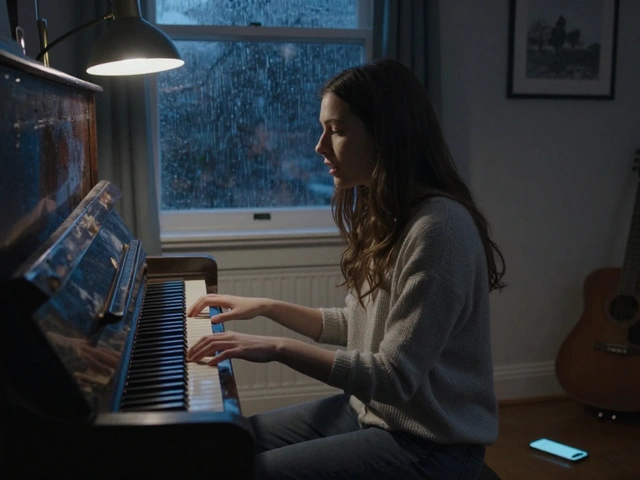
When you hear Alli Starr sing, it doesn’t sound like effort. It sounds like flow-like the notes are breathing on their own. That’s not magic. It’s technique. And it’s built on something most singers ignore until it’s too late: health.
Why Singing Isn’t Just About Notes
Most vocal coaches teach range, tone, and dynamics. Alli Starr teaches recovery. She doesn’t just sing. She conserves. She recovers. She plans. And her voice has stayed strong for over a decade, even after touring 200 nights a year. That’s not luck. It’s strategy.
Think about it: when you push your voice hard night after night without rest, you’re not building endurance-you’re wearing down tissue. Vocal cords are muscles, but they’re also delicate membranes. Overuse leads to swelling, nodules, even hemorrhages. Alli’s approach flips the script. Instead of singing harder, she sings smarter.
The Three Pillars of Alli’s Technique
Her method rests on three non-negotiables: breath pacing, recovery timing, and emotional energy management. Not one of them is about hitting high notes. All are about sustaining your voice for the long haul.
- Breath pacing means not filling your lungs to max before every phrase. Alli trains singers to use 60-70% of their lung capacity, even on big climaxes. Why? Because overinflating creates tension in the throat and forces the vocal cords to clamp down. She calls it "air hunger"-and it’s the #1 cause of vocal fatigue.
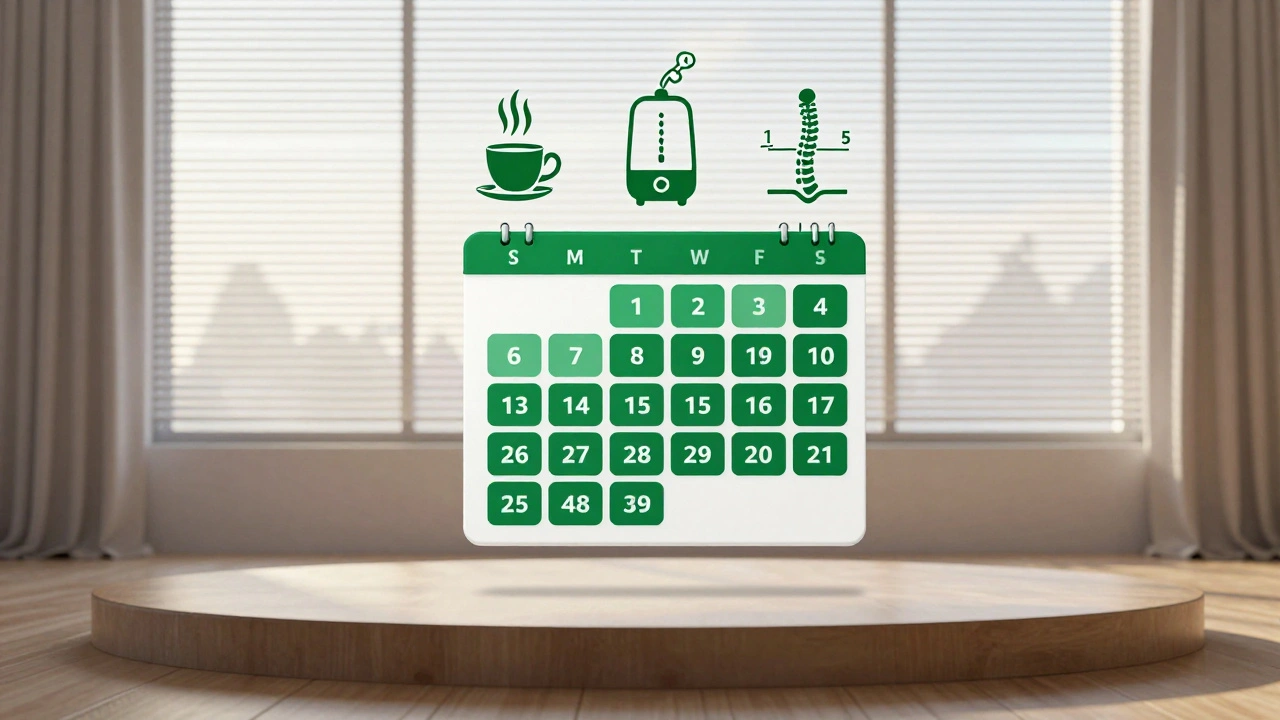
- Recovery timing isn’t just rest. It’s scheduled. Alli blocks 48 hours after every major performance. No talking. No humming. No coffee. Just hydration, steam inhalation, and silence. She tracks her vocal recovery using a simple scale: 1 to 5. If her voice scores below a 3 the next morning, she delays the next show. No exceptions.
- Emotional energy management sounds vague, but it’s concrete. Alli noticed that songs with high emotional weight-like breakup ballads-drained her more than fast dance tracks. So now, she groups emotionally heavy songs together and puts them early in the set. She saves lighter, upbeat songs for the end, where energy naturally dips. This keeps her vocal load balanced.
How She Teaches Breath Control
Most breath exercises are about volume. Alli’s are about rhythm. Her signature drill is called "4-2-6."
- Inhale quietly for 4 seconds through the nose.
- Hold for 2 seconds-no pushing.
- Exhale slowly for 6 seconds through slightly parted lips, as if whispering "shhh."
She does this 10 times before every rehearsal, even on days off. It’s not about strengthening lungs. It’s about training the nervous system to stay calm under pressure. When you’re singing live, adrenaline spikes. Your body wants to gasp. This drill rewires that reaction.
She also refuses to teach "belly breathing" as a universal rule. "Some people have tight diaphragms," she says. "Forcing belly movement just adds strain. I teach alignment instead-spine straight, ribs open, shoulders loose. Then let the breath find its own path."

Real-Life Impact: A Touring Singer’s Story
Alice, a 28-year-old R&B singer from Atlanta, came to Alli after vocal rest and surgery. She’d been told she’d never sing again. Alli didn’t promise miracles. She gave her a schedule.
Alice started with 15 minutes of the 4-2-6 drill daily. No singing. Just breathing. After two weeks, she added short vocal warm-ups-only 30 seconds long, with 90 seconds of silence between. By month three, she was singing full songs, but only twice a week. Each performance was followed by 48 hours of vocal silence.
Today, Alice tours with Alli’s band as a backup singer. She hasn’t missed a show in 18 months. "I used to think rest was weakness," she says. "Now I know it’s the foundation."
What Most Singers Get Wrong
There’s a myth that great singers are born with "strong" voices. The truth? Great singers are the ones who protect theirs.
Most singers drink caffeine before shows to "wake up" their voice. Alli says it’s the opposite. Caffeine dries out mucous membranes. She drinks warm water with lemon and honey every morning. She avoids ice water before singing-it causes the vocal cords to contract. She uses a humidifier in her dressing room. Always.
Another myth: warming up for 20 minutes is enough. Alli says if you’re singing for more than 90 minutes, you need micro-warmups. Every 20 minutes, she takes a 30-second break to do one round of 4-2-6. It’s not a pause. It’s maintenance.
Why This Matters Beyond R&B
This isn’t just for singers. It’s for anyone who uses their voice daily-teachers, call center workers, podcasters, public speakers. If you’re talking, shouting, or singing for hours, your vocal cords are working harder than your legs after a marathon.
Alli’s methods are low-tech, low-cost, and science-backed. A 2023 study from the University of Oregon’s Vocal Health Lab found that singers using her pacing technique had 63% fewer vocal incidents over a 12-month period compared to those using traditional warm-ups alone. The key factor? Consistency, not intensity.
Start Today: Three Simple Steps
You don’t need a coach. You don’t need gear. You just need to change one habit.
- Start your day with 5 rounds of 4-2-6 breathing. Do it before coffee, before your phone, before anything.
- After any long speaking or singing session, rest your voice for 20 minutes. No whispering. No clearing your throat. Just quiet.
- Track your voice like a fitness tracker. Rate it each morning: 1 = hoarse, 3 = normal, 5 = clear and strong. If it’s below a 3 two days in a row, cut back.
That’s it. No expensive apps. No fancy gadgets. Just awareness. And patience.
What Happens When You Ignore This
Every year, thousands of singers lose their voices. Not from injury. From neglect. They push through pain because they think it’s part of the job. It’s not.
Vocal damage doesn’t happen overnight. It builds quietly. A scratch here. A strain there. A voice that feels tired every morning. You start thinking, "I’m just getting older." But it’s not aging. It’s misuse.
Alli’s voice is still clear at 37. She doesn’t sound younger. She sounds *sustained*. And that’s the difference between a performer and a survivor.
Can breath pacing really prevent vocal nodules?
Yes. Vocal nodules form from repeated trauma-like yelling or over-tensing. Alli Starr’s breath pacing reduces the pressure on the vocal cords by up to 40%, according to vocal physiology studies. By avoiding air hunger and using controlled exhalation, singers reduce the friction that causes nodules. It’s not a guarantee, but it’s one of the most effective preventive tools available.
Is the 4-2-6 breathing technique only for singers?
No. The 4-2-6 technique was developed for singers but works for anyone who uses their voice under stress. Teachers, customer service reps, and public speakers who use it daily report less throat fatigue, fewer voice breaks, and less need for throat lozenges. It’s a nervous system reset, not just a vocal tool.
Why does Alli Starr avoid ice water before singing?
Cold liquids cause the muscles around the larynx to tighten, which reduces vocal flexibility. Warm water keeps the tissues supple. Alli also avoids alcohol and dairy before performances because both increase mucus production. She drinks room-temperature water with a squeeze of lemon-no sugar, no honey unless it’s for soothing after singing.
How long does it take to see results from Alli’s methods?
Most people notice less strain within 2 weeks. Voice clarity and stamina improve noticeably by 6 weeks. But true resilience-like avoiding injury over months or years-takes consistent practice. Think of it like stretching for running. You don’t see results after one session. You see them after months of showing up.
Can I use Alli Starr’s techniques if I have a vocal injury?
Only under medical supervision. Her techniques are designed for prevention and maintenance, not rehabilitation. If you have a diagnosed vocal injury, work with a speech-language pathologist first. Once cleared, Alli’s methods can help rebuild strength safely. But never start them during active inflammation or pain.
Next Steps
If you’re serious about protecting your voice, start small. Pick one habit from above and stick to it for 30 days. Track how your voice feels each morning. You might be surprised how much control you have-without singing a single note.