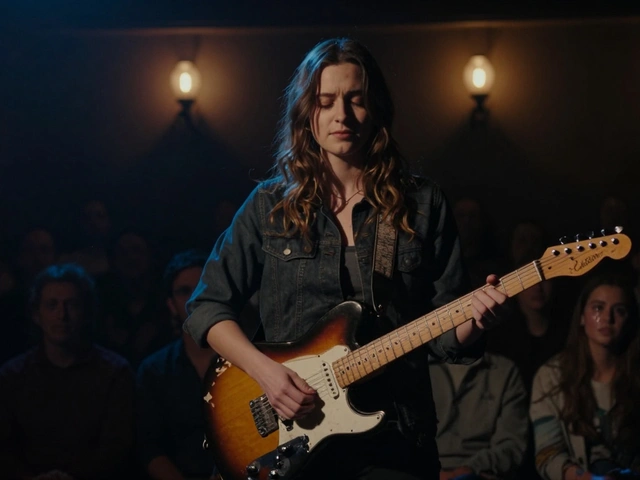
Most people think great soul music comes from sudden bursts of inspiration - a lightning strike of emotion, a melody that falls out of nowhere. But if you’ve ever listened to Alli Starr’s albums, you know that’s not how it works. Her songs don’t just appear. They’re built. Day after day. Rain or shine. Even when she didn’t feel like it. Alli doesn’t wait for the muse. She shows up. And that’s where the real magic happens.
She writes every single day - no exceptions
Alli Starr’s first rule? Write something, every day. No matter what. Not a full song. Not even a verse. Just a line. A chord change. A hummed melody recorded on her phone while brushing her teeth. She’s done this for over 12 years. That’s more than 4,300 consecutive days of writing. Not because she’s obsessed. Because she’s smart.
She doesn’t wait to feel "in the zone." She knows the zone isn’t a place you find. It’s a place you build. On days she felt numb, she’d write about the numbness. On days she was angry, she’d turn the rage into a bassline. One morning, after a fight with her partner, she wrote the opening line of "Broken Clocks" - a song that later became a viral hit on soul radio stations across the Pacific Northwest. She didn’t plan it. She just showed up.
Her morning ritual: 20 minutes, no phone
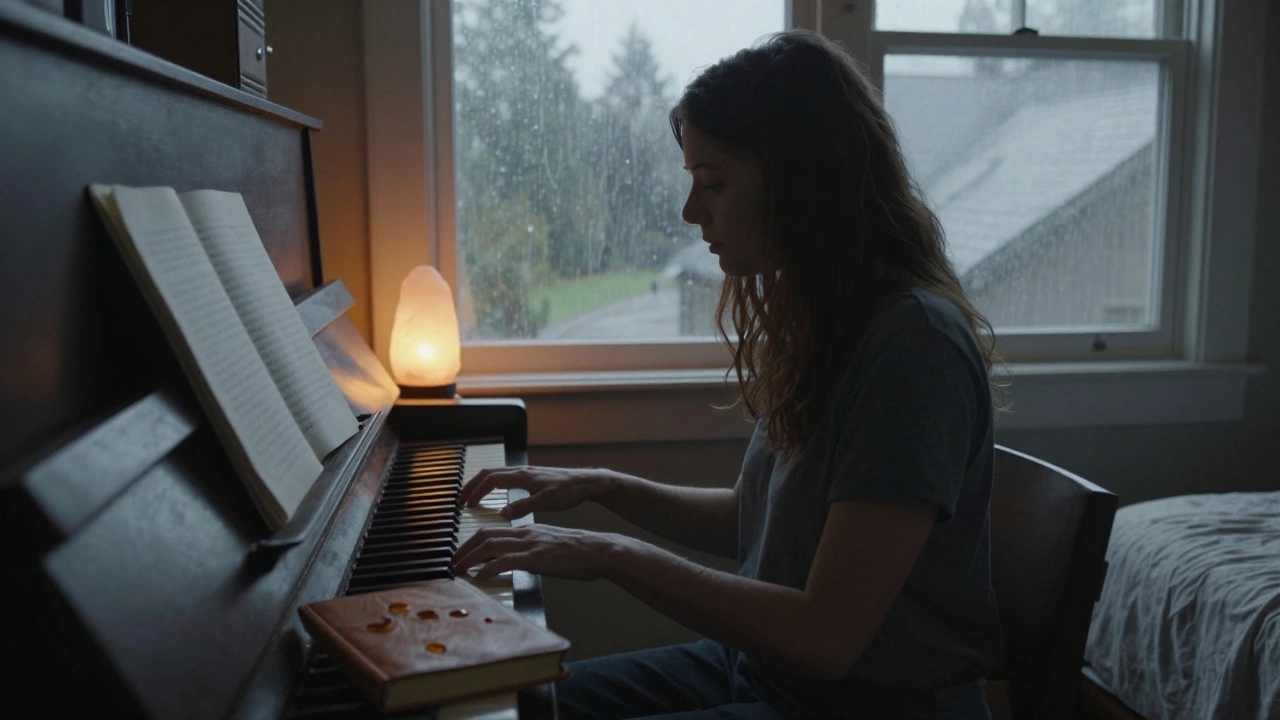
Every morning at 6:15 a.m., Alli sits at her old upright piano in the back room of her Portland home. She doesn’t open her laptop. She doesn’t check email. She doesn’t even turn on the lights. Just the dim glow of a salt lamp and the sound of rain tapping the roof. She plays the same three chords over and over - C major, A minor, F - until something new emerges. Sometimes it’s a melody. Sometimes it’s a lyric fragment. Sometimes it’s nothing. She still records it.
She calls it "warm-up mode." It’s not about creating a song. It’s about reconnecting with the raw, unfiltered part of herself that still remembers how to feel. She says if she skips this, the rest of the day feels hollow. Even when she’s touring, she finds a piano in a hotel lobby, a church basement, or even a music store window. The ritual doesn’t change. The space does.
She keeps a "Soul Journal" - not a lyric notebook
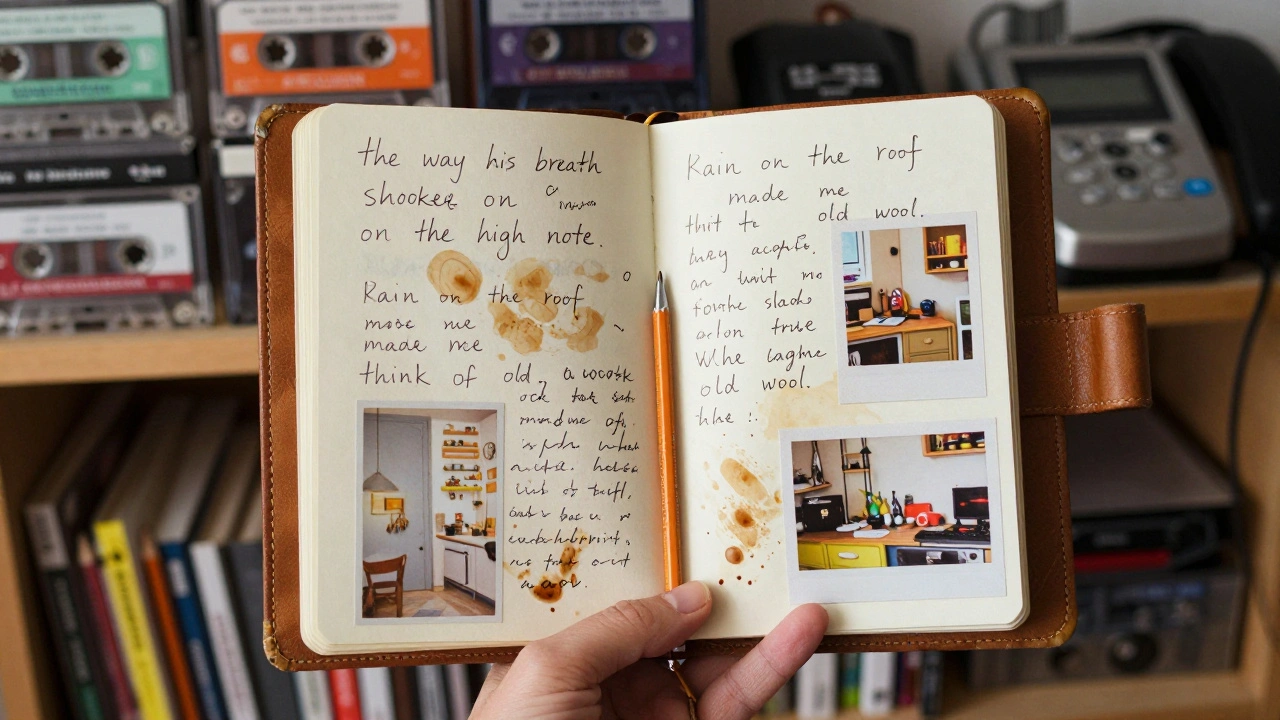
Most songwriters keep lyric journals. Alli keeps a soul journal. It’s a worn, leather-bound notebook filled with messy handwriting, coffee stains, and scribbled memories. Not songs. Not rhymes. Just feelings.
- "Woke up thinking about Mom’s voice when she sang in the kitchen - not the words, but the way her breath shook on the high note."
- "The way the bus driver smiled at me today. Not polite. Real. Like he saw me."
- "Rain on the roof last night. Made me think of the attic in my grandma’s house. Cold. Smelled like old wool."
She says these aren’t prompts. They’re emotional anchors. When she’s stuck on a chorus, she flips through the journal. One line - "the way he didn’t say goodbye" - became the hook of "Leave Me in the Doorway," her most personal song to date. She didn’t write it as a lyric. She wrote it as a memory. Then she let the music find it.
She writes in layers - not all at once
Alli doesn’t write a song from top to bottom. She builds it like a quilt. One piece at a time.
She’ll spend a week on just the groove. Then a few days on the vocal phrasing. Then a morning on the bridge. She records each layer separately. Sometimes, she’ll have a bassline from January, a vocal melody from March, and lyrics from November all sitting in different folders on her computer. One day, they just fit together.
She doesn’t force it. She lets the pieces breathe. If a section feels stiff, she sets it aside. She trusts that if it’s meant to be part of the song, it’ll come back. And it always does. She says the best songs are the ones that surprised her - not because she was brilliant, but because she was patient.
She doesn’t chase hits. She chases truth.
Every year, she gets asked: "How do you keep your sound so raw? So real?" She doesn’t talk about gear or producers. She talks about boundaries.
She won’t write for trends. She won’t rewrite a song to fit a label’s "vibe." She won’t polish a line just because it sounds "catchy." If it doesn’t feel true, it doesn’t make the cut. She once scrapped an entire album because one chorus made her cringe. "It sounded like someone else’s pain," she told me. "I didn’t earn that."
Her latest album, Still Breathing, was recorded live in one room with no overdubs. Just her, a mic, a piano, and a single guitar. No producer. No auto-tune. No tricks. The raw takes are the final tracks. She says the cracks in her voice? Those are the parts people hold onto. Not because they’re perfect. Because they’re honest.
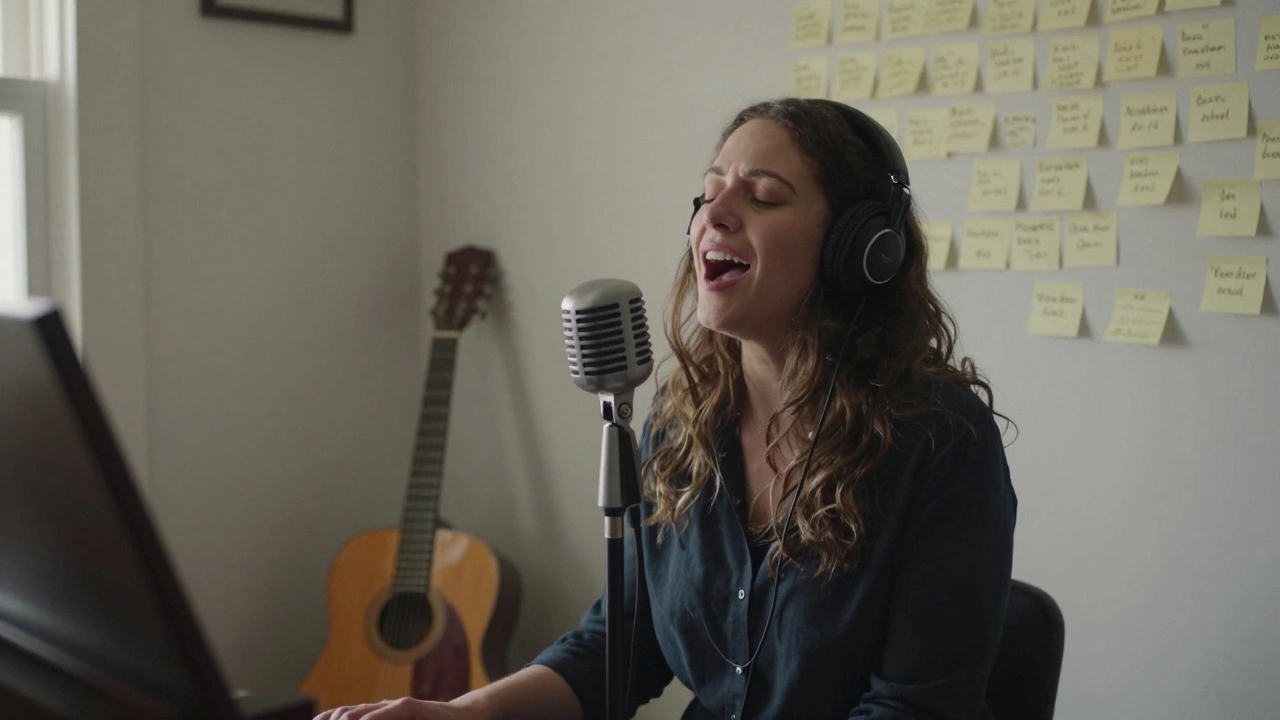
Her biggest lesson? Discipline isn’t about willpower. It’s about love.
Alli doesn’t see her daily writing as a chore. She sees it as a conversation. With herself. With her past. With the people who’ve shaped her. Some days, she writes to heal. Other days, she writes to remember. Rarely does she write to impress.
She says the discipline isn’t what keeps her going. It’s the opposite. The love keeps her disciplined. When you love something enough, you don’t need motivation. You just show up. Even when you’re tired. Even when you’re scared. Even when you think no one will care.
She doesn’t have a studio. She has a space. A space where she can be quiet. Where she can be messy. Where she can be wrong. And every day, she comes back to it. Not because she’s trying to be a musician. But because she’s trying to be human.
If you want to write soul music - real soul music - you don’t need a better microphone. You don’t need a producer. You don’t need to be "inspired." You just need to show up. Every day. Even when it’s hard. Especially when it’s hard.
Do you need to be naturally talented to write soul music like Alli Starr?
No. Alli Starr doesn’t have perfect pitch or formal training. She taught herself piano by ear. Her voice cracks sometimes. Her lyrics aren’t always polished. What sets her apart isn’t talent - it’s consistency. Soul music doesn’t come from being flawless. It comes from being real. Showing up every day, even when you’re not sure you have anything to say, is what builds the muscle to say something true when it matters.
Can I start with just 5 minutes a day?
Yes. Alli started with 10 minutes. Now she does 20. But she says if you’re serious, even five minutes counts - if you do it without distraction. Play one chord. Hum one note. Write one line. Don’t judge it. Just record it. Over time, those tiny moments add up. They become your voice. Not because they were great. But because they were yours.
What if I don’t feel emotional enough to write?
You don’t need to feel dramatic. Alli writes on days she’s bored, tired, or just plain numb. She writes about the numbness. That’s how she found her most powerful songs - not when she was crying, but when she couldn’t cry. The emotion isn’t in the intensity. It’s in the honesty. Write about what’s actually happening - not what you think should be happening.
Should I record everything I write?
Yes. Even the bad stuff. Alli has hundreds of voice memos that sound like nonsense. But one of them became the chorus of her biggest song. You can’t predict what will matter. But you can train yourself to recognize it when it shows up. Recording keeps the door open. Silence shuts it.
How do I know if I’m on the right track?
If you’re still writing after a week of feeling like it’s pointless, you’re on the right track. Soul music isn’t about instant results. It’s about long-term trust. The right track isn’t a destination. It’s the path you keep walking, even when the light’s out.
Next steps - start small, stay steady
Here’s how to begin, right now:
- Find a quiet spot - even if it’s just your kitchen table.
- Set a timer for five minutes.
- Play one chord on a piano, guitar, or even your phone’s keyboard app.
- Hum until something changes.
- Record it - even if it’s just a mumble.
- Do it again tomorrow.
Don’t look for a masterpiece. Look for a moment. One real moment. That’s all you need. The rest will follow - not because you forced it, but because you showed up.