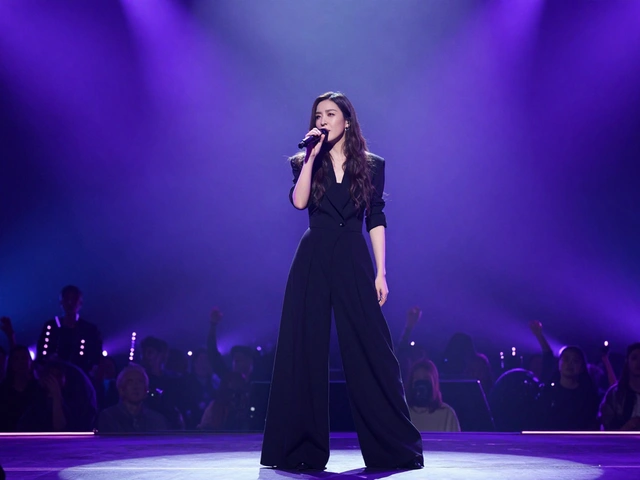
Most songwriters write about love, heartbreak, or partying. But Alli Starr writes about the silence after a scream. About the kind of pain that doesn’t fit in a therapy session or a journal. The kind that lingers in your bones long after everyone else has moved on. Her music doesn’t ask you to feel sorry for her. It asks you to recognize it in yourself.
What Happened Before the Music?
Alli Starr didn’t start out as a musician. She was a college student in Eugene, Oregon, studying psychology when her younger brother died in a car crash. He was 17. She was 20. The funeral was quiet. People hugged. They brought casseroles. No one asked what it felt like to wake up every morning and forget, for a second, that he was gone.
She stopped talking. Not because she didn’t want to. Because words felt like lies. How do you explain that your brother’s favorite hoodie still smells like him? That you still check his Instagram every Sunday? That you scream into pillows so your roommate doesn’t hear you?
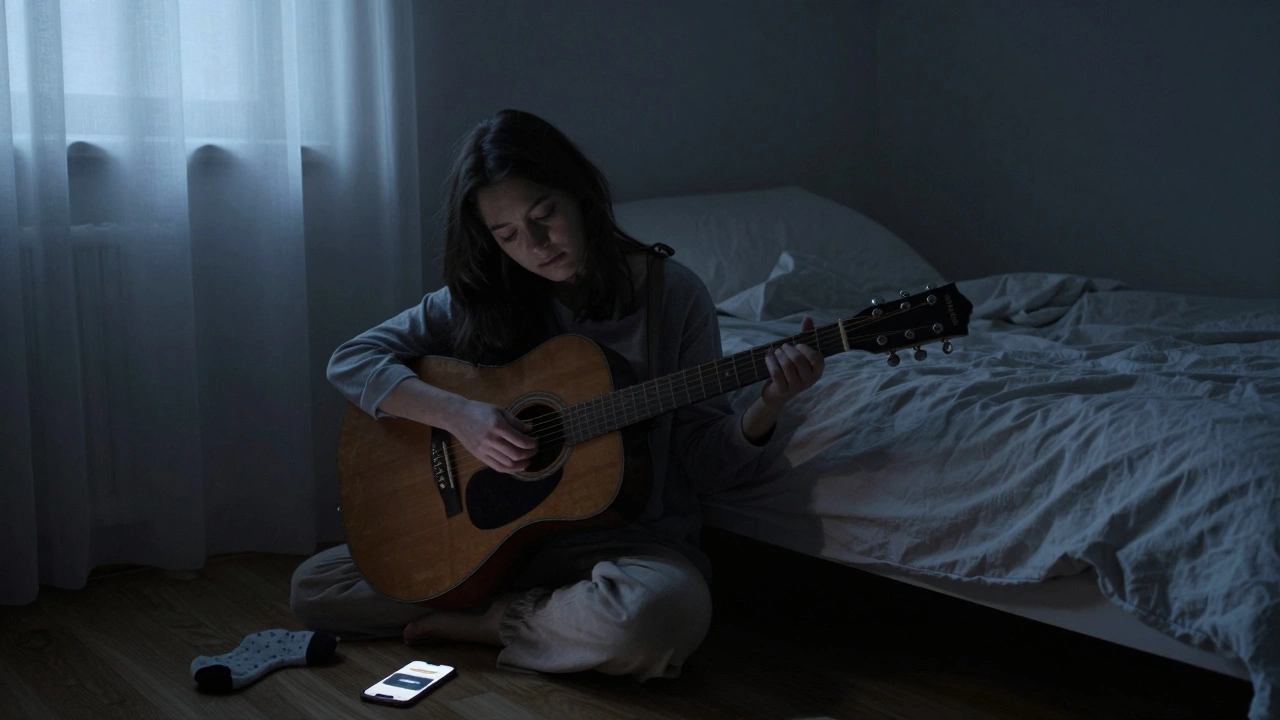
Two years later, she bought a used acoustic guitar from a pawn shop for $80. She didn’t know chords. She didn’t care. She just needed to make noise that matched the noise inside her.
The First Song That Changed Everything
Her first real song was called "Left Sock." It was three minutes long. No chorus. Just her voice, shaky at first, then stronger, over a single fingerpicked guitar line.
"I still wear his left sock / When I can’t sleep / It’s not because I miss him / It’s because I’m scared / He’d be cold without me."
She recorded it on her phone. Uploaded it to SoundCloud. Didn’t tell anyone. Two weeks later, a stranger messaged her: "I lost my sister last year. I’ve been wearing her sneakers to work. I didn’t know I was doing it until I heard this. Thank you."
That was the moment she realized: her pain wasn’t unique. It was universal - if you let people see it.
How Her Songwriting Structure Works
Alli doesn’t write songs in verses and choruses. She writes in emotional arcs.
- Phase 1: The Quiet - Soft, sparse, barely there. Just voice and one instrument. No drums. No harmonies. This is where she sits with the raw feeling.
- Phase 2: The Crack - A single chord shifts. A harmony enters. The tempo slows. This is the moment she admits she’s not okay - and lets you in.
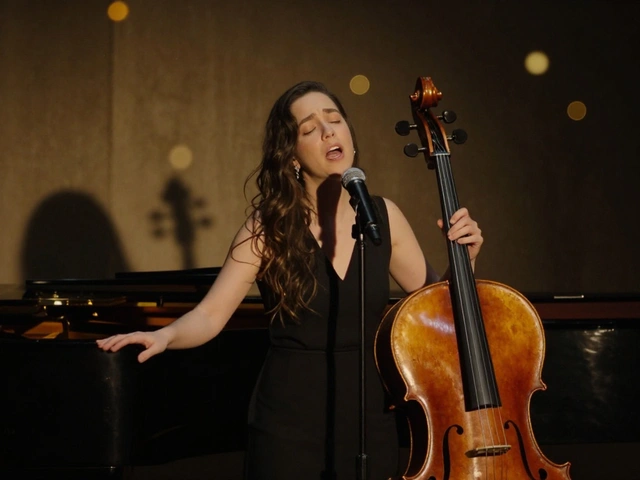
- Phase 3: The Echo - Her voice doubles. Reverb swells. A cello or pedal steel joins. This isn’t catharsis. It’s resonance. She’s not healing alone anymore.
- Phase 4: The Silence After - The music drops out. Just a breath. Then silence for three seconds. No fade-out. No ending. Just space. Because healing doesn’t have a final note.
Her 2024 album, Where the Light Doesn’t Reach, follows this structure across all 11 tracks. Critics called it "brutal" and "unflinching." Listeners called it "the only thing that made me feel seen."
Why Her Music Resonates Beyond the Folk Scene
Alli’s songs aren’t about trauma porn. They’re not performative. She doesn’t use her pain as a prop. She uses it as a bridge.
When she sings about her mother’s silence after the funeral, people with abusive parents hear themselves. When she sings about not being able to cry in front of friends, people with anxiety feel understood. When she sings about the hospital’s waiting room lights - fluorescent, too bright - people who’ve lost someone in a hospital all over the world say: "That’s exactly how it looked."
Her lyrics avoid metaphors. No "storms" or "shadows." She writes about specific details: the smell of antiseptic, the weight of a funeral program, the way a hospital chair creaks when you shift too fast.
That’s the secret. It’s not the pain that connects people. It’s the precision of it.
How She Turns Private Grief Into Public Comfort
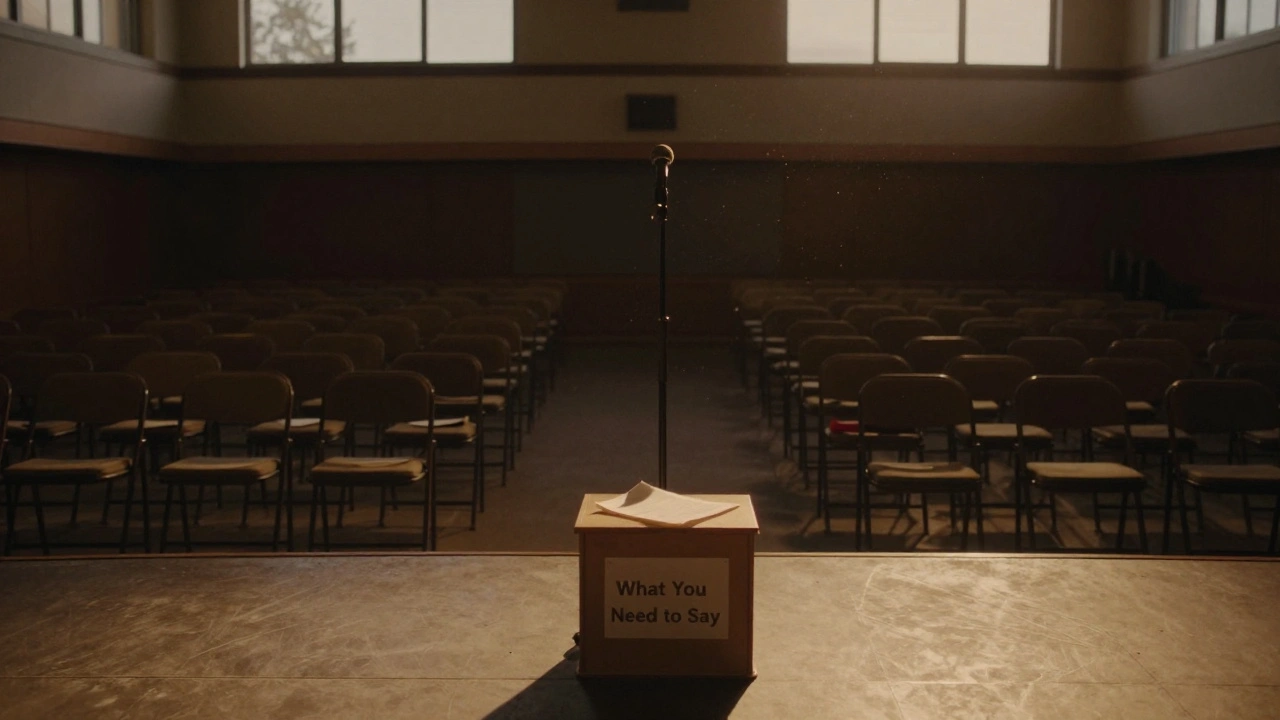
Alli doesn’t perform in big venues. She plays in community centers, libraries, hospice waiting rooms, and even one-time pop-ups in funeral homes. She asks the audience to write down one thing they’ve never said out loud - then she reads them anonymously between songs.
At a show in Boise last year, a man in his 60s wrote: "I never told my daughter I was proud of her before she died." Alli played a new song that night called "The Last Thing I Didn’t Say." He came back three weeks later. He said it was the first time he’d cried in five years.
She doesn’t take donations. She doesn’t sell merch. She leaves a box at every show labeled "What You Need to Say." People write notes. She reads them. Sometimes, she turns them into songs.
What Makes Her Different From Other "Healing" Artists
There are plenty of artists who sing about mental health. But most of them use music to escape pain. Alli uses music to stay in it.
She doesn’t end songs with hope. She ends them with presence. There’s no "it gets better." There’s only "I’m still here. Are you?"
Compare her to artists like Joni Mitchell or Leonard Cohen. They wrote about pain with poetry. Alli writes about it with precision. She doesn’t say "my heart is broken." She says: "I still have his toothbrush in the bathroom. I rinse it every time I brush mine."
That’s the difference. One makes you feel moved. The other makes you feel known.
Where She’s Going Now
In early 2025, Alli launched a nonprofit called Unspoken Songs. It trains people who’ve experienced loss to write their own songs - not to be performers, but to be witnesses. They record them. No production. No polish. Just voice, guitar, and silence.
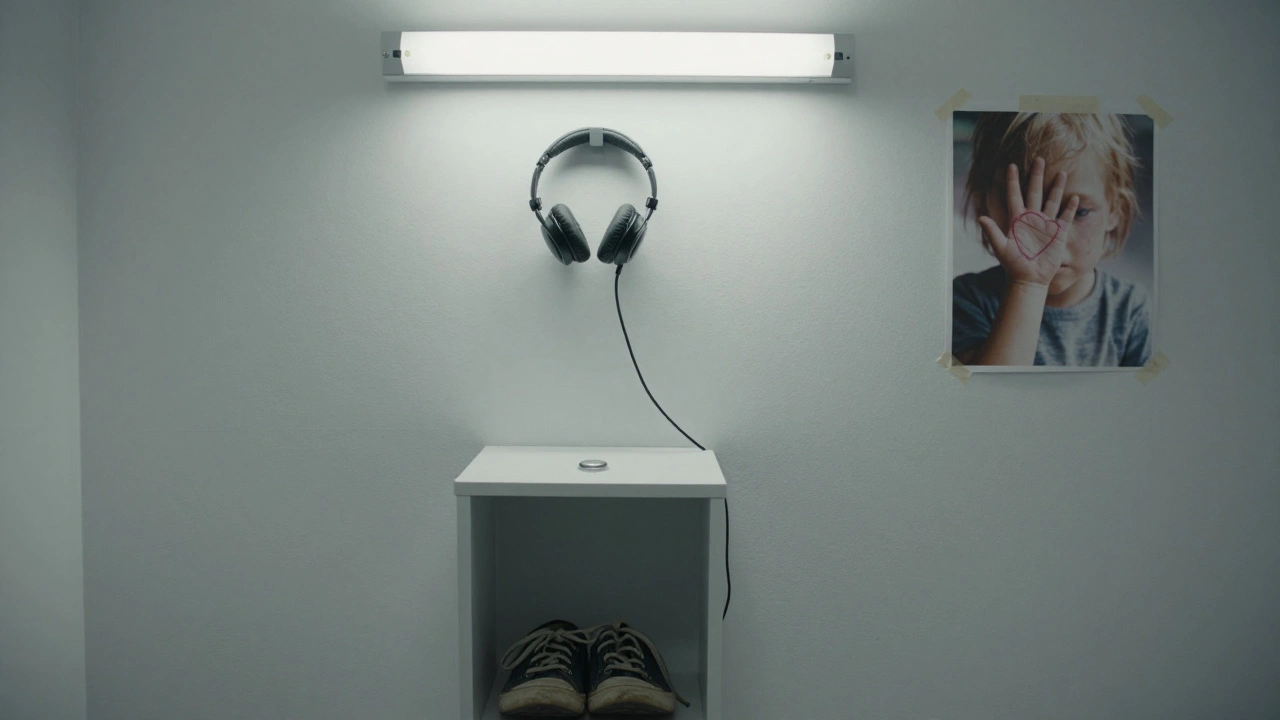
She’s working with hospices in Oregon, Washington, and Montana to install listening stations in waiting rooms. You can sit there, press a button, and hear a stranger’s song about losing a child, a spouse, a pet. No names. No faces. Just truth.
She says: "I didn’t write these songs to fix myself. I wrote them so someone else wouldn’t feel as alone as I did."
Her next album, due in late 2026, will be entirely made of songs written by others. She’ll be the voice, but not the author. The title? We Didn’t Say It Out Loud - But Here It Is.
Why does Alli Starr avoid metaphors in her lyrics?
Alli Starr avoids metaphors because they create distance. When someone says "my heart is a stone," it sounds poetic but abstract. When she says "I still have his toothbrush in the bathroom," it’s specific, real, and undeniable. People don’t connect to general pain - they connect to the exact, messy, ordinary details of loss. Her lyrics work because they’re not trying to sound like art. They’re trying to sound like truth.
Is Alli Starr’s music only for people who’ve experienced loss?
No. While her songs often stem from grief, they resonate with anyone who’s ever felt invisible in their pain. People with chronic illness, anxiety, depression, or even loneliness find themselves in her lyrics because she doesn’t write about loss alone - she writes about the silence that follows. You don’t need to have lost someone to recognize what it feels like to be afraid to speak up.
How does Alli Starr’s songwriting process differ from traditional songwriting?
Traditional songwriting often follows verse-chorus-bridge structures designed for radio play. Alli’s process is emotional, not structural. She starts with a single feeling - like the weight of a hospital chair - and builds the song around how that feeling changes over time. Her songs have four emotional phases, not musical sections. She lets the emotion dictate the form, not the other way around.
Does Alli Starr use therapy or counseling to process her trauma?
Yes, but she doesn’t rely on it. She’s said in interviews that therapy helped her understand her grief, but songwriting helped her live with it. She doesn’t write songs to "get over" her pain. She writes them to make sure her pain doesn’t live alone. For her, music isn’t a cure - it’s company.
What’s the purpose of the "Unspoken Songs" nonprofit?
"Unspoken Songs" gives people who’ve experienced deep loss a way to express what they can’t say out loud - without needing to be a musician. They write a short song, record it on their phone, and submit it. Alli and her team compile them into a growing archive. These aren’t performances. They’re acts of witness. The goal isn’t to make music - it’s to make sure no one has to carry their silence alone.
Final Thought: The Power of Being Heard
Alli Starr’s music doesn’t fix anything. It doesn’t promise healing. It doesn’t offer solutions. It just says: I see you. I’ve been there. You’re not broken. You’re not alone.
That’s more powerful than any chorus. More lasting than any hit. More real than any headline.
Her songs aren’t meant to be played loud. They’re meant to be played quietly - late at night, when the house is still, and you’re not sure if you’re crying because of what happened… or because someone finally understood.