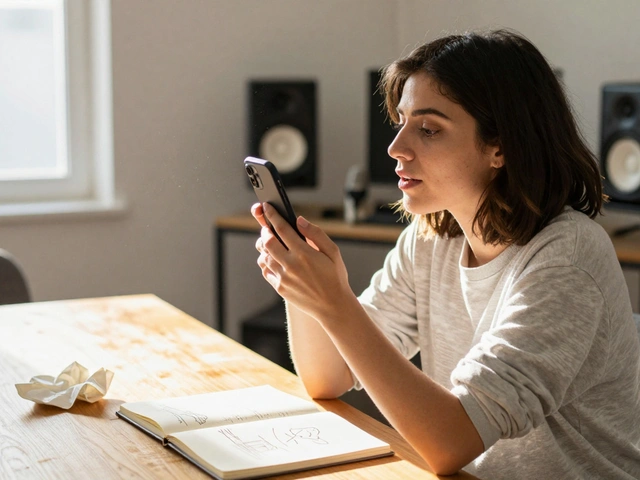
When Alli Starr dropped her last album, Neon Ghosts, no one expected it to hit number one on the indie charts. But it did - and not just because of her voice. Fans started noticing something else: the production. Every track felt like a different world, yet somehow stitched together by the same emotional thread. That’s the magic of cross-genre production, and it’s exactly what’s happening on her next EP.
Who’s Behind the Sound?
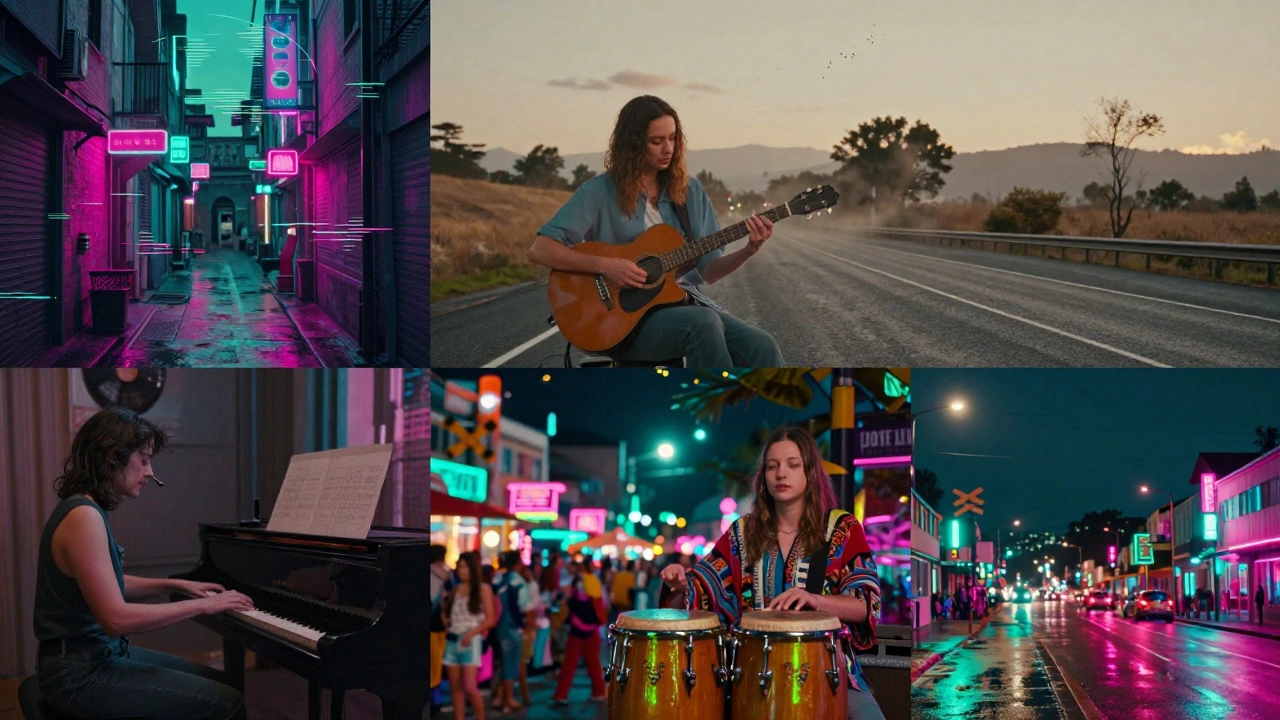
This time, Alli didn’t just bring in one producer. She brought in five - each from a completely different musical world. There’s Marlon Voss, the electronic producer from Berlin who built his name on glitchy ambient beats. He’s the one who turned her acoustic demo of Static Heart into a pulsing, reverb-drenched anthem. Then there’s Keisha Rivera, a Nashville-based country-rock engineer who’s worked with artists like Miranda Lambert and Tyler Childers. She’s the reason the pedal steel guitar on Highway Halo sounds like it’s riding through a dust storm.
Joining them is Junpei Tanaka, a Tokyo-based lo-fi hip-hop beatmaker known for vinyl crackle and sampled jazz horns. He added the muffled piano loop on Midnight Train to Kyoto - a track that blends her whispered vocals with the sound of a train crossing a bridge in the rain. Daniela Cruz, a salsa and Afro-Caribbean percussionist from Medellín, brought in live congas and batá drums that ripple under the chorus of Fire in the Favela. And finally, Ryan Cho, a synthwave producer from Los Angeles who once scored a cult indie game, layered in retro analog synths that make Neon Pulse feel like a late-night drive through 1987.
These aren’t session players. They’re co-authors. Alli gave them each a raw vocal take and a mood - not a genre, not a tempo, just a feeling. "I told them: make me feel like I’m waking up in a place I’ve never been, but it remembers me," she said in a recent studio interview. And that’s what they did.
Why Cross-Genre Production Matters Now
Music fans aren’t listening to one genre anymore. They’re jumping from K-pop to post-punk to gypsy jazz in one playlist. Algorithms don’t care about genre labels. Listeners don’t either. The best producers today aren’t genre specialists - they’re emotional translators.
Think about it: Billie Eilish didn’t become a global star because she made pop. She made feelings with bass drops and whispers. Arca didn’t become a visionary because she made experimental music - she made soundscapes that felt like emotional surgery. Alli’s team is doing the same thing, but with more voices. Each producer brings their own cultural DNA. Voss brings the cold, digital loneliness of Berlin. Rivera brings the ache of rural American highways. Tanaka brings the quiet of Japanese winter nights. Cruz brings the heat of street festivals. Cho brings the nostalgia of early video game soundtracks.
It’s not a collage. It’s a conversation.
The Recording Process: No Rules, Just Trust
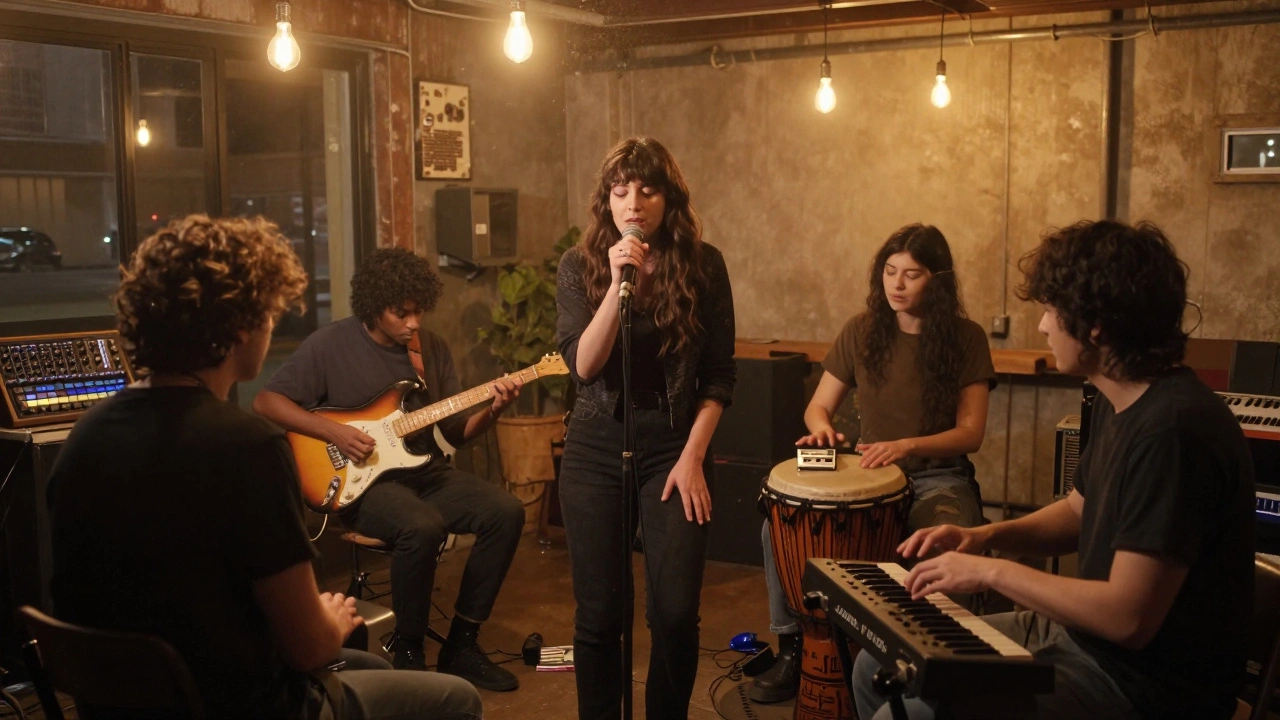
The sessions weren’t done in a studio. They happened in a converted warehouse in Portland - the same one where Alli recorded her first EP. No isolation booths. No click tracks. No Pro Tools presets. Just microphones, amps, and a lot of silence.
Each producer came in with their own gear. Voss brought modular synths and a reel-to-reel tape machine. Rivera brought a 1972 Fender Telecaster and a mic she’s used since 2008. Tanaka brought a dusty cassette player he uses to sample street sounds. Cruz brought hand-carved wooden drums from Colombia. Cho brought a vintage Juno-60 that he says "still has the smell of a 1985 arcade."
They recorded live, often all at once. Alli would sing into one mic while Voss triggered a synth sequence from across the room, Tanaka layered in a rain sample from his phone, and Cruz tapped out a rhythm on a metal barrel. No overdubs. No fixes. If a note cracked, they kept it. If a drum slipped, they leaned into it.
"We didn’t want perfection," Alli said. "We wanted truth. And truth doesn’t always sound clean."
What to Expect on the EP
The EP, titled Places I’ve Never Been, drops March 14, 2026. It’s six tracks - each one shaped by a different producer, each one named after a place that means nothing to the listener but everything to Alli.
- Static Heart - Berlin, Germany (Voss)
- Highway Halo - Nashville, Tennessee (Rivera)
- Midnight Train to Kyoto - Kyoto, Japan (Tanaka)
- Fire in the Favela - Medellín, Colombia (Cruz)
- Neon Pulse - Los Angeles, California (Cho)
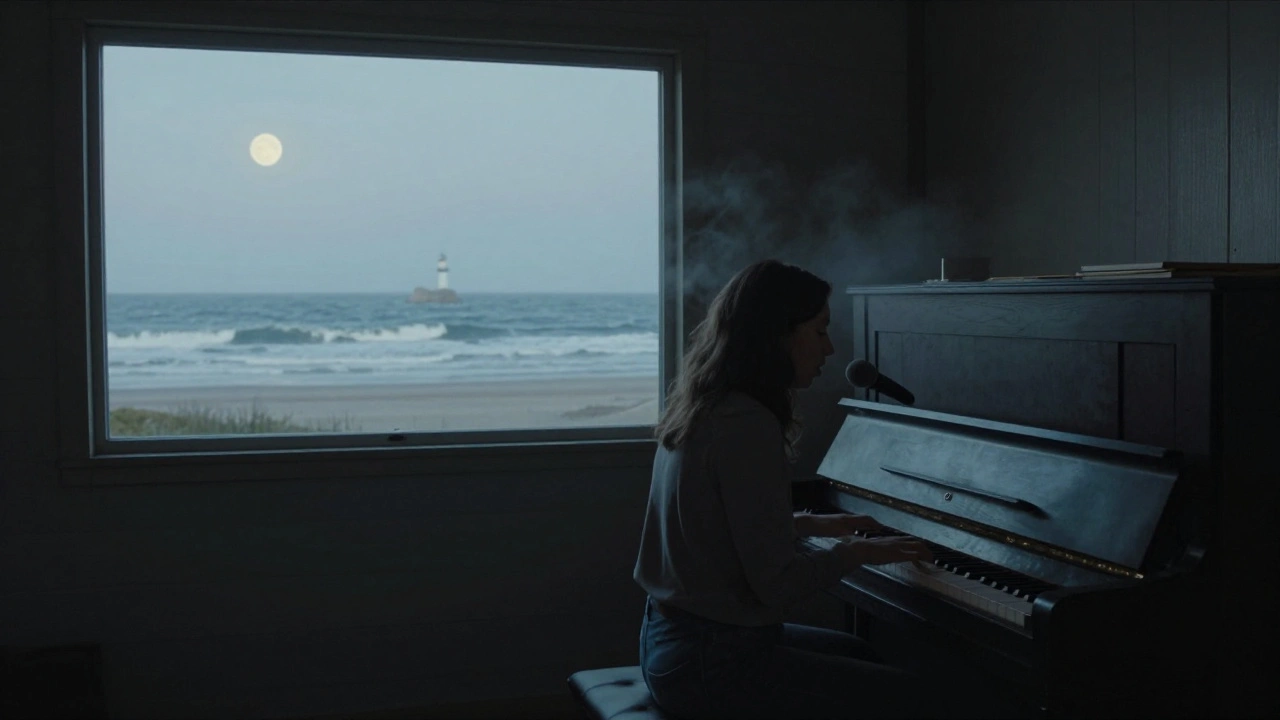
- Empty Room at the Edge of the Sea - Cannon Beach, Oregon (Alli, solo)
The last track is the only one without a producer. Alli recorded it alone - just her voice, a broken upright piano, and the sound of waves crashing outside the window. It’s raw. It’s quiet. And it’s the anchor that holds the whole thing together.
Why This Isn’t Just Another Collab
Collaborations are everywhere. Artists team up. Producers tag in. But most of them feel like checkboxes. This EP doesn’t. It feels like a group of strangers sitting around a fire, telling stories they didn’t know they shared.
Alli didn’t hire these producers because they were popular. She chose them because their sound made her feel seen. Voss’s music helped her through a panic attack in 2022. Rivera’s production reminded her of her grandmother’s porch. Tanaka’s beats were the soundtrack to her first solo trip abroad. Cruz’s rhythms made her dance when she couldn’t walk. Cho’s synths were the first music she ever bought with her own money.
This isn’t a business move. It’s a love letter.
And that’s why it’s going to matter.
Who are the producers working on Alli Starr’s new EP?
The EP features five producers: Marlon Voss (Berlin, electronic/ambient), Keisha Rivera (Nashville, country-rock), Junpei Tanaka (Tokyo, lo-fi hip-hop), Daniela Cruz (Medellín, Afro-Caribbean percussion), and Ryan Cho (Los Angeles, synthwave). Each brought their own cultural and sonic background to shape a unique track.
When is Alli Starr’s new EP coming out?
The EP, titled Places I’ve Never Been, is scheduled for release on March 14, 2026. Pre-orders begin February 25, 2026, through her official website and all major streaming platforms.
What makes this EP different from her previous work?
Unlike her earlier albums, which were primarily produced by one person, this EP is a collaborative mosaic. Each track was shaped by a different producer from a distinct musical tradition. The result is a sonic journey across continents and genres, unified by emotional honesty rather than genre rules.
Is this a genre-blending project or just a collection of songs?
It’s both. Each track stands alone as its own world - but they’re connected by Alli’s voice and the emotional thread running through them. It’s not random blending; it’s intentional storytelling. The producers didn’t just add elements - they reimagined her songs through their own lived experiences.
Where was the EP recorded?
The entire EP was recorded in a converted warehouse in Portland, Oregon - the same space where Alli recorded her first EP. Sessions were live, with no isolation or overdubs. Producers brought their own gear, and recordings happened in real time, often with everyone playing together.