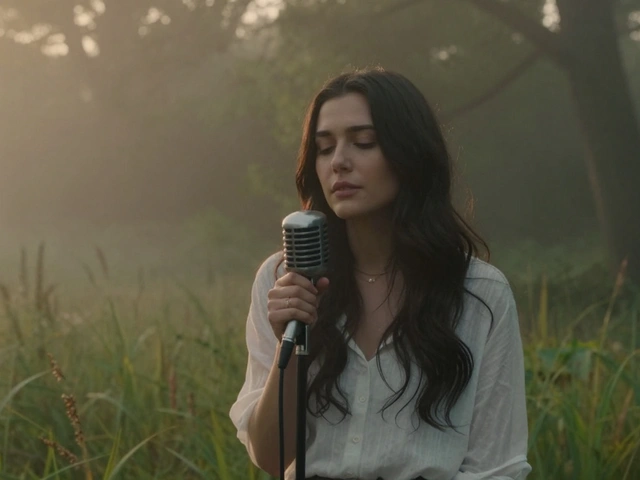
Most people think of a song’s melody as the heart of the story. But if you’ve ever listened to Alli Starr’s music and felt your chest tighten without knowing why, you’ve felt the real power of vocal arrangement. It’s not just about stacking harmonies. It’s about using voice like a brushstroke-each layer adding depth, tension, or release to the emotional arc of the song.
Why Harmony Isn’t Just Background
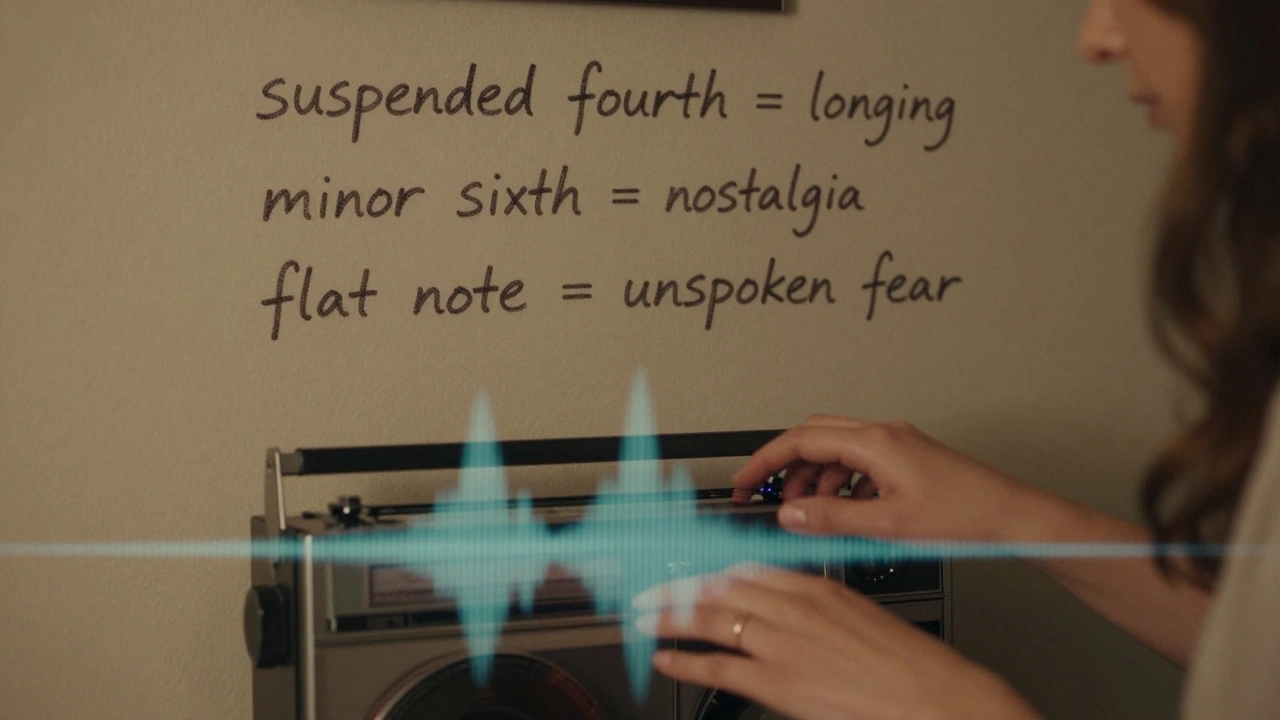
Too often, backing vocals are treated like filler. A quick doubling of the lead, maybe a third above, and call it done. But Alli Starr doesn’t do that. In her 2024 album Weight of Light, every harmony has a job. In the song "Broken Clock," the backing vocals don’t just repeat the melody-they shift from unison to a suspended fourth as the lyrics describe waiting for someone who never comes. That interval? It’s not random. It’s the sound of unresolved longing.
Think of harmony as the emotional subtext. When the lead voice says one thing, the harmonies can say another. In "Tides," the lead sings, "I’m fine," but the harmonies crawl up in minor thirds, whispering doubt. You don’t need lyrics to feel the lie. That’s the craft.
How Alli Starr Builds Her Harmonies
She doesn’t start with chords. She starts with silence.
Alli records the lead vocal first, then sits with it for days. She listens for gaps-the places where the voice feels too alone, or too exposed. Those are the spots she fills. Not with more notes, but with the right notes.
Here’s how she does it:
- She avoids perfect fifths unless she wants to feel open, empty, or lonely.
- She leans into minor sixths for nostalgia, especially in verses.
- She uses parallel sevenths to create unease-like in "Paper Wings," where the harmony slides down with each chorus, mimicking the feeling of slipping away.
- She never harmonizes the entire phrase. She leaves one note bare, so the listener’s ear lingers on it.
In "The Way You Said Goodbye," the bridge starts with a single voice. Then, on the word "never," two harmonies enter-one a major third above, one a perfect fifth below. The result? A chord that’s both warm and shattered. You feel the love and the loss at the same time.
Harmony as Character
Alli treats each vocal layer like a different person in the story.
In "Sister, I’m Sorry," the lead vocal is the younger sister speaking. The harmony above her is a higher, brighter tone-representing the older sister’s memory. The harmony below is deeper, slightly out of tune, like the weight of regret. The song doesn’t have instruments until the third verse. Just voices. And you hear three people, not one.
This isn’t production. It’s casting.
She’s done this with non-singers too. In a session for a spoken-word artist, she layered three of her own voice recordings to mimic the rhythm of a mother humming while rocking a child. No melody. Just breath, pitch, and timing. The result? A lullaby without notes.
What Most Songwriters Get Wrong
Too many try to make harmonies "pretty." They aim for smoothness, for polish. But Alli’s harmonies are often rough. Slightly sharp. Slightly late. Sometimes they breathe in before they sing.
That’s the secret: imperfection carries truth.
A perfectly tuned harmony feels artificial. A harmony that cracks on a high note? That’s human. In "Frayed," the final harmony on the word "love" is sung a half-step flat. It’s not a mistake. It’s the point. The song is about love that didn’t hold. The flat note doesn’t resolve. It just hangs.
Also, most writers add harmonies too early. Alli waits. She lets the lead vocal live alone for at least one full pass. If the emotion doesn’t need help, she leaves it bare. Too many songs drown in layers when they only needed one honest note.
The Tools She Uses (And Doesn’t Use)
She doesn’t use Auto-Tune. Not even for pitch correction. She’ll re-sing a line ten times if she has to.
She records all harmonies in one take. No overdubs. No comping. She believes that the slight timing variations between voices-how one singer leans into the beat, another pulls back-create the pulse of emotion.
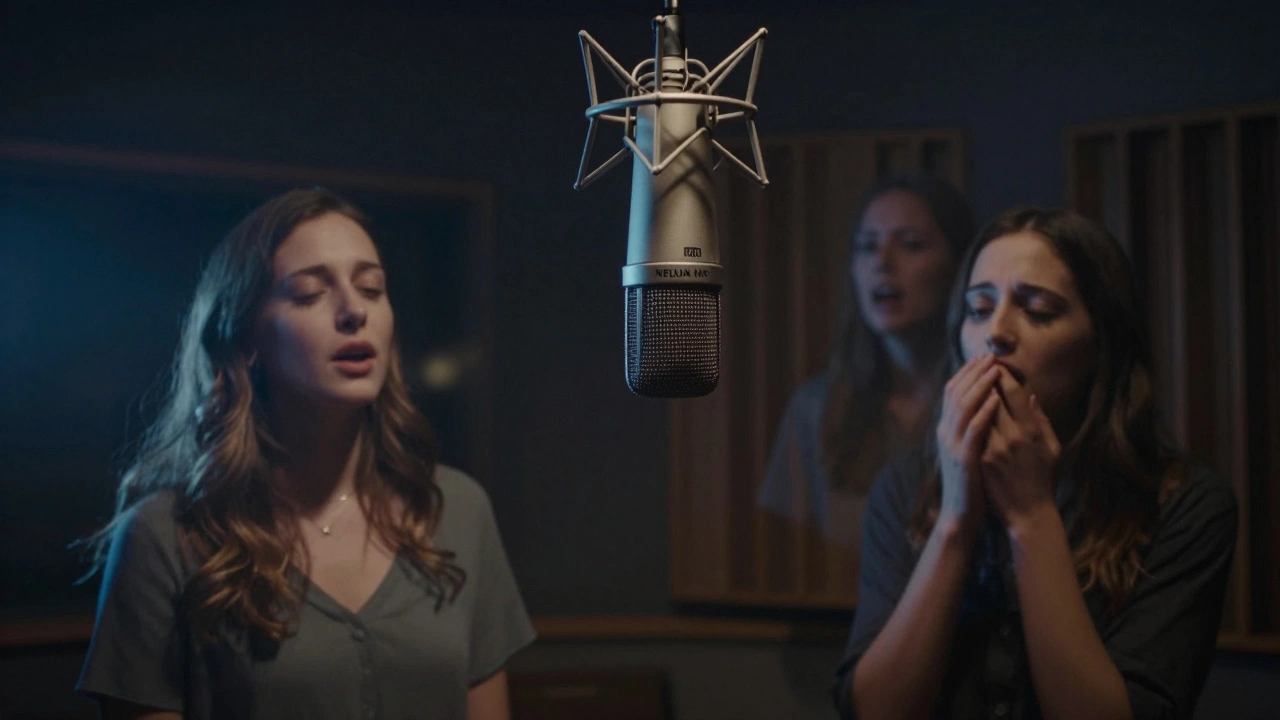
She uses a single Neumann TLM 103 mic for all vocals. Same mic, same room, same distance. That way, the harmonies feel like they’re in the same body, even if they’re singing different lines.
She doesn’t EQ them heavily. She doesn’t compress them into submission. She lets the natural resonance of each voice sit where it wants. Sometimes, a harmony is slightly muffled. That’s fine. It means it’s the memory, not the present.

How to Start Thinking Like Alli Starr
If you’re writing a song and want your harmonies to tell a story, try this:
- Write the lyrics as if they’re a monologue. Who’s speaking? Who’s listening? Who’s hiding?
- Record the lead vocal. Then listen without thinking about harmony. Just feel the emotion.
- Ask: What’s missing? What’s too loud? What’s being whispered?
- Try adding one harmony note. Not a chord. One note. Does it deepen the feeling? Or distract from it?
- Leave space. Sometimes silence between harmonies is the most powerful layer.
Don’t think about intervals. Think about relationships. Is the harmony a friend? A ghost? A mirror? A lie?
Final Thought: Harmony Is the Unspoken
Words can say "I miss you." But a harmony that hangs a half-step off-key? That says "I miss you, and I’m too scared to say it out loud."
Alli Starr doesn’t write songs to be heard. She writes them to be felt. And she knows that the most honest parts of a story aren’t always spoken. Sometimes, they’re sung in thirds.
What makes vocal arrangement different from harmony?
Harmony refers to the specific notes sung together. Vocal arrangement is the intentional placement, timing, and layering of those harmonies to serve the emotional story of the song. It’s not just what notes you choose-it’s when, how, and why you use them.
Can vocal arrangement work in genres besides indie or folk?
Absolutely. Alli Starr’s approach isn’t genre-specific-it’s emotional. In pop, harmonies can build tension before a chorus. In hip-hop, layered ad-libs can create a sense of inner dialogue. In electronic music, harmonies can act as rhythmic textures. The technique changes, but the storytelling goal stays the same.
Do you need to be a trained singer to create emotional harmonies?
No. Alli has worked with people who can’t read music but have perfect pitch or emotional timing. What matters is listening-not technique. A harmony that feels true is more powerful than one that’s technically perfect.
How many vocal layers is too many?
There’s no number. But Alli’s rule: if you can’t name the emotional role of each layer, it’s too many. One layer might be memory. Another might be fear. A third might be hope. If they’re all just "background," you’ve lost the story.
What’s the most common mistake in vocal arrangement?
Trying to make it sound "full" instead of honest. Most people add harmonies to fill space, not to deepen meaning. The result? A song that sounds busy, not emotional. The best arrangements often have fewer voices-but every one matters.