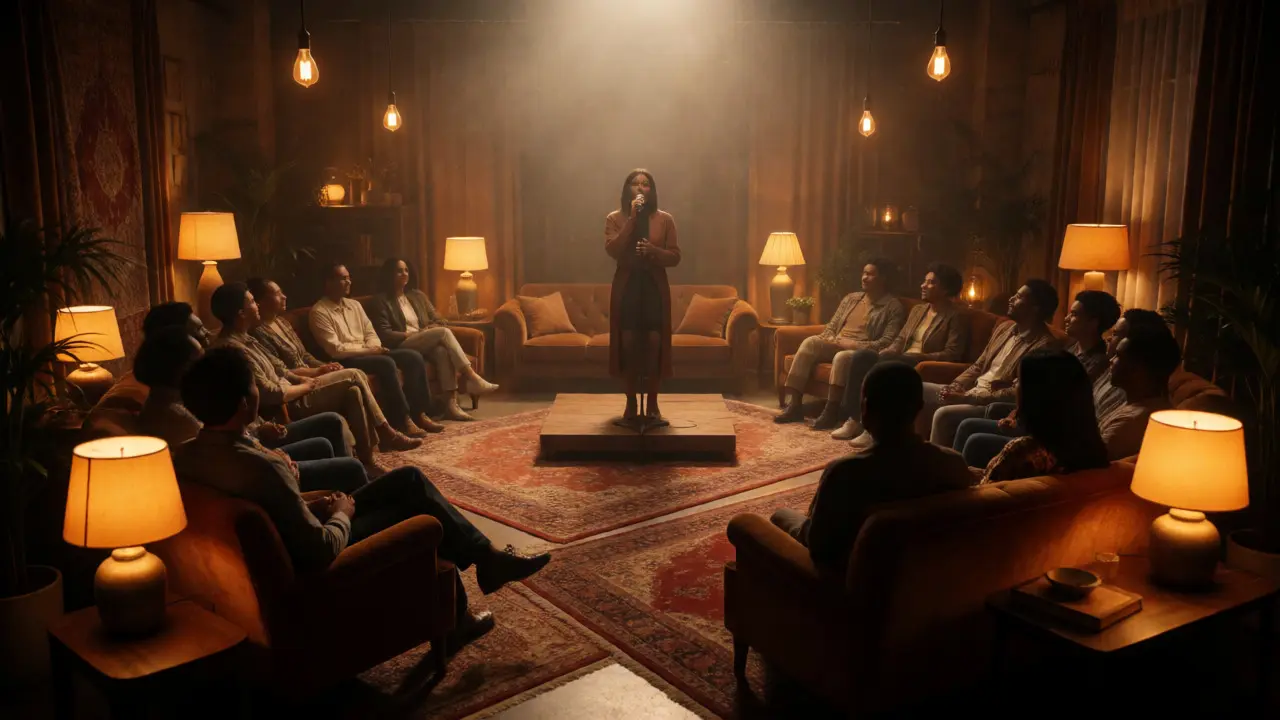
You walk into a space that doesn’t feel like a club. There are no sticky floors, no blinding strobe lights, and no barrier between you and the performer. Instead, there are plush rugs, warm lamps, and seats arranged in a tight circle. This is the Alli Starr experience, a deliberate shift from spectacle to connection. For many fans, this isn't just a concert; it's a conversation. But how do you engineer that level of intimacy without losing the energy of a live show? It comes down to specific choices in lighting, sound, and spatial arrangement that prioritize presence over production.
The Psychology of Proximity
Most large-scale concerts rely on distance to create awe. You look up at a giant screen or a distant stage, feeling small but excited. Alli Starr flips this script. By reducing the physical gap between artist and audience, she triggers a different psychological response. When someone is within arm's reach, eye contact becomes possible. A breath before a note becomes audible. This proximity forces both the performer and the listener to be present. If you drop your phone to check Instagram, you miss the subtle facial expression that contextualizes the lyric. The risk of missing out (FOMO) here isn't about missing a big pyrotechnic moment; it's about missing a human interaction.
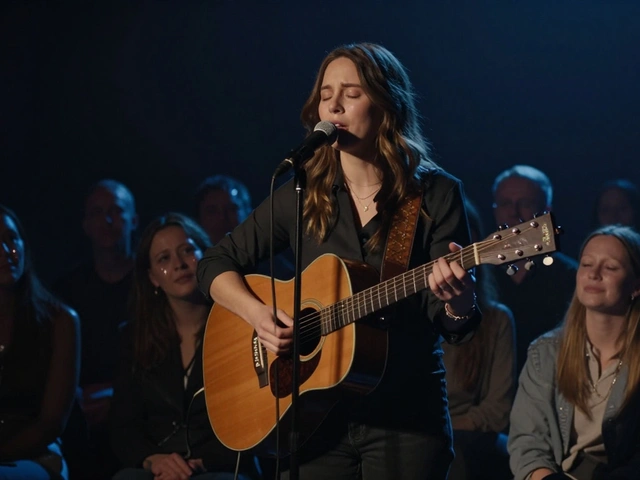
This approach requires a rethinking of traditional stage etiquette. In a "living room" setup, the performer cannot hide behind choreography or auto-tune. Every vocal crack or emotional hesitation is exposed. For an R&B artist known for vocal precision and emotional depth, this vulnerability is the product. It transforms the song from a recorded artifact into a shared, ephemeral event. You aren't just hearing her sing; you're witnessing the effort and emotion required to deliver the line right then and there.
Lighting as a Warmth Mechanism
Standard concert lighting is designed for visibility and drama. It cuts through smoke and hits the back row. Intimate stagecraft does the opposite. It uses light to create boundaries and warmth. Think of the difference between a hospital exam room and a cozy den. One is harsh and clinical; the other invites relaxation. Alli Starr’s teams often utilize practical lights-lamps, candles, or low-hanging bulbs-that serve as set dressing rather than technical fixtures. These sources emit a warmer color temperature, typically around 2700K to 3000K, which mimics sunset or candlelight.
This choice isn't just aesthetic; it affects physiology. Cooler, blue-heavy light can keep audiences alert and agitated, suitable for high-energy pop sets. Warmer tones lower cortisol levels and encourage stillness. When the audience is physically relaxed, they listen more deeply. Furthermore, dimming the house lights creates a sense of privacy. Even if you are sitting next to ten strangers, the darkness makes the experience feel personal, as if the song is being performed just for you.
Acoustic Transparency Over Volume
Loudness is often mistaken for power. In massive arenas, volume compensates for distance. In a living room setting, volume is the enemy. High decibel levels flatten dynamics, making soft passages hard to hear and loud passages painful. The goal here is acoustic transparency-the ability to hear every nuance of the instrument and voice without distortion. This usually means using smaller, high-fidelity speakers placed closer to the listeners, rather than a wall of subwoofers.
Consider the instrumentation. A full drum kit might overwhelm a small space. Often, these performances feature stripped-back arrangements: a Rhodes piano, a simple kick drum, or even just vocals and bass. This reduction allows the natural resonance of the room to play a role. If the venue has good wooden floors or curtains, those surfaces absorb harsh reflections and enhance warmth. The sound engineer’s job shifts from pushing air to balancing frequencies so that the human voice sits clearly in the mix without competing with instruments.

Spatial Arrangement and Sightlines
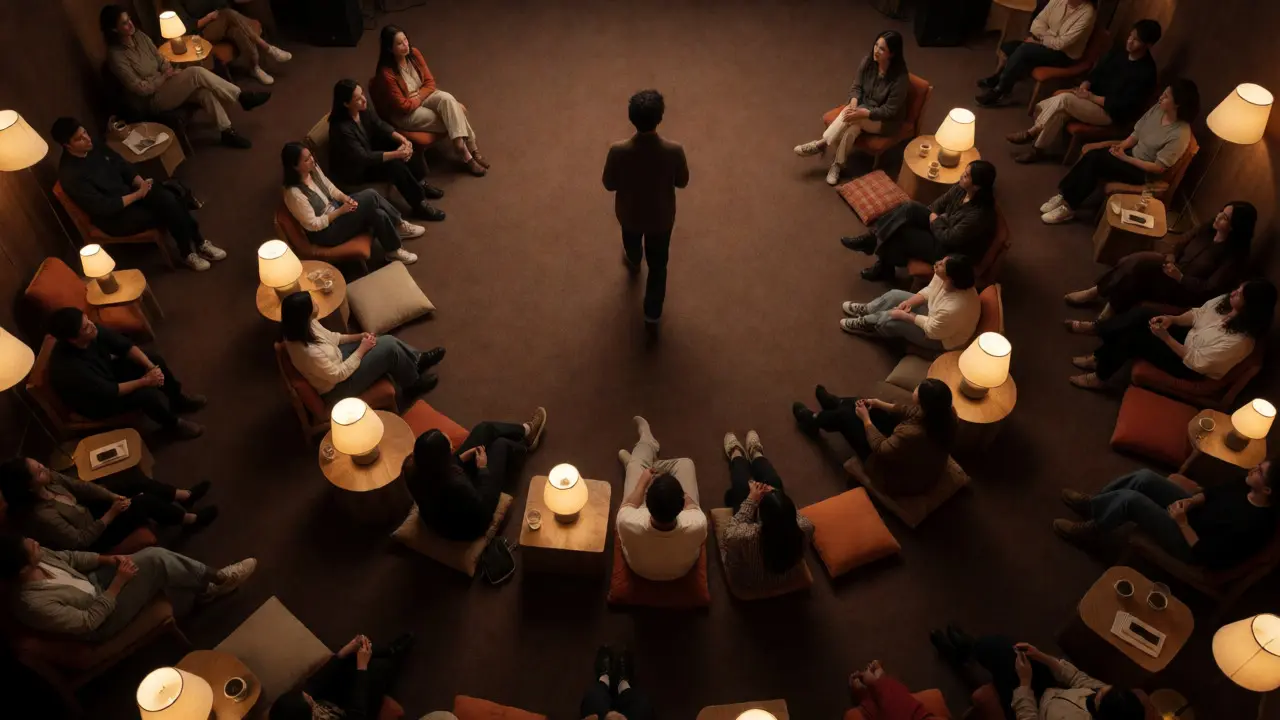
Traditional stages have a "fourth wall." The performer faces forward, and the audience watches from the front. Living room concerts break this fourth wall by arranging seating in semi-circles or clusters. This ensures that no one is stuck in a bad sightline where they only see the back of someone’s head. More importantly, it allows the artist to scan the entire room. They can make eye contact with people on the left, center, and right, creating a rotating focus that keeps everyone engaged.
| Element | Traditional Arena Show | Intimate 'Living Room' Set |
|---|---|---|
| Distance | 50-100+ feet | Under 10 feet |
| Lighting Color Temp | 5000K+ (Cool/White) | 2700K-3000K (Warm) |
| Sound Focus | Volume and Bass Impact | Clarity and Dynamic Range |
| Audience Role | Passive Observer | Active Participant |
| Performer Interaction | Scripted Banter | Improvised Conversation |
This layout also changes how the artist moves. They don't need to run across a 40-foot stage. Instead, they might step off a low platform onto the rug, walking among the seats. This movement breaks the hierarchy of "star" versus "fan." It signals that the performer is comfortable, vulnerable, and accessible. It turns the concert into a social gathering rather than a transactional viewing.
Curating the Environment
Every object in the space contributes to the narrative. Why are there plants? Why is the sofa positioned at that angle? These details signal intentionality. A cluttered stage feels chaotic; a curated one feels safe. For Alli Starr, whose music often explores themes of heartbreak, self-discovery, and resilience, the environment acts as a visual extension of the lyrics. Soft textures invite touch and comfort, reinforcing the emotional safety needed to engage with heavy lyrical content.
Venue selection is critical here. Not every club works for this format. Spaces with high ceilings and concrete walls tend to echo, ruining the intimacy. Ideal venues are smaller theaters, art galleries, or converted lofts with carpeting and drapery. The architecture itself must support the vibe. If the room feels cold or industrial, the artist has to work twice as hard to warm it up. Conversely, a naturally cozy space amplifies the effect, allowing the music to land with greater impact.
The Artist’s Burden of Presence
While the audience enjoys the closeness, it places unique demands on the performer. There is nowhere to hide. Technical glitches, forgotten lyrics, or vocal fatigue are immediately visible. Artists must maintain high levels of emotional stamina. Unlike a stadium show where adrenaline carries you through, an intimate set requires sustained emotional availability. You have to connect with individuals, not just a mass crowd. This can be exhausting but also incredibly rewarding. The feedback loop is immediate. If a joke lands, you hear laughter directly. If a song moves someone, you see tears in real-time.
This format also encourages storytelling between songs. Because the audience is close, anecdotes feel more meaningful. Explaining the inspiration behind a track becomes a shared secret rather than a press release snippet. This builds loyalty and deepens the fan relationship beyond the music itself. It transforms casual listeners into advocates who feel personally connected to the artist’s journey.
Frequently Asked Questions
Why choose a living room style concert over a standard club show?
Living room concerts prioritize emotional connection and acoustic clarity over volume and spectacle. They allow for direct eye contact, nuanced vocal delivery, and a relaxed atmosphere that encourages deeper listening and engagement with the artist.
What kind of lighting is best for intimate performances?
Warm, low-intensity lighting is ideal. Using practical lights like lamps and candles with a color temperature between 2700K and 3000K creates a cozy, inviting atmosphere that reduces audience anxiety and enhances emotional receptivity.
How does venue size affect the sound in intimate shows?
Smaller venues require less amplification, allowing for greater dynamic range and detail. Hard surfaces like concrete should be avoided in favor of spaces with carpets, curtains, or wood, which absorb echoes and provide a warmer, more natural acoustic profile.
Can any artist perform in an intimate setting?
Artists with strong vocal control and storytelling abilities thrive in intimate settings. Those who rely heavily on production tricks or large-scale choreography may struggle, as the format exposes technical imperfections and demands authentic presence.
What is the role of audience seating in these concerts?
Seating is typically arranged in semi-circles or clusters to eliminate bad sightlines and foster community. This layout allows the artist to interact with all parts of the room, breaking the traditional 'us vs. them' dynamic of stage and audience.