songwriting workflow isn't a set of rigid rules; it's a flexible system that adapts to the mood of the piece. Some days a chord progression feels like an invitation, and other days a single phrase in a journal feels like the heart of a song. If you force yourself into one camp, you're essentially cutting your creative options in half.
Quick Takeaways for Your Next Session
- Starting with melody often leads to more intuitive, emotional phrasing.
- Starting with lyrics ensures the narrative is tight and the message is clear.
- The most successful writers, like Alli Starr, switch between these methods based on the project's needs.
- The "middle ground" approach-starting with a groove or a chord-often bridges the gap.
The Melody-First Approach: Leading with Emotion
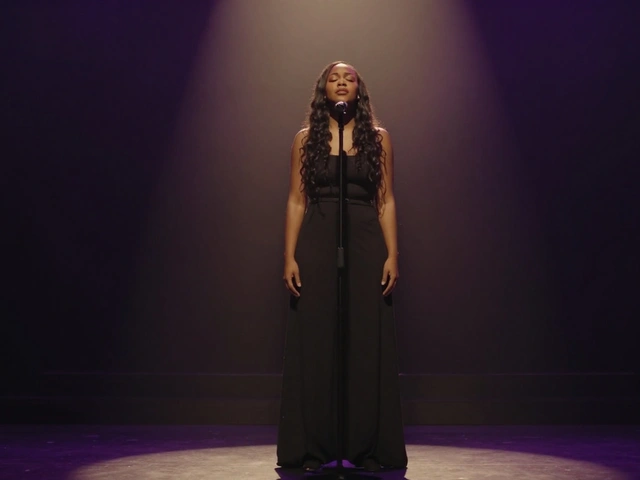
When you start with the music, you're tapping into the visceral side of creativity. Melody is a sequence of musical notes that are perceived as a single entity. By focusing on the melody first, you allow the music to dictate the emotional weight of the lyrics. Have you ever noticed how a soaring, melancholic tune almost demands words about longing or loss? That's the melody guiding the pen.
This method is a favorite for artists who want a "radio-ready" feel. When you nail the hook first, you've already solved the hardest part of the song. The challenge here is avoiding "filler lyrics." It's easy to write words that fit the rhythm but don't actually say anything. To avoid this, try the "mumble track" technique. Record yourself singing nonsense syllables over your melody to find the natural cadence of the phrase, then go back and replace those sounds with meaningful words that fit the exact same rhythmic pocket.
The Lyrics-First Approach: Building the Narrative
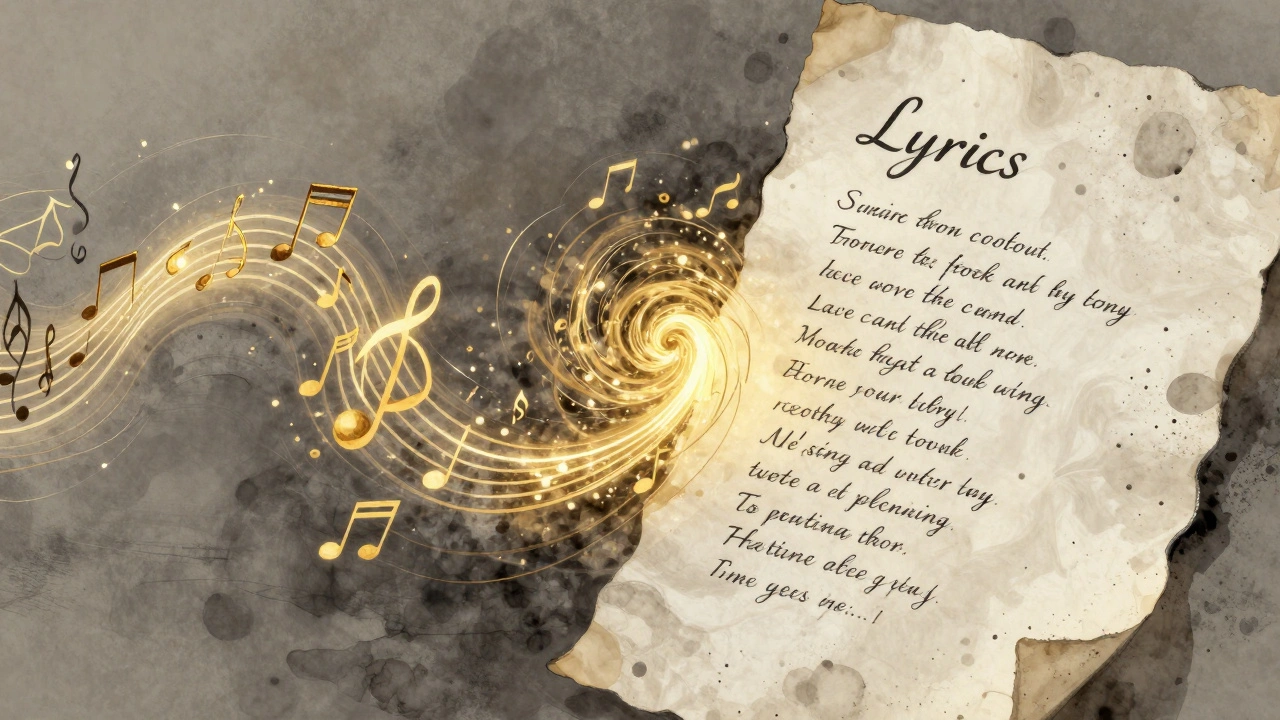
Starting with the words is like writing a short story that happens to be sung. This is the primary tool for songwriters who prioritize storytelling or social commentary. When Lyrics-the words of a song, excluding the musical accompaniment-come first, the structure of the poem determines the timing. You aren't fighting a pre-existing melody; instead, you're creating a melody that serves the story.
The risk with this approach is that the resulting music can feel clunky if the lyrics are too wordy. If you have a line with fifteen syllables and a corresponding line with only four, your melody might end up sounding like a conversation rather than a song. A pro tip here is to treat your lyrics like a sculpture. Once the draft is done, carve away unnecessary adjectives. If a word doesn't add a specific image or emotion, cut it. This gives the music room to breathe and prevents the singer from sounding rushed.
The Alli Starr Philosophy: The Power of Flexibility
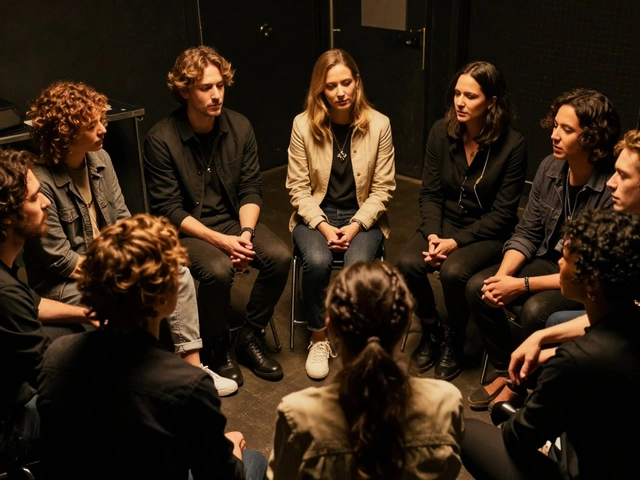
Alli Starr doesn't believe in picking a side. Instead, she treats songwriting as a dialogue between the music and the message. This flexible workflow means that if a project requires a high-energy anthem, she might lean into the Rhythm first. If it's a deeply personal ballad, the lyrics might take the lead. This adaptability prevents creative burnout because you aren't trying to force a square peg into a round hole.
This approach relies on a concept called "iterative layering." Instead of finishing the lyrics and then adding the music (or vice versa), you move in small circles. You write a line, hum a melody for it, tweak the line to fit the melody, and then use that melody to inspire the next line. This creates a symbiotic relationship where the music and words evolve together, resulting in a more cohesive final product.
| Feature | Melody First | Lyrics First | Flexible/Hybrid |
|---|---|---|---|
| Primary Strength | Emotional impact & hooks | Narrative depth & clarity | Versatility & balance |
| Main Risk | Vague or filler lyrics | Clunky rhythmic phrasing | Takes longer to finalize |
| Best For... | Pop, Dance, EDM | Folk, Rap, Musical Theater | Singer-Songwriter, Jazz |
Bridging the Gap with Chord Progressions
Sometimes, neither melody nor lyrics are the spark. Instead, it's the Chord Progression-a series of chords played in a sequence to create the harmonic foundation of a song. Starting with a sequence of chords provides a "map" for both the melody and the lyrics to follow. It sets the mood-a minor chord progression feels dark or tense, while a major one feels bright and hopeful.
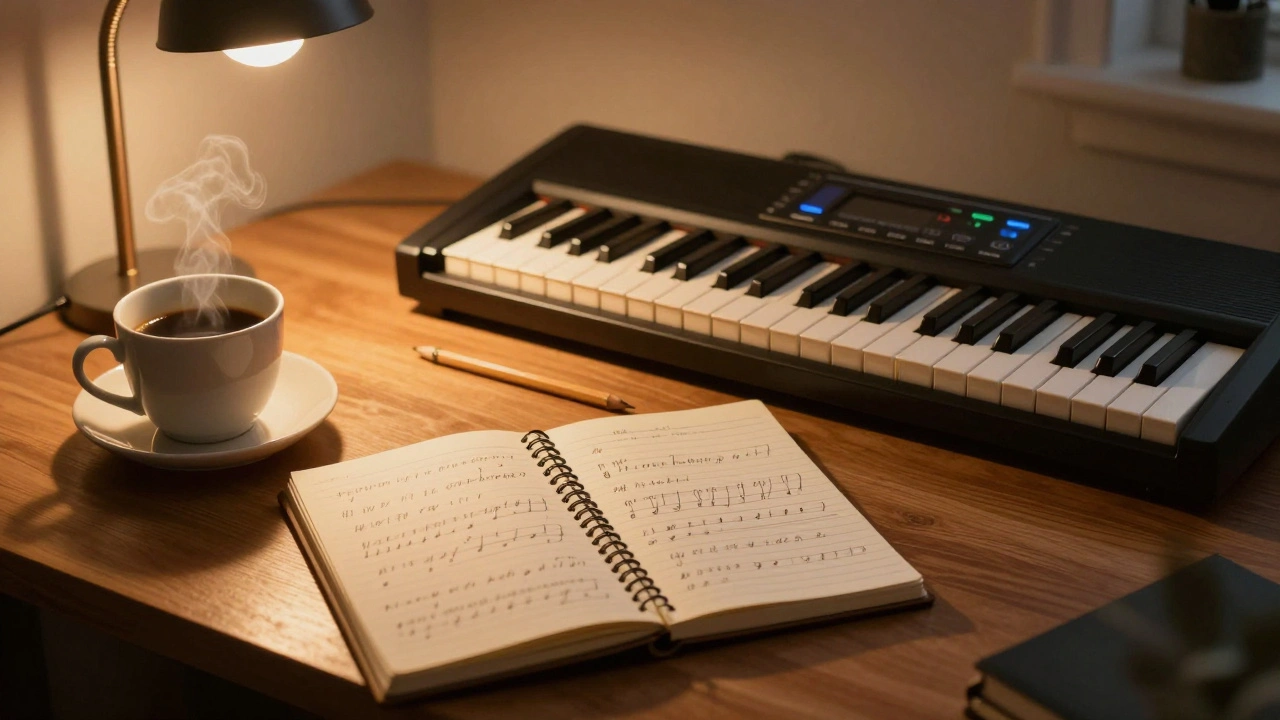
When you have your chords, try a "top-lining" session. This is where you simply loop the chords and improvise vocal melodies over the top without worrying about words. Once you find a melody that sticks, you can analyze the emotion of that melody and write lyrics to match. This is how a huge percentage of modern hits are written in professional studios today. It removes the pressure of "writing a song" and turns it into "exploring a sound."

Common Pitfalls and How to Dodge Them
One of the biggest traps writers fall into is the "first-idea fallacy." This is the belief that the first melody or lyric that comes to mind is the one that must be used. In reality, your first idea is often the most cliché because it's the one your brain has heard a thousand times in other songs. To get past this, try the "Rule of Three." For every section of your song, come up with three different melodic directions and three different lyrical angles. Only then should you choose the best one.
Another common issue is ignoring Song Structure. Whether you start with a melody or a lyric, you need a framework. Most modern songs follow a Verse-Chorus-Verse-Chorus-Bridge-Chorus pattern. If you start with a great melody but it doesn't fit into a chorus (the part that sums up the song's main idea), you might actually have a great verse. Don't force a verse-style melody into a chorus position just because it's your favorite part of the song; it will kill the momentum of the track.
Expanding Your Toolkit: Exercises for Growth
If you always start with lyrics, force yourself to write three songs this month starting with a random melody. Use a tool like a random chord generator or just play a few notes you've never used before. If you're a melody-first person, try a "blackout poetry" exercise. Take a newspaper page, circle words that jump out at you, and build a lyrical structure before you even touch an instrument.
Try collaborating with someone who has the opposite workflow. If you're a lyricist, find a producer. If you're a composer, find a poet. This friction creates a creative spark that you can't get when you're working alone. You'll find yourself defending your choices and compromising in ways that lead to unexpected, brilliant results.
Which method is faster for writing a song?
Generally, the melody-first approach is faster for creating a "catchy" track because you're prioritizing the hook. However, lyrics-first can be faster for those who already have a story or a specific message they need to get out. The fastest method is usually the one you're most comfortable with, but the hybrid approach often prevents the need for major rewrites later.
What should I do if my lyrics don't fit the melody?
You have two choices: change the words or change the notes. If the emotion of the melody is right, tweak the lyrics by using synonyms or changing the sentence structure to fit the rhythm. If the story is too important to change, adjust the melody by adding pauses or extending certain notes to accommodate the syllables.
Can I start with a rhythm instead of a melody?
Absolutely. Many songwriters start with a drum beat or a bass line. This is common in funk, hip-hop, and dance music. The rhythm establishes the "groove," and the melody and lyrics are then built to enhance that physical feeling.
How do I stop using cliché lyrics when writing melody-first?
Avoid the first rhyme that comes to mind. If you're rhyming "heart" with "apart," stop and find a more specific image. Use sensory details-what does the scene smell like? What is the temperature? Specificity kills clichés.
Is there a 'correct' way to write a hit song?
There is no single correct way. Hits are written using all these methods. Some artists are purely intuitive, while others use a mathematical approach to structure. The only "correct" way is the one that allows you to finish the song and feel proud of the result.