You’ve probably stood in the back of a venue during an Alli Starr show and felt that specific shift in the air. It’s not just loudness; it’s a controlled pressure change. You’re here because you want to know how she pulls off those seamless transitions from chill vibes to full-blown club energy without losing the crowd. This isn’t magic. It’s engineering.
The Myth of the Random Playlist
Most amateur DJs or performers treat a set like a grocery list. They pick songs they like and play them one after another. The result? A disjointed mess where people check their phones because the vibe dropped too hard or spiked too fast. Tempo mapping is the process of arranging songs based on Beats Per Minute (BPM) and musical key to create a smooth, logical progression of energy. When you listen to an Alli Starr setlist, you aren’t hearing random choices. You’re hearing a carefully calculated ascent and descent of human excitement.
Think of your audience’s attention as a battery. If you start at 100% intensity, you burn them out by minute ten. If you stay at 20%, they get bored. The goal is to build a curve that peaks at the right moment-usually around the 75% mark of the set-and then gently guides them down so they leave wanting more, not exhausted.
| Phase | BPM Range | Audience State | Goal |
|---|---|---|---|
| The Warm-Up | 90-100 BPM | Arriving, chatting, low focus | Establish groove without demanding attention |
| The Build | 100-115 BPM | Talking less, moving more | Create anticipation through rhythmic complexity |
| The Peak | 115-130 BPM | Dancing, shouting, high energy | Maximum emotional release and connection |
| The Comedown | 80-95 BPM | Catching breath, intimate moments | Leave a lasting impression before exit |
Why Alli Starr’s Approach Works for R&B
R&B is tricky. Unlike house or techno, which rely heavily on a steady four-on-the-floor beat, R&B lives in syncopation and vocal emotion. You can’t just mash two tracks together if the vocals clash. Harmonic Mixing is critical here. It involves matching the musical keys of songs so they sound pleasing when blended. Alli doesn’t just match BPMs; she matches moods. She knows that transitioning from a heartbreak ballad to a hype track needs a bridge-a song that has both the lyrical weight and the rhythmic drive to carry the listener across.
Consider her use of "double-time" switches. She’ll take a slow jam, maybe something with a 60 BPM feel, and overlay a drum pattern that pushes the perceived tempo to 120. This tricks the brain into feeling urgency without changing the fundamental soul of the track. It’s a psychological hack. You feel like you need to move, but you’re still emotionally connected to the lyrics. That balance is what keeps a room engaged for two hours straight.

Reading the Room: The Feedback Loop
No map survives contact with reality. You can plan every transition, but if the bar is empty or the AC is broken, you have to adapt. Experienced performers watch three things: foot movement, eye contact, and drink orders. If people are tapping feet but not looking up, you’re in the "Build" phase correctly. If they’re dancing wildly but ignoring the stage, you might be too far in the "Peak" zone without giving them a hook to latch onto.
Alli often uses call-and-response sections not just for fun, but as a diagnostic tool. If the crowd responds loudly, she stays in that energy lane. If the response is weak, she pivots. Maybe she drops a classic throwback that everyone knows the words to. Nostalgia is a cheat code in Live Performance. It instantly unifies a diverse crowd because shared memory creates instant rapport.

Technical Execution: Transitions That Don’t Clutter
In R&B, space is everything. If you overlap vocals poorly, it sounds like noise. Alli’s transitions are often long-sometimes 16 bars or more. Why? Because it gives the DJ time to EQ out the bass of the outgoing track while bringing in the mid-range of the incoming one. This prevents the "muddy" sound that ruins the vibe.
- EQ Sweeps: Cutting low frequencies gradually rather than abruptly.
- Acapella Drops: Using isolated vocals over new instrumentals to surprise the ear.
- Breakdowns: Stripping a track down to drums and claps to reset the crowd’s attention span.
These techniques ensure that the energy curve remains smooth. There are no jarring stops. It feels like one continuous song, even though you heard twenty different artists. That continuity is what makes people lose track of time. And when they lose track of time, they buy another round.
Building Your Own Energy Curve
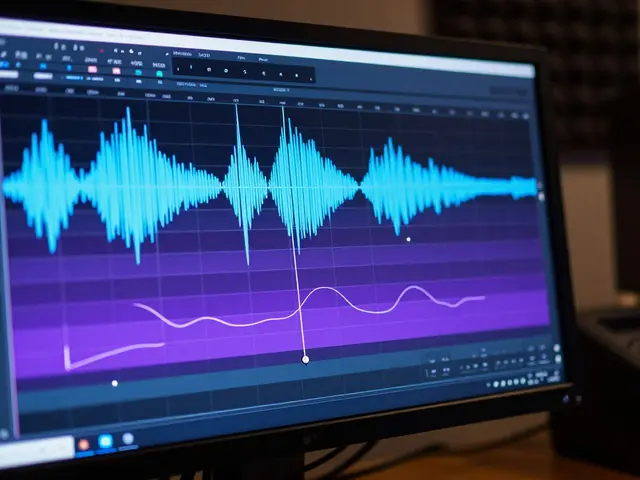
If you’re trying to replicate this style, don’t start with the hits. Start with the middle. Pick three songs that flow perfectly together. Test them. Then add one before and one after. You’re building a chain link by link. Use software like Rekordbox or Serato to visualize the BPM graphs. Look for flat lines (steady energy) versus spikes (drops). Your job is to connect the spikes with gentle slopes.
Also, consider the venue size. A small club allows for more intimate, lower-energy sets because the proximity creates intensity. A large festival stage requires higher BPMs and bigger drops to reach the back rows. Adjust your curve accordingly. What works for a Portland basement show won’t necessarily work for a stadium tour.
What is the ideal BPM range for an R&B peak hour?
For most modern R&B sets, the peak energy typically occurs between 115 and 125 BPM. This range is fast enough to encourage dancing but slow enough to allow for complex vocal rhythms and syncopated beats characteristic of the genre. Going above 130 BPM often shifts the vibe toward hip-hop or dance-pop, which may alienate purists unless carefully curated.
How do I handle a dead crowd during my set?
If the crowd seems disengaged, avoid increasing volume or tempo immediately, as this can feel aggressive. Instead, drop the energy slightly with a recognizable classic or a track with strong melodic hooks. Re-establish a groove first. Once you see heads nodding or feet tapping, gradually increase the tempo again. Nostalgia is often the fastest way to re-engage a distracted audience.
Is harmonic mixing really necessary for R&B?
Yes, especially for vocal-heavy genres like R&B. While BPM matching ensures rhythmic consistency, harmonic mixing ensures tonal compatibility. Clashing keys can create dissonance that subconsciously unsettles listeners, breaking the immersive experience. Tools like Camelot Wheel notation help DJs select compatible keys, ensuring smooth blends that maintain the emotional integrity of the songs.
How long should each phase of the energy curve last?
In a standard 90-minute set, the warm-up might last 15-20 minutes, the build 20-25 minutes, the peak 20-30 minutes, and the comedown 15-20 minutes. However, these are flexible guidelines. The key is to read the room. If the crowd reaches peak energy early, you may extend the peak phase and shorten the build. Flexibility is more important than rigid timing.
Can I apply this tempo mapping strategy to non-DJ performances?
Absolutely. Bands and solo singers can use similar principles by structuring their setlists around dynamic contrast. Start with softer, slower songs to draw listeners in, build momentum with mid-tempo tracks that feature stronger rhythms, hit the climax with high-energy anthems, and end with resonant, memorable pieces. The concept of managing audience attention through pacing applies to any live performance format.