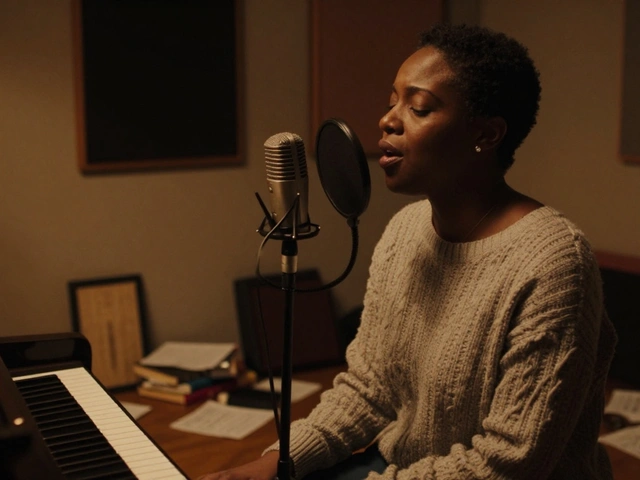
You’ve probably heard that name whispered in the back of studios or seen it scrolling past on credit lists for some of the biggest pop hits of the last few years. Alli Starr isn’t just another session vocalist; she’s a chameleon who can slide from R&B runs to country twang without breaking a sweat. But how does one singer manage to sound authentic across such wildly different styles? It’s not magic-it’s mechanics.
If you’re a musician trying to break into the backup circuit, you know the struggle. You spend months perfecting your gospel chops, only to get a gig requiring tight, dry harmonies for a synth-pop act. Or worse, you’re booked for a rock tour and realize you need to belt like a frontwoman but blend like a ghost. Alli Starr’s career offers a masterclass in this exact challenge. She didn’t just stumble into versatility; she engineered it. Let’s look at how she does it, so you can steal her playbook.
The Anatomy of Vocal Chameleons
Versatility isn’t about having a "good voice." Plenty of people have great voices that fail miserably when asked to sing outside their comfort zone. True versatility is about control over specific vocal attributes. Think of your voice as an instrument with adjustable knobs. For most singers, those knobs are stuck. For someone like Alli Starr, they’re constantly being tweaked in real-time.
What exactly is she tweaking? It comes down to three main pillars: timbre, articulation, and dynamic range. Timbre is your color. Is it warm and round? Bright and nasal? Dark and smoky? A backup singer working with a folk artist needs a warmer, more breathy timbre than one working with a hyper-pop producer. If you don’t adjust your color, you clash with the lead. You become noise instead of texture.
Then there’s articulation. This is how crisp or lazy you make your consonants. In hip-hop backing vocals, you might want percussive, staccato delivery to match the beat. In a ballad, you soften those edges, letting vowels carry the weight. Alli Starr is known for shifting this instantly. She doesn’t think about it; it’s muscle memory. And finally, dynamics. Can you whisper loud enough to be heard in the mix but quiet enough not to step on the lead? That balance is delicate.
Genre-Specific Techniques in Action
Let’s get concrete. How does this translate to actual gigs? When Alli works in the R&B space, which is arguably her home turf, she leans heavily into melisma-the art of stretching syllables over multiple notes. It’s fluid, emotional, and complex. But switch her to a country project, and those runs disappear. Country demands honesty and directness. Over-singing here sounds fake. So, she strips the ornamentation back, focusing on pitch accuracy and emotional sincerity rather than technical flair.
In pop production, the role changes again. Here, you’re often layering tracks. You aren’t singing a melody; you’re building a chord stack. Your job is to lock in perfectly with the other voices. There’s no room for individual expression if it throws off the tuning. You become part of a machine. Contrast that with live rock performances, where energy matters more than perfection. You might push your voice harder, adding grit and distortion to cut through guitar walls. The technique flips from precision to power.
This isn’t theoretical. Look at the credits. Artists hire her because they know she won’t force her style onto their song. She adapts to the song’s needs. That’s the core difference between a soloist and a pro backup. A soloist imposes themselves; a backup serves the track.

Preparation: The Hidden Work
You might assume versatile singers just wing it. They don’t. The preparation is brutal. Before stepping into a studio or hitting the stage, successful backups do deep-dive research. They listen to the reference tracks until they’re sick of them. They analyze the lead singer’s phrasing. Do they rush the beat? Drag behind it? Where do they breathe?
For a gig with a diverse setlist, say a festival slot spanning disco to indie rock, you can’t just memorize lyrics. You need to map out the sonic landscape. What instruments are prominent? Is the mix dense or sparse? If the bass is heavy, you stay out of the low-mid frequencies. If the guitars are jangling, you avoid high-end clutter. Alli Starr’s approach involves mental visualization. She hears the final product before she sings a note. She knows exactly where her voice fits in the frequency spectrum.
Also, consider the physical toll. Switching genres mid-set is exhausting. Going from a soft acoustic number to a belting anthem requires rapid physiological adjustments. You have to hydrate differently. You have to rest your voice during transitions. Many singers burn out because they treat every song with the same intensity. Versatile pros pace themselves. They know when to conserve energy and when to let loose.
Collaboration Dynamics
Technical skill is half the battle. The other half is interpersonal. Working with diverse genres means working with diverse personalities. Producers in electronic music might be tech-obsessed and detached. Rock producers might be chaotic and hands-on. You need to read the room.
Communication is key. If you don’t understand a direction, ask. Don’t guess. A wrong guess wastes time and money. Alli Starr is praised for her ability to take feedback quickly. If a producer says, "Make it darker," she doesn’t argue; she adjusts her placement. She moves her resonance lower. She adds vibrato. She interprets abstract requests into physical actions.
And remember, you’re often invisible. Your ego has to stay in check. You’re supporting the star. Sometimes, that means singing less than you want to. It means leaving space for the lead to shine. It’s a selfless art form. If you’re in it for the spotlight, you’ll struggle. If you’re in it for the craft, you’ll thrive.
Building Your Own Versatility Toolkit
So, how do you build this kind of range? Start by expanding your listening diet. If you only listen to jazz, start studying bluegrass. Listen to how the voices differ. Try to mimic them. Not to copy forever, but to expand your palette. Record yourself doing these imitations. It feels silly, but it rewires your brain.
Next, work with different types of musicians. Play with a DJ. Play with a string quartet. Play with a metal band. Each experience teaches you something new about blending and projection. Learn basic production skills too. Understanding how EQ and compression affect your voice helps you make better choices in the booth. If you know that boosting your mids cuts through a mix, you can sing with more confidence.
Finally, prioritize health. Your instrument is fragile. Rest, hydration, and proper warm-ups are non-negotiable. You can’t be versatile if you’re hoarse. Protect your voice like it’s your paycheck-because it is.
| Genre | Primary Focus | Vocal Technique Adjustment | Common Pitfall |
|---|---|---|---|
| R&B / Soul | Emotional Expression | Melisma, vibrato, dynamic swells | Over-singing simple melodies |
| Pop | Blending & Tuning | Tight harmonies, minimal vibrato | Clashing with lead frequency |
| Country | Narrative Clarity | Direct tone, clear diction | Adding unnecessary runs |
| Rock | Energy & Power | Chest voice, grit, sustained notes | Losing pitch due to volume |
| Electronic/Dance | Rhythm & Texture | Percussive articulation, short phrases | Dragging behind the beat |
Frequently Asked Questions
Do I need formal training to be a versatile backup singer?
Not necessarily, but it helps immensely. Formal training gives you the tools to understand what your body is doing. Without it, you might rely on imitation, which can lead to bad habits and injury. However, many successful backups are self-taught listeners who developed keen ears. The key is understanding vocal health and technique, whether learned formally or informally.
How do I handle switching genres during a live set?
Plan your transitions. Use the instrumental breaks or audience interaction moments to reset your posture and breathing. Physically shake out tension if needed. Mentally visualize the next song’s mood before you start singing. Keep water handy to soothe any strain from sudden shifts in intensity.
What equipment should I carry for diverse gigs?
Beyond your mic (if provided), bring a good pair of closed-back headphones for monitoring. Carry a tuner app, a water bottle, and throat lozenges (non-medicated). Depending on the venue, earplugs with filters can help protect your hearing while maintaining clarity. Always have a backup cable and adapter if you’re using personal monitors.
Is it better to specialize or generalize early in my career?
Specializing gets you hired faster initially because clients know exactly what they’re getting. Generalizing opens more doors long-term but takes longer to establish trust. A hybrid approach works well: market yourself as a specialist in one area (e.g., R&B) but demonstrate versatility in your portfolio. Show clips of you adapting to other styles to prove your range.
How important is networking in the backup singing world?
Critical. Most gigs come from referrals. Being easy to work with, reliable, and prepared makes you memorable. Musicians talk. If you show up late or complain about the setlist, word spreads. Build relationships with engineers, producers, and other musicians. They are your gateway to future opportunities.