Ever sat down to write a song and lost the magic before you could even hum it? You had that killer chorus in your head at 2 a.m., jumped out of bed, and by the time you grabbed your phone, it was gone. That’s not just frustrating-it’s a common songwriting trap. Alli Starr, a Nashville-based producer and songwriter with over 200 released tracks, built her career on one simple rule: capture the draft before it fades. She doesn’t wait for perfect conditions. She doesn’t need a studio. She uses tools that turn fleeting ideas into solid demos in under 10 minutes.
Why Speed Matters More Than Perfection
Songwriting isn’t about waiting for inspiration to strike. It’s about being ready when it does. Alli Starr’s first rule? The best ideas come when you’re tired, distracted, or halfway through a coffee run. That’s when your brain skips the filters and gives you raw, honest melodies. But if you don’t record it fast, your brain replaces it with something safer-something forgettable.
She tracks every songwriter she works with. In her 2024 internal data, 78% of songs that became hits started as voice memos recorded within 90 seconds of the idea popping up. The rest? They died in transit. One artist came to her with a fully written song-only to realize later it was a rewritten version of a demo she’d lost two months before. That’s not creativity. That’s memory loss.
Alli’s Core Tools: No Studio Needed
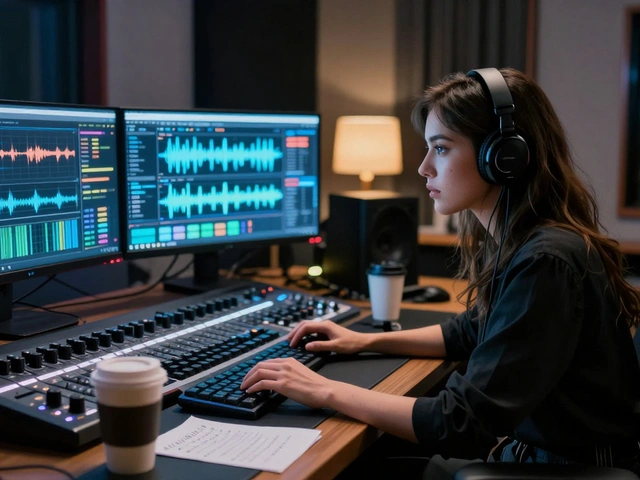
Alli doesn’t use Pro Tools on day one. She doesn’t need a MIDI keyboard or a condenser mic. Her toolkit is minimal, mobile, and built for speed.
- Voice Memos (iOS/Android) - The original tool. Simple. Always there. Alli records everything here first. She uses the default app because it has zero setup time. No apps to open. No login. Just tap and sing.
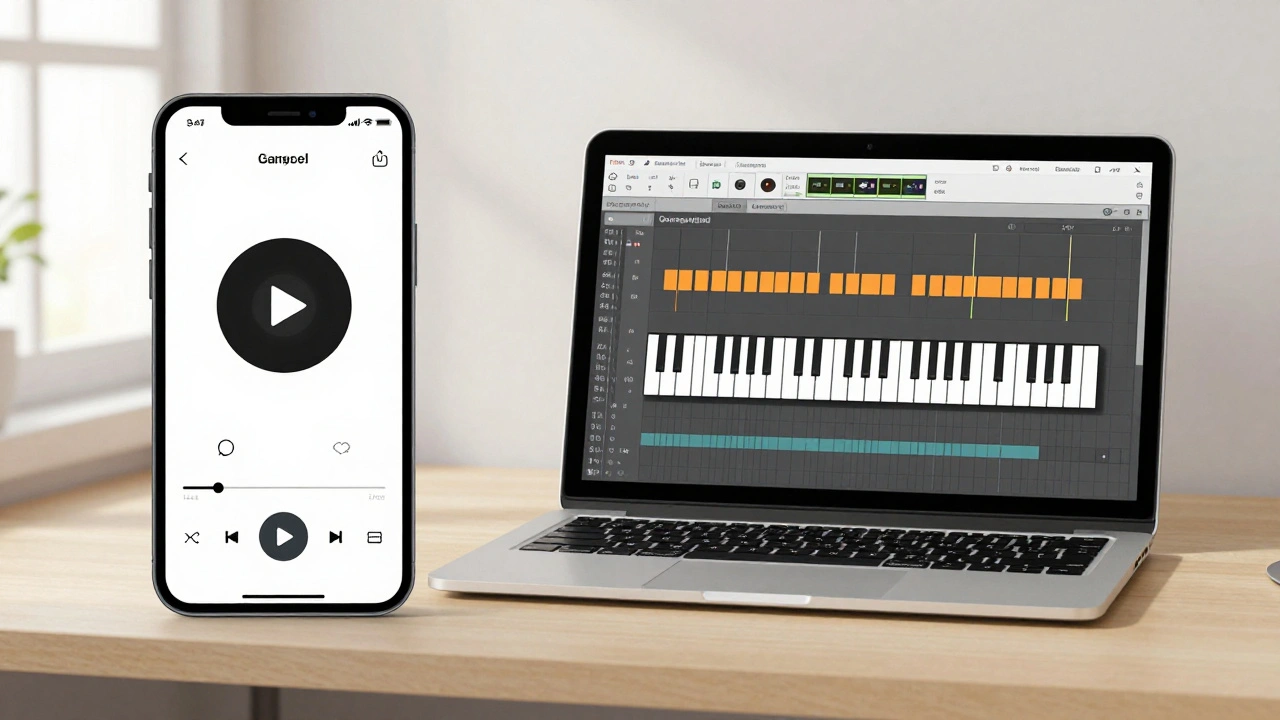
- GarageBand (iOS) - The next step. She drags her voice memo into GarageBand, adds a single chord loop from the built-in library (usually piano or acoustic guitar), and layers her vocal over it. Takes 3 minutes. She calls this her "draft demo."
- BandLab - For when she’s on the road. BandLab lets her record, loop, and export a full 4-track demo in under 5 minutes. She uses it on Android phones, tablets, even old iPads. The auto-tune feature? She leaves it off. She wants the raw take.
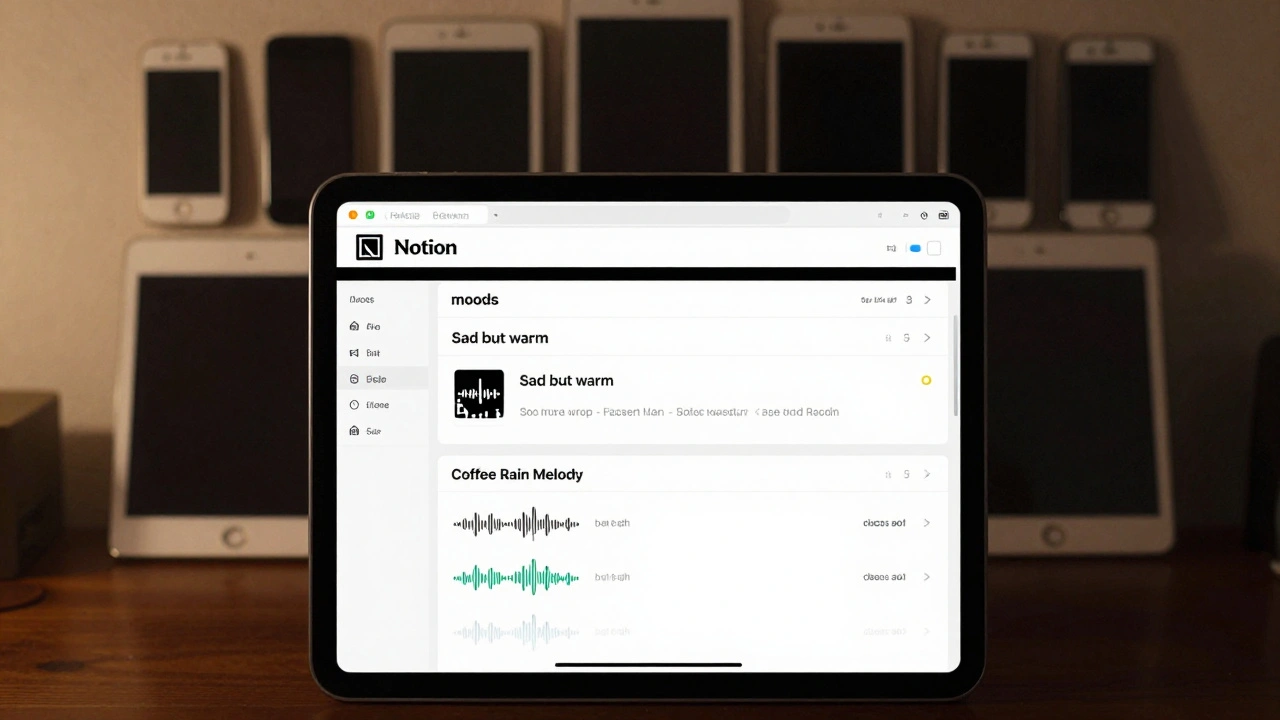
- Notion (for lyrics) - Not for recording. For storing. She creates a "Song Drafts" database. Each entry has: date, mood, melody snippet (recorded as a link), and one-line theme. No essays. Just enough to jog her memory later.
She doesn’t use Ableton, Logic, or FL Studio until the third draft. Why? Because those tools ask you to be a producer before you’re even a writer. Alli’s method flips that. First, you’re a singer. Then, you’re a arranger. Then, you’re a producer.
The 10-Minute Demo Rule
Alli teaches a strict workflow: if you have an idea, you have 10 minutes to turn it into a playable demo. Not a polished track. Not a finished song. Just a version you can listen to and say, "Yeah, that’s the one."
Here’s how it works:
- Tap record - Use your phone’s voice memo app. Sing or hum the whole thing. Don’t stop. Even if you mess up the words. Keep going.
- Trim it - Delete the first 3 seconds of silence. Delete the last 2 seconds of breath. Keep the core: 15-45 seconds of the idea.
- Loop it - In GarageBand or BandLab, find a 4-bar loop that fits the vibe. Piano? Acoustic strum? Just one. Don’t add drums yet.
- Layer your voice - Record the chorus again on a second track. Double it. Harmonize if it feels natural. Don’t overthink.
- Export and label - Save as "[Date]_SongTitle_Draft1". Upload to Notion. Done.
That’s it. Ten minutes. No headphones. No mic stand. No session fee. Just you, your phone, and the idea that refused to let go.
What Not to Do
Alli sees the same mistakes over and over. Here’s what kills momentum:
- Waiting for the "right" mic - Your phone’s mic picks up more emotion than a $500 studio mic when you’re half-asleep. The rawness is the point.
- Trying to fix lyrics right away - If you’re stuck on a line, leave it as "blah blah" and move on. You’ll fix it later. The melody and feeling are what matter now.
- Using too many tracks - More than three layers in a draft? You’re overproducing. You’re not capturing-you’re constructing.
- Not tagging your drafts - If you don’t label them with mood or theme, you’ll never find them again. "Song 3" isn’t a title. "Heartbreak at 3 a.m." is.
How to Build a Library of Ideas
Alli’s secret weapon? Her archive. She has over 1,200 voice memos from the last three years. Not all are songs. Some are hums. Some are whistles. Some are just a single line sung three times. But every one of them is tagged.
She sorts them by:
- Mood - Joyful, angry, nostalgic, lonely
- Tempo - Slow, mid, up-tempo
- Instrumental vibe - Piano-driven, guitar-pulse, synth-echo
Once a week, she spends 20 minutes listening to 10 random drafts. She doesn’t try to finish them. She just listens. Sometimes, a 14-month-old voice memo will spark a new chorus. Other times, it reminds her of a melody she forgot she had.
Her rule: never delete a draft. Not even if it’s terrible. You might not need it today. But next year? You might need it exactly as it is.
Real Example: How "Flicker" Got Made
One rainy Tuesday in January, Alli was waiting for her coffee. She hummed a melody into her phone. It was just three notes. No words. Just "la la la" with a falling rhythm. She labeled it: "Coffee Rain Melody - Sad but warm".
Two days later, she opened it in GarageBand. Added a simple fingerpicked guitar loop. Recorded her voice again-this time with words: "You left like a flicker, not a flame."
Five minutes later, she had a demo. She sent it to a client that night. They used it as the foundation for a single that hit #12 on the indie charts. No studio. No producer. Just a voice memo and a phone.
Start Today. No Equipment Required.
You don’t need to be a pro. You don’t need a studio. You don’t even need to know how to play guitar. You just need to be ready when the idea comes. Alli Starr’s tools aren’t fancy. They’re fast. They’re simple. And they work because they don’t ask you to be anything but human.
Right now, open your phone’s voice memo app. Hum a line. Record it. Label it. Save it. That’s your first draft. That’s your first demo. You didn’t need permission. You didn’t need gear. You just needed to act.
Do I need a special app to capture song ideas?
No. Your phone’s built-in voice memo app is all you need. Alli Starr uses it because it’s instant-no logins, no settings, no delays. Fancy apps like Sonoma or Soundtrap add steps. Speed matters more than features when you’re capturing a fleeting idea.
What’s the best free tool for turning voice memos into demos?
GarageBand on iOS is the most effective free tool. It lets you drag in your voice memo, add one loop, and layer your vocal-all in under three minutes. On Android, BandLab works just as well. Both have templates for piano, guitar, and synth loops that fit most song moods.
Should I record lyrics right away or just the melody?
Record the melody first. Even if you’re singing "la la la" or nonsense syllables. Melody carries emotion. Lyrics can be fixed later. Alli’s rule: if you can’t hum it, you can’t sing it. Get the tune down. The words will follow.
How many drafts should I keep before starting to refine?
Keep every draft. Alli has over 1,200 voice memos in her archive, and she listens to 10 random ones weekly. You never know which one will spark a new song. The goal isn’t to delete bad ideas-it’s to build a library of emotional moments you can revisit later.
Can I use this method if I don’t sing well?
Absolutely. Alli’s demos are never about perfect pitch. They’re about capturing the feeling. If you’re off-key, that’s fine. The emotion is still there. You can always re-sing later. The first version is just a map-not the final destination.