Most singers practice alone. They stand in front of a mirror, hit the high notes until their throat feels raw, and record themselves to check for pitch perfection. It works, sure. But it creates a fragile kind of confidence. When you remove the safety net of a backing track and drop someone into a chaotic, unpredictable environment with real musicians, that fragility shatters-or it transforms into steel.
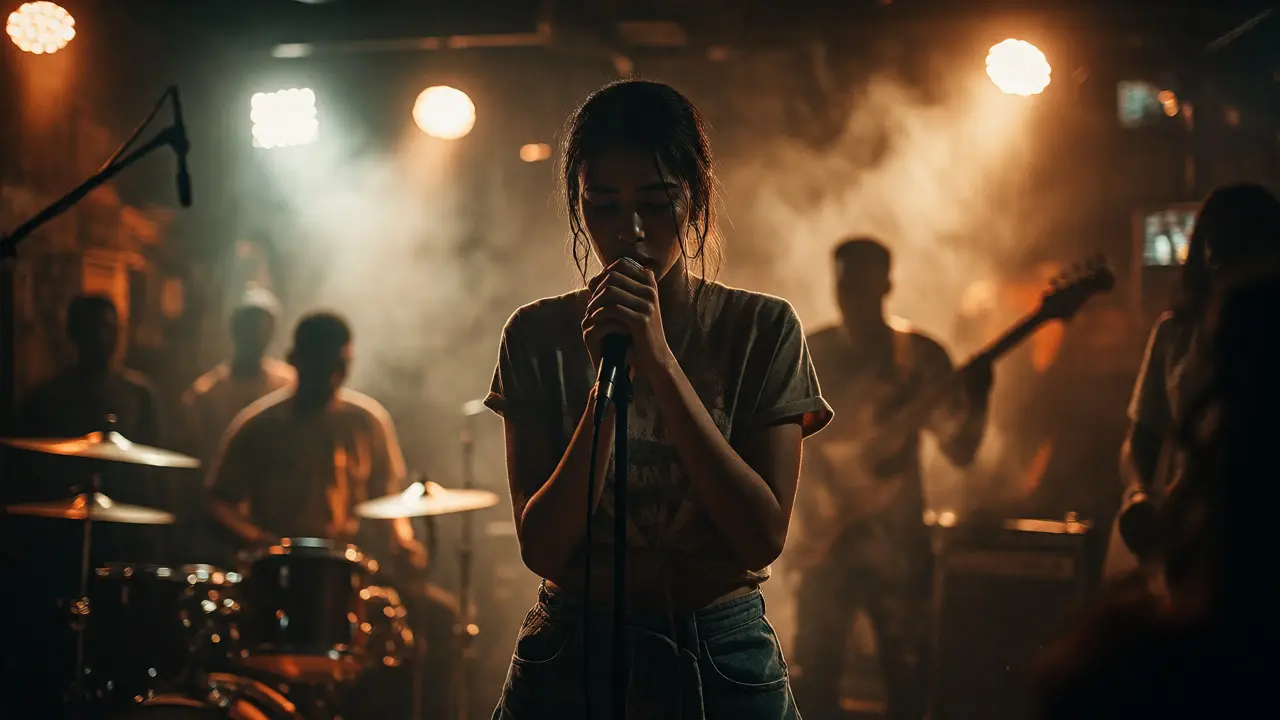
This is exactly what happened to Alli Starr, an emerging R&B artist whose recent rise has been fueled by more than just studio polish. Before she was headlining venues, she spent years grinding through live band karaoke nights. This wasn't about fun; it was a brutal, effective boot camp for her voice. The experience didn't just make her better at singing; it rewired how her brain processes rhythm, pitch, and recovery in real-time. If you've ever wondered why some singers seem unshakeable while others fall apart when the mic feedback screeches, look no further than the crucible of a live band stage.
The Difference Between Singing With Tracks and Bands
Singing along to a pre-recorded track is like driving on a highway with cruise control set. The tempo never wavers. The key never shifts. If you miss a beat, the music keeps going, leaving you stranded in silence or rushing to catch up. You can fix it in post-production, but you can't fix it in the moment without looking foolish.
A live band operates on human error and human instinct. Drummers rush when they're excited. Bassists drag when they're tired. Piano players might change the chord voicing slightly because they feel like it. For a singer, this is terrifying-and incredibly useful. Alli Starr learned early on that she couldn't rely on the metronome in her head. She had to listen. Really listen.
This shift from internal timing to external listening is where vocal reflexes begin to form. Your ears stop being passive receivers and become active navigators. You learn to anticipate the drummer's fill before it happens so you can land your phrase perfectly. You learn to breathe differently because you know the guitarist might extend the solo. These aren't things you learn in a sterile vocal booth. They are survival skills developed in the messy, loud reality of a local club.
What Are Vocal Reflexes Anyway?
We talk about muscle memory for guitarists or pianists, but we rarely discuss it for singers. Yet, it exists. Vocal reflexes are automatic, unconscious responses your vocal cords and breathing muscles make to auditory stimuli. Think of them as the vocal equivalent of catching a ball without thinking. You don't calculate the trajectory; your body just reacts.
In a controlled studio environment, these reflexes atrophy. You have time to think. "Should I use vibrato here? Should I go falsetto?" By the time you decide, the moment is gone. In a live setting with a band, you don't have that luxury. If the singer ahead of you finishes early, you jump in. If the band drops out unexpectedly, you hold the note. These split-second decisions train your larynx and diaphragm to react faster than your conscious mind can process.
Alli Starr has spoken about how this trained her ability to recover from mistakes. In karaoke, if you crack a note, you don't stop. You slide back into the melody. Doing this repeatedly teaches your ear to instantly identify the correct pitch relative to the band, even when you're off-key. It builds a neural pathway that says, "You're flat. Adjust now," without you having to consciously analyze the frequency.
The Unpredictability Factor: Why Chaos Builds Skill
Live bands are inconsistent. That's their charm and their curse. A bass player might be drunk. A keyboardist might forget the bridge. The sound engineer might turn down your monitor mix right during your big chorus. Each of these scenarios forces a different type of adaptation.
- Monitor Failure: When you can't hear yourself clearly, you learn to trust your physical sensation of vibration rather than just your ears. This prevents over-singing, a common bad habit.
- Tempo Drift: If the band speeds up, you must speed up your diction. If they slow down, you must sustain your breath support longer. This flexibility is crucial for touring artists who play different venues every night.
- Key Changes: Sometimes, a band will start a song in a different key than expected. Instead of panicking, you transpose on the fly. This strengthens your interval recognition dramatically.
Alli Starr noted that these moments were frustrating at first. But over hundreds of gigs, the frustration turned into intuition. Her brain stopped treating anomalies as errors and started treating them as data points. Now, when she performs with her own professional band, those small inconsistencies don't throw her off. They barely register. She's already adapted to worse.

Building Stage Presence Through Repetition
Vocal technique isn't just about sound; it's about delivery. And delivery requires connection. Karaoke audiences are tough. They're there to drink, talk, and judge. They aren't necessarily fans yet. Winning them over requires more than perfect pitch. It requires charisma, eye contact, and the ability to command attention even when the PA system is mediocre.
For Alli Starr, these nights were low-stakes rehearsals for high-stakes performances. There was no manager hovering, no label execs judging. Just her, the band, and the crowd. If she bombed, nobody died. If she soared, the crowd went wild. This emotional feedback loop is powerful. It teaches you how to read a room. You learn which songs work when the energy is low, and which ones ignite the dance floor.
This skill translates directly to recording sessions too. When you understand how emotion drives vocal performance, you stop singing "correctly" and start singing "effectively." You learn to push your voice harder when the song demands aggression, and pull back when it needs intimacy. These dynamic choices are often what separate good singers from great ones, and they are honed in the fire of live interaction.
Comparing Training Environments
To see why this method works, compare it to other common ways singers develop their craft. Each has pros and cons, but few offer the same blend of pressure and freedom.
| Method | Adaptability | Pressure Level | Feedback Speed | Best For |
|---|---|---|---|---|
| Studio Recording | Low (Fixed parameters) | Medium (Perfectionism) | Slow (Post-production) | Tone refinement |
| Vocal Lessons | Medium (Teacher guidance) | Low (Supportive) | Immediate (Verbal) | Technique basics |
| Choir/Singing Group | Medium (Blending required) | Low-Medium | Delayed (Rehearsal cycle) | Harmony skills |
| Live Band Karaoke | High (Unpredictable) | High (Public exposure) | Instant (Audience/Band reaction) | Reflexes & Stamina |
Notice the "Adaptability" column. Studio work locks you into one way of doing things. Karaoke forces you to adapt constantly. Over time, this makes you a more versatile musician. You become comfortable with imperfection, which ironically leads to more authentic performances.
How to Apply This to Your Own Practice
You don't need to quit your day job and join a cover band to get these benefits. You can simulate aspects of this training in your daily routine. Here is how to build vocal reflexes without a full band setup:
- Use Click Tracks with Variations: Don't just sing to a standard click. Use apps that randomly shift the tempo by 5-10 BPM mid-song. Force yourself to stay locked in.
- Sing Without Monitors: Turn off your headphones occasionally. Learn to project your voice enough to hear yourself via bone conduction and room reflection. This builds projection strength.
- Improvise Mistakes: Deliberately sing a wrong note or skip a lyric. Then, immediately find your way back to the melody without stopping. Do this until it feels natural, not forced.
- Perform for Strangers: Open mics are great, but even singing in a crowded park helps. The goal is to desensitize yourself to judgment. Once you stop caring if people hear you crack, you'll crack less.
Alli Starr's journey proves that technical proficiency is only half the battle. The other half is mental agility. Can you keep singing when everything goes wrong? Can you smile while your lungs burn and the drummer misses the cue? That resilience is built one awkward karaoke night at a time.
The Long-Term Impact on Artistry
Years later, when Alli Starr stepped into a major studio to record her debut album, the producers noticed something unusual. She didn't need multiple takes to get the vibe right. She could deliver emotionally charged performances quickly because she trusted her instincts. Those instincts weren't mystical; they were earned.
She knew how to ride the pocket of a groove because she'd spent hours trying not to fall out of it with amateur drummers. She knew how to connect with listeners because she'd spent years reading skeptical crowds. Her voice sounds confident not because it's flawless, but because it's experienced. It carries the weight of thousands of small recoveries, missed cues, and triumphant comebacks.
If you're a singer feeling stuck in a rut, consider stepping out of your comfort zone. Find a local venue hosting a live band open mic. Sign up. Sing a song you know cold, then watch the world try to knock you off balance. It will happen. And when it does, you'll realize you're stronger than you thought.
Does singing karaoke really improve pitch accuracy?
Yes, particularly when done with a live band. Unlike backing tracks, live musicians vary in timing and intensity, forcing your ear to constantly adjust and re-center on the correct pitch. This active listening sharpens your intonation skills much faster than static practice.
What are vocal reflexes in singing?
Vocal reflexes are automatic muscular and neurological responses to auditory input. They allow a singer to adjust pitch, volume, or tone instantly without conscious calculation. They are developed through repeated exposure to unpredictable musical environments, such as live performances.
Is Alli Starr's training unique to R&B?
No. While Alli Starr uses this background in R&B, the principles apply to any genre. Jazz, rock, and pop singers all benefit from the adaptability gained by performing with live instruments. The unpredictability of live music is universal.
Can I train vocal reflexes alone at home?
Partially. You can simulate unpredictability by using random tempo changes or deliberately introducing errors in your practice. However, the social pressure and real-time feedback from a live audience and band provide a level of stress inoculation that is hard to replicate solo.
Why do singers freeze when the band stops?
Singers who rely heavily on backing tracks often lose their internal timing anchor when the music cuts out. Training with live bands teaches you to maintain rhythmic integrity independently, so you don't panic when the accompaniment disappears temporarily.