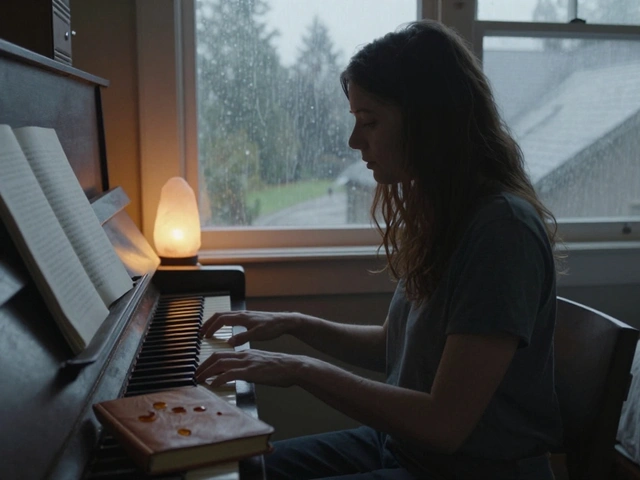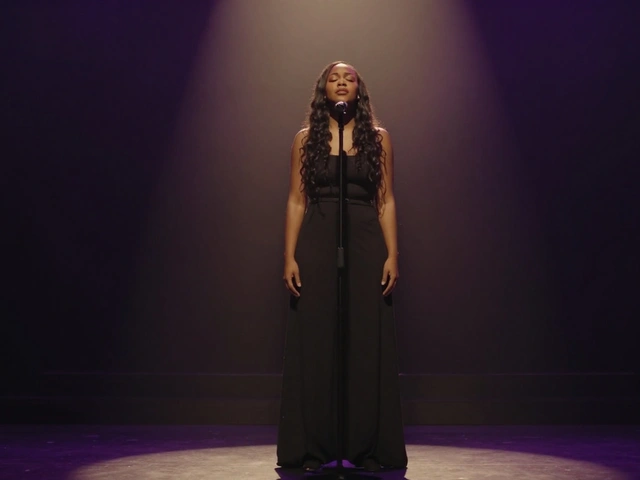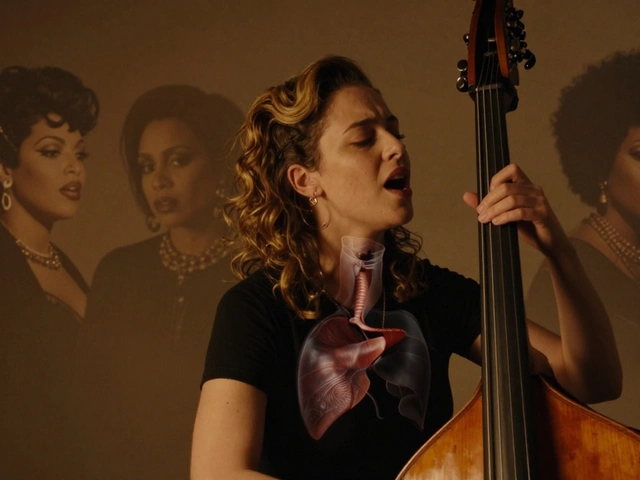
When you hear Alli Starr’s voice, you don’t just hear a singer-you hear a whole world built from stacked harmonies, unexpected counterpoints, and carefully timed silences. Her solo identity isn’t just about what she sings, but how she layers it. In an era where solo artists often rely on producers to craft their sound, Alli Starr built hers from the inside out-with her voice as the only instrument she trusted completely.
What Makes a Solo Artist’s Voice Their Signature?
Most solo artists use backing tracks, session singers, or auto-tuned harmonies to fill space. Alli Starr does none of that. Instead, she records every harmony, every echo, every whisper herself. It’s not a gimmick-it’s a method. She calls it "vocal architecture." Each layer is a brick. No two layers are identical. Even when she sings the same note twice, she changes the breath, the pressure, the slight rasp. That’s how she avoids sounding robotic. That’s how she avoids sounding like anyone else.
Listen to "Paper Wings" from her 2025 album Unfiltered. The chorus has seven distinct vocal tracks. Five are harmonies. One is a whispered counter-melody. The seventh? It’s her voice recorded in a bathroom stall during a tour stop in Nashville, with the echo of a flushing toilet subtly blending in. She kept it. Why? Because it felt human. That’s the core of her identity: imperfection as authenticity.
The Science Behind Her Layering Technique
Alli doesn’t use presets. She doesn’t rely on plugins to auto-harmonize. Every vocal stack is manually tuned, time-aligned, and emotionally matched. She records each part in a different room. A hallway for reverb. A closet for muffled warmth. A studio booth for clarity. She then layers them based on how they make her feel-not how they look on a waveform.
Her engineer, Marcus Lin, says she once spent 14 hours recording just three notes for the bridge of "Broken Clock." She tried 87 takes. Each one had a different emotional weight. One was angry. One was grieving. One was defiant. She didn’t pick the best pitch. She picked the one that made her cry when she played it back alone. That’s the version that made the cut.
This isn’t just technique. It’s therapy. She says her solo identity emerged after years of singing in bands, where her voice was buried under guitars and drums. When she went solo, she realized: if no one else is there to carry the sound, then every note has to mean something.

How Her Arrangements Defy Genre
Alli Starr doesn’t fit neatly into pop, soul, or indie. That’s not an accident. Her vocal arrangements refuse to follow genre rules. In "Midnight Train," she layers gospel-style call-and-response vocals over a minimalist synth beat. In "Rust," she sings in three different octaves simultaneously-each line telling a different part of the same story. One voice is the past. One is the present. One is the future. They don’t always harmonize. Sometimes they clash. And that’s the point.
She’s been compared to Björk and Fiona Apple, but those comparisons miss the mark. Björk uses electronics to distort voice. Fiona Apple uses piano to anchor emotion. Alli uses only voice-and the spaces between it-to build her entire universe. She doesn’t need instruments. She *is* the instrument.
Why This Matters for Solo Artists Today
Too many solo artists today outsource their sound. They hire vocal producers, use AI harmonizers, or copy trending vocal patterns from TikTok. Alli Starr’s success proves you don’t need to be the loudest-you need to be the most intentional.
Her approach works because it’s deeply personal. When she layers her voice, she’s not trying to sound like a choir. She’s trying to sound like herself-across time, mood, and memory. Each vocal track is a version of her at a different moment. The final arrangement? That’s the full picture.
Artists who try to mimic her often fail because they copy the sound, not the intention. You can’t fake the hours spent recording in a closet. You can’t automate the emotional risk of singing the same line 50 times until it breaks your heart.
What You Can Learn from Her Method
If you’re a solo artist trying to build your own identity, here’s what Alli Starr’s process teaches:
- Don’t outsource your voice. Record every harmony yourself-even if it’s imperfect.
- Change your environment for each layer. A bathroom, a car, a basement-each gives a different emotional texture.
- Let dissonance stay. Not every harmony needs to be sweet. Sometimes the tension is the message.
- Use silence as an instrument. The space between layers can be more powerful than the notes themselves.
- Don’t chase trends. Chase truth. If a vocal take makes you cry, keep it.
Her 2025 album Unfiltered was recorded entirely without a band. No drums. No bass. No guitar. Just her voice, a Shure SM7B, and a laptop. It went platinum. Not because it was polished. Because it was real.
The Hidden Cost of Vocal Layering
It’s not easy. She’s lost her voice three times from overuse. She has vocal nodules. She takes monthly vocal rest weeks. She can’t sing in public for weeks at a time. Her body pays the price. But she says it’s worth it. "If I’m going to be alone on stage," she told Rolling Stone in 2025, "then my voice has to carry everything. That means it has to be everything. Not just pretty. Not just loud. Just true."
That’s the heart of her solo identity. Not talent. Not fame. Not production budget. Just the raw, layered, messy, beautiful truth of one person refusing to hide behind anything else.
Why doesn’t Alli Starr use backing vocalists?
Alli Starr refuses to use backing vocalists because she believes her solo identity must come entirely from her own voice. She sees each layer of harmony as a different version of herself-past, present, and emotional states. Using other singers would break that personal narrative. She records every single harmony herself, even if it takes dozens of takes, because only her voice can carry the exact emotional weight she needs.
How does Alli Starr’s vocal layering differ from typical pop production?
Typical pop production uses auto-tuned harmonies, preset vocal stacks, and digital plugins to create polished, uniform backing vocals. Alli Starr avoids all of that. She records each layer in a different physical space, manually adjusts timing and pitch by ear, and keeps imperfections like breath noise or room echo. Her goal isn’t perfection-it’s emotional honesty. Each layer is a memory, not a sound effect.
Can vocal arrangements really define an artist’s identity?
Absolutely. For Alli Starr, her vocal arrangements are her signature. While other artists might be known for lyrics, production, or stage presence, Alli is recognized for the way her voice interacts with itself. Fans can identify her songs within the first three seconds-not because of a melody, but because of the unique, layered texture of her vocals. That texture is her identity.
What equipment does Alli Starr use for her vocal recordings?
She uses a Shure SM7B microphone, a Focusrite Scarlett 2i2 audio interface, and a basic laptop with Audacity and Reaper. She doesn’t use expensive studios. Instead, she records in everyday spaces: bathrooms, closets, parked cars, hotel rooms. The environment shapes the sound more than the gear. She says the room’s acoustics tell her when a take is right-not the meters on the screen.
Is Alli Starr’s method sustainable long-term?
It’s physically demanding. She has vocal nodules and takes mandatory rest weeks between tours. She’s had three vocal injuries in five years. But she says the cost is worth it. Her identity as a solo artist depends on the authenticity of her voice. She’s willing to sacrifice longevity for truth. Many artists admire her, but few replicate her method because it requires emotional and physical endurance most aren’t prepared to give.