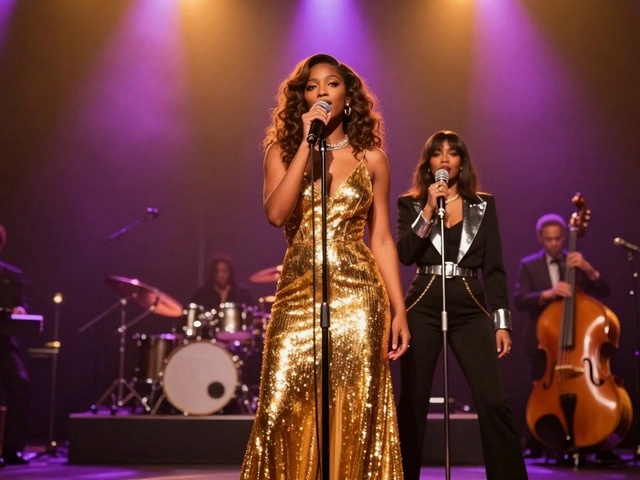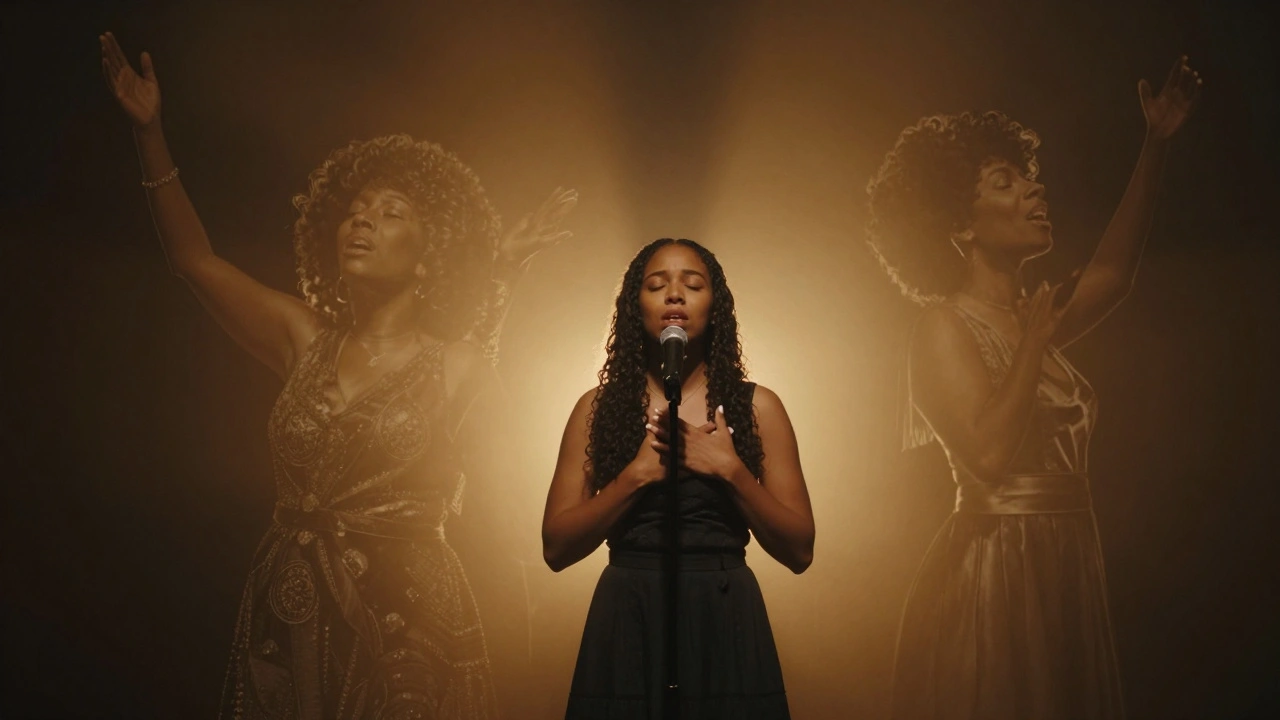
When you hear Alli Starr sing, you don’t just hear a voice-you hear layers. A gospel cry from the church pews, a soaring whistle note that feels like it’s breaking the sky, and a raw, unfiltered emotion that lingers long after the last note fades. That sound didn’t come out of nowhere. It was built, note by note, from the voices of two legends: Aretha Franklin and Mariah Carey.
Aretha Franklin: The Foundation of Soul
Aretha Franklin didn’t just sing songs. She turned them into testimonies. Her voice carried the weight of Black American history-the pain, the joy, the defiance. When she belted out “Respect,” she wasn’t asking. She was demanding. And that’s what Alli Starr learned first: vocal power isn’t about volume. It’s about conviction.
Alli has said in interviews that she spent her teenage years transcribing Aretha’s live performances. Not just the notes, but the pauses. The sighs. The way Aretha would stretch a syllable like taffy, then snap it back with a growl. That’s where Alli got her phrasing. She doesn’t just hit notes-she tells stories with them. When she sings “I Will Survive,” you don’t just hear resilience. You feel it in your chest.
Aretha’s technique was simple but devastating: use your whole body. Her diaphragm didn’t just support notes-it launched them. Her shoulders moved. Her hands gestured. She sang with her spine. Alli adopted this. She doesn’t stand still when she sings. She leans into the mic. She shifts her weight. She lets her voice ripple through her ribs. That’s Aretha’s fingerprint on her sound.
Mariah Carey: The Science of the High Note
If Aretha taught Alli how to feel, Mariah Carey taught her how to fly. Mariah’s whistle register wasn’t just a trick-it was a language. A language of pure, unadulterated air, shaped into notes that hovered above the beat like fireflies. Alli didn’t just admire it. She studied it like a scientist.
She broke down Mariah’s runs on “Emotions” and “Fantasy.” Not just the speed, but the articulation. How Mariah used consonants to lock each note in place. How she’d slide from chest voice to head voice without a breath. How she made the impossible sound effortless. Alli practiced for hours in front of a mirror, watching her larynx move, recording herself, comparing waveforms.
What most people miss is that Mariah’s whistle isn’t about strength. It’s about control. A tiny adjustment in the vocal folds, a precise airflow, a relaxed jaw. Alli learned that. She doesn’t scream into the whistle. She lets it happen. And when she hits it live-like in her cover of “Vision of Love”-the room goes silent. Not because it’s loud. Because it’s rare.

The Blend: Where Two Voices Become One
Alli Starr doesn’t sound like Aretha. She doesn’t sound like Mariah. But if you listen closely, you’ll hear both.
Take her song “Break This Chain.” The verses are pure Aretha-slow, aching, full of breath and blues. Then the chorus explodes. A five-note run climbs up, lands in a whistle note, and hangs there like a prayer. That’s Mariah. But the way she holds the final note? The slight crack? That’s Aretha. The vulnerability. The humanity.
She doesn’t imitate. She translates. She takes Aretha’s emotional honesty and Mariah’s technical mastery and builds something new. It’s not a fusion. It’s a conversation. One legend speaks through her soul. The other through her technique. And Alli? She’s the bridge.
What Makes Her Different
Many singers try to sound like Aretha or Mariah. They copy the runs. The runs. The runs. But Alli doesn’t just sing like them. She thinks like them.
Aretha believed every note had a reason. If you’re singing a love song, your voice should tremble like you’re holding back tears. Mariah believed every note had a structure. If you’re hitting a high note, your body must be aligned like a violin string.
Alli merged those beliefs. She doesn’t just train her voice. She trains her mind. She visualizes the emotion before she sings. She maps out the airflow before she takes a breath. She doesn’t just perform. She engineers feeling.
That’s why producers keep coming back to her. She can deliver a ballad that makes grown men cry-and then turn around and nail a pop anthem with precision that rivals a synth. She’s not a clone. She’s a synthesis.
The Legacy in Every Note
Aretha Franklin passed in 2018. Mariah Carey still tours. But their influence lives in the way young singers now approach their craft. Alli Starr is proof that legacy isn’t about imitation. It’s about evolution.
She doesn’t wear Aretha’s pearls or Mariah’s headbands. She doesn’t try to sing like them. She sings like herself-because they showed her how.
Aretha gave her the courage to be loud. Mariah gave her the tools to be precise. And Alli? She took both and turned them into something that belongs to no one but her.
That’s the real influence. Not the notes. The permission.
How did Aretha Franklin influence Alli Starr’s phrasing?
Alli Starr studied Aretha’s live recordings intensely, focusing not just on pitch but on timing, breath, and emotional pauses. She learned to stretch vowels, add growls for emphasis, and let silence speak as much as sound. This shaped her storytelling approach-every phrase carries weight, not just melody.
What technical aspects of Mariah Carey’s singing did Alli Starr adopt?
Alli meticulously analyzed Mariah’s whistle register, vocal runs, and seamless transitions between chest and head voice. She practiced controlling airflow and larynx position to replicate the precision of Mariah’s runs without strain. This allowed Alli to incorporate complex ornamentation into her own style while maintaining vocal health.
Is Alli Starr’s voice a mix of Aretha and Mariah?
Not a mix-more like a conversation. Aretha taught her emotional depth and soulful delivery. Mariah taught her technical control and vocal agility. Alli merged these into a unique style: emotionally raw but technically flawless. She doesn’t sound like either; she sounds like herself, shaped by both.
Why don’t more singers blend these two influences?
Most singers choose one path: soul or pop. Blending them requires mastering two completely different vocal philosophies-emotional spontaneity versus mechanical precision. Few have the discipline to train both. Alli Starr did, because she didn’t want to imitate-she wanted to evolve.
What makes Alli Starr’s vocal identity stand out today?
In an era of auto-tuned vocals and formulaic pop, Alli Starr brings back the human element. Her voice cracks with feeling, soars with precision, and never feels manufactured. She proves that technical mastery and emotional truth aren’t opposites-they’re partners. That’s why she’s becoming a new benchmark for vocal artistry.
When you listen to Alli Starr now, you’re not just hearing a singer. You’re hearing the past speak through the present. And maybe, just maybe, you’re hearing the future of voice.