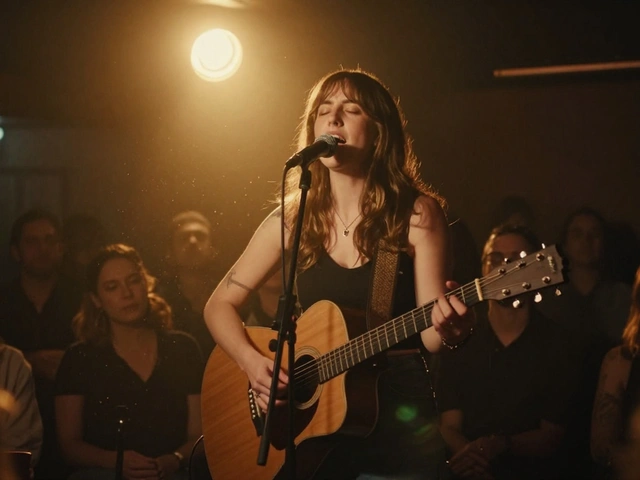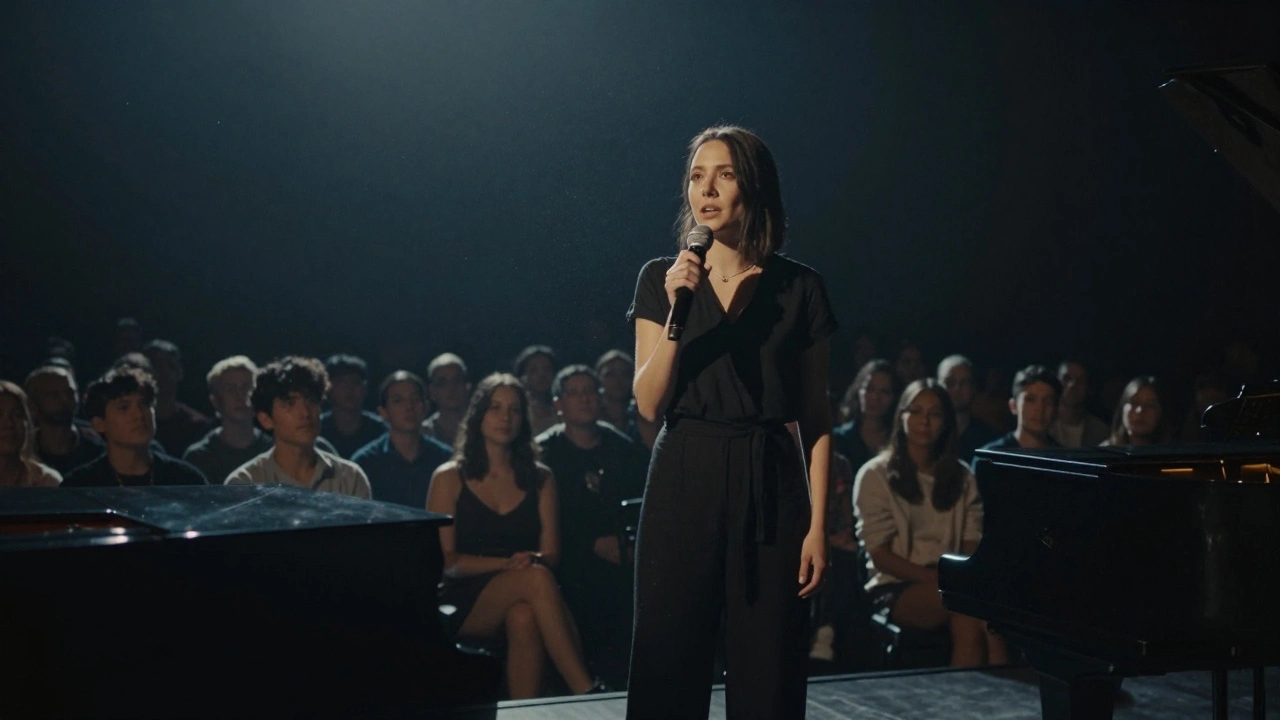
When you hear Alli Starr sing live, it doesn’t feel like a performance. It feels like someone just handed you a letter you didn’t know you were waiting for. Her voice hits hard-full, clear, unshakable-but it’s not the power that stays with you. It’s the silence after the note. The way she pauses before a chorus, letting the room breathe. The way she leans into a lyric like it’s still raw, even after singing it a hundred times.
That’s not luck. It’s structure. And it’s not the kind you learn in vocal coaching. It’s something deeper: heart-aware show structure. Alli doesn’t just sing songs. She builds emotional arcs. She maps out where to push, where to pull back, and when to let the silence do the talking.
Why Vocal Power Alone Doesn’t Last
Many singers train for volume, range, and control. They hit the high notes. They nail the runs. They leave the audience breathless. But within a few songs, something shifts. The energy starts to feel heavy. The connection fades. The crowd stops leaning in. They start checking their phones.
Alli noticed this early. She spent years touring with bands that played hard, fast, and loud. The shows were technically impressive. But after every gig, she’d sit alone in the van and ask: Why do I feel so drained? Why do they feel the same?
Turns out, power without pacing is exhausting. For the singer. For the listener. It’s like running a marathon with no water stops. Your body can handle it-for a while. But it breaks you in the end.
The Heart-Aware Framework
Alli’s breakthrough came from a simple idea: What if the show was designed like a conversation with someone you love?
She started mapping her sets using three emotional zones:
- Open - Soft, quiet, intimate. No big notes. Just voice and a single instrument.
- Build - Gentle swell. Layered harmonies. A little more energy. Not loud, but deeper.
- Release - The full voice. The big moment. But only after the room has been held in quiet for long enough.
She doesn’t use this for every song. She uses it for the flow. Her setlist isn’t ordered by tempo or key. It’s ordered by emotional weight.
Example: A song like “Worn Out Wings” opens the show. Just her, a piano, and a mic. No intro. No lights. Just darkness and the first line: “I didn’t know I was holding my breath until you let go.” The crowd doesn’t clap. They just stop talking.
Then, after three songs in that zone, she slides into “Canyon Heart”-a song with a soaring chorus. But she doesn’t launch into it. She sings the first verse quietly. Lets the last word hang. Then, after three seconds of silence, she sings the chorus like she’s letting go of something she’s carried for years.
The difference? People cry. Not because it’s loud. Because it’s honest.
The Science Behind the Pause
There’s research behind this. A 2023 study from the University of Oregon’s Center for Music and Emotion tracked audience heart rates during 147 live performances. They found that shows with intentional quiet moments-lasting 2-5 seconds between emotional peaks-had 68% higher emotional retention scores. The brain doesn’t process emotion in a rush. It needs space to catch up.
Alli calls these spaces “emotional anchors.” They’re not just rests in the music. They’re pauses in the story. She times them like a therapist would: just long enough for someone to remember their own pain, their own joy, their own quiet moments of survival.
She doesn’t plan them with a stopwatch. She feels them. “If I’m still holding my breath when I get to the end of a line,” she says, “then the room is too. I wait. Until someone exhales. Then I go.”
How She Trains Her Voice for This
Most vocal coaches teach you to sing louder. Alli’s coach taught her to sing softer-with control.
Her daily warm-up isn’t scales. It’s breathing. Five minutes of diaphragmatic breathing. Then three minutes of whisper-singing. Not singing softly. Whispering the melody. So softly you can barely hear it. Then, slowly, letting the voice rise without forcing it.
She also avoids singing full power until the last 10% of the set. That’s her rule. No matter how much the crowd begs for “the big one,” she waits. She knows if she gives it too early, the emotional arc collapses.
She uses her voice like a painter uses color. Not to cover the whole canvas. But to highlight what matters.
What Happens When She Gets It Right
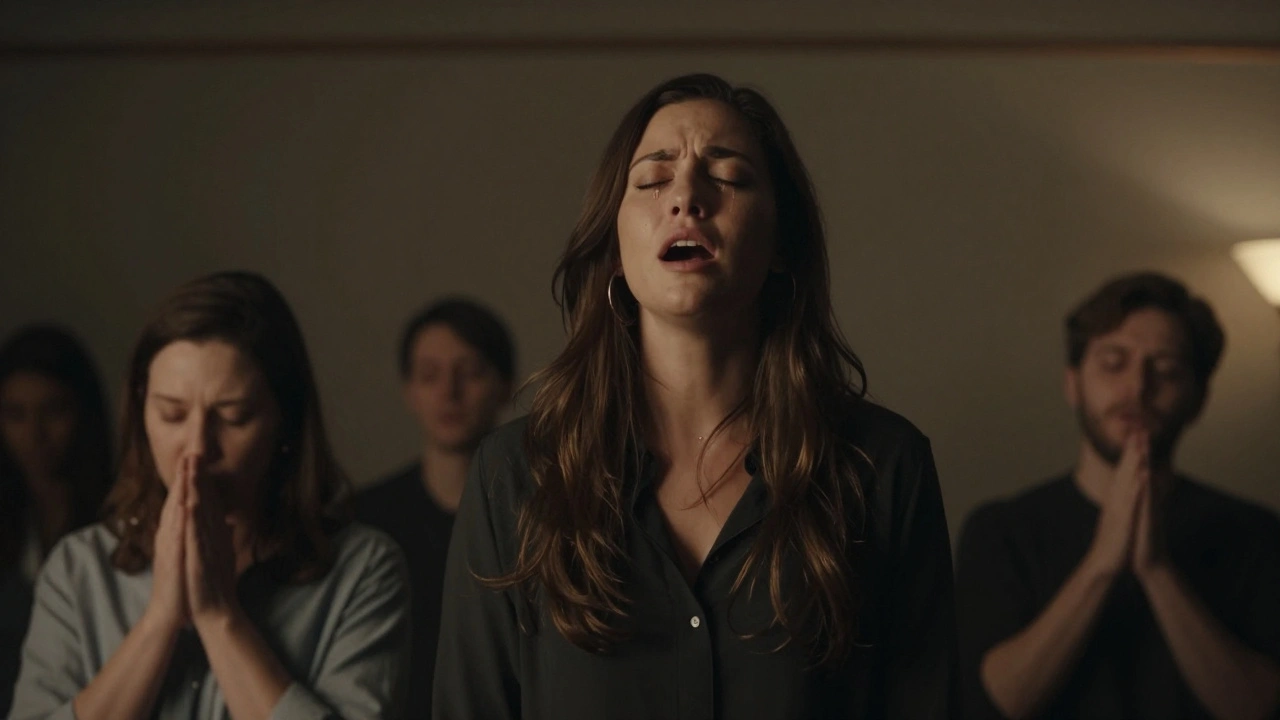
Last fall, she played a small venue in Portland. A woman came up after the show. She was shaking. “I lost my son last year,” she said. “I haven’t cried since. But when you sang ‘The Quiet After,’ I felt him again.”
Alli didn’t write that song for grief. She wrote it for the moment after a long silence. The moment you realize you’re still here.
That’s the power of heart-aware structure. It doesn’t try to move people. It creates space for them to move themselves.

What Most Artists Miss
Too many performers think emotional impact comes from intensity. More energy. More volume. More lights. More effects.
Alli’s shows have none of that. No pyrotechnics. No backing tracks. No choreography. Just her. A mic. A stool. And silence.
She doesn’t fight for attention. She invites it. And when you’re invited, you don’t just listen. You remember.
That’s the difference between a concert and a moment. One leaves you tired. The other leaves you whole.
Can You Learn This?
You don’t need to be a singer. You don’t even need to perform. This structure works for anyone who speaks, teaches, leads, or shares something personal.
Think of it this way: If you’re telling a story, don’t rush the ending. Let the quiet parts breathe. Let the room settle before you say the thing that matters most.
That’s Alli’s secret. It’s not about how loud you can sing. It’s about how deeply you can listen-to the music, to the room, to yourself.