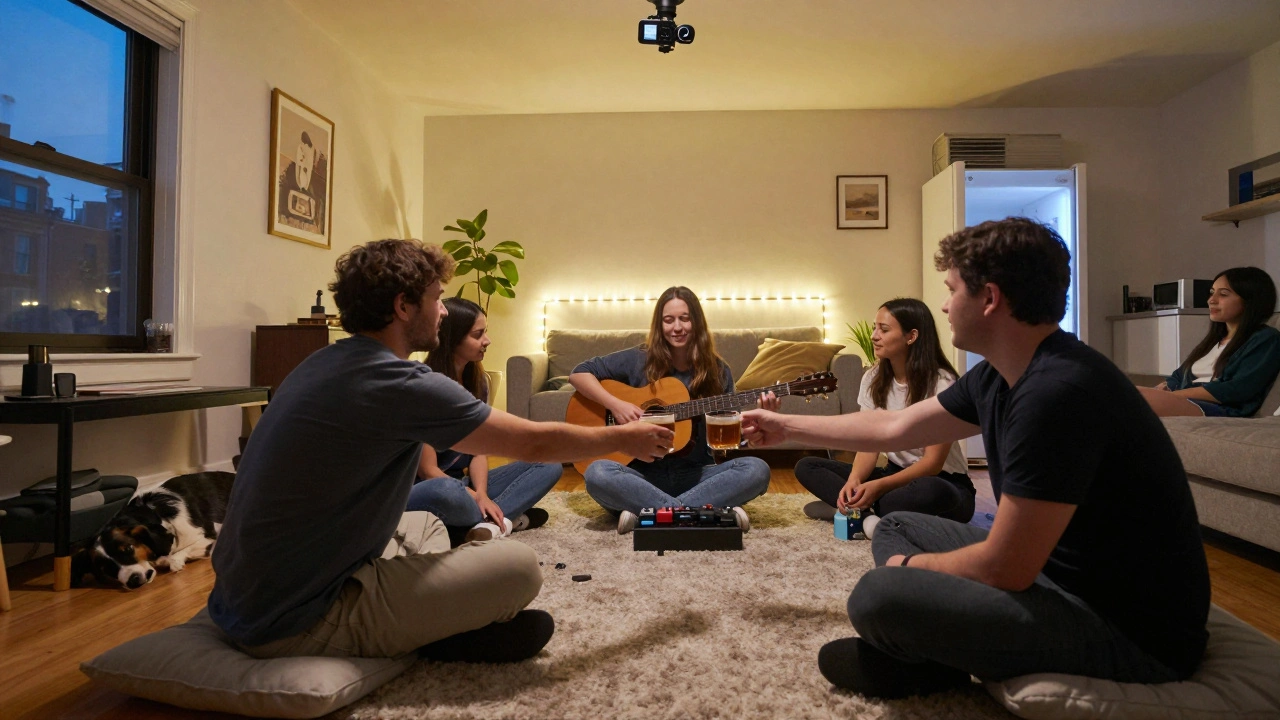
It started with a couch. Not a fancy one-just an old, worn-out sectional someone dragged out of a basement. But when Alli Starr turned her Brooklyn apartment into a live performance space in 2023, something shifted. No stage lights. No velvet ropes. Just her, a mic, a loop pedal, and six people sitting on floor cushions. That night, the audience didn’t just listen-they leaned in. They laughed when she missed a chord. They passed around a single cup of tea between songs. It wasn’t a concert. It was a conversation.
What Happened to the Concert Hall?
For decades, live music meant one thing: a big room, a dark stage, and a crowd spaced out like spectators at a movie. But by 2025, ticket prices for traditional venues had climbed past $150. Bands were playing fewer shows. Fans were tired of being treated like customers instead of guests. Meanwhile, streaming platforms flooded the market with endless content. People didn’t want more noise. They wanted connection.
Alli Starr didn’t set out to fix the industry. She just wanted to play for her friends. But when a video of her living room show went viral-gaining 2.3 million views in three weeks-something unexpected happened. Fans started asking: Can I host one too?
The Birth of the Hybrid Stage
Alli’s hybrid stage isn’t just a living room with a mic. It’s a deliberate blend of intimacy and technology. She uses a single 360-degree camera mounted on a ceiling bracket, capturing every glance, every hand movement, every quiet breath between lyrics. The audio? A single high-end lavalier mic and a small array of room mics that pick up the ambient hum of the space-the fridge turning on, a dog sighing, someone coughing softly.
Live streams are optional. Most shows are hybrid: a small in-person audience (capped at 12 people) + a real-time digital feed. The digital viewers aren’t passive. They can send voice notes during the set, which Alli sometimes responds to mid-song. One fan in Tokyo sent a recording of their cat purring. Alli looped it into the next track. The audience in Brooklyn clapped. The online crowd cheered. It wasn’t edited. It wasn’t polished. It was real.
Why It Works
Traditional venues treat performers as products. Alli treats them as people. Her hybrid model cuts out middlemen. No promoters. No ticketing fees. No corporate sponsors. Artists keep 92% of what’s donated. She uses a simple Venmo-style system called StagePass-a tool she helped build with a group of indie musicians. Donations are voluntary. No pressure. No paywall. Just trust.
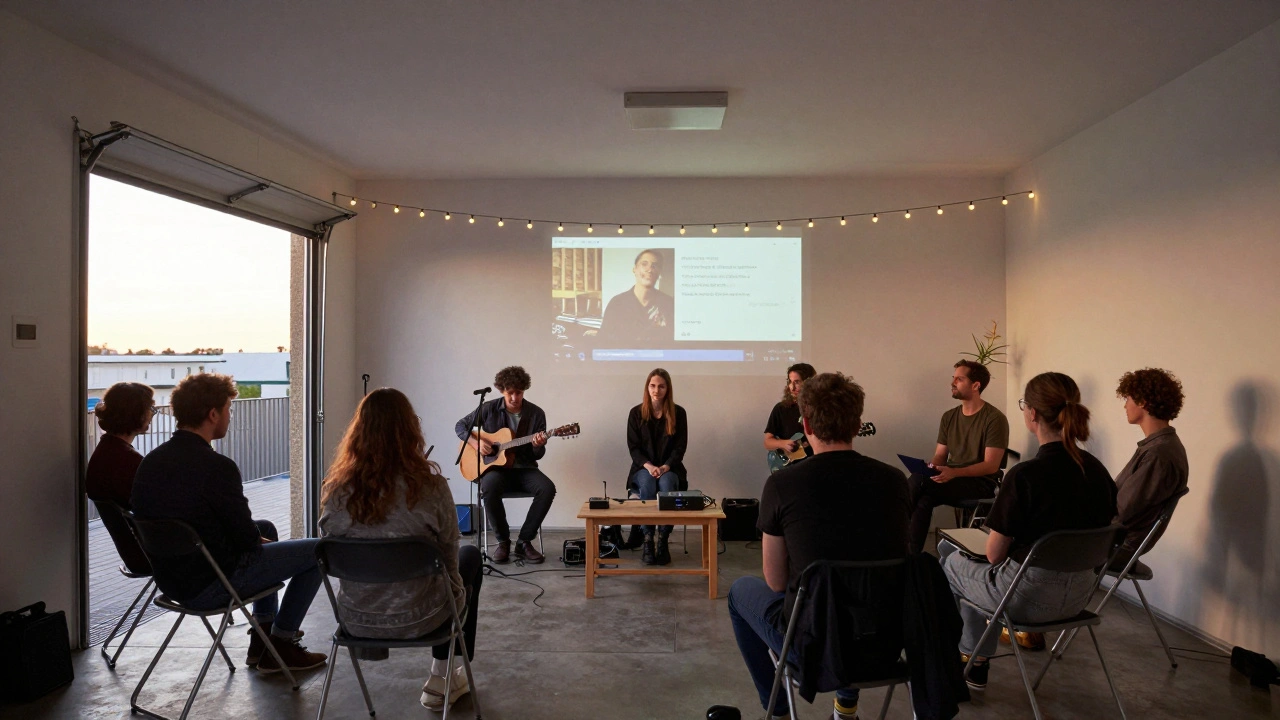
And it’s working. In 2025, over 1,200 artists hosted hybrid shows in homes, garages, and even tiny apartments across North America and Europe. One artist in Berlin turned her 22-square-meter kitchen into a weekly venue. She sold out every show for six months. No marketing. Just word-of-mouth.
Why now? Because audiences are done with spectacle. They’re not looking for pyrotechnics. They’re looking for presence. A 2024 study from the University of Toronto found that 78% of Gen Z and millennial concertgoers said they felt ‘more emotionally connected’ to artists during small, unpolished performances than during stadium shows. The data didn’t surprise Alli. She’d seen it firsthand.
The Tech Behind the Feeling
It’s not magic. It’s smart, simple tech. Alli’s setup costs under $800. Here’s what’s in it:
- One 4K 360-degree camera (Insta360 ONE X3)
- Two omnidirectional room mics (Rode NT-USB Mini)
- A single lavalier mic (Shure MV88+)
- A portable audio interface (Focusrite Scarlett Solo)
- A Raspberry Pi 5 running StagePass software
- A single LED strip for soft lighting (no spotlights)
No green screens. No virtual backgrounds. No filters. The space stays real. The camera doesn’t zoom. It just watches. The audio doesn’t auto-tune. It just records.
And here’s the twist: the stream isn’t saved. Each show is live-only. No recordings. No replays. You were there, or you weren’t. That scarcity? It’s what makes people show up.
Artists Are Leading the Change
Alli didn’t invent this. She just named it. Artists like Jules Rivera in Portland and Mateo Cruz in Lisbon were already doing similar things-small, home-based shows with digital streaming. But Alli’s system made it repeatable. She wrote open-source guides. She created a free online hub called HomeStage Collective where anyone can share their setup, schedule, or story.
Now, it’s spreading. A retired schoolteacher in rural Ohio hosts monthly shows in her living room. A group of high schoolers in Reykjavik turned their garage into a monthly venue. A musician in Nairobi streams from her rooftop at sunset. The format doesn’t care about budget. It cares about heart.
What’s Next?
Some critics call it a trend. Others say it’s the future. Alli doesn’t care what they call it. She’s already thinking ahead.
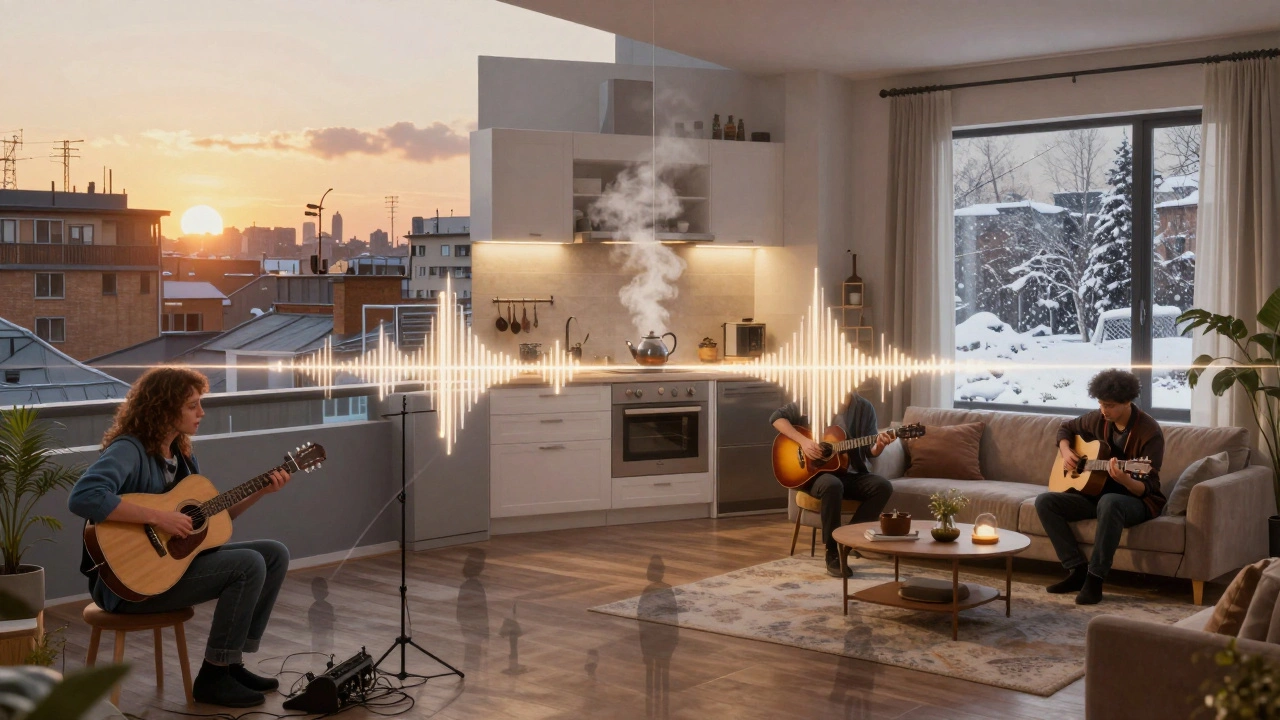
She’s testing a new version: Living Room Relay. Imagine a show that starts in Toronto, moves to a host in Chicago, then to a host in New Orleans-all in one night. The artist plays one song in each space. The audience follows along. The digital stream stitches it together in real time. No editing. No cuts. Just a chain of human moments.
She’s also working with local libraries and community centers to turn unused rooms into permanent hybrid venues. No门票. No profit. Just space. For music. For silence. For being together.
It’s Not About the Stage. It’s About the Space.
The old model said: Go to the place where the music happens. The new one says: Let the music come to you.
Alli Starr’s hybrid stage isn’t about replacing concerts. It’s about reminding us that music doesn’t need a spotlight. It just needs a person willing to sit quietly, listen, and say: I’m here.
Maybe that’s why it’s catching on. Not because it’s new. But because it’s old. Like campfires. Like porch concerts. Like singing to your neighbor across the fence. We forgot how to do that. She’s helping us remember.
Can anyone host a hybrid stage show?
Yes. Alli’s model is designed for anyone with a space and a willingness to connect. You don’t need a big home, expensive gear, or a following. A corner of your living room, a $200 setup, and a few friends are enough. The HomeStage Collective offers free guides, templates, and a community forum to help beginners get started.
Do artists make money with hybrid shows?
Absolutely. Most artists keep 90% or more of donations. Since there are no venue fees, ticketing platforms, or booking agents taking cuts, even small shows can generate $300-$1,200 per night. Some artists report earning more from three home shows than from one club gig. The key is consistency-hosting weekly or biweekly shows builds a loyal audience.
Is the hybrid stage only for solo performers?
No. Duos, trios, and even small bands have adapted the format. One group in Glasgow turned a converted bookstore into a monthly venue where each show features a different lineup of local musicians. They rotate hosts and share equipment. It’s become a hub for regional talent. The setup scales easily-just add more mics and a second camera.
What about sound quality? Isn’t it worse than a studio?
It’s different, not worse. The goal isn’t studio perfection-it’s emotional honesty. Room mics capture the natural reverb of the space, which many listeners find more comforting than sterile studio sound. A 2025 survey of 5,000 hybrid show viewers found that 68% preferred the ‘live room’ sound over studio recordings. They said it felt more human. That’s the point.
Are hybrid shows legal in residential areas?
In most places, yes. As long as noise levels stay within local ordinances and you’re not charging admission, it’s treated like a private gathering. Alli’s team created a legal toolkit that includes sample letters to neighbors, noise guidelines, and tips for avoiding complaints. Many cities have updated their rules in 2025 to recognize home-based cultural events as community-building, not disturbances.
More than 18,000 people have hosted a hybrid show since 2024. That’s not a statistic. It’s a movement. And it’s growing.