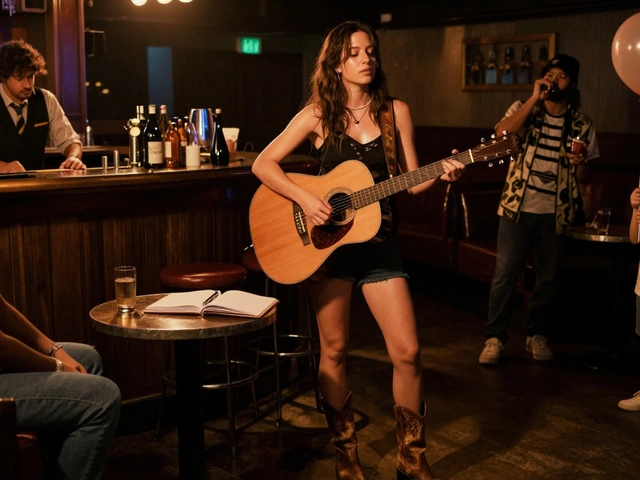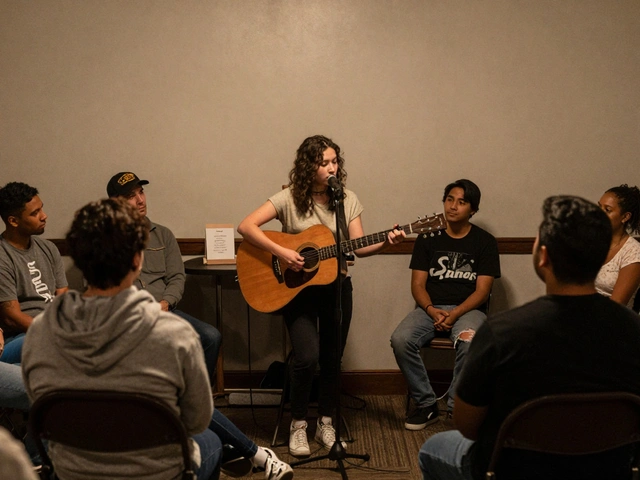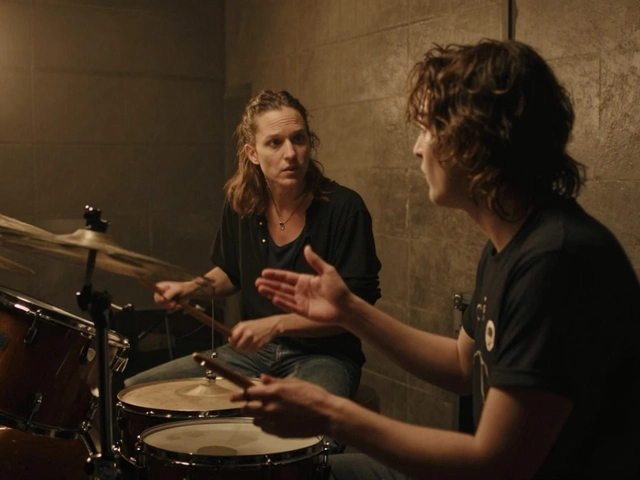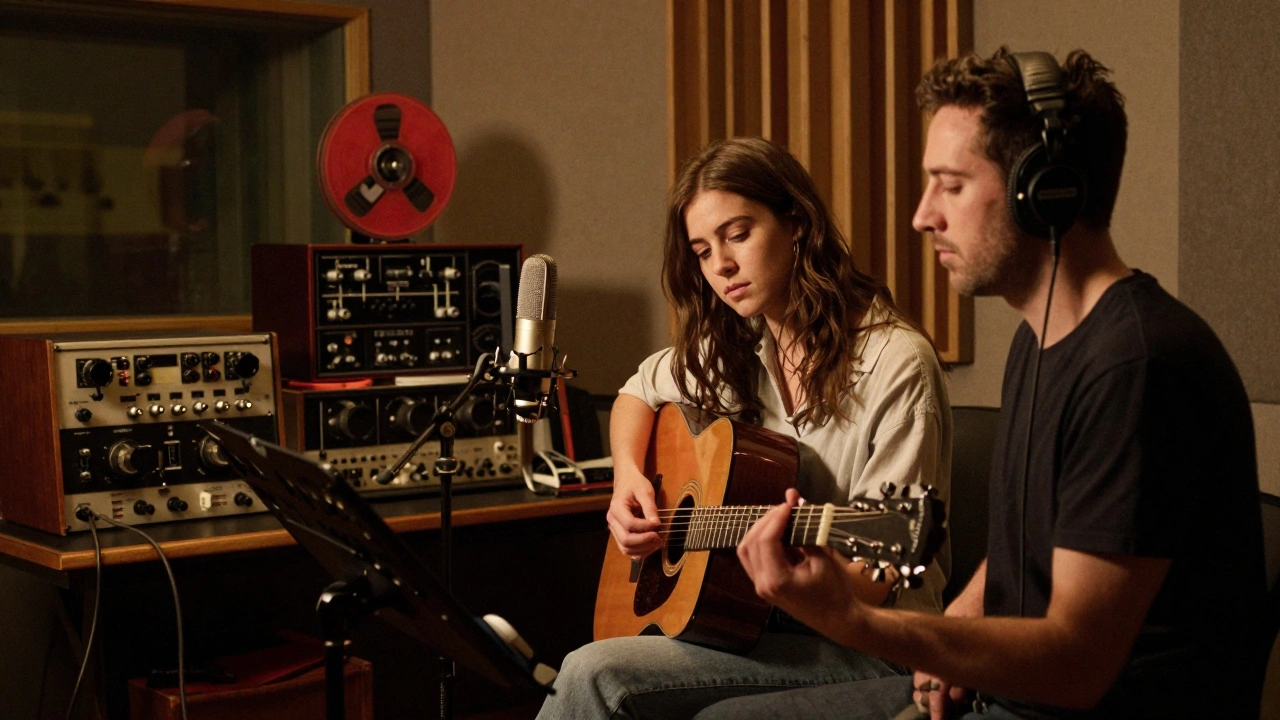
When Alli Starr first walked into a recording studio in Nashville, the engineer didn’t look up from his headphones. He just said, "You’re here for the coffee, right?" That was 2019. She didn’t argue. She just set up her gear, played three songs live, and left him speechless. By the time she finished her session, he was the one asking for advice.
Starr didn’t become a producer by accident. She didn’t wait for permission. She built her credibility one studio, one track, and one stubborn refusal to be ignored at a time. Today, she’s one of the few women in the U.S. with a platinum-producing credit in country and rock - and she’s not alone anymore. But she’s still one of the few who made it without a male mentor, a corporate sponsor, or a viral TikTok moment.
How the Music Industry Still Works Like a Boys’ Club
The numbers don’t lie. In 2025, only 12% of music producers listed on Billboard charts were women. Less than 7% of engineers in major studios were female. At industry panels, women still get asked how they balance motherhood with studio hours - while men are asked about their gear.
It’s not that women aren’t there. They’re in the background - as session singers, assistants, or A&R coordinators. But when it comes to decision-making roles - the ones that decide what gets heard, who gets signed, and what sounds "commercial" - men still hold 89% of those positions.
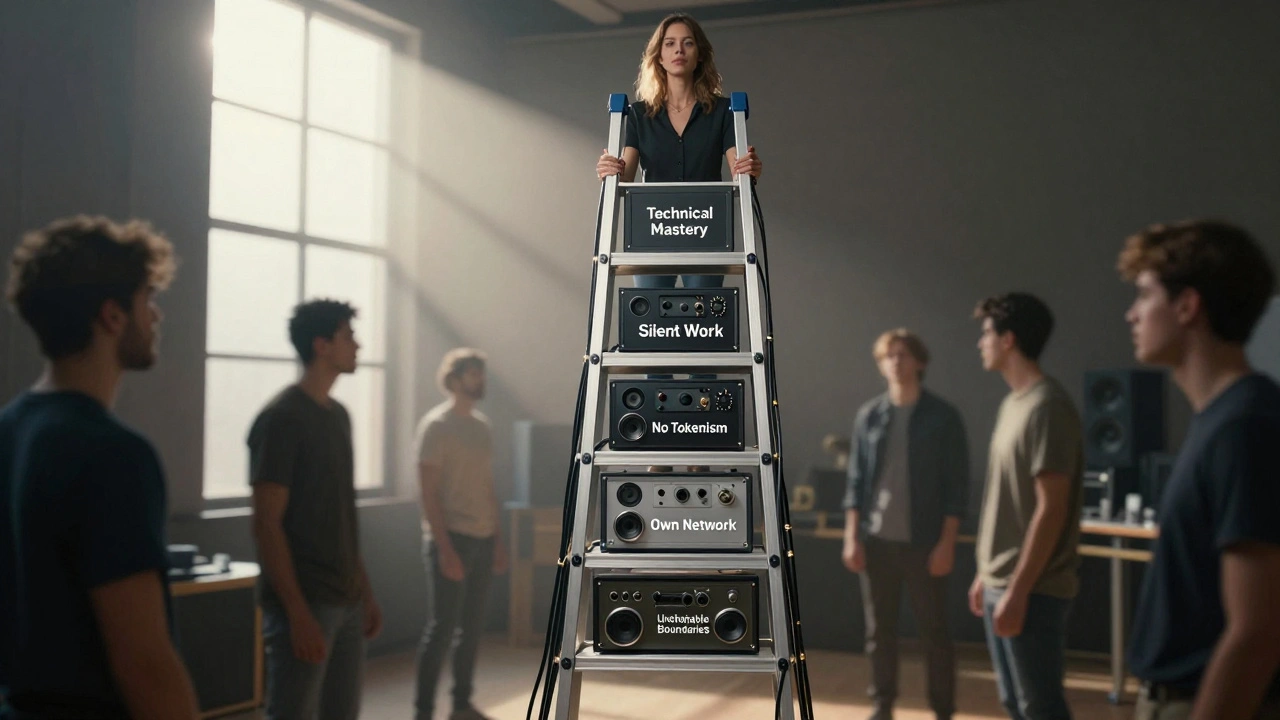
Starr calls it "the invisible ladder." You can climb it, but no one’s going to hand you a rung. You have to build it yourself - out of sweat, silence, and sheer repetition.
Strategy 1: Master the Technical Side Before Anyone Asks
Starr didn’t start as a producer. She started as a guitar tech. She showed up early. Stayed late. Asked questions. Not the kind like, "How does this work?" - but the kind like, "What’s the signal chain for that amp?" and "Why did you use this preamp instead of the Neve?"
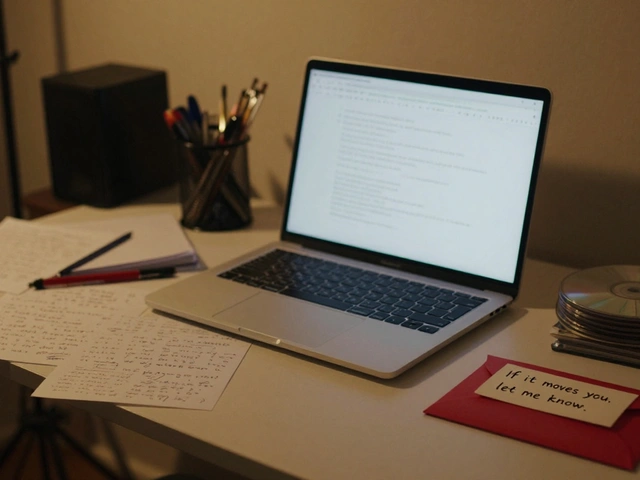
She taught herself Pro Tools by watching YouTube tutorials at 2 a.m. after gigs. She bought used gear on eBay and broke it on purpose just to learn how to fix it. By the time she sat at the console for the first time, she already knew how to patch a mic cable blindfolded.
That’s the first rule: technical mastery is your armor. In male-dominated spaces, people will try to dismiss you as "just a performer." But if you can troubleshoot a compressor while they’re still figuring out where the power cord goes, they have no choice but to listen.
Strategy 2: Work in Silence. Let Your Work Speak.
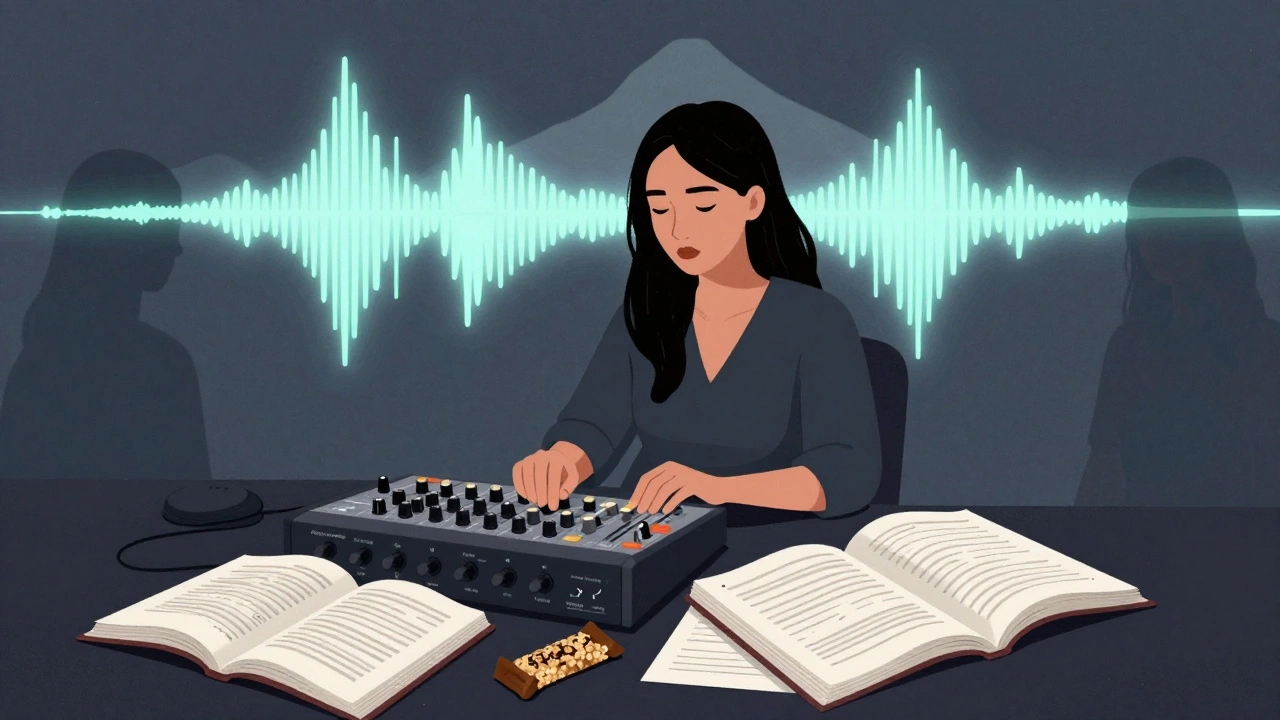
Starr never posted a "look at me" video. No behind-the-scenes reels. No Instagram stories of her holding a mic like a trophy. She worked quietly - on demos, on indie albums, on underground punk records nobody heard.
Her first big break came when a producer from a major label heard a track she produced for a little-known artist in Boise. The track had no marketing budget. No hype. Just a killer drum sound and a vocal take that made him pause mid-sip of coffee.
He called her. Asked who produced it. When he found out it was her - a woman with no public profile - he asked if she’d work on his next project.
That’s the second rule: don’t ask for a seat at the table. Build a better table. Let your work be the reason people come to you. No self-promotion needed. Just results.
Strategy 3: Refuse to Be the "Token Woman"
Starr has been asked to join panels, to be the "female voice" on panels, to speak on "women in music." She says yes - but only if she’s not the only one.
"I’m not here to represent all women," she told me in a Portland café last year. "I’m here because I know how to get a snare to punch through a wall of guitars. If you want diversity, hire five women who know how to do five different things. Don’t hire one woman and call it a day."
She refuses to be reduced to a checkbox. And she’s not alone. More women are doing the same - turning down "inclusion" gigs that don’t come with real power, real pay, or real creative control.
Strategy 4: Build Your Own Network - Not the One They Give You
The old boys’ network? It’s still there. But it’s not the only one.
Starr started a private Slack group in 2021 with 12 other women producers, engineers, and mixers. No men allowed. No self-promotion. Just technical deep dives, gear recommendations, and studio horror stories. It grew to 217 members in 18 months.
They don’t post on LinkedIn. They don’t go to NAMM. They share patch cables, studio addresses, and contacts for reliable mastering engineers who don’t charge extra because you’re a woman.
That’s the fourth rule: create your own ecosystem. You don’t need to be invited into the club. Build your own. And make it better.
Strategy 5: Say No to "Nice". Say Yes to "Necessary".
Starr once got an email from a manager who said, "We’d love to work with you - but we need someone who can be more... collaborative."
She replied: "I’m collaborative. I just don’t compromise on sound. If you want someone who’ll nod and smile while you change my mix, hire someone else."
That’s the fifth rule: don’t soften your voice to fit in. You don’t need to be liked. You need to be respected. And respect comes from clarity, consistency, and boundaries.
She’s had producers try to take credit for her work. She’s been asked to "just sing" on tracks she produced. She’s been told she’s "too intense" for country music.
She’s kept every email. Every contract. Every recording. And she’s filed DMCA takedowns when needed. She doesn’t make drama. She makes documentation.
What’s Changed Since She Started?
More women are in studios. More labels are hiring female engineers. But the real shift? It’s not in numbers. It’s in mindset.
Younger women now walk into studios and say, "I’m the producer. Let’s go." No hesitation. No apology.
Starr gets DMs every week from girls in their teens asking how to get started. She doesn’t send them links. She sends them a list:
- Buy a $200 audio interface. Start recording your friends.
- Learn one plugin inside out - not 10.
- Find one studio that’ll let you shadow for free. Show up early. Stay late.
- Don’t wait for permission. Build your own sound.
- And when someone tries to talk over you? Play the next track. Let the music answer.
Final Thought: You Don’t Need a Seat. You Need a Signal.
The music industry doesn’t need more women who fit in. It needs more women who change the frequency.
Alli Starr didn’t break into the industry. She re-tuned it.
And if you’re a woman trying to make your sound heard - you don’t need to be louder. You just need to be clear. Consistent. Unshakable.
The world will hear you - not because you asked nicely. But because you refused to be quiet.
How did Alli Starr get her first producing credit?
Alli Starr earned her first producing credit on a low-budget indie rock album recorded in a garage in Boise, Idaho. She worked for free for six months, handling every aspect of the session - from mic placement to final mix. The album went viral on underground music blogs, caught the attention of a major indie label, and was later re-released with her name listed as producer. No agent. No pitch. Just results.
What tools did Alli Starr use to learn production?
She started with a Focusrite Scarlett 2i2 interface, a used Shure SM57, and a $50 MIDI keyboard. Her main DAW was Reaper - because it was cheap and didn’t require a credit card to download. She learned by redoing songs from albums she loved, trying to match the sound exactly. She also studied old engineering manuals from the 1970s, which taught her how to work with limited gear.
Is Alli Starr’s approach only for musicians?
No. Her strategy works for any woman in a male-dominated field. Whether you’re a sound engineer, a tech founder, or a construction foreman - the core principles are the same: master your craft, work quietly, build your own network, refuse tokenism, and let your results speak. Her methods are about competence, not genre.
Why doesn’t Alli Starr use social media to promote herself?
She believes social media rewards noise, not skill. Instead of posting videos of her mixing, she spent two years quietly producing 47 tracks for unknown artists. Those tracks became the proof. Now, labels come to her because they’ve heard the work - not because she tweeted about it. She says, "If your work is good, it finds people. You don’t need to chase them."
What’s the biggest mistake women make trying to break into music production?
Waiting to be invited. Too many women wait for someone to say, "You’re ready," or "We need someone like you." But the people who control access rarely see women as producers - until they’ve already proven it. The fastest way in? Start producing now, even if it’s just for your bedroom. Your first project doesn’t need to be perfect. It just needs to exist.