When Alli Starr dropped her first solo EP in 2021, no one expected it to shift the sound of modern R&B. But by the time her second album, Worn Out Hearts, hit number two on the Billboard R&B charts in late 2024, it was clear: something had changed. Her music doesn’t sound like anyone else in the genre right now-not because she’s trying to be different, but because she’s refusing to fit into the boxes everyone else is still using.
She Doesn’t Sing to Fit In
Most contemporary R&B singers today follow a formula: smooth falsetto, layered harmonies, a trap beat with a soulful chord progression, and lyrics about love, loss, or luxury. Alli Starr breaks that pattern by singing like she’s talking to herself in a quiet room at 3 a.m. Her voice isn’t polished for radio play. It cracks on purpose. It breathes too loudly. You can hear her swallow before the chorus. That’s not a mistake-it’s the point.
Take the track Not Your Fix from her 2023 album. The production is minimal: just a muted bassline, a faint synth pulse, and her voice, recorded with a cheap condenser mic in her Portland apartment. There’s no auto-tune. No reverb tail. Just her, singing about how she stopped calling her ex at midnight. The rawness isn’t a gimmick. It’s the emotional core of her entire catalog.
Lyrics That Don’t Sugarcoat
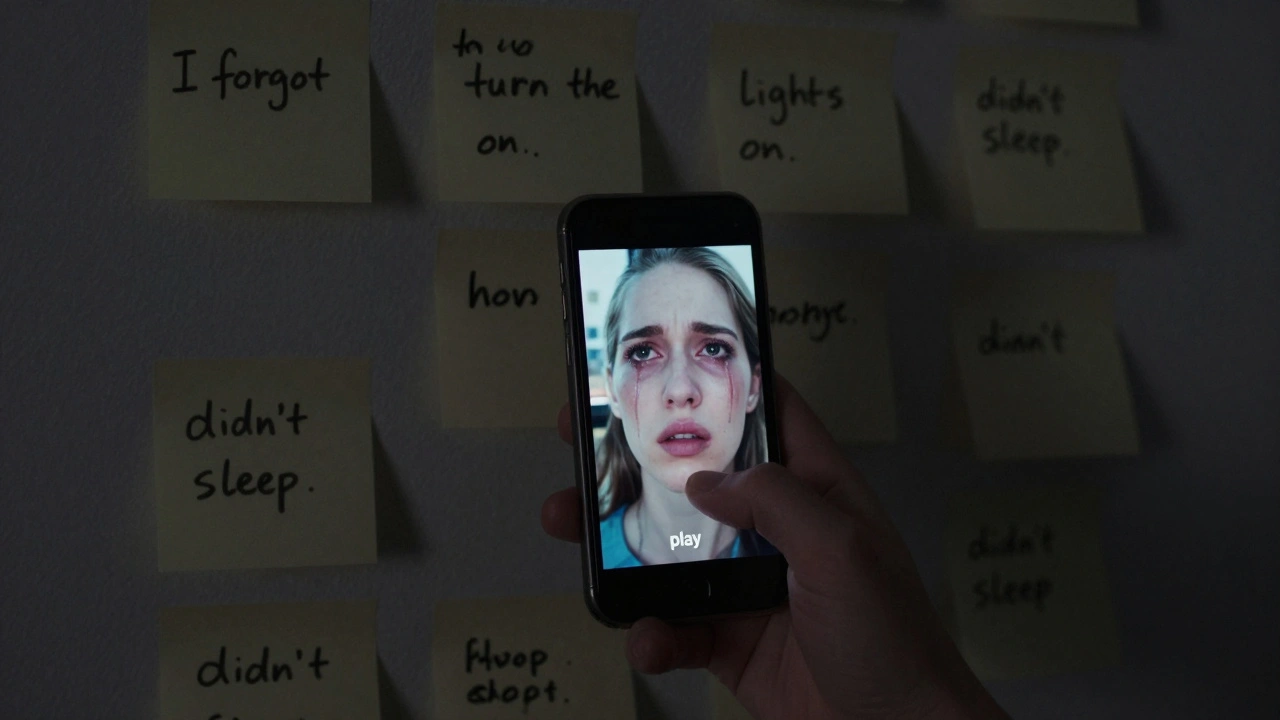
Contemporary R&B often leans into fantasy: love as salvation, heartbreak as poetry, intimacy as performance. Alli Starr writes about the ugly, quiet parts no one talks about. In Still Woke Up Alone, she sings: "I didn’t cry when you left. I just forgot how to turn the lights on." No metaphors. No poetic twists. Just the truth, stripped bare.
Her songwriting avoids clichés like "baby," "my love," or "forever." She doesn’t use rhyme for the sake of rhythm. Her lines often end in fragments. In February, she repeats: "I bought new sheets. Didn’t sleep. Didn’t sleep. Didn’t sleep." The repetition isn’t lazy-it’s exhausting. And that’s the point. She’s not trying to make you feel better. She’s making you feel seen.
Production That Feels Unfinished
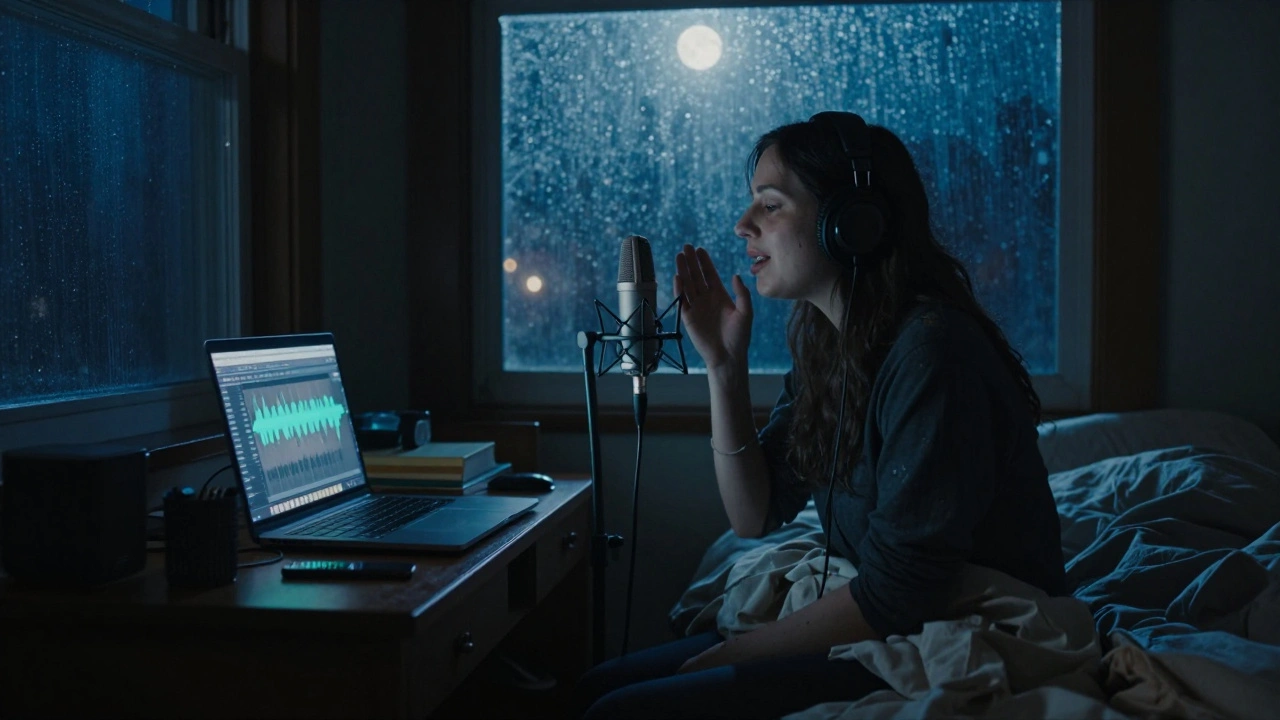
Her albums don’t sound like they were made in a studio. They sound like they were made in a bedroom, with headphones on, late at night, after a long day. She works with a small team of engineers who’ve been with her since her early demos. No big-name producers. No session musicians. Just her, a MIDI keyboard, and a laptop running GarageBand.
On Worn Out Hearts, you can hear the faint sound of rain tapping against her window during Drift. The track ends with a 12-second silence-no fade-out, no echo. Just quiet. Critics called it "bold." Fans called it "the most honest thing I’ve heard all year."
Compare that to the polished, radio-ready sound of artists like SZA or Brent Faiyaz. Their music is meticulously crafted. Alli Starr’s music feels like it’s still being made. You can hear the hesitation. The doubt. The relief when she finally lets go.
She Rejects the Star System
Alli Starr doesn’t do interviews. She doesn’t post on Instagram. She doesn’t tour. Her label tried to push her into a branded merch line. She refused. Her manager says she once said: "If people want to hear me, they’ll find me. If they don’t, that’s fine. I’m not here to be liked."
This isn’t rebellion for the sake of it. It’s a quiet rebellion against the idea that R&B artists must perform their pain to sell it. She doesn’t want to be a symbol. She wants to be a signal. A signal that says: You don’t have to be loud to be felt.
Her music spreads through word of mouth. A friend sends a link. A stranger leaves a comment on YouTube: "This song knew I was crying before I did."" That’s how she’s built a fanbase of over 2.3 million monthly listeners on Spotify without ever doing a single ad campaign.
Her Sound Is a Reaction to Overproduction
Modern R&B has become a genre of excess: too many vocal layers, too many effects, too many producers trying to make every song feel like a blockbuster. Alli Starr’s music is the opposite. It’s underproduced. Underpromoted. Underestimated.
But that’s what makes it powerful. She strips away everything that’s not essential. No ad-libs. No background choirs. No dance breaks. Just voice, emotion, and space. Her songs are like silent films-no soundtrack needed because the silence speaks louder than the music.
Artists like H.E.R. and Leon Bridges brought back classic soul. Alli Starr is doing something different: she’s building a new kind of soul for people who don’t believe in grand gestures anymore.
Why She Matters Now
In 2026, we’re tired of perfection. We’re tired of curated pain. We’re tired of songs that make us feel like we’re watching someone else’s therapy session instead of living through our own.
Alli Starr’s catalog matters because it doesn’t ask you to admire it. It asks you to recognize it. You don’t need to know music theory to feel her songs. You just need to have been alone. You just need to have wanted to say something but didn’t know how.
Her music isn’t about breaking records. It’s about breaking through.
She’s not the next big thing. She’s the thing we didn’t know we needed.
What makes Alli Starr’s vocal style different from other R&B artists?
Alli Starr’s voice doesn’t aim for technical perfection. She lets cracks, breaths, and hesitations stay in the recording. Unlike most R&B singers who use auto-tune and layered harmonies to create a polished sound, her vocals are raw and unfiltered-like a conversation recorded in real time. This approach makes her emotions feel immediate and personal, not performative.
Why does Alli Starr avoid social media and interviews?
She believes music should speak for itself, not be packaged as a brand. Alli Starr rejects the pressure to perform her identity for fans or media. She doesn’t want to be a celebrity-she wants to be a voice that people find when they’re ready for it. Her silence isn’t mysterious; it’s intentional. It’s a statement against the industry’s obsession with visibility.
How does her production style differ from mainstream R&B?
Mainstream R&B often uses high-end studios, professional engineers, and multi-layered production. Alli Starr records in her apartment using basic equipment-sometimes just a laptop and a single mic. She leaves ambient sounds like rain or creaking floors in the tracks. Her albums feel unfinished on purpose, creating an intimate, almost private listening experience.
Is Alli Starr’s music considered underground?
Yes, but not because it’s unknown. She’s streamed over 2.3 million times monthly on Spotify, and her albums charted on Billboard. "Underground" here means she operates outside the industry’s promotional machine. She doesn’t rely on radio play, influencer campaigns, or label-driven marketing. Her success comes from organic listener connection, not manufactured buzz.
What albums best represent her distinct sound?
Her 2023 album Worn Out Hearts is the clearest example. It includes tracks like Still Woke Up Alone and Drift, where silence, minimal instrumentation, and unedited vocals define her style. Her 2021 debut EP, Small Quiet, is where the sound began-raw, unpolished, and emotionally direct.