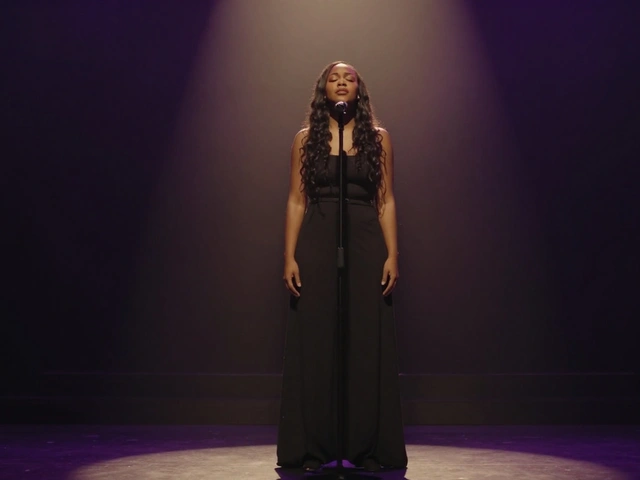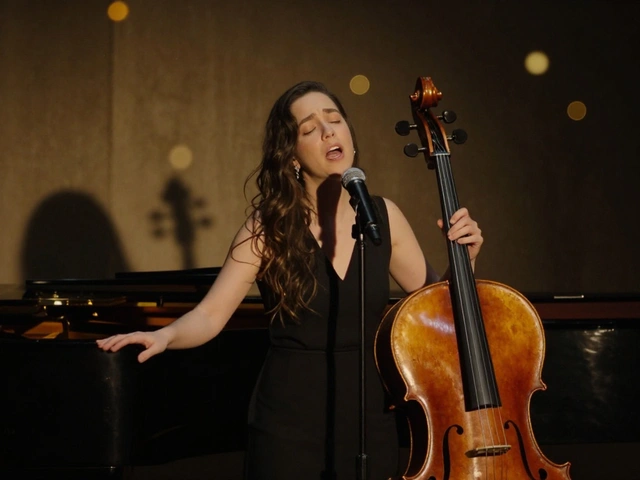
Most songwriters focus on what to say. Alli Starr focuses on what to leave out. Her lyrics don’t just tell stories-they breathe. And that breathing? It’s built on silence and space. Not the kind you hear between notes, but the kind you feel in the pause before a line lands. If you’ve ever sat still after one of her songs ended, wondering why your chest felt tight, you’ve felt the power of her pacing. It’s not about speed. It’s about weight.
What Silence Does to a Lyric
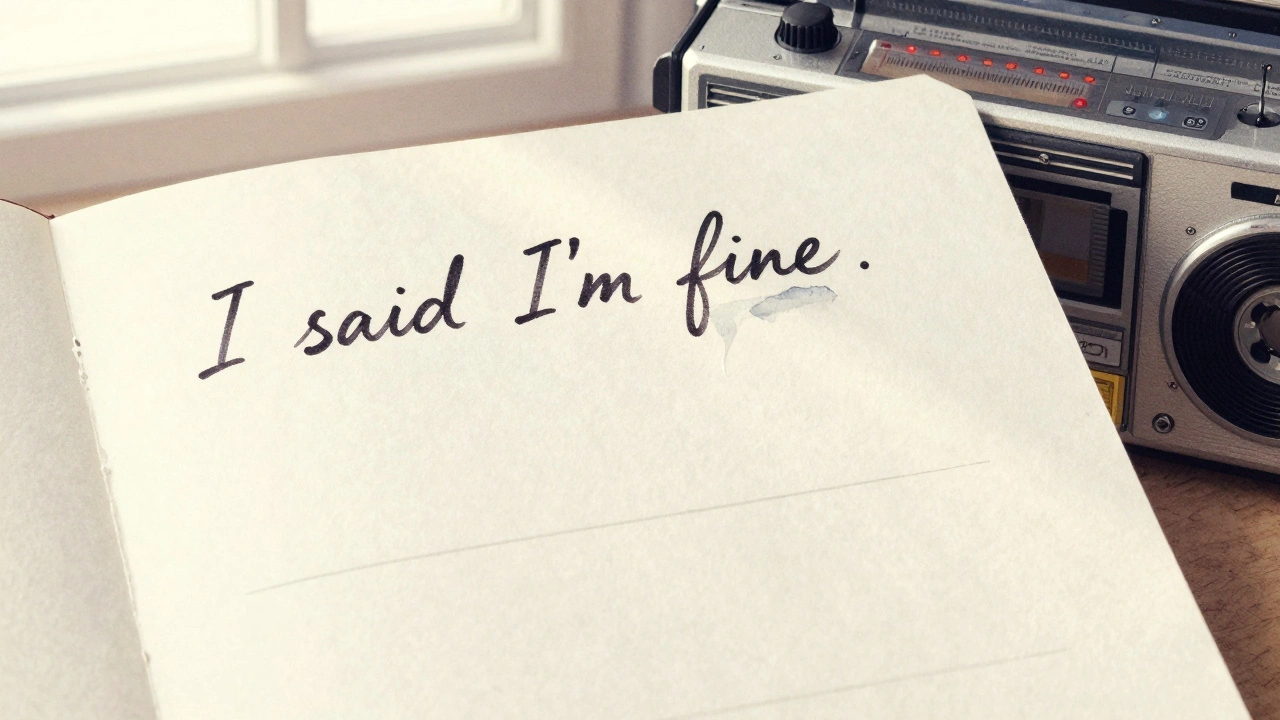
Think of a lyric like a punch. If you throw one right away, it’s just noise. But if you pull your arm back, hold it, then strike-that’s when it hurts. Alli Starr uses silence like a boxer uses a feint. In ‘The Quiet Between Heartbeats,’ she sings, "I said I’m fine," then stops. No music. No drums. Just air. And that three-second gap? That’s where the listener starts to doubt. That’s where they remember their own lies.
She doesn’t write silence into the sheet music. She writes it into the emotional arc. The space after "I still love you," in ‘Frayed at the Edges,’ isn’t empty. It’s full of everything unsaid. Listeners don’t hear the pause. They feel it. And that’s the difference between a lyric and a moment.
Space as a Structural Tool
Most pop songs cram every second. Chorus, verse, bridge, pre-chorus, outro-all stacked like books on a shaky shelf. Alli Starr’s songs feel like open rooms. She leaves gaps between phrases. Sometimes between lines. Occasionally, between words.
In ‘Barefoot on Concrete,’ the entire second verse is built on a single line: "You didn’t call." It comes after a full 12 seconds of instrumental quiet. No reverb. No echo. Just the hum of a room. That space isn’t an accident. It’s a choice. It forces the listener to sit with the weight of abandonment. No drums. No harmonies. Just the rawness of a sentence that hangs too long to ignore.
She treats space like a chord. Not a background element, but a core voice in the arrangement. In interviews, she says, "If the song’s crying, don’t drown it out. Let it cry alone for a while." That philosophy changes how you write. You stop asking, "What else can I add?" and start asking, "What can I take away?"
How She Builds Pacing Without Tempo
Tempo doesn’t control pacing. Weight does. Alli Starr’s songs rarely change BPM. Yet they feel like they’re speeding up, slowing down, holding their breath. How?
- She uses line length to create rhythm. Short lines. Then a long one. Then silence.
- She repeats phrases with slight variations, letting the space between repetitions build tension.
- She ends verses on open vowels-"gone," "home," "know,"-so the sound lingers even after the voice stops.
In ‘October Stillness,’ the bridge has no melody. Just her voice whispering, "I waited." Then silence. Then, three seconds later, a single piano note. That note doesn’t resolve. It just hangs. And for 11 seconds, nothing else happens. That’s pacing. Not a change in speed. A change in attention.
Why This Works-The Science Behind the Silence
Neuroscience backs this up. When sound stops, your brain doesn’t stop processing. It fills the gap. Studies from the University of Oregon show that listeners experience heightened emotional response during musical silence. The brain starts generating its own emotional content-memories, regrets, hopes.
Alli Starr’s silence doesn’t just pause the music. It activates the listener’s inner monologue. You don’t just hear her lyrics. You start writing your own. That’s why her songs stick. Not because they’re catchy. Because they’re mirrors.
She doesn’t sing to you. She sings beside you. And lets you fill the quiet with your own truth.
What Other Songwriters Get Wrong
Many try to copy her. They add long pauses. They drop out the beat. They think that’s all it takes. But it’s not. Empty space without emotional intent is just awkward. It’s the difference between a pause in a conversation and a dead air on a bad Zoom call.
Alli’s silence works because it’s earned. Every gap follows a moment of vulnerability. Every break comes after a confession. You can’t fake that. You can’t insert silence like a plugin. It has to grow from the lyric’s core.
Compare her to a songwriter who uses silence as a trick. They’ll cut the music for a beat before the chorus. It feels like a gimmick. Alli’s silence feels like a sigh. One is decoration. The other is revelation.
How to Use Silence in Your Own Writing
You don’t need to write like Alli Starr to learn from her. But you do need to stop fearing quiet.
- After writing a line, read it aloud. Where do you naturally hesitate? That’s your space.
- Try cutting one word from your chorus. Then wait. Does the meaning deepen or vanish?
- Write a verse without any rhyme. Let the rhythm live in the breath between phrases.
- Record yourself singing. Then mute the audio. Just watch the timing. Where do you pause? That’s where emotion lives.
- Ask: "What’s the silence saying?" If the answer is "nothing," delete it.
Her songs aren’t hard to write. They’re hard to endure. That’s why so few try. But if you’re ready to let your lyrics breathe, start by leaving room for the listener to enter.
Why Alli Starr’s Approach Matters Now
In 2026, music is louder than ever. Algorithms push songs that grab attention in the first three seconds. But attention isn’t connection. Alli Starr’s music doesn’t compete. It waits. And in a world that never stops talking, that’s revolutionary.
Her fans don’t stream her songs. They sit with them. They replay them. Not because they’re complex. Because they’re honest. And honesty needs space to land.
When everything is engineered for instant impact, the most powerful thing you can do is stop. Let the listener feel the weight of what’s left unsaid. That’s not a trend. It’s a return to something older than music.
It’s silence.
Why does silence in lyrics feel more emotional than loud music?
Silence doesn’t just stop sound-it stops distraction. When music fades, your brain stops processing external signals and turns inward. That’s when memories, emotions, and personal associations rise to the surface. Alli Starr’s lyrics often touch on loss, regret, or quiet longing. The silence after those lines gives your mind room to connect those themes to your own life. That’s why it hits harder than any chorus.
Can silence be overused in songwriting?
Yes. Silence that’s not earned feels like a mistake, not a choice. If you pause for no reason-no emotional buildup, no lyrical weight-it just confuses listeners. Alli Starr’s silence always follows a moment of vulnerability. It’s not about length. It’s about context. A 10-second pause after a confession feels like healing. A 10-second pause after a cliché feels like boredom.
Do I need to write sparse lyrics to use silence effectively?
No. You can have dense lyrics and still use space. The key is pacing. Alli Starr sometimes uses long, flowing lines-then drops everything for a single word. It’s not about how much you say. It’s about how you let it land. One powerful line, followed by silence, can do more than a whole verse of rhymes.
How do I know if my silence is working?
Play the song for someone and watch their face. If they lean in. If they pause before speaking. If they say, "Wait, what was that?"-you’ve done it right. If they laugh nervously or check their phone, you’ve added empty space. Real silence makes people uncomfortable in a good way. It pulls them into the song instead of pushing them away.
Can silence work in fast-paced songs?
Absolutely. Speed doesn’t kill space-it changes its shape. In a fast song, silence might be a half-beat rest between lyrics. Or a skipped strum. Or a breath taken mid-phrase. Alli Starr’s song ‘Rush Hour’ is a punk-pop track, but it has a 0.8-second gap after the line "I didn’t mean to break you," right before the final chorus. That tiny pause makes the line land like a door slamming. It’s not slow. It’s surgical.