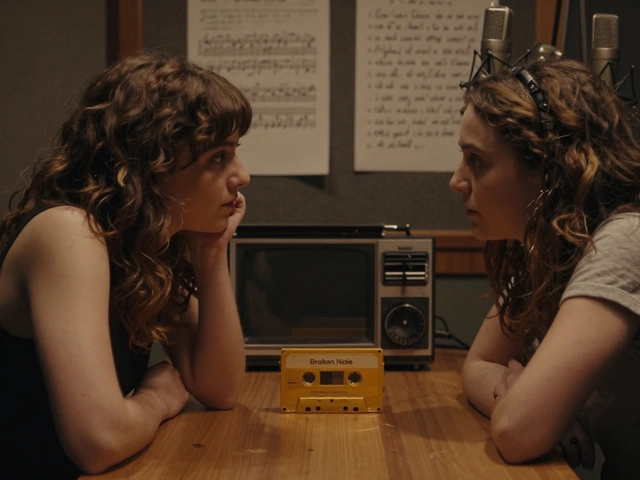
When Alli Starr first started singing backup vocals, she thought it was just about blending in. She’d show up to sessions, follow the sheet music, and hope she didn’t stand out. But after a few months of singing with a tight-knit ensemble in Portland, something shifted. She didn’t just learn how to hold a note-she started hearing the architecture of R&B music in a whole new way.
What Ensemble Singing Really Means
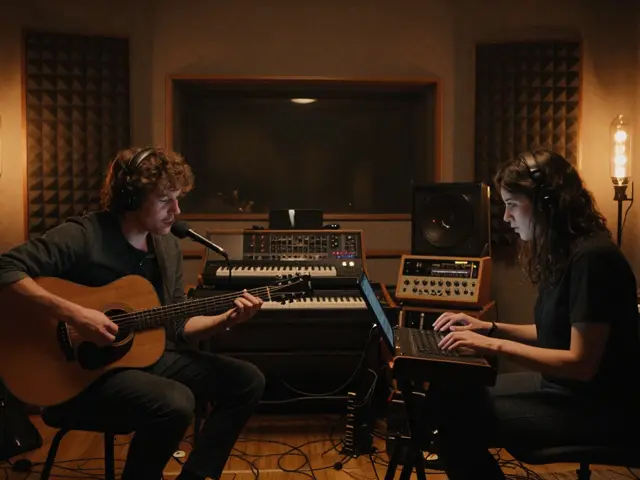
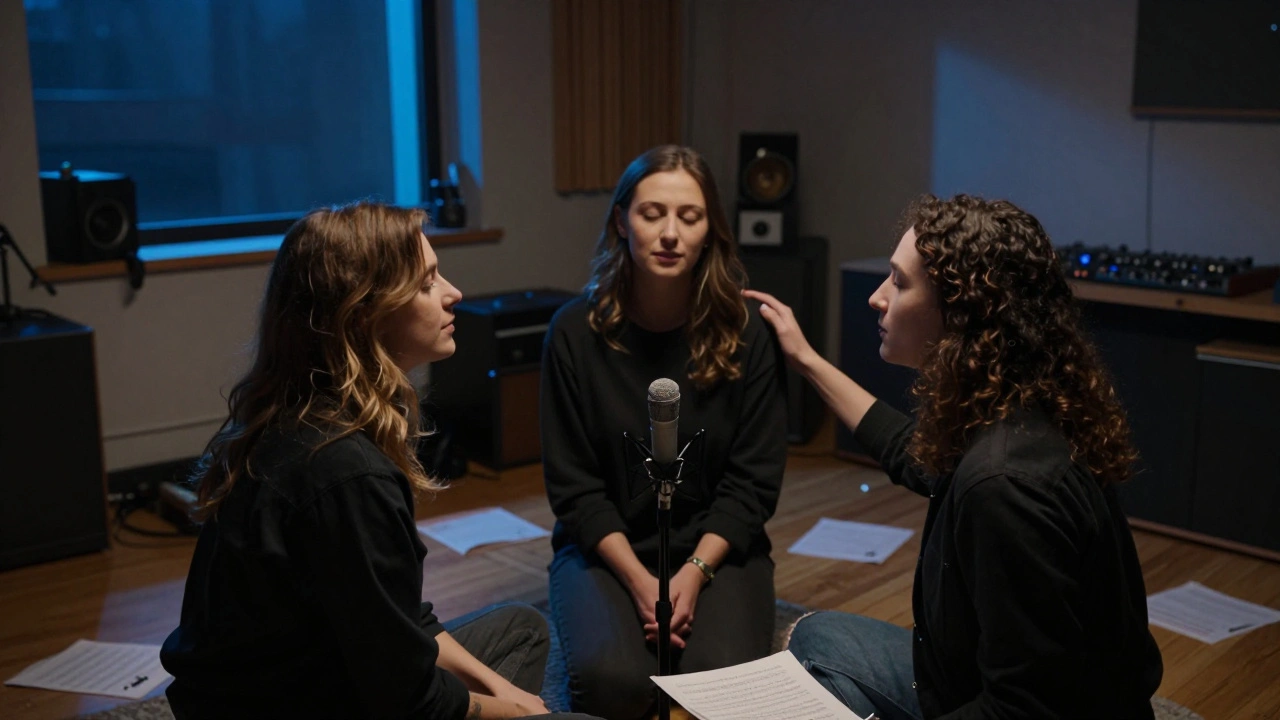
Ensemble singing isn’t just a group of people singing the same melody. It’s a conversation. In R&B, the backing vocals aren’t there to fill space-they’re the glue. They lift the lead, anchor the harmony, and sometimes even carry the emotion when the lead singer takes a breath. Alli learned this the hard way during a late-night studio session for a local artist’s debut album. The producer stopped the track after three takes. "You’re all singing the same thing," he said. "But no one’s listening to each other."
That moment stuck with her. She started showing up early to rehearsals, just to listen. She’d mute her own mic and focus on how the tenor’s third harmonized with the bass’s fifth. She noticed how the lead singer would slightly delay a phrase on the word "love," and how the backup singers would stretch that delay by a fraction of a beat to make it feel heavier. That’s when she realized: R&B arrangements are built on timing, tension, and space-not just pitch.
The Anatomy of a Backing Vocal Line
Before ensemble singing, Alli thought backing vocals were just "oohs" and "ahhs." But in real R&B, every line has a job. She started breaking down classic tracks like Whitney Houston’s "I Will Always Love You" and Marvin Gaye’s "I Heard It Through the Grapevine." She found patterns:
- Roots and fifths in the lower harmonies-these give the song its foundation.
- Thirds and sixths in the mid-range-these add color and lift.
- Octave doubling on key phrases-this makes the lead feel bigger without shouting.
- Call-and-response between backup groups-this creates movement, like a wave.
She began transcribing these parts by ear. Not just copying them-understanding why they were placed where they were. One night, she wrote out the backing vocal chart for a song she’d never heard before, then sang it with her group. They nailed it on the first try. The producer said, "How’d you do that?" Alli just smiled. "I stopped thinking about my part. I started thinking about the whole thing."
Harmony Isn’t Just Notes-It’s Emotion
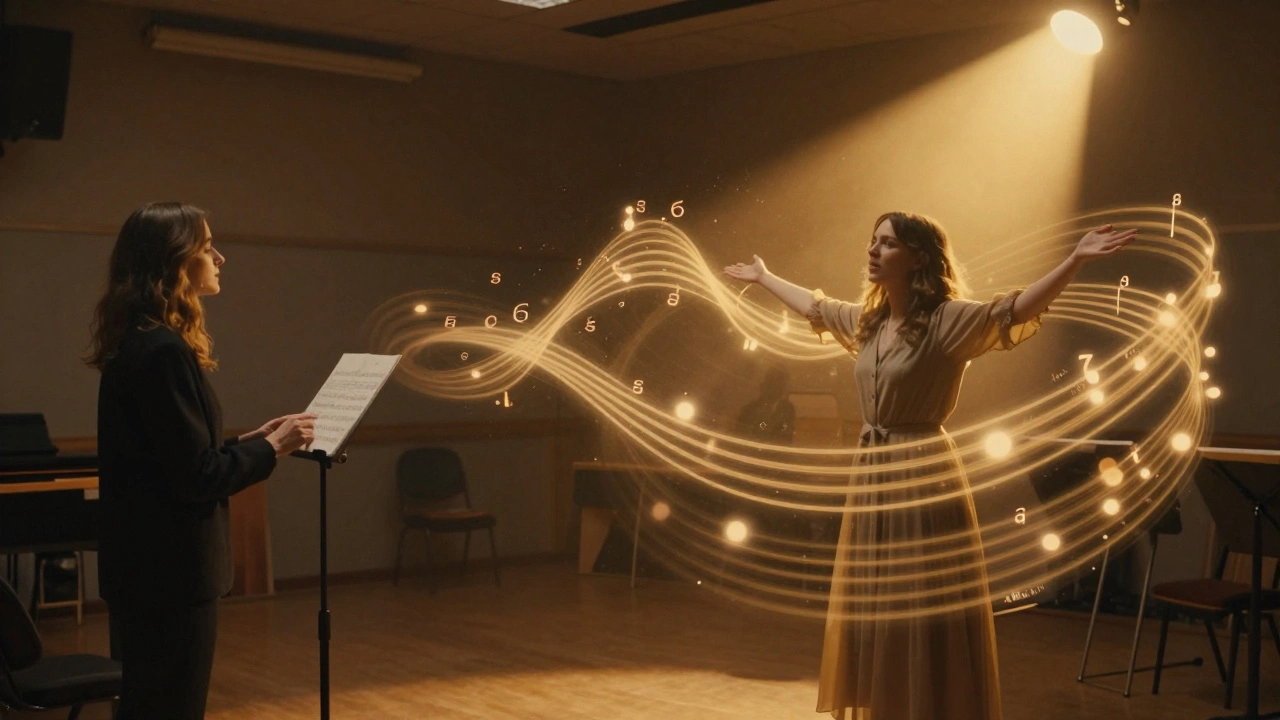
Ensemble singing taught Alli that harmony isn’t about perfection. It’s about feeling. In one session, the lead singer was going through a breakup. Her voice cracked on the bridge. Instead of smoothing it out, the ensemble leaned into it. One singer dropped a half-step. Another added a whispery breath. The result? Raw. Real. Unpolished-and it became the most powerful moment on the track.
Alli had always been taught to "fix" mistakes. But in R&B, mistakes can become the soul. She started experimenting. Sometimes she’d sing slightly flat on purpose if the lead was pushing too hard. Other times, she’d add a vibrato that wasn’t in the chart because the room felt heavy. The group began calling her "the emotional tuner." She didn’t mind. She finally understood: R&B arrangements breathe. They don’t just play-they react.
How the Ensemble Became Her Teacher
Alli didn’t have formal training in vocal arrangement. She didn’t go to music school. But her ensemble became her classroom. Every rehearsal was a lesson. One member, a former gospel singer, showed her how to use dynamics like punctuation. Another, who’d worked with Stevie Wonder, taught her how to lock into the pocket of the bassline with your voice. They didn’t lecture. They just sang-and let her figure it out.
She started noticing things she’d never paid attention to before. Like how the lead singer’s breaths were timed to match the snare. Or how the background harmonies on the chorus would shift subtly to create a sense of rising tension. She began writing her own backing vocal parts for demos. Her first original song had a bridge where the harmonies spiraled upward like a ladder. The producer asked, "Where’d you learn that?" She said, "I learned it from listening to my own voice in the room with others."
Why Backup Singing Isn’t Secondary
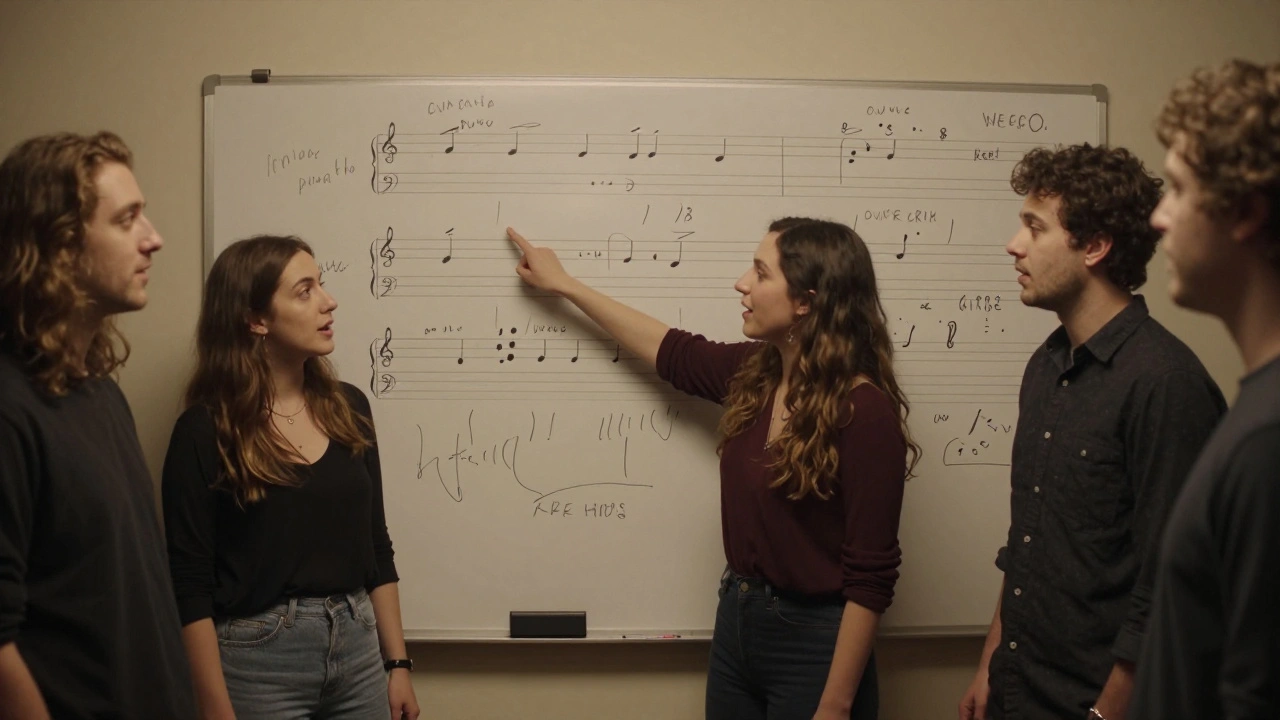
People still think backup singers are just support. But Alli knows better. In R&B, the backing vocals often carry the hook. Listen to "Ain’t No Mountain High Enough"-the harmonies on "I’ll never let you down" are what make you feel like you’re flying. The lead sings the story. The ensemble sings the feeling.
Alli used to worry she’d never get her own spotlight. Now she doesn’t care. She’s found her voice-not as a lead, but as a builder. She’s the one who knows how to make a vocal line feel like it’s hugging the listener. She’s the one who can hear when a harmony needs to be a little sharper, or softer, or longer. And she’s the one who taught herself that the most powerful notes aren’t always the ones you sing alone.
What She Does Now
Today, Alli works as a vocal arranger for indie R&B artists in Portland. She doesn’t just sing-she maps out harmonies before a session. She writes charts that include not just notes, but breathing cues, dynamic shifts, and emotional intent. She’s trained three other backup singers who now do the same. And she still shows up to rehearsals early, just to listen.
She says the best advice she ever got wasn’t from a producer or a coach. It was from a fellow backup singer who told her: "Your job isn’t to be heard. It’s to be felt."
Why is ensemble singing important for learning R&B arrangements?
Ensemble singing forces you to listen beyond your own part. In R&B, harmony isn’t just stacked notes-it’s a living, breathing layer that responds to the lead, the rhythm, and the emotion of the moment. Singing in a group teaches you how to lock into timing, adjust pitch for emotional effect, and understand how each voice contributes to the whole. You don’t just learn the theory-you feel the structure.
Can backup singers become arrangers?
Absolutely. Many of the best R&B arrangers started as backup singers. They learned the craft from the inside out-by hearing how harmonies interact, how dynamics shape a song, and how small adjustments create big impacts. Alli Starr didn’t take a class to become an arranger. She learned by singing in a group, paying attention to every note, and asking herself: "Why does this part feel right?" That’s how real arrangement skills are built.
Do you need formal music training to arrange R&B vocals?
No. While formal training helps, many of the most influential R&B arrangers never read sheet music. What matters is ear training, emotional sensitivity, and experience singing with others. Alli Starr learned by listening, transcribing classic tracks by ear, and experimenting in live rehearsals. The ability to hear intervals, recognize chord tones, and feel phrasing matters more than knowing music theory notation.
How do backup singers improve their harmonic skills?
Start by singing along to classic R&B records with the lead vocal turned down. Try to match the harmony parts by ear. Focus on songs with clear backing vocals like those by Aretha Franklin, Earth, Wind & Fire, or Maxwell. Record yourself and compare. Join a local ensemble or gospel choir-real-time feedback is irreplaceable. Practice singing intervals (thirds, fifths, sixths) without piano support. Over time, your ear will internalize the structure of R&B harmony.
Is ensemble singing only for professional singers?
No. Ensemble singing is one of the best ways for any singer to grow, whether you’re a beginner or a pro. It builds listening skills, vocal control, and musical intuition faster than solo practice. You don’t need to be perfect-you just need to show up and pay attention. Many professional arrangers, including Alli Starr, say their most valuable lessons came from singing in community choirs and informal studio groups, not from lessons or textbooks.