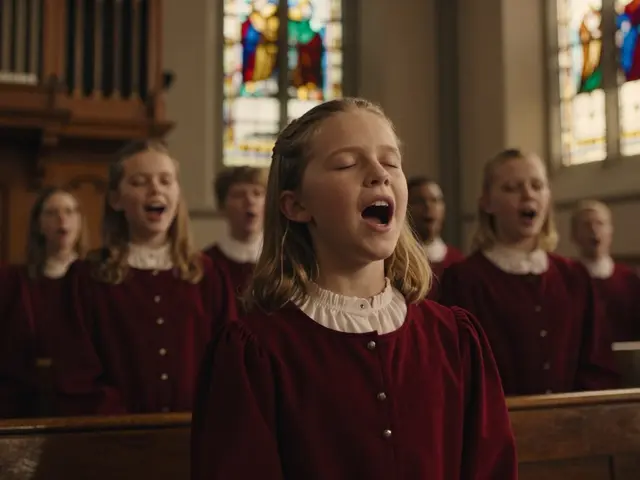
Most people think backup singing is just about singing behind the lead vocalist. They picture someone standing still, quietly harmonizing, invisible until the credits roll. But if you’ve ever watched Alli Starr perform live, you know that’s not even close to the truth. Backup singing isn’t about blending in-it’s about connecting. It’s the quiet art of holding the audience’s attention even when you’re not the center of the stage.
What Backup Singing Actually Does
Alli Starr has sung backup for over a dozen touring artists since 2018, from indie folk acts to soul revivalists. She’s not just hitting notes. She’s reading the room. When the lead singer pauses for a breath, Alli stretches the last vowel just a little longer-giving the crowd time to breathe with them. When the chorus hits, she leans into the harmony so hard it feels like the song is lifting off the stage. She doesn’t sing louder. She sings deeper.
Studies from the Berklee College of Music show that audiences subconsciously latch onto harmonies more than lead vocals. Harmonies create emotional texture. They make a song feel bigger than one voice. Alli knows this. She doesn’t just follow the melody-she builds a bridge between the lead singer and the crowd. Her voice becomes the emotional glue.
The Silent Language of Stage Presence
Look at any live performance video of Alli. Notice how she moves. Not like a dancer. Not like a show-off. She leans into the mic like she’s sharing a secret. She makes eye contact with the front row-not to stare, but to say, I see you. When the lead singer turns away, Alli steps slightly forward, her body language saying, Keep listening.
This isn’t choreography. It’s instinct. Backup singers who just stand there fade into the background. But Alli? She turns silence into tension. She turns stillness into intention. In 2023, during a sold-out show in Portland, a fan posted a TikTok video of her during a quiet bridge. No one was singing. Just Alli, holding a single note, eyes closed, swaying slightly. The video got 2.3 million views. Comments poured in: “I cried because I felt heard.” “She made me feel like I was the only one there.”
That’s not luck. That’s mastery.

How Backup Singing Teaches Emotional Timing
Most lead singers train for power. Range. Projection. Alli trained for timing. She learned how long to hold a note before the beat drops. How to breathe in sync with the crowd’s exhale. How to pause just one beat too long so the silence becomes part of the song.
Think about it: when a lead singer hits a high note, the audience cheers. But when a backup singer holds a low harmony just as the music fades, the crowd leans in. That’s the magic. It’s not about being heard. It’s about being felt.
Alli once told a journalist, “I don’t sing to be noticed. I sing so no one feels alone.” That’s why she’s been asked to join tours again and again. Not because she’s the best vocalist. But because she’s the best listener.
The Hidden Skills of a Backup Singer
Here’s what most people don’t realize: backup singers do more than sing. They’re emotional engineers.
- They adjust pitch based on the lead singer’s fatigue-sometimes singing a half-step lower to soften a strained note.
- They mirror facial expressions to help the lead stay in character.
- They read crowd energy and adjust volume without being told-quieter when the room is hushed, louder when the vibe is rising.
- They know which harmonies calm a nervous crowd and which ones ignite it.
Alli keeps a journal. Not of lyrics. Of moments. She writes down how a room reacted when she sang a minor third instead of a major. How a single mother in the front row cried when Alli hit a note that reminded her of her late grandmother. She doesn’t memorize songs. She memorizes people.

Why This Matters for Anyone Who Performs
You don’t have to be a singer to learn from Alli. Whether you’re a teacher, a speaker, a therapist, or a parent reading bedtime stories-your job is the same: connect.
Lead singers get the spotlight. But backup singers get the soul of the performance. They’re the ones who turn a good show into a sacred moment. They don’t need to be the loudest. They just need to be the most present.
That’s the real masterclass. Not in vocal technique. Not in pitch accuracy. But in the quiet, relentless act of showing up-fully, honestly-for someone else.
What Alli Starr Teaches Us About Being Seen
There’s a myth that to matter, you have to be in front. That you need to be the voice everyone hears. But Alli’s career proves the opposite. Sometimes, the most powerful voice is the one that doesn’t demand attention.
She’s never had a solo album. Never headlined a tour. Yet fans call her “the heartbeat” of every show she’s ever sung in. People come to her concerts just to watch her. Not because she’s flashy. But because she makes them feel like they’re part of something real.
That’s the secret. Connection isn’t about volume. It’s about resonance. And Alli Starr? She’s tuned to the frequency of human emotion.
Is backup singing considered a real music career?
Absolutely. Many professional backup singers earn more than lead artists they support. Alli Starr, for example, books 6-8 tours a year with top indie acts and earns a steady six-figure income. Backup singing is a full-time, skilled profession that requires vocal precision, emotional intelligence, and stagecraft. It’s not a stepping stone-it’s a destination for many.
Can you learn backup singing without formal training?
Yes. Alli Starr never took voice lessons. She learned by listening-hundreds of live shows, late-night jam sessions, and recording herself for hours. The key isn’t perfect pitch. It’s ear training and emotional awareness. Many top backup singers are self-taught. What matters is your ability to match tone, timing, and feeling-not your degree.
Why do some lead singers rely so heavily on their backup singers?
Because the best lead singers know they can’t carry the whole performance alone. A lead’s voice is the spark-but backup singers are the fuel. They smooth out cracks in live vocals, add depth to studio recordings, and hold the emotional space when the lead is overwhelmed. Alli’s collaborators say she’s the reason their songs feel alive in concert. She doesn’t just sing harmony-she saves performances.
Do backup singers get credit for their work?
Legally, yes-on album credits, tour programs, and streaming platforms. But culturally, no. Most audiences don’t know who they are. That’s changing. Alli’s rise has sparked a movement: fans now tag backup singers in concert videos, and labels are starting to feature them in promotional material. Recognition is growing, but it’s still earned through reputation, not headlines.
How can someone start a career in backup singing?
Start by recording yourself singing harmonies over popular songs and posting them online. Join local choirs or open mics to practice live. Build relationships with local musicians-they’ll call you when they need a reliable voice. Alli’s first gig came from a friend who needed someone to fill in at a last-minute show. She showed up prepared, listened more than she sang, and never missed a cue. That’s how careers begin-not with auditions, but with trust.