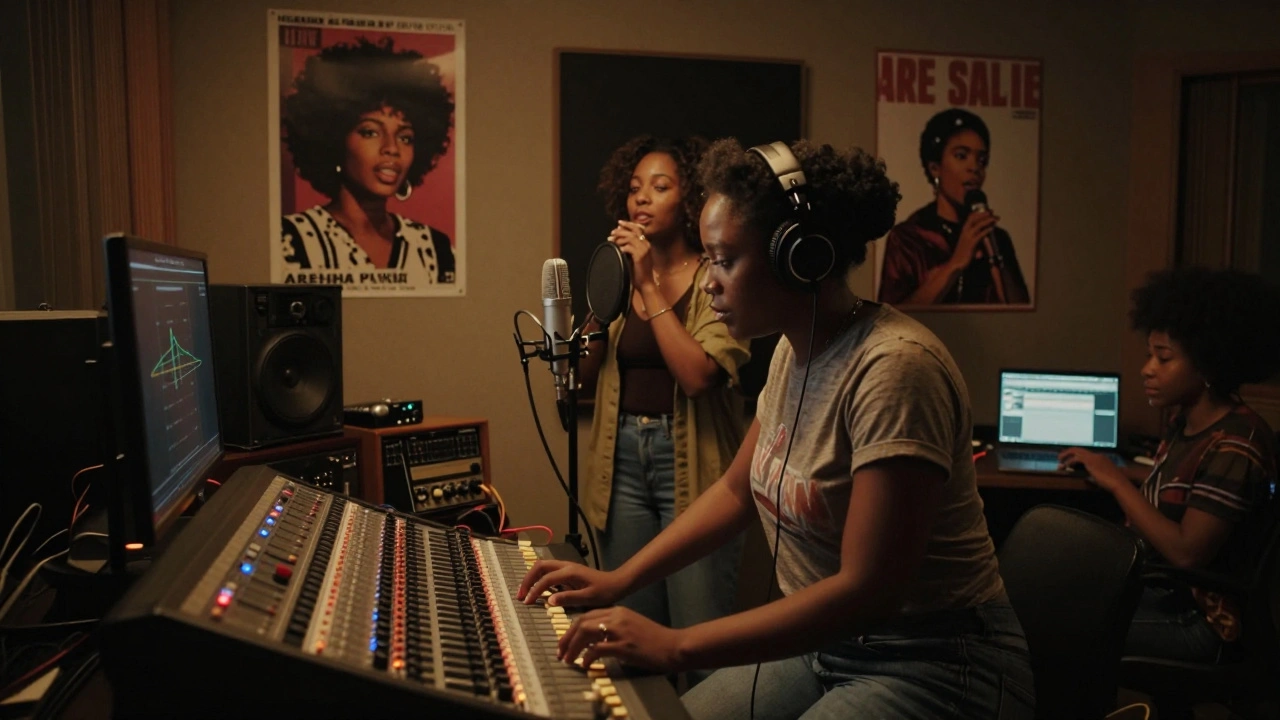
When Alli Starr first stepped into a recording studio at 19, she was the only woman in the room. Not just the only woman in the session - the only woman on the whole floor. That moment stuck with her. Years later, as a producer, songwriter, and mentor, she saw the same pattern repeat: talented women walking into studios, getting sidelined, or leaving because no one was building pathways just for them. R&B is rooted in Black womanhood - from Aretha Franklin to Sade to H.E.R. - but the industry still doesn’t make space for emerging women the way it does for men. So here’s how Alli Starr could build a women-in-R&B accelerator program that actually works.
Start with the real problem, not the buzzword
Most programs say they support "women in music." But what does that mean? Are they giving out free studio time? Connecting artists to A&R reps? Teaching them how to negotiate publishing splits? Too often, these initiatives are surface-level: a panel here, a workshop there, a hashtag campaign. They don’t fix the structural gaps.
Alli knows the real issues because she lived them. Women in R&B often lack:
- Access to producers who understand their vocal style and emotional delivery
- Financial backing to record without sacrificing creative control
- Networking with decision-makers who aren’t just tokenizing them
- Legal support to protect their songwriting credits and masters
Any accelerator must tackle these four pillars - not just "empowerment."
Build a 6-month intensive, not a summer camp
Accelerators work when they’re structured, time-bound, and outcome-driven. Alli’s program wouldn’t be a weekend retreat. It would be a full-time, paid, six-month residency based in Atlanta or Los Angeles - two cities with deep R&B roots and active music ecosystems.
Each cohort would include 12 women. Not because 12 is magic - but because that’s the number where you can give real attention without stretching resources too thin. Participants would get:
- $10,000 stipend (no strings attached) to cover living costs
- Free studio time at partner studios like The Bunker in Atlanta or The Mix Lab in L.A.
- One-on-one mentorship from established women producers like Missy Elliott’s longtime collaborator, Rockwilder, or SZA’s engineer, Derek Anderson
- Legal workshops led by music attorneys who specialize in copyright and publishing for independent artists
- A final showcase at a major festival like Afropunk or the R&B Festival in Oakland, with industry scouts invited
This isn’t about giving them a chance. It’s about giving them the tools to win.
Partner with labels - but don’t let them take control
Alli wouldn’t sign artists to a label as part of the program. That’s a trap. Too many accelerators hand over creative rights in exchange for "exposure." Instead, she’d partner with labels like Motown, RCA, and independent powerhouses like Terri Walker’s Sis Records - but only as listeners, not owners.
These labels would attend the final showcase. They’d have access to demo reels and metadata. But the artists would retain full ownership of their masters, publishing, and merch. The goal? To prove that women in R&B don’t need to be "discovered" - they need to be invested in.
Imagine: a 21-year-old from Detroit drops a track during the showcase. Within 48 hours, three labels email her team. She’s not signing a 360 deal. She’s negotiating a 12-month licensing deal for one single - with 70% royalties. That’s the outcome.
Include behind-the-scenes roles, not just singers
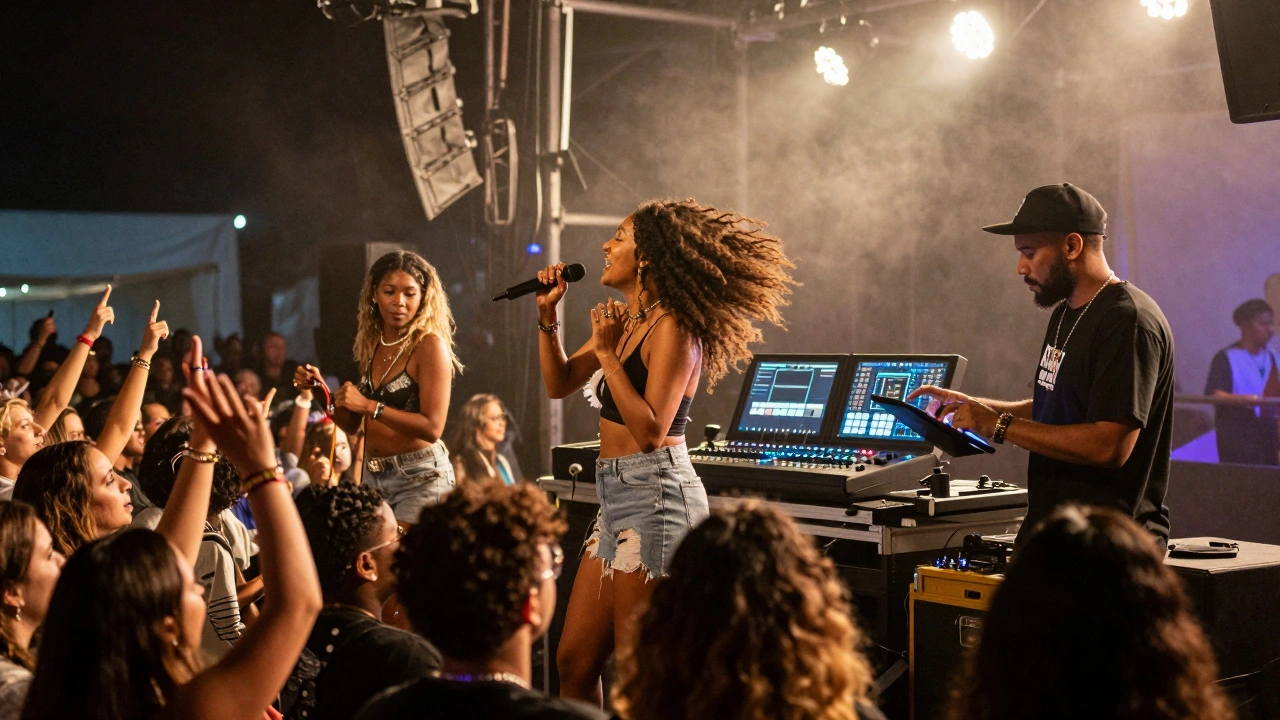
Most programs focus on vocalists. But R&B is built on layers - the bassline, the vocal harmonies, the drum programming, the reverb tails. Alli’s accelerator would also accept women producers, engineers, arrangers, and mixers.
There are fewer than 12 known female mixers in the top 100 R&B tracks of 2025. That’s not talent. That’s access. The program would reserve 3 of the 12 spots for non-singers. One might be a 24-year-old from Houston who edits vocal stacks on her laptop. Another, a 30-year-old from Chicago who’s been working as a session engineer but never got credit.
These women would work alongside the singers. They’d co-produce tracks. They’d be featured in interviews. They’d be invited to the showcase. Because R&B isn’t just about the voice - it’s about the whole sound.
Create a public database of alumni
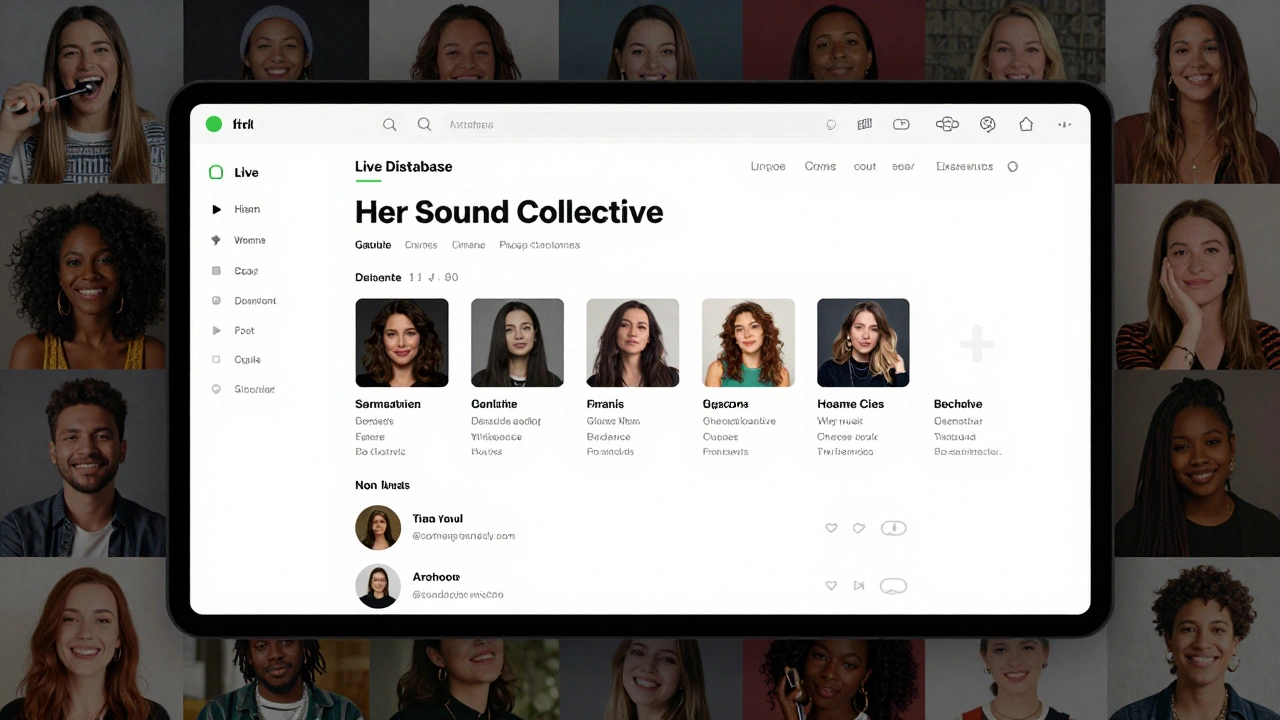
After the program ends, the work doesn’t stop. Alli would launch a live, searchable database called "Her Sound Collective." Every alum would be listed with:
- Her name and location
- Her credits (songs, albums, production roles)
- Links to her music and socials
- Whether she’s signed, independent, or running her own label
This isn’t just a portfolio. It’s a tool. A&R reps at Warner, Sony, and independent labels would bookmark it. Producers looking for female vocalists would search it. Journalists writing about R&B would cite it. The database becomes a living archive - proof that this program isn’t a charity project. It’s a pipeline.
Measure what matters
Success isn’t how many people show up to the launch party. It’s in the numbers one year later:
- At least 8 of 12 artists release original music within 6 months
- 70% retain ownership of their masters
- 5+ alumni get placed on major playlists (Spotify, Apple Music, Tidal)
- 3+ alumni get invited to perform at SXSW, Rolling Loud, or the BET Awards
Alli would publish these metrics publicly every year. No PR spin. Just data. Because transparency builds trust. And trust attracts funding.
Why this could change the game
There are dozens of music incubators. But none focus on R&B with this level of specificity. And none center Black women as the core - not as a trend, not as a demographic, but as the genre’s heartbeat.
If Alli builds this right, it won’t just help 12 women a year. It will shift the industry’s expectations. Labels will start asking: "Who are the women in your R&B pipeline?" Studios will start hiring female engineers without being asked. Young girls in Birmingham, Alabama, or Omaha, Nebraska, will see this program and think: "That could be me."
It’s not about creating another program. It’s about creating a new standard.
What makes Alli Starr qualified to run this program?
Alli Starr has produced for multiple Billboard-charting R&B artists since 2020, co-founded the independent label Luminous Sound, and mentored over 50 emerging female artists through workshops in Atlanta and Detroit. She’s also spoken at the Women in Music Summit and has been cited in Billboard’s "Top 50 Producers to Watch" list. Her experience isn’t theoretical - it’s earned in the studio, on the road, and in contract negotiations.
Would participants have to relocate?
Yes. The program would be based in either Atlanta or Los Angeles, depending on where the partner studios and mentors are most active. Relocation is required because in-person collaboration is critical - studio sessions, live feedback, and networking don’t work well over Zoom. The $10,000 stipend is meant to cover housing, transportation, and living costs during the six months.
Can women outside the U.S. apply?
Yes, but only if they have legal work authorization in the U.S. The program is designed to operate within the American music industry infrastructure - studios, labels, distributors, and performance rights organizations. International applicants are welcome if they can relocate and work legally in the U.S. during the program term.
How is funding secured for the program?
Funding would come from a mix of private donors, music foundations like the Recording Academy’s MusiCares, and corporate sponsorships from audio tech brands like Shure, Focusrite, and Ableton. No label money would be accepted in exchange for artist rights. All sponsors would be publicly listed on the program’s website with clear disclosures.
What happens after the six months?
Alumni join the Her Sound Collective database and gain access to a private Slack community with mentors, producers, and fellow graduates. Quarterly check-ins are held. The program also offers a "second-year" track: select artists can apply for a $5,000 grant to fund their first EP or music video. The goal is to keep the support alive - not just give a boost and disappear.