Key Takeaways for Visual Storytellers
- Storyboards are communication tools, not rigid mandates.
- The most successful workflows treat the board as a starting point for experimentation.
- Direct communication between the artist and the director reduces costly mistakes on set.
- Technical knowledge of lens types and camera movement is as vital as drawing skill.
The Philosophy of the Fluid Blueprint
Most people think a storyboard is a set of instructions. In the world of high-end visual storytelling, that's a dangerous misconception. If you treat a board as a law, you kill the spontaneity that often makes a scene legendary. Alli Starr approaches her work as a 'fluid blueprint.' This means the boards are designed to solve the most difficult spatial problems while leaving room for the director to discover a better shot in the moment.
Think about a complex chase scene. A rigid board tells the camera exactly where to stand. A fluid board, however, maps out the emotional beats and the critical geography. It says, 'We need to feel the character's panic here,' and 'the audience must understand the distance between these two points.' By focusing on the intent rather than just the image, the workflow allows for a collaborative dance between the artist's vision and the director's intuition.
This approach requires a high level of trust. The director has to trust that the storyboard artist understands the narrative core, and the artist has to be okay with seeing their work changed. When this synergy clicks, the production moves faster because everyone is speaking the same visual language long before the first light is rigged.
Mapping the Collaborative Loop
The workflow doesn't start with a pencil; it starts with a conversation. Alli's process begins with a deep dive into the script, but not in isolation. She engages in a 'visual interrogation' with the director. They ask questions like: "Why is this character in the corner of the frame?" or "Does the camera need to feel handheld and anxious, or steady and predatory?"
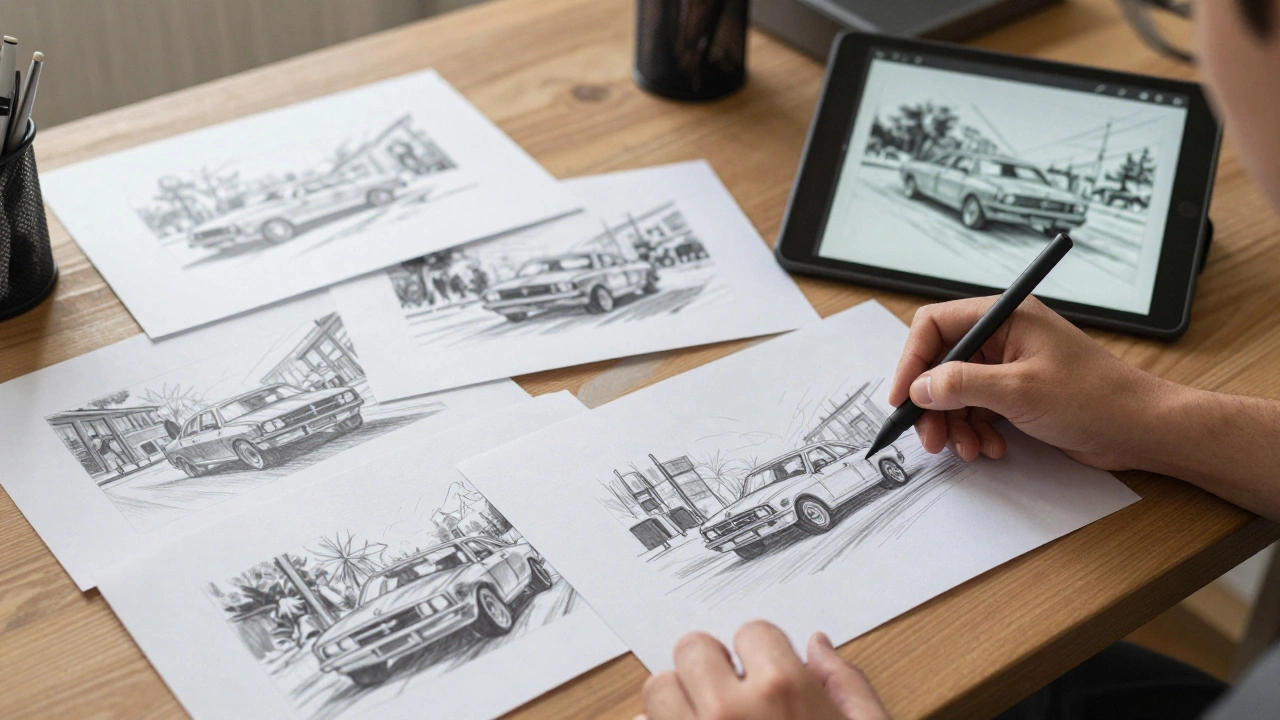
Once the conceptual alignment is set, she moves into the Thumbnailing phase. These aren't polished pieces of art; they are fast, loose sketches used to determine composition and pacing. This is where the most honest collaboration happens. By presenting multiple options for a single shot-perhaps a wide master versus a series of tight inserts-she gives the director a menu of visual choices.
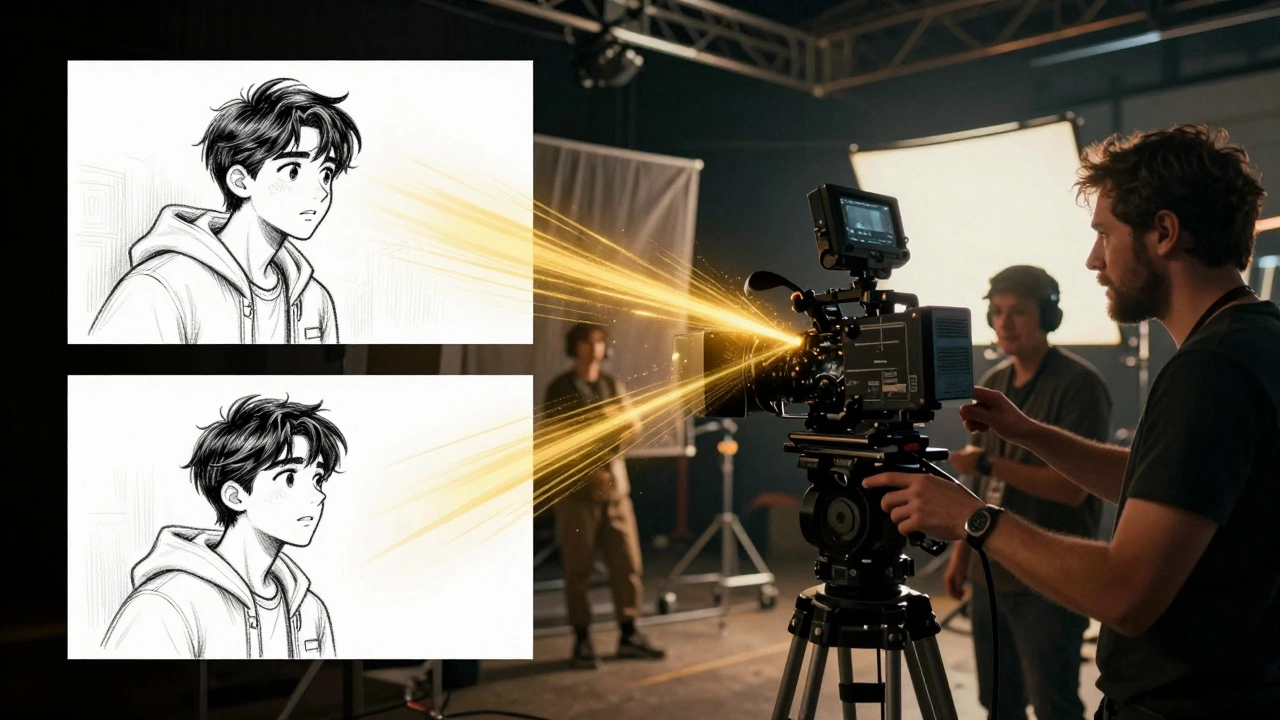
The loop then moves to the refined boards. At this stage, technical precision becomes the priority. She isn't just drawing a person; she's drawing a Field of View. If a director wants a 35mm lens look, the board needs to reflect that specific distortion and depth of field. This level of detail prevents the dreaded "we can't actually fit the camera there" conversation on the day of the shoot.
| Feature | Rigid Workflow | Alli Starr's Collaborative Workflow |
|---|---|---|
| Primary Goal | Exact replication of drawings | Narrative clarity and spatial logic |
| Director's Role | Approver/Sign-off | Active Co-Creator |
| Change Management | Seen as a 'mistake' or delay | Expected evolutionary step |
| Technical Detail | General composition | Specific lens and movement data |
Bridging the Gap Between Paper and Set
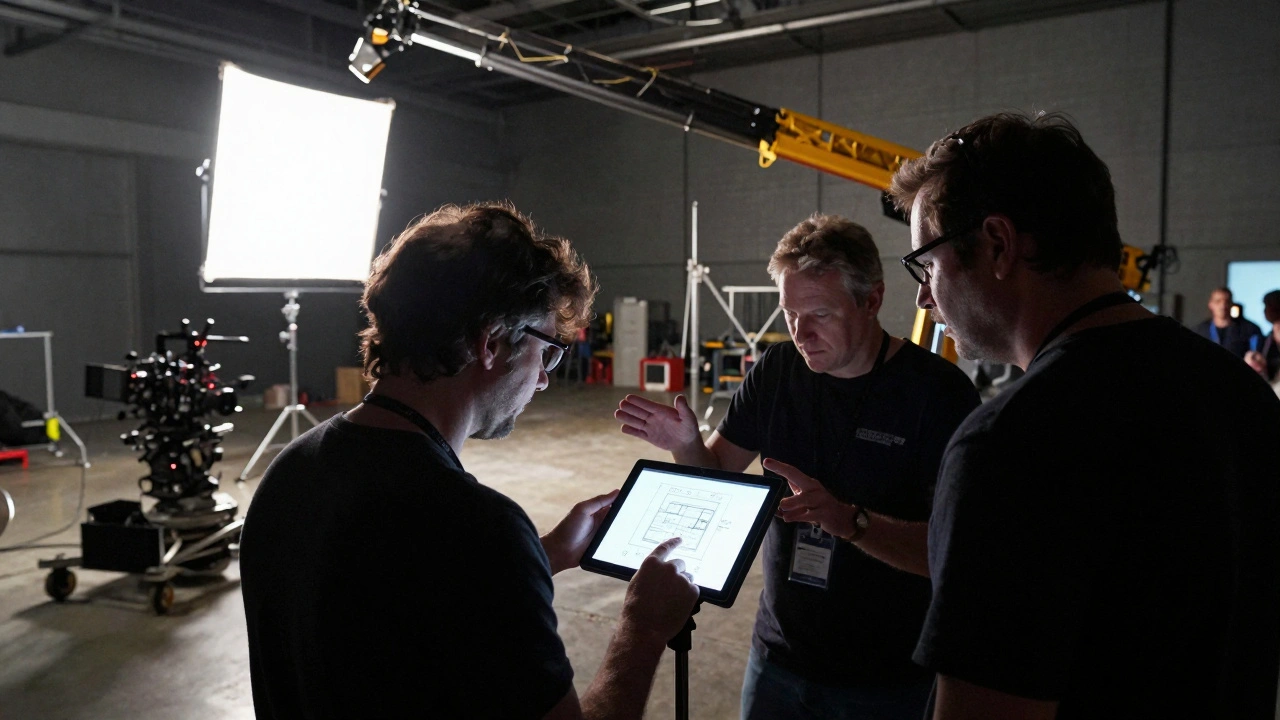
The most critical transition happens when the project moves from the studio to the Film Set. A common pitfall for storyboard artists is disappearing once the boards are delivered. Alli stays embedded in the process. She often works closely with the Director of Photography (DP) to ensure the lighting and framing match the intended mood of the boards.
For instance, if a board shows a character engulfed in shadow to represent isolation, the DP needs to know if that's a narrative requirement or just a stylistic suggestion. When the storyboard artist is part of the conversation, these nuances are handled in seconds rather than hours of trial and error with expensive lighting rigs. It turns the storyboard into a shared map that the entire crew can follow.
Consider a scenario where a planned tracking shot is physically impossible due to a wall in the actual location. In a traditional setup, the crew might panic. In a collaborative workflow, the artist and director quickly pivot. Because they've already discussed the why of the shot, they can find a visual alternative-perhaps a cut-away or a different angle-that achieves the same emotional result without wasting half a day of production time.
The Technical Toolkit of a Modern Board Artist
Visual storytelling in 2026 isn't just about pencils and paper. It's about a hybrid ecosystem of tools. While the initial sparks often happen in a sketchbook, the delivery is almost always digital. Tools like Procreate or Storyboard Pro allow for rapid iteration. The ability to move a character an inch to the left or change a background color in seconds is what enables the 'fluidity' mentioned earlier.
Beyond software, the 'tool' is the knowledge of Cinematography. A great storyboard artist must understand the difference between a dolly zoom and a pan. If you draw a shot that looks like a wide shot but the director wants the energy of a close-up, the board has failed its primary purpose. The board must communicate the energy of the movement, not just the static image.
This technical fluency allows the artist to act as a bridge. They translate the director's abstract desires ("I want this to feel like a dream") into concrete visual instructions ("Use a shallow depth of field with a slow zoom-in on the eyes"). This translation is where the real value lies; it saves time, money, and a lot of stress for everyone involved.
Avoiding Common Pitfalls in Visual Planning
One of the biggest mistakes artists make is over-polishing. When a board looks like a finished painting, directors are often hesitant to suggest changes because the work looks "done." This creates a psychological barrier to collaboration. The trick is to keep the work looking like a sketch for as long as possible. It invites the director to put their own fingerprints on the vision.
Another trap is ignoring the "negative space" of a scene. Many focus on what is in the frame, but a collaborative workflow considers what is outside the frame. Where is the camera moving from? Where is it going? By mapping the 360-degree environment, the artist helps the director visualize the flow of the entire scene, rather than just a series of disconnected images.
Lastly, avoid the "my way or the highway" mentality. The storyboard is a tool to serve the story, not the artist's portfolio. The most successful artists are those who can detach their ego from their drawings and prioritize the final film's impact over the perfection of an individual frame.
Does a detailed storyboard limit a director's creativity on set?
Not if the workflow is collaborative. A good storyboard provides a safety net and a structural guide, but it doesn't replace the director's eye. When the board is treated as a fluid document, it actually frees the director to experiment because they already know the essential narrative requirements that must be met for the scene to work.
What is the most important skill for a storyboard artist besides drawing?
Active listening and an understanding of cinematography. You need to be able to translate a director's emotional or abstract goals into technical visual terms. Knowing how lenses, camera heights, and movement affect the psychology of a scene is what separates a technician from a visual storyteller.
How does a storyboard artist handle disagreements with a director?
The best approach is to provide options. Rather than arguing why one shot is better, the artist can present two or three different visual interpretations of the same beat. This shifts the conversation from a conflict of opinions to a choice of directions, allowing the director to see the pros and cons of each approach visually.
Why is it important for the artist to understand the Director of Photography's needs?
The DP is the one who has to physically execute the vision. If a storyboard suggests an impossible angle or a lighting setup that doesn't exist in the real location, it creates friction. By collaborating with the DP, the artist ensures the boards are grounded in reality while still pushing the creative envelope.
When should a storyboard be considered 'finished'?
A storyboard is technically finished when it provides enough clarity for the crew to prepare the set and the equipment. However, in a collaborative workflow, it's never truly 'done' until the final cut of the film is exported. It remains a living document that evolves through pre-production, production, and even into the edit.
Next Steps for Improving Your Workflow
If you're a director or an artist looking to implement this style of collaboration, start by changing your meeting structure. Stop the "presentation" format where the artist shows the work and the director nods or shakes their head. Instead, move to a "workshop" format. Open the files, use digital pens, and sketch over the boards together in real-time.
For artists, focus on learning the technical specifications of the gear your directors use. If you can suggest a specific lens (like a 14mm wide) instead of just saying "make it look wide," you'll gain immediate respect from the technical crew and a deeper trust from the director.
If you find that your boards are being ignored on set, don't take it personally. Analyze why they were ignored. Was the shot too rigid? Was it technically impossible? Use that feedback to adjust your next project. The goal isn't to have your drawings copied; it's to have your visual logic embedded in the final film.