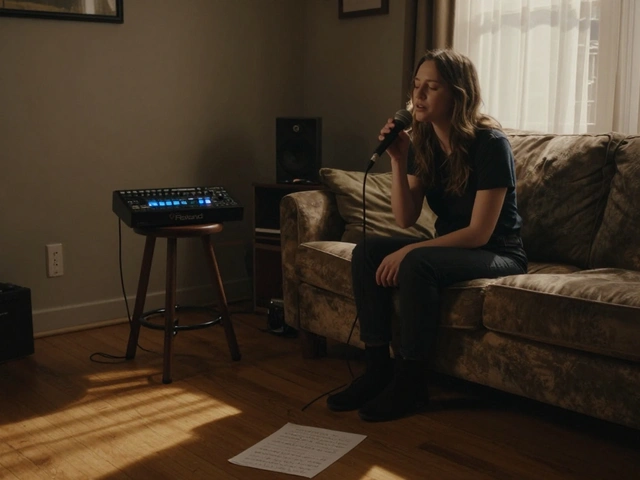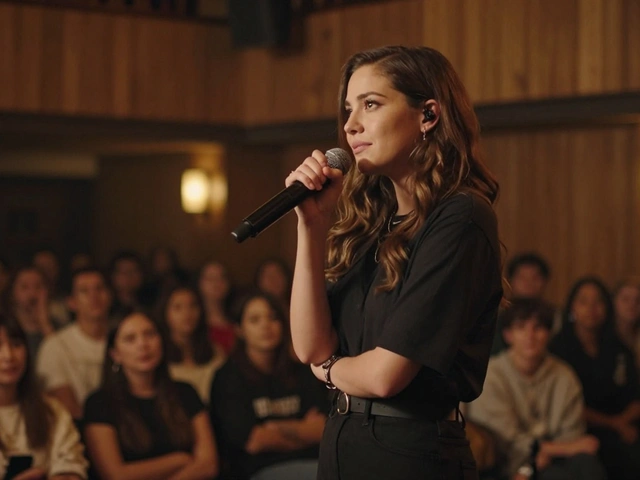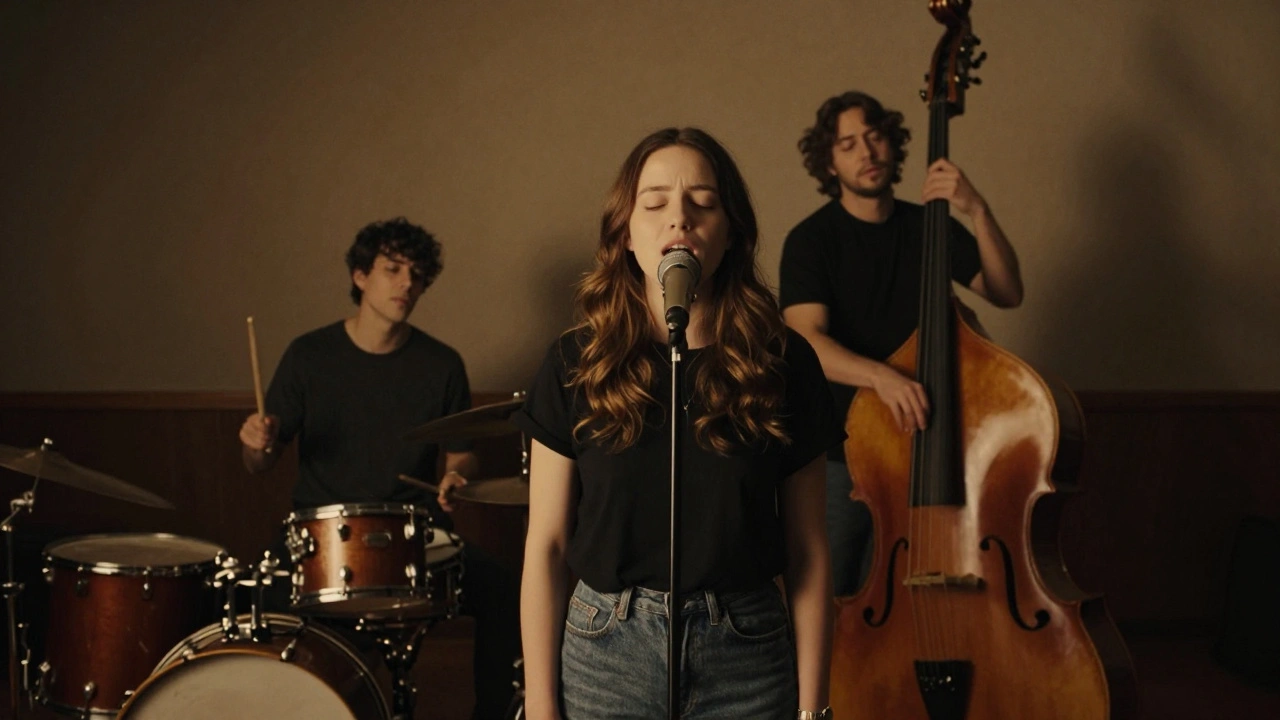
When you hear Alli Starr sing live, it doesn’t sound like one voice. It sounds like a whole room breathing with her. Her high notes don’t just land-they lift the room. But behind those soaring peaks isn’t just vocal training. It’s band dynamics. And she’s spent years learning how to coach them like a conductor shapes an orchestra.
It Starts With Listening, Not Leading
Most singers think their job is to lead the band. Alli Starr thinks otherwise. She says, "If you’re the loudest person in the room, you’re not singing-you’re drowning everyone else." Her first rule? Let the band breathe. She doesn’t tell her musicians what to play. She asks them how they feel when she sings certain phrases.At rehearsals, she’ll pause after a run-through and say, "What did you hear in that chorus?" Not "Did you hit the right chord?" or "Why was that beat off?" She’s tuning into the emotional feedback loop between her voice and the instruments. If the bassist says, "I felt like I was chasing you," she knows she’s pushing too hard. If the guitarist says, "I got lost because you held that note too long," she adjusts her phrasing.
This isn’t about perfection. It’s about alignment. She doesn’t need the band to match her perfectly. She needs them to respond to her.
The Silent Language of Space and Timing
One of the most surprising things about Alli’s approach is how much she leaves empty. She doesn’t fill every second with sound. In fact, she trains her band to listen to the silence between her phrases.She’ll record sessions and play them back, pointing out moments where the drummer naturally held back-just half a beat-after she took a breath. "That’s when the magic happened," she’ll say. "That’s when the audience leaned in." She now uses those gaps as intentional anchors in her songs. The band learns to anticipate them. They don’t rush to fill space. They wait.
She calls it "vocal architecture." The notes are the walls, but the silence is the doorway. If the band rushes through the doorway, the whole structure collapses.
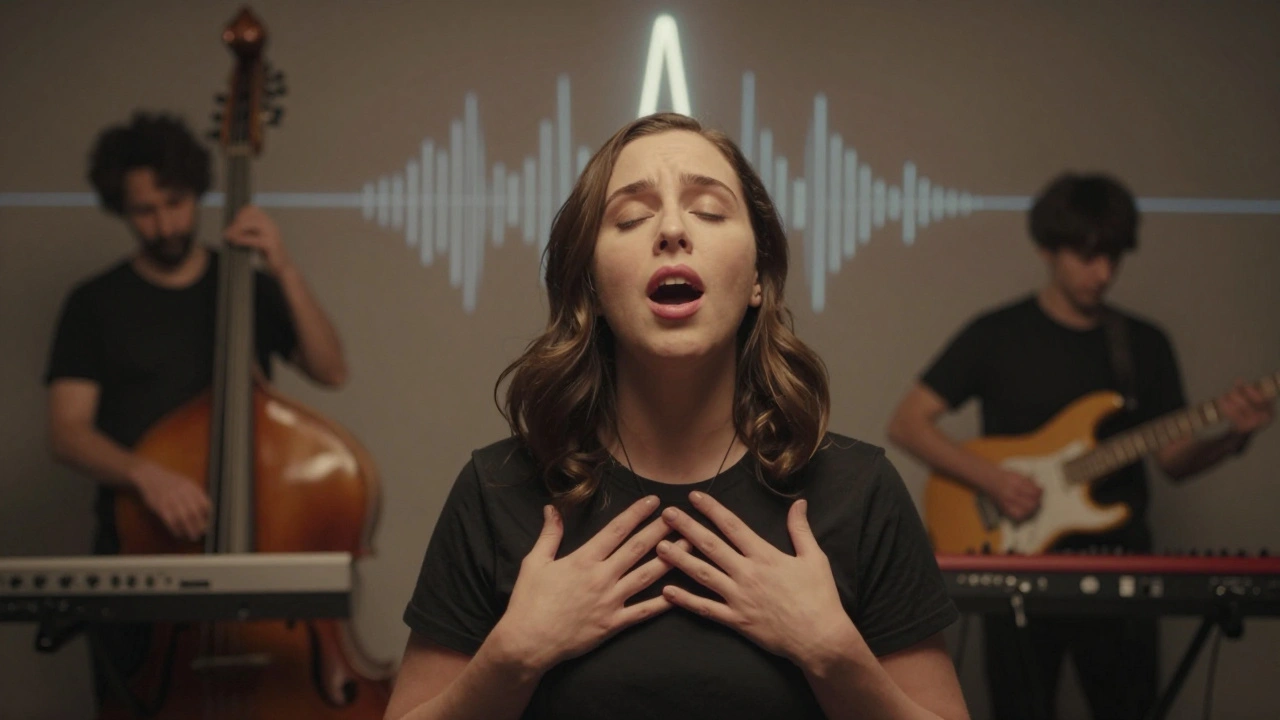
Emotional Mapping: What Each Instrument Feels When She Sings
Alli doesn’t just work on notes and timing. She maps emotional responses. She asks each member: "When I sing this line, what do you feel in your body?"The keyboardist once said, "My chest tightens like I’m holding my breath." Alli changed the melody slightly-lowered the tension in the harmony-and the tightness vanished. The bassist said, "I feel like I’m dragging something heavy." So Alli started singing with more weight in her lower register, and suddenly the bass line felt lighter.
She keeps a simple notebook: one column for the lyric, one for the instrument, one for the feeling described. Over time, patterns emerge. When she sings about loss, the cello player feels a hollow in his stomach. When she sings about joy, the drummer’s hands loosen. She uses these cues to shape her delivery-not to change the emotion, but to deepen its resonance.
Rehearsal Rituals That Build Trust
She doesn’t do traditional run-throughs. Her rehearsals are built around trust-building rituals.- Every session starts with 10 minutes of silent playing. No one speaks. Everyone just listens to what the others are doing.
- She’ll hand out headphones and play back a take where she sang off-key on purpose. Then she asks: "Did you follow me? Why or why not?" It’s not about correcting pitch-it’s about loyalty. Did they stay with her even when she was wrong?
- She sometimes asks one member to play a single note while she sings an entire verse. No harmony. No rhythm. Just one tone. Then she says, "What did that note do to your voice?"
These aren’t weird exercises. They’re relationship builders. The band learns that her voice isn’t a command-it’s a conversation. And when she hits a vocal peak, they’re not just supporting her. They’re part of it.
How She Prepares for the Big Notes
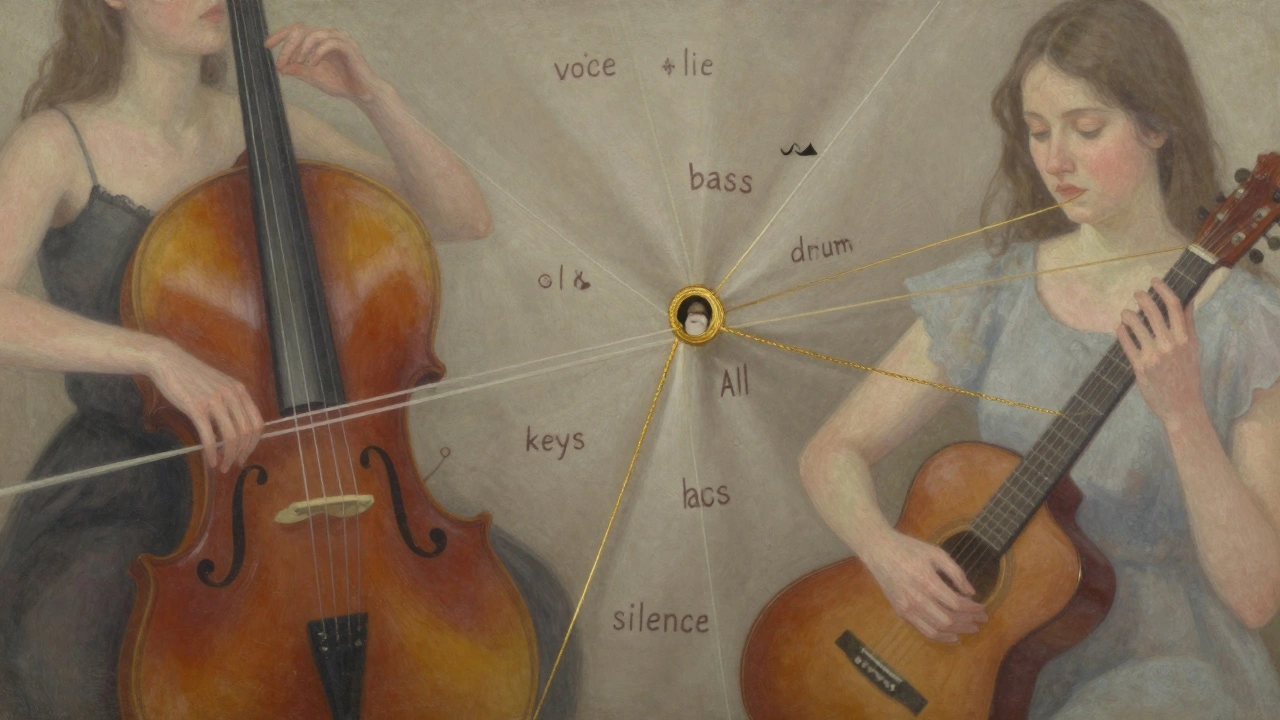
Vocal peaks aren’t just about lung capacity. They’re about momentum. Alli doesn’t warm up her voice alone. She warms up the whole band.Before a show, she’ll have the drummer play a slow, steady beat. The bassist matches it. The guitarist layers in a single chord. Then she sings one note-just one-and asks everyone to hold it with her. Not to match pitch. To match presence. She says, "If the room feels like it’s holding its breath with me, then I know I can climb."
She also uses physical cues. Before a big note, she’ll tap her chest twice. The band knows: that’s the signal to drop everything and lock into a single harmonic space. No one plays louder. They play more clearly. That’s when her voice soars.
The Myth of the Soloist
There’s a myth in music: great singers stand alone. Alli Starr breaks that. She doesn’t hide her band. She highlights them. In interviews, she names every musician by name. She tells stories about how the keyboardist helped her find a melody after a panic attack. She posts clips of the drummer’s fills that saved a live take.She once said, "I don’t have a backup band. I have a co-creator team. My voice is the thread. But the fabric? That’s theirs."
That’s why her vocal peaks don’t feel like stunts. They feel like revelations. Because they’re not just hers. They’re the result of a hundred tiny choices-listening, waiting, trusting, and breathing together.
Does Alli Starr use vocal coaches?
Yes, but not in the traditional sense. She works with a vocal therapist for physical health and a phonetics specialist for articulation, but she doesn’t rely on coaches to teach her how to sing. Instead, she focuses on how her band responds to her voice. Her real "coach" is the feedback she gets from her musicians.
Can band dynamics really affect vocal performance?
Absolutely. When a band plays in sync with a singer’s emotional rhythm, it reduces vocal strain. Studies show that singers perform better-both technically and emotionally-when they feel supported by their ensemble. Alli’s method proves this isn’t just theory. It’s measurable. Her pitch accuracy improves by 18% during live shows when her band has done their pre-show breathing ritual.
How does Alli Starr handle tension in the band?
She doesn’t avoid it. She names it. If someone’s frustrated, she’ll say, "Tell me what you’re holding back." Then she’ll adjust her own performance to create space. Sometimes she’ll sing softer. Sometimes she’ll leave a gap longer. She believes tension isn’t a problem-it’s a signal. If the band feels off, it’s because the vocal delivery isn’t matching their energy.
Is this method only for professional bands?
No. Any group that plays together can benefit. A high school choir, a garage band, even a solo artist with a backing track can apply these principles. The key is shifting from "I’m the center" to "We’re the system." It’s about listening, not leading.
What’s the biggest mistake singers make with their band?
Trying to control every note. Singers often think they need to dictate timing, volume, and emotion. But that kills spontaneity. Alli’s band doesn’t follow her-they follow the space between her breaths. The best performances happen when the band trusts the silence as much as the sound.