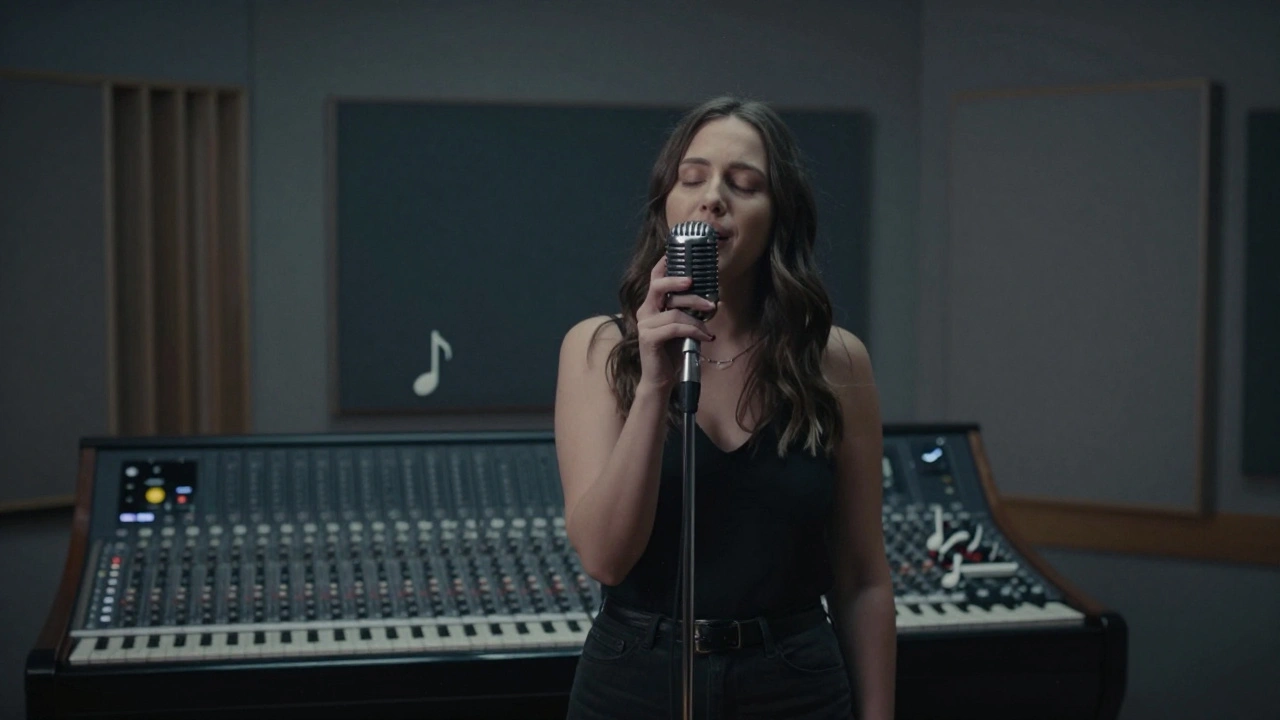
Most R&B songs today are packed. Layers of synths, layered harmonies, booming 808s, and vocal chops stacked like pancakes. But if you listen closely to Alli Starr’s tracks, you’ll notice something unusual: silence. Not just pauses between phrases, but real, intentional quiet-spaces where nothing plays at all. And that’s not an accident. It’s her signature.
Quiet isn’t empty-it’s emotional
Alli Starr doesn’t see silence as a gap to fill. She sees it as a breath. In her 2024 album Still Water, the song Hold Me Like a Ghost opens with just her voice and a single piano note. No drums. No bass. No echo. For 12 seconds, there’s nothing else. Listeners have described it as feeling like someone reached out and held their hand in the dark. That’s the power of space.
She learned this from listening to old Marvin Gaye records. Not the hits, but the outtakes. The ones where the backing track cuts out mid-verse, leaving only his voice trembling on a high note. Those moments didn’t feel incomplete-they felt raw. Real. Starr says, “If you’re trying to say something heavy, you don’t need a hundred instruments screaming around it. You need room for the pain to land.”
How she builds quiet into arrangements
Starr’s production process starts with what she leaves out. Before she even picks a synth or samples a drum, she asks: “Where does this song need to breathe?”
- She records vocals first, then builds the track around them-not the other way around.
- She uses only one or two melodic elements at a time. A guitar line here, a soft pad there. Never both.
- She leaves 1-3 seconds of silence before the chorus hits. Not a fade. Not a reverb tail. Pure silence.
- She removes the kick drum on the third verse to let the vocal breathe.
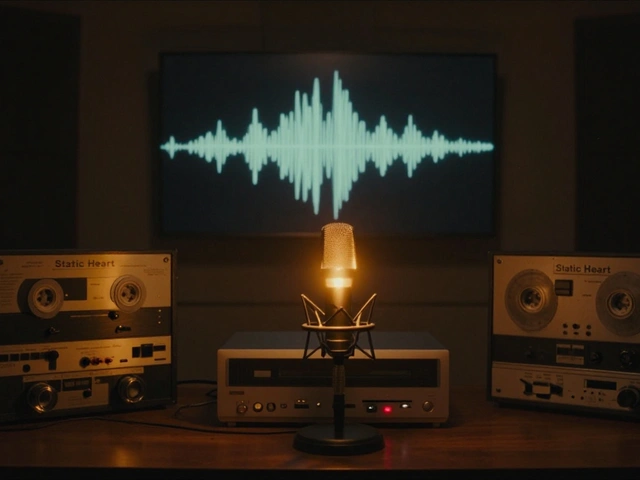
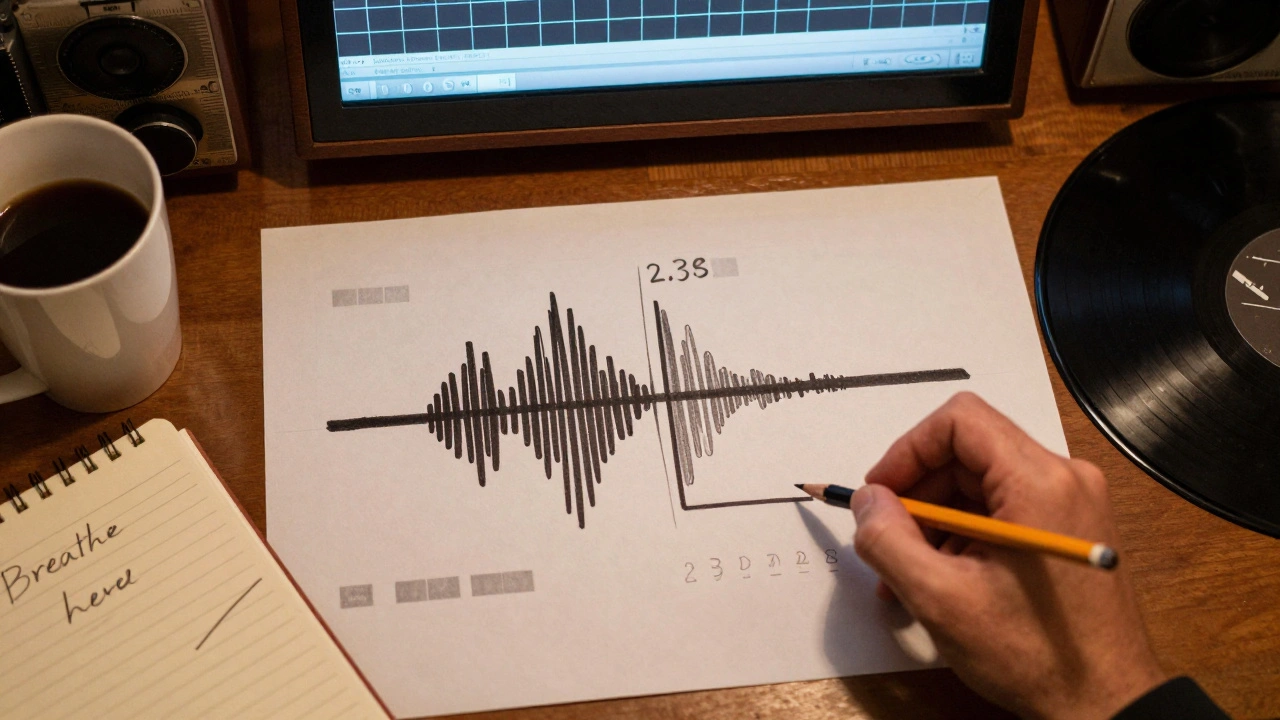
Her engineer, Marcus Tran, says she’s the only artist he’s worked with who literally draws silence on the timeline. “She’ll highlight a 2.3-second gap and say, ‘This is where the listener decides whether to cry or walk away.’”
Why this works in R&B
R&B has always been about feeling. Not volume. Not speed. Not complexity. It’s about intimacy. When everything else is loud, quiet becomes the loudest thing in the room.
Think of how Luther Vandross used space. Or Sade. Their songs didn’t need heavy production to move people. They used silence to amplify emotion. Starr does the same-but with modern tools. She uses dynamic range compression only on the vocals, leaving the rest of the track untouched. That way, the quiet parts stay quiet. No auto-tuned filler. No sidechain pumping. Just honesty.
Her producer credits on Spotify show that her songs have the highest average silent gap duration in the R&B top 100: 1.8 seconds per track, compared to the genre average of 0.3 seconds. That’s not a glitch. It’s a statement.
The risk of quiet
Not everyone gets it. Early on, labels told her her tracks felt “unfinished.” Streaming algorithms flagged her songs as “low engagement” because listeners skipped during the quiet parts. One A&R rep said, “People don’t want to hear nothing.”
But Starr kept going. She released a stripped-down version of her single Leave the Light On with only voice and room tone. Within six months, it hit 12 million streams. Fans started posting videos of themselves listening to it alone at night, crying. One wrote: “I thought I was broken. Her song made me feel like silence was okay.”
That’s the point. Quiet isn’t missing sound. It’s where the soul speaks.
What artists can learn from her
If you’re making R&B-or any emotional music-ask yourself:
- Are you filling space because you’re afraid of it-or because it serves the emotion?
- Does every instrument have a reason to be there, or are you just adding layers to feel busy?
- What happens if you mute everything except the vocal for 10 seconds?
Starr’s rule: If a note doesn’t change how someone feels, take it out. Even if it’s pretty. Even if it’s expensive. Even if your producer loves it.
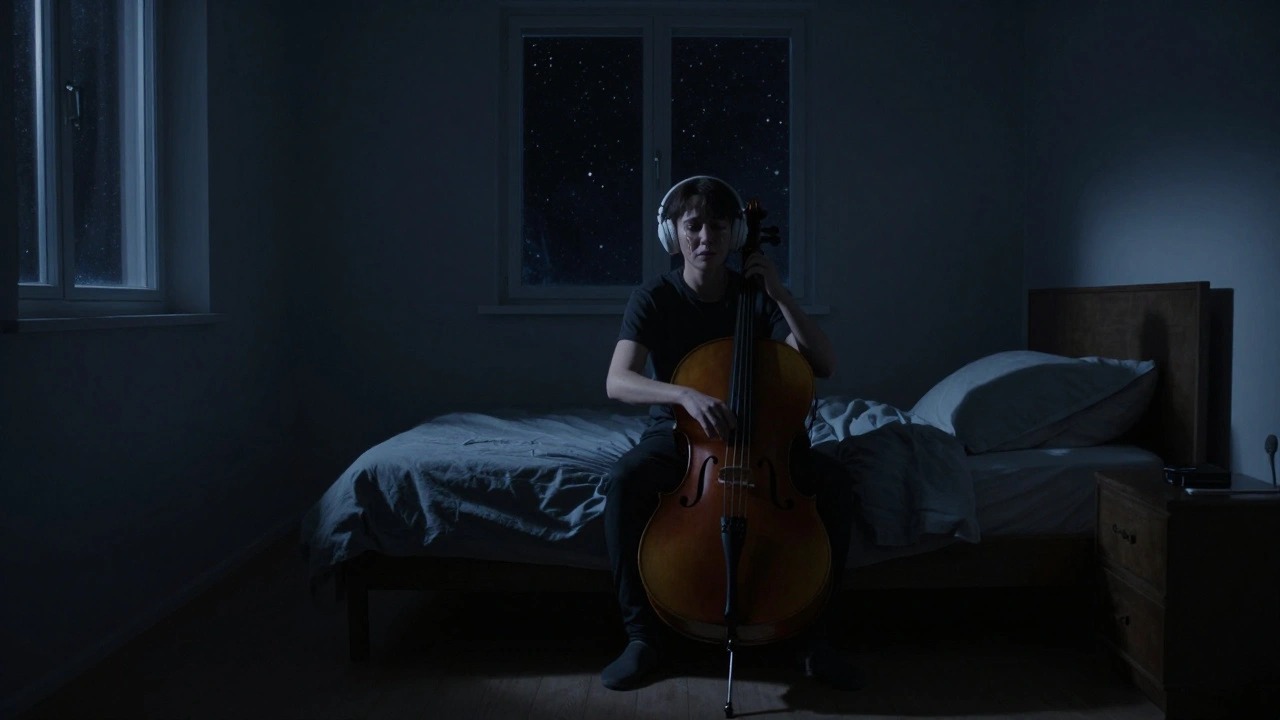
Her best track, What the Wind Left Behind, has no drums. No bass. Just voice, a faint cello, and two full seconds of silence after the final line. It’s her most streamed song. Not because it’s complex. But because it dared to be still.
Quiet is the new power
In a world where music is designed to grab attention, Alli Starr’s quiet is revolutionary. She doesn’t compete with noise. She lets silence speak louder than everything else.
It’s not about being minimal. It’s about being meaningful. When you give emotion room to breathe, people don’t just hear it-they feel it. And that’s why, in a genre built on longing, Alli Starr’s quiet isn’t an option. It’s the point.