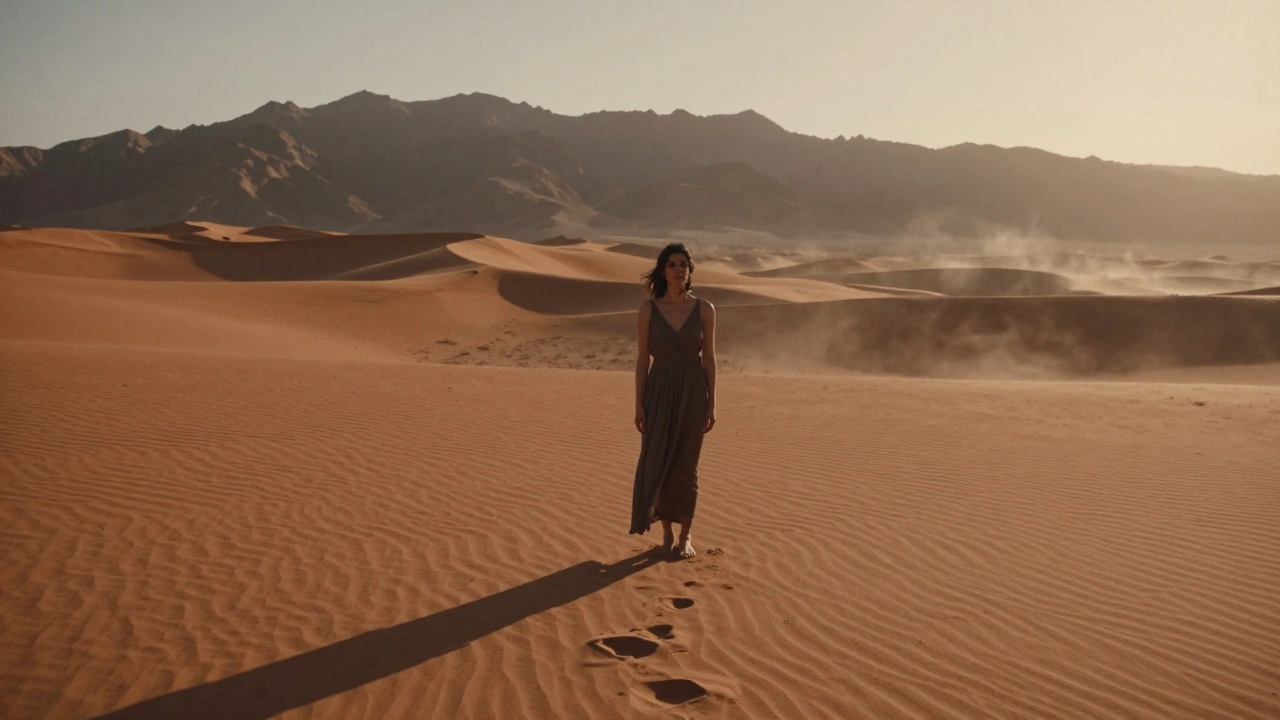
Have you ever stood in a place so quiet you could hear your own heartbeat? That heavy stillness often defines the work of Alli Starra visual storyteller known for capturing human emotion through arid environments. Also known as Starr Photography, her projects rely heavily on location scouting. When she chooses a desert location, she isn’t just picking a pretty background. She is selecting a psychological mirror for her subjects. This approach transforms a simple photo into a narrative device.
In many commercial shoots, the backdrop is treated as wallpaper. It’s something to blur out or fill with props. Starr does the opposite. She makes the land a co-star. When you look at her series “Dust and Skin,” the relationship between the terrain and the person becomes impossible to ignore. The heat haze isn’t just atmospheric; it represents anxiety. The cracked earth isn’t just soil; it symbolizes resilience. Understanding this shift changes how we read images entirely.
The Mechanics of Landscape Metaphor
To grasp why the desert works so well for Starr, we first need to talk about landscape metaphor itself. In visual storytelling, a metaphor doesn’t require words. It happens when two things share a conceptual link. A lonely rock formation can stand in for a solitary human spirit. You see this connection instantly because the brain links form to meaning automatically. For example, jagged mountains imply conflict, while flat dunes suggest calm or emptiness.
Alli Starr leverages this instinct. She avoids locations where nature hides the human presence. Instead, she picks spots where the scale forces comparison. A person standing next to a massive canyon wall looks small. That size difference tells you immediately that the individual is facing something bigger than themselves. This technique grounds abstract emotions like grief or hope in a physical reality you can touch visually.
Why the Desert Becomes the Primary Canvas
You might wonder why she focuses on arid zones instead of forests or cities. The desert offers a level of raw honesty that green spaces sometimes mask. Vegetation creates softness. Stone and sand strip away distractions. In a forest, you have layers of depth that hide things. In the Mojave or Sonoran ranges, everything is exposed. There is nowhere for the subject’s expression to hide.
| Feature | Desert Setting | Forest Setting | Urban Setting |
|---|---|---|---|
| Visual Noise | Low | High | Extreme |
| Symmetry | High (Horizon) | None | Geometric |
| Emotional Tone | Isolation, Timelessness | Growth, Complexity | Tension, Energy |
| Lighting Conditions | Harsh Shadows | Diffused Canopy | Mixed Reflective |
The table above highlights why the desert stands out. Low visual noise allows the viewer to focus purely on the subject. There are no billboards or tree branches breaking the line of sight. The horizon line often cuts straight across the frame, creating a visual baseline for stability or instability depending on composition. Starr utilizes these clean lines to direct your eye exactly where she wants it. If she tilts the camera slightly off-level, the ground feels like it’s falling. That subtle angle mimics internal unease without saying a word.
Matching Light and Mood
Timing dictates the temperature of the story. You can’t capture the same metaphor at noon as you can at dusk. Starr typically shoots during the golden hour, just before sunset or after sunrise. During these windows, long shadows stretch across the sand. These shadows act like extensions of the body. They pull the figure into the landscape, blurring the line between human and earth.
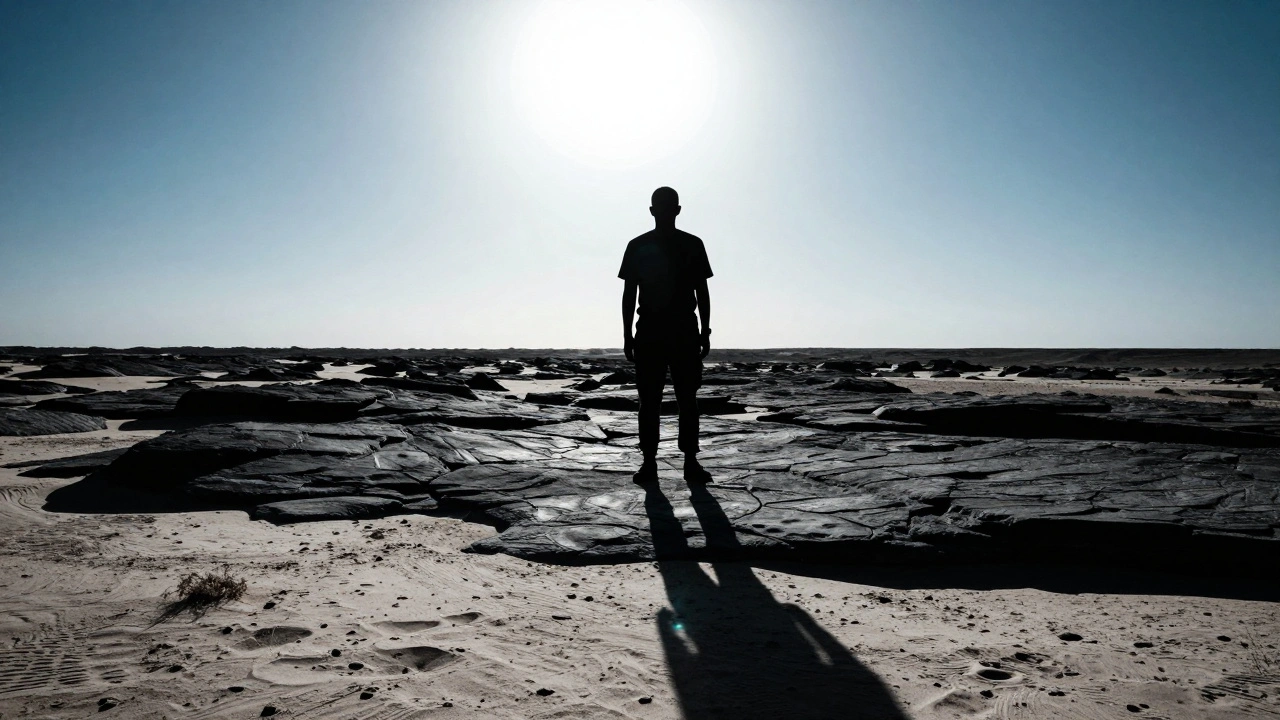
When the sun is high, the contrast spikes. Shadows become black voids. White sand turns blindingly bright. Starr uses this high contrast to represent clarity or shock. Sometimes, the subject is silhouetted against a massive sun flare. This visual reduction removes facial detail. It universalizes the experience. We stop seeing “John” or “Sarah.” We see a human facing the elements. That ambiguity invites viewers to project their own stories onto the image.
The Role of Negative Space
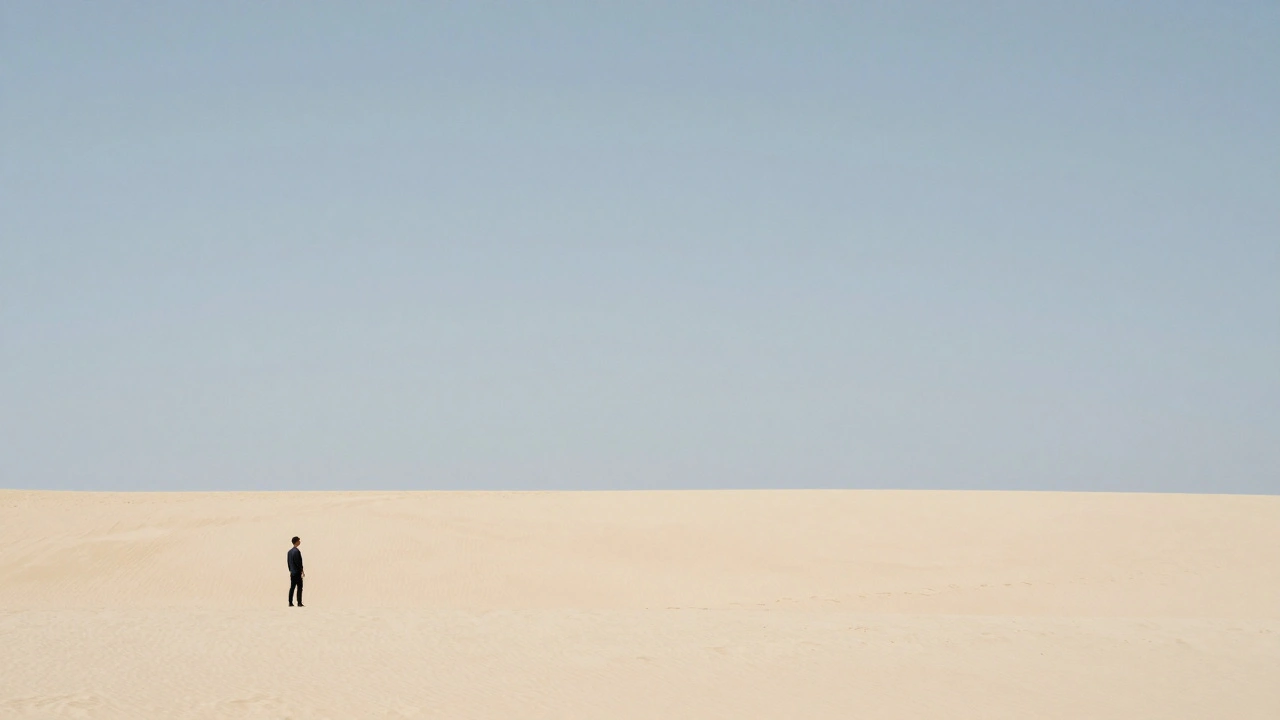
One of the most effective tools in Starr’s kit is negative space. This is the area of the photo containing no distinct objects-sky, sand, water. In her desert shots, she often places the subject in one corner of the frame, leaving three-quarters of the image empty. This isn’t wasted room. It implies movement or future direction.
If the subject faces the empty space, they are looking toward possibility. If they face the edge of the frame, they seem trapped or turning away. This spacing forces the viewer to question where the journey begins. It also emphasizes the solitude. You can feel the distance between the human and the world around them. The vastness of the sky overhead reminds us of insignificance. It creates a sense of vulnerability that is hard to achieve in a busy studio.
Color as Emotional Language
We tend to forget that color carries semantic weight. The desert isn’t just brown. It contains rust oranges, dusty blues, pale yellows, and deep ochres. Starr adjusts her white balance deliberately to lean into these hues. In some series, she pushes the tones toward warm sepia. This ages the image. It feels archival, like a memory fading over time. It connects the current moment to history.
In other sets, she cools the image down. Blue light hitting grey stone suggests melancholy or coldness even if the environment is hot. This contradiction-physical heat versus visual cold-creates tension. It asks the viewer to reconcile the feeling of warmth with the sensation of isolation. That cognitive dissonance sticks in the mind longer than a straightforward portrait.
Applying These Concepts to Your Work
You don’t need to travel to Joshua Tree to use landscape as a metaphor. Look for local environments that match your subject’s state of mind. Does your client feel crowded? Find a tight alleyway. Do they feel lost? Find an intersection or a large open plaza. The key is intentionality.
- Define the emotion you want to convey before scouting.
- Walk the location at the same time of day as your planned shoot.
- Consider the texture. Rough concrete suggests struggle; smooth water suggests peace.
- Use foreground elements to frame or obstruct the subject intentionally.
If you try to force a happy vibe into a dark, foggy alley, the image will feel dishonest. The landscape fights you. Instead, let the environment lead the narrative. Ask yourself what the ground is saying about the person standing on it.
Overcoming Technical Challenges
Shooting in the desert presents logistical hurdles you must plan for. Dust gets everywhere. It coats the lens and settles on clothing. Heat distorts air quality, making sharp focus difficult at high apertures. Starr often shoots with prime lenses to keep the system light and fast. She avoids heavy tripods unless absolutely necessary. Mobility allows her to react to sudden wind shifts or cloud breaks.
Exposure compensation is vital. Cameras often meter off dark shadows and blow out the bright sand. Underexposing slightly preserves the texture of the grains. You can lift the shadows in post-processing, but recovered highlights look muddy. Protect the highlights. Retain the grit. The grit makes the photo feel real.
Why does Alli Starr prefer the desert over urban settings?
Starr prefers the desert because of its low visual noise and minimal distractions. Urban environments contain man-made structures that carry their own narratives, such as signs or architecture styles, which compete with the human subject. The desert offers a clean canvas of earth and sky where the focus remains solely on the interaction between the person and the elemental surroundings.
How does negative space affect the viewer’s perception?
Negative space creates a sense of scale and isolation. By placing a subject in a large empty frame, the viewer perceives the human as small relative to their environment. This evokes feelings of vulnerability, freedom, or loneliness, depending on where the subject is facing and how much space exists around them.
What role does lighting play in a landscape metaphor?
Lighting sets the emotional temperature of the scene. Warm golden light suggests nostalgia or transition, while harsh midday sun creates stark contrasts that can symbolize clarity or struggle. Soft morning mist or blue shadow tones can indicate introspection or melancholy.
Can you use landscape metaphor in non-outdoor photos?
Yes. An interior room can act as a landscape. Empty corridors, messy desks, or cluttered rooms serve the same purpose as outdoor environments. The goal is to show the subject’s relationship with their immediate surroundings as a reflection of their internal state.
Does Alli Starr edit the images significantly?
She performs moderate editing to enhance the atmosphere captured in-camera. Adjustments focus on color temperature and contrast to align with the metaphor. She avoids heavy manipulation like adding fake clouds or removing people, preferring to keep the authenticity of the location intact.