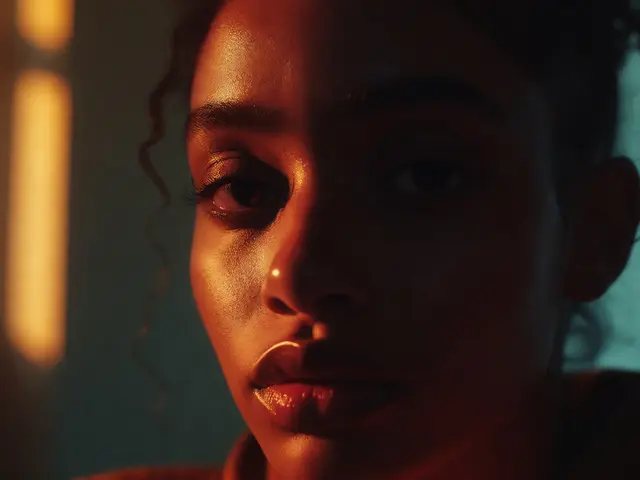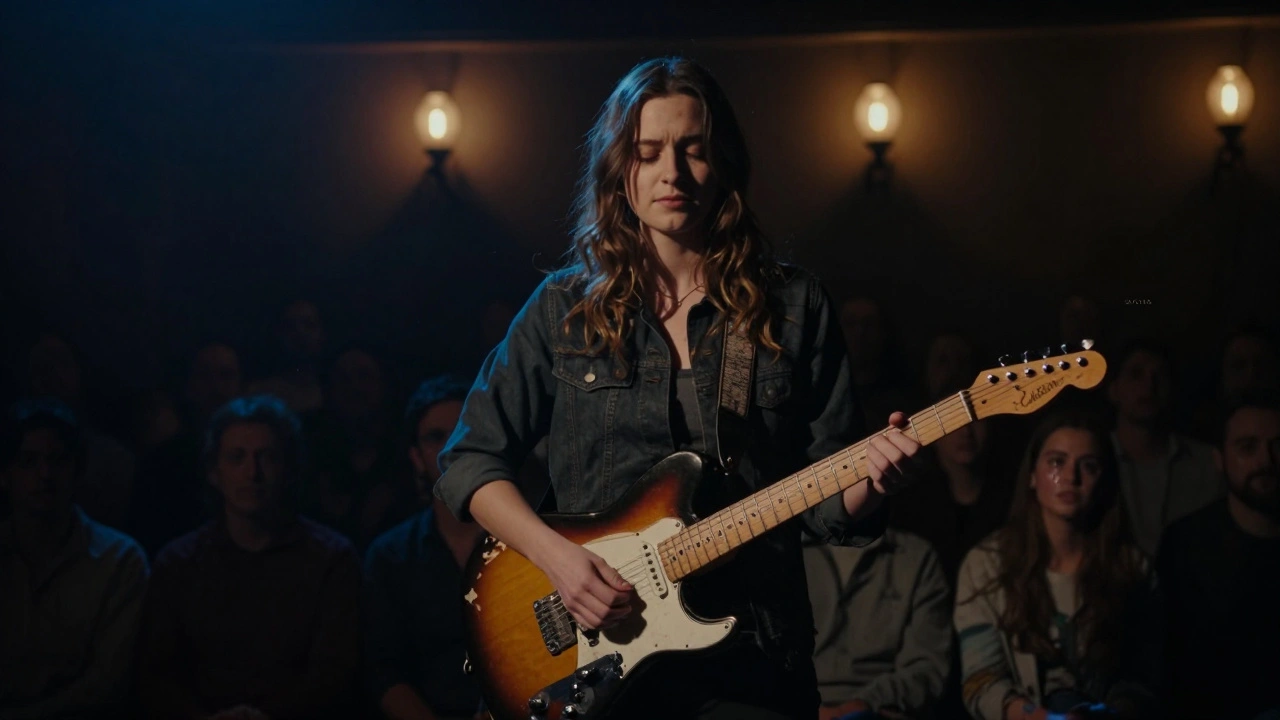
When you think of a Vegas residency, you picture glitz, big stages, and endless encores. But behind the lights and lasers, there’s something quieter, deeper: the art of choosing what to play. Not every song on the setlist is a hit. Not every note is written by the artist. For Alli Starr, her residency at The Pearl at Palms Casino Resort isn’t just about singing songs-it’s about weaving together covers and originals into a story only she can tell.
Why Covers Matter More Than You Think
People come to see Alli Starr because they know her voice. But they stay because they recognize the song-even if they didn’t know she sang it. Her 90-minute show opens with a slow, soulful take on Fleetwood Mac’s ‘Landslide.’ No drums. No backing track. Just her, a piano, and a room full of strangers who suddenly feel like old friends.
She doesn’t pick covers because they’re popular. She picks them because they fit her journey. ‘I don’t do ‘Sweet Caroline’ or ‘Don’t Stop Believin’,’ she says. ‘I do songs that changed me.’ Her version of ‘Hurt’ by Johnny Cash? It’s not a cover. It’s a confession. She recorded it live during her first residency show in 2023. The clip has over 2.3 million views. Fans call it ‘the moment she broke.’
Each cover is a bridge. A way to say, ‘I’ve been here too.’ Her rendition of Adele’s ‘Someone Like You’ isn’t louder or prouder-it’s quieter. Slower. She drops the key by a half-step. Lets the silence hang. That’s the trick: she doesn’t try to out-sing the original. She tries to out-feel it.
Originals That Stick
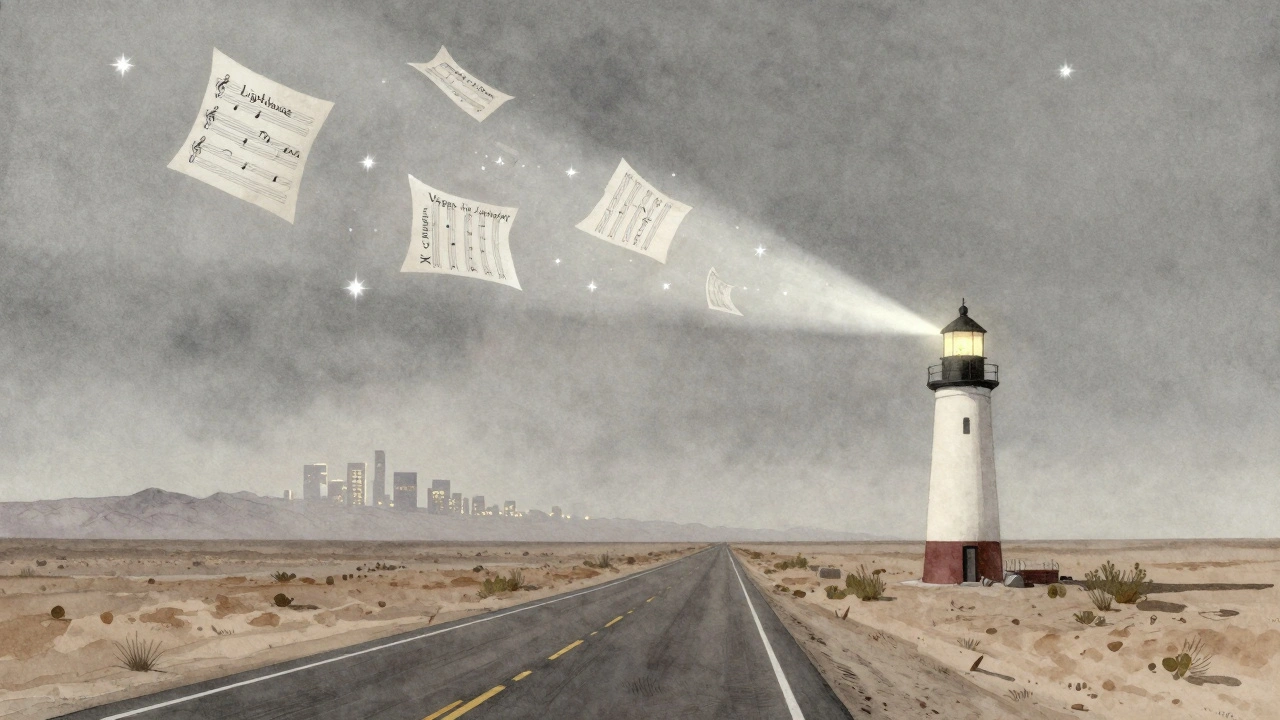
But here’s the twist: her originals aren’t just filler. They’re anchors. ‘Lighthouse’-her 2022 single-closed her first residency. Now it opens the second act. It’s not on any streaming platform. You can’t buy it. You have to be there.
She wrote it after a 3 a.m. drive through the Nevada desert, alone, after a breakup. The lyrics? ‘I don’t need you to shine. Just let me be the one you come back to.’ She plays it on a 1973 Fender Telecaster she found at a pawn shop in Reno. The strings are worn. The tuning pegs creak. It sounds like it’s been through hell. Just like her.
Her original setlist includes three songs that only exist in live form. ‘Coyote Moon,’ ‘Empty Chair,’ and ‘Vegas in January’-each written for a specific night, a specific crowd, a specific emotion. She doesn’t record them. ‘If you want to hear it again,’ she tells fans, ‘you’ll have to come back.’
The Balancing Act
Her residency runs 18 nights a month. That’s 324 performances a year. You’d think she’d get tired. But she doesn’t repeat the same set. Ever.
She has a rule: no more than three covers per show. And no original more than twice in a row. That means she rotates her originals like a deck of cards. One night, ‘Lighthouse’ is the opener. The next, it’s the encore. Sometimes, she swaps in ‘Coyote Moon’ just because the crowd was quiet during ‘Landslide.’ She watches them. Listens. Adjusts.
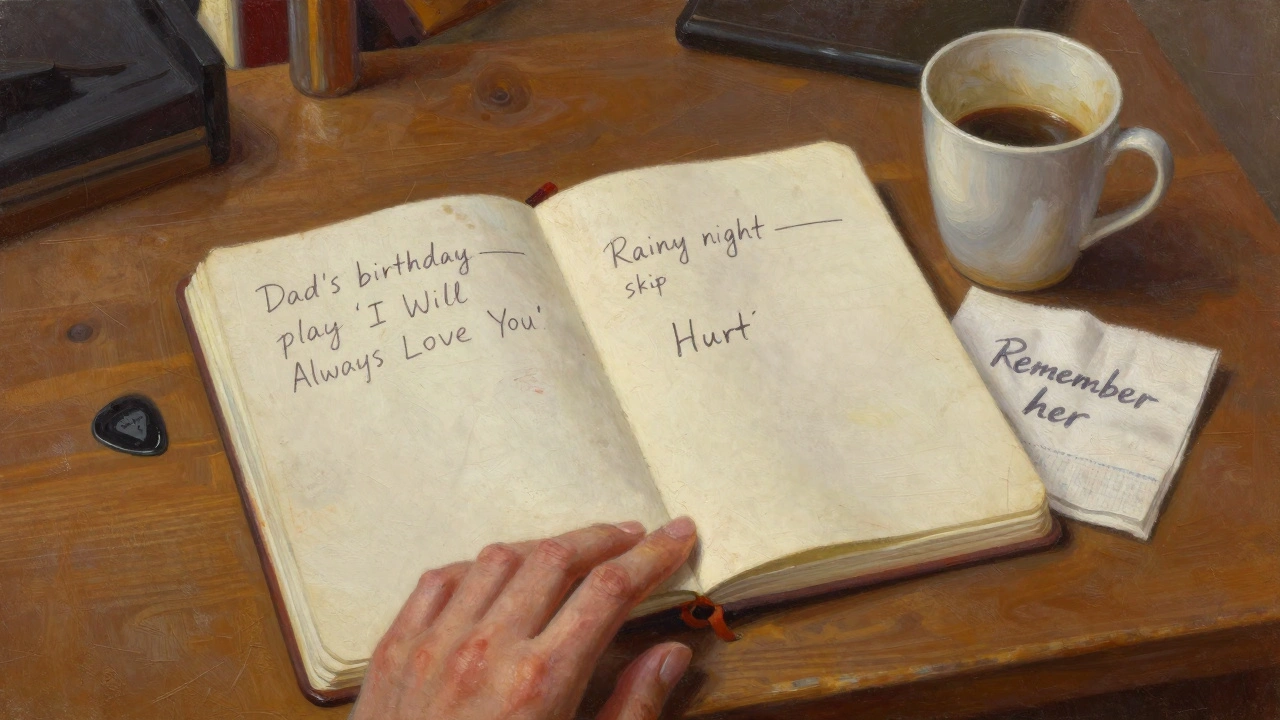
Her setlist is stored in a battered notebook. Not on a tablet. Not in a cloud. On paper. She writes in pencil. Erases with her thumb. The margins are filled with notes: ‘Dad’s birthday-play ‘I Will Always Love You’’; ‘Rainy night-skip ‘Hurt’’; ‘Couple in row 7-save ‘Empty Chair’ for them.’
She doesn’t use a click track. No in-ear monitors. Just a sound engineer who knows her breathing. She cues changes with a nod. A half-smile. A glance at the drummer. The band doesn’t need sheet music. They’ve memorized her silence.
The Unwritten Rules
There’s no playlist. No algorithm. No focus group. Alli Starr’s repertoire is built on memory, mood, and muscle.
She knows the difference between a tourist who just wants to hear ‘I Will Always Love You’ and a local who’s been coming for three years and knows every lyric to ‘Vegas in January.’ She’ll play the Whitney Houston cover for the first-timer. Then, later in the night, she’ll slide into her own song-and watch the local’s eyes light up.
She doesn’t like to explain her choices. ‘If you have to ask why I sang that,’ she says, ‘then you weren’t listening.’
But if you ask her why she plays ‘The Weight’ by The Band on Tuesdays? She’ll pause. Then say: ‘Because Tuesday is the loneliest night in Vegas. And that song? It’s the only one that doesn’t lie about that.’
What Makes It Stick
Other artists play Vegas. Alli Starr lives it. Her residency isn’t a gig. It’s a ritual.
She’s played 1,200 shows in three years. No two are the same. She’s never canceled. Not once. Not even during the 2024 heatwave when the AC failed and the crowd was sweating through their jackets. She played in a tank top. Sang with her throat raw. Didn’t stop. Didn’t apologize.
Her fans don’t just show up. They return. Some come every month. One man, retired from the military, flies in from Ohio every third Tuesday. He says he comes to remember his wife. She never knew it, but Alli wrote ‘Empty Chair’ after reading his note left on a napkin after a show in 2023.
That’s the magic. Her covers aren’t nostalgia. They’re mirrors. Her originals aren’t songs. They’re scars. And together, they make something rare: a performance that doesn’t just entertain. It remembers.
What You’ll Hear If You Go
Here’s what a typical setlist looks like-just one night:
- ‘Landslide’ (Fleetwood Mac cover)
- ‘Coyote Moon’ (original)
- ‘Hurt’ (Johnny Cash cover)
- ‘Vegas in January’ (original)
- ‘The Weight’ (The Band cover)
- ‘Lighthouse’ (original)
- ‘I Will Always Love You’ (Whitney Houston cover)
- ‘Empty Chair’ (original)
That’s eight songs. Four originals. Four covers. No repeats. No fluff. Every note has a reason.
Are Alli Starr’s original songs available to stream or download?
No. Alli Starr’s original songs-‘Lighthouse,’ ‘Coyote Moon,’ ‘Empty Chair,’ and ‘Vegas in January’-are only performed live during her residency. She doesn’t release them on any streaming platform or digital store. The experience is meant to be lived, not saved. Fans who want to hear them must attend a show.
How does Alli Starr choose which covers to perform?
She doesn’t pick songs based on popularity. She chooses covers that shaped her emotionally-songs she heard during pivotal moments in her life. She avoids overplayed Vegas standards and instead selects tracks that let her connect with the audience on a deeper, more personal level. Her version of ‘Hurt’ and ‘Landslide’ aren’t tributes-they’re reimaginings born from her own pain and healing.
Does Alli Starr change her setlist every night?
Yes. She has a strict rule: no two shows are the same. She rotates her originals and alternates covers based on the crowd, the night, and even the weather. She uses a physical notebook with handwritten notes to track moods, fan interactions, and personal memories tied to each performance. She might skip a song if she senses the audience needs something quieter-or play an extra original if someone’s been coming back for months.
Why does Alli Starr avoid using in-ear monitors or click tracks?
She believes music should breathe. In-ear monitors and click tracks create a sterile, robotic feel. Instead, she relies on live cues-eye contact, breath, a tap on the shoulder. Her band has memorized her rhythm. This raw, human connection is why her performances feel intimate, even in a 1,200-seat venue. It’s also why her shows can’t be replicated on recording.
What’s the most surprising cover she’s ever done?
In 2024, she performed ‘Wicked Game’ by Chris Isaak-but stripped it down to just voice and a single acoustic guitar. She slowed it to half speed and added a key change halfway through. No one expected it. The crowd went silent. A video of the performance went viral. She says she did it because she’d been thinking about how loneliness sounds when you’re alone in a city full of people. Vegas, she realized, is the perfect place for that song.