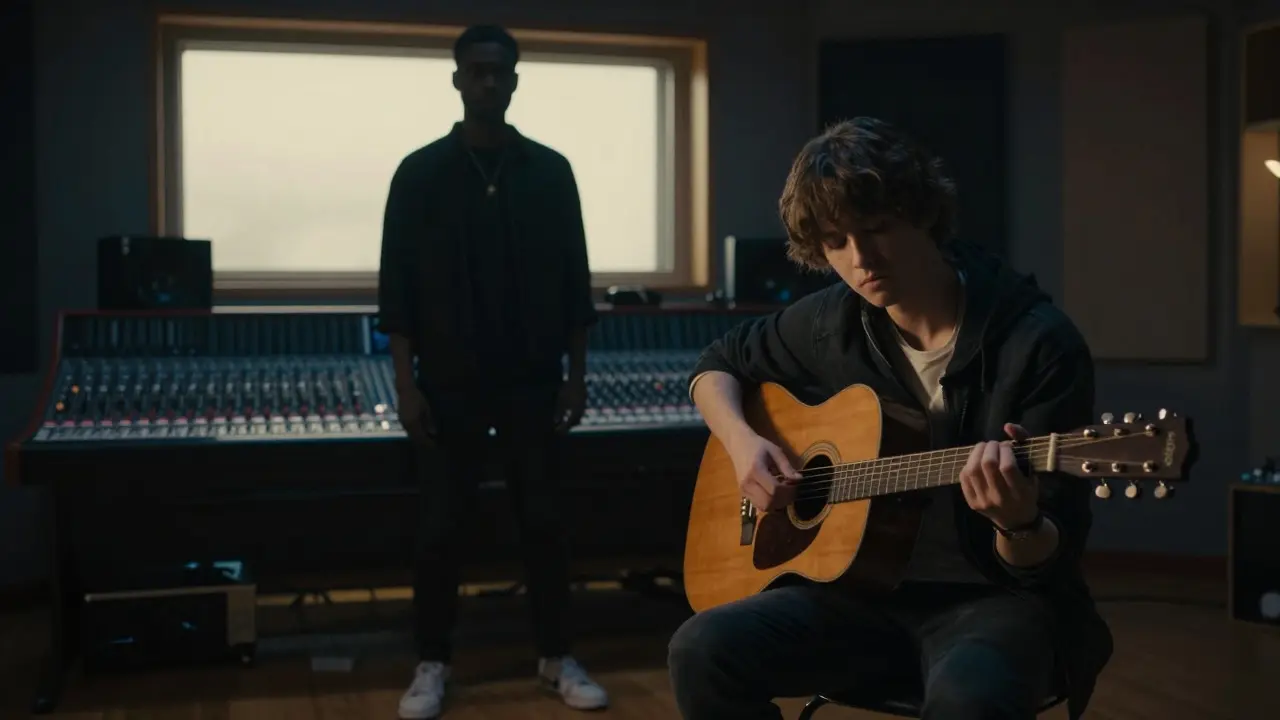
Imagine you’re in a studio with one of the biggest names in contemporary folk-pop. The air is thick with potential, but there’s a tension underneath. You’ve got your song, your voice, your story. But across the table sits Alli Starr, a figure whose brand is built on raw honesty and acoustic intimacy. How do you collaborate without losing yourself? This isn’t just about Alli; it’s about the broader challenge artists face when working with high-profile partners. The core issue is simple: how do you maintain your authentic voice while leveraging the reach and resources of a "star"? For many emerging or mid-tier artists, this dynamic can feel like a power imbalance that threatens to dilute their unique identity.
The music industry has long struggled with this dichotomy. On one hand, star power brings visibility, budget, and technical expertise. On the other, authenticity is the currency that keeps fans connected. When these two forces collide, the result can be either a magical fusion or a hollow compromise. Understanding how to navigate this requires looking at specific ethical frameworks, communication strategies, and contract structures that protect both parties’ creative integrity.
Defining the Ethical Framework in High-Profile Collaborations
To solve this problem, we first need to define what "collaboration ethics" actually means in a commercial context. It’s not just about being nice; it’s about structural fairness. At its core, Collaboration ethics refers to the set of principles governing decision-making, credit attribution, and creative control between partnering artists. In the case of an established star like Alli Starr, the ethical weight shifts because of the inherent leverage difference. A smaller artist might agree to terms that seem fair on paper but are exploitative in practice, simply because they want the association.
Consider the concept of "creative sovereignty." This is the right of an artist to have final say over how their work is presented. When collaborating with a major label-backed artist, this sovereignty is often eroded by marketing departments rather than the artist themselves. The ethical approach involves establishing clear boundaries early. For instance, does Alli’s team have veto power over B-side tracks? Can the smaller artist use the single for their own promotional tours without additional licensing fees? These questions form the bedrock of a healthy partnership.
The Role of Pre-Production Communication
Most failed collaborations don’t fail in the studio; they fail before the first note is recorded. The pre-production phase is where expectations are set, and where ethical misalignments become visible. A common pitfall is assuming that shared musical taste equals shared values. Just because two artists love similar chord progressions doesn’t mean they view ownership or branding the same way.
- Establish Creative Goals: Is the goal exposure for the smaller artist, or artistic exploration for the star? If the goals differ, the project needs a hybrid strategy.
- Define Decision-Making Hierarchy: Who decides on the final mix? Who chooses the cover art? Ambiguity here leads to conflict later.
- Set Financial Transparency Standards: Agree on how royalties will be split, including streaming revenue from playlists curated by the larger artist’s label.
In my experience covering the Pacific Northwest indie scene, I’ve seen too many projects stall because the "vibe check" was prioritized over the "contract check." A detailed creative brief, even if informal, acts as a safety net. It documents who brought what idea to the table, ensuring that credit isn’t contested months after release.
Navigating Brand Dilution vs. Audience Expansion
One of the most subtle ethical issues is brand dilution. When a niche artist collaborates with a mainstream star, their fanbase often expects consistency. If Alli Starr, known for her stripped-back acoustic sets, suddenly releases a heavily produced pop track with a hip-hop producer, her core audience might feel alienated. Conversely, the collaborator might worry that their experimental edge is being smoothed out to fit a radio-friendly format.
This is where the concept of "audience segmentation" comes into play. Ethical collaboration respects the distinct identities of both artists. Instead of forcing a middle ground that satisfies no one, successful partnerships often create a third space-a new sonic landscape that belongs to neither artist individually but to the duo. Think of how Billie Eilish and Finneas operate; their sound is distinctly "Billie and Finneas," not just Billie or just Finneas. The key is whether this new space feels organic or forced.
| Factor | Solo Artist Approach | Star Collaborator Approach |
|---|---|---|
| Creative Control | Full autonomy over all aspects | Shared, often influenced by management teams |
| Risk Profile | High financial risk, low public scrutiny | Lower financial risk, high public scrutiny |
| Audience Expectation | Consistency with previous work | Novelty and crossover appeal |
| Decision Speed | Fast, direct communication | Slower, multi-layered approval processes |
Contractual Protections for the Smaller Partner
Let’s talk money and rights, because that’s where ethics gets tested. Standard recording contracts often favor the party with the bigger legal team. For an artist collaborating with someone like Alli Starr, the contract needs specific clauses to ensure fairness. One critical area is "master ownership." Does the star’s label own the master recording, or is it split equally? If the label owns it, the smaller artist might lose the ability to license the track for sync placements (movies, TV) independently.
Another vital component is "image rights." If the collaboration becomes a hit, can the smaller artist use the artwork for their own merch? Or does every t-shirt sale require a royalty payment to the star’s camp? Ethical transparency here prevents resentment down the line. A good rule of thumb: if you wouldn’t sign a deal with a stranger based on these terms, don’t sign it with a star just because of their name. The leverage should come from the value you bring, not just the desire to be associated with fame.
Case Studies in Successful Ethical Partnerships
History offers plenty of examples where star power and authenticity coexisted successfully. Take the partnership between Ed Sheeran and Beyoncé on "I Don’t Care." While the dynamics were different due to both being massive stars, the process was transparent. They worked remotely, respecting each other’s time zones and creative workflows. The result was a track that felt like a natural extension of both artists’ catalogs, not a forced mashup.
On the indie side, look at how Phoebe Bridgers collaborated with Bon Iver. Both artists have strong, distinct voices. Their joint work didn’t try to blend their styles into something unrecognizable. Instead, it highlighted the similarities in their lyrical themes while preserving their individual production signatures. This approach respects the listener’s trust in each artist’s brand. It says, "We are friends making music together," rather than "We are creating a new product for the market." That distinction is crucial for maintaining authenticity.

Practical Steps for Artists Working with Major Names
If you find yourself in a room with a major artist, here are actionable steps to protect your integrity:
- Hire Independent Counsel: Don’t rely on the star’s lawyer. Get your own advocate who understands indie music law.
- Document Everything: Keep a log of who contributed which lyric, melody, or production element. This protects your publishing rights.
- Set Boundaries on Promotion: Agree on how the release will be marketed. Will it be billed as "Alli Starr featuring [You]" or "[You] and Alli Starr"? The order matters for streaming algorithms and fan perception.
- Maintain Your Own Release Schedule: Don’t pause your solo work entirely. Keeping your own momentum ensures you aren’t dependent on the collaboration for survival.
Frequently Asked Questions
What is the primary ethical risk in collaborating with a famous artist?
The primary risk is the erosion of creative sovereignty. The smaller partner may inadvertently agree to terms that limit their future control over their work, such as master ownership or exclusive marketing rights, due to the pressure of the opportunity.
How can an emerging artist ensure fair credit attribution?
Ensure fair credit by using a detailed split sheet during the writing process. This document records exactly who wrote which part of the song (lyrics, melody, hook) and should be signed by all parties before entering the studio. This creates a legal record that supports PRO registration accuracy.
Does star power always lead to better sales for the smaller artist?
Not necessarily. While initial streams may spike, long-term growth depends on whether the collaboration aligns with the smaller artist's brand. If the track feels inauthentic, it may attract casual listeners but fail to convert them into dedicated fans of the smaller artist's solo catalog.
What is the difference between a 'feature' and a 'collaboration' legally?
Legally, the distinction often lies in royalty splits and credit prominence. A 'feature' usually implies the main artist retains majority control and revenue share, while a 'collaboration' suggests a more equitable 50/50 split and shared decision-making authority, though this must be explicitly defined in the contract.
How important is the order of names on the single title?
It is critically important. Streaming platforms and radio stations often prioritize the first name listed. Being second in the billing can significantly reduce algorithmic promotion for the smaller artist. Negotiating equal billing or alternating the order on different tracks can help balance exposure.