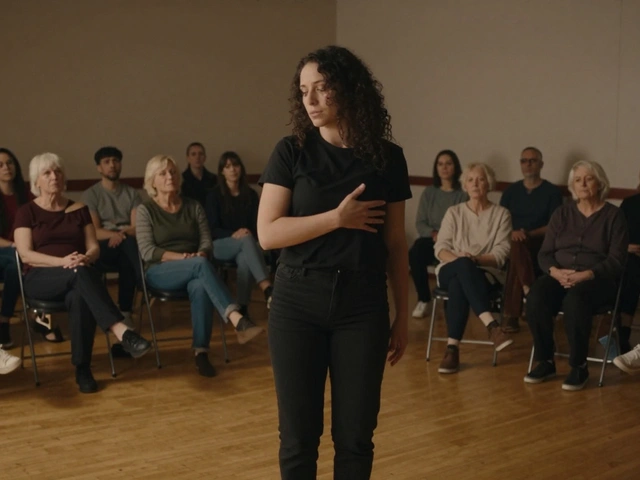
When you hear Alli Starr sing, it doesn’t feel like a performance. It feels like someone cracked open their chest and let you listen to the heartbeat inside. Her songs don’t just tell stories-they live inside you long after the last note fades. That’s not luck. It’s the result of a careful, intentional dance between raw vulnerability and unshakable power in her songwriting.
What Makes Her Vulnerability Different
Most artists use vulnerability as a tool. They share pain to get sympathy. Alli Starr shares pain to demand respect. You can hear it in "Crimson in the Mirror," where she sings, "I let you see the cracks, but you didn’t fix them-you widened them." That line isn’t begging for comfort. It’s calling out manipulation. Her vulnerability isn’t weakness. It’s a weapon.She doesn’t hide behind metaphors. In "Bones in the Basement," she names the exact moment her trust broke: "You said you’d stay for the winter, but left when the snow stopped falling." No poetic vagueness. No vague references to "seasons" or "winds." Just the truth, sharp and quiet. That specificity is what makes her lyrics stick. Listeners don’t just relate-they recognize themselves.
There’s a myth that emotional songs need to be messy. Alli proves the opposite. Her most powerful moments come from clarity. She doesn’t scream. She whispers, and that’s when you lean in. In interviews, she says, "I don’t write to heal. I write to make sure someone else doesn’t feel alone in their silence." That’s not therapy. That’s leadership.
The Quiet Power in Her Delivery
Power in music doesn’t always mean volume. Sometimes, it’s control. Alli Starr’s voice doesn’t shout. It holds space. You can hear it in the way she lets silence sit between phrases in "Weight of a Whisper." The pause after "I loved you anyway" lasts three full seconds. Not because she’s out of breath. Because she wants you to feel how heavy those words are.Her vocal technique is rooted in R&B tradition-think Mary J. Blige, Sade, Alicia Keys-but she strips away the runs, the melismas, the ornamentation. What’s left is something rarer: emotional precision. She doesn’t sing to show off range. She sings to show off truth.
That restraint makes her moments of release even more explosive. In "No More Apologies," she builds slowly, note by note, until the final chorus explodes-not with high notes, but with layered harmonies that sound like a choir of her past selves singing in unison. It’s not a climax. It’s a reckoning.
How She Turns Pain Into Authority
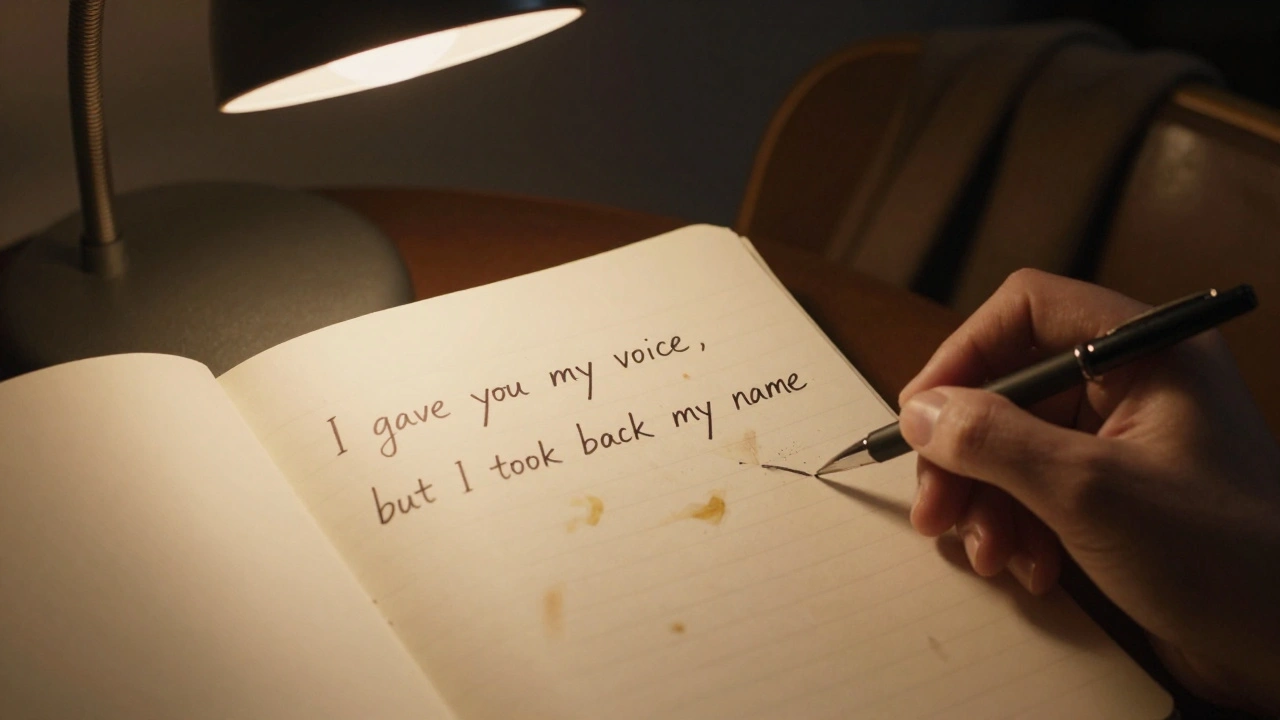
There’s a difference between sharing trauma and owning it. Alli Starr doesn’t just recount her pain-she reclaims it. In "The Girl Who Said Yes," she walks through a relationship where she gave up too much. But instead of ending on sorrow, she flips the script: "I gave you my voice, but I took back my name." That’s not a sad song. It’s a manifesto.Her songwriting doesn’t ask for permission. It doesn’t apologize for being too much, too raw, too honest. She writes like someone who’s been told to shrink-and chose to grow instead. The power isn’t in the anger. It’s in the calm that follows. In "Still Here," she sings, "They said I’d break. I didn’t. I became the thing they couldn’t break." That’s not resilience. That’s transformation.
The Structure Behind the Emotion
Behind every raw lyric is a carefully built structure. Alli works with producers who understand that emotion needs architecture. Her songs often follow a pattern: observation → confrontation → stillness → declaration.- Observation: She describes the scene without judgment. "You left your coat on the chair. Didn’t say goodbye."
- Confrontation: She names the lie. "You called it space. I called it abandonment."
- Stillness: A breath. A pause. A single sustained note. No lyrics. Just silence.
- Declaration: A quiet, unshakable truth. "I don’t need you to understand. I just need to know I’m free."
This structure isn’t accidental. It’s designed to mirror emotional healing-not in a linear way, but in a circular one. You don’t move past pain. You integrate it. Her songs let you feel that process without telling you how to feel.
Why Her Approach Resonates Now
In 2026, audiences are tired of performative emotion. They’ve seen too many artists use trauma as content. Alli Starr doesn’t monetize her pain. She uses it to build connection. Her music doesn’t trend because it’s viral. It spreads because it’s true.She’s part of a quiet shift in R&B. No more overproduced beats. No more auto-tuned heartbreak. Just voice, space, and words that land like a hand on your shoulder. Her album "Still Here" went platinum without a single radio edit. People didn’t need a 30-second clip. They needed the whole story.
Young songwriters now study her lyrics like poetry. Not for technique, but for courage. She proves you don’t need to scream to be heard. You don’t need to be perfect to be powerful. You just need to be real.
What You Can Learn From Her
If you’re a songwriter trying to find your voice, here’s what Alli Starr teaches:- Be specific, not vague. Instead of "I was hurt," say "I cried in the parking lot after your text said, ‘We need to talk’ and never followed up."
- Let silence do the work. Not every line needs to be sung. Sometimes the space between notes carries more weight than the words.
- Turn pain into power, not pity. Ask: "Am I asking for comfort-or claiming my truth?"
- Don’t explain. Declare. You don’t need to justify your feelings. Just state them like facts.
- Write for one person, not everyone. Alli says she writes for the girl who’s sitting in her car, listening to the same song for the third time. That’s who you’re singing to.
Her music doesn’t tell you how to heal. It just shows you that healing is possible. And sometimes, that’s all you need to keep going.
Why does Alli Starr’s vulnerability feel different from other R&B artists?
Alli Starr doesn’t use vulnerability as a plea for sympathy. She uses it as a declaration of self-worth. While many artists reveal pain to invite comfort, she reveals it to demand respect. Her lyrics are specific, not vague, and her delivery is calm, not dramatic. That shift-from seeking validation to asserting truth-makes her emotional honesty feel powerful, not fragile.
How does Alli Starr use silence in her music?
Silence is one of her most powerful tools. She lets pauses sit-sometimes for three or more seconds-after emotionally charged lines. These silences aren’t gaps; they’re spaces for the listener to feel what she’s singing. In "Weight of a Whisper," the silence after "I loved you anyway" makes the weight of those words heavier than any vocal run could. It’s a technique borrowed from spoken word and jazz, but she uses it to amplify emotional truth.
What makes her songwriting structure unique?
Her songs follow a four-part emotional arc: observation, confrontation, stillness, declaration. She starts by describing a moment without judgment, then names the lie behind it. After that, she creates space-often with silence or a single sustained note-before delivering a quiet but unshakable truth. This structure mirrors how real healing happens: not with a bang, but with a slow, steady reclaiming of self.
Is Alli Starr’s music only for people who’ve experienced trauma?
No. While her lyrics often come from personal pain, her songs aren’t about trauma-they’re about transformation. Listeners who’ve never been hurt can still connect to the courage in her words. Her music speaks to anyone who’s ever held back their truth, doubted their worth, or felt silenced. It’s not about the experience. It’s about the choice to speak anyway.
Why has her music gone platinum without radio play?
Her music spread through deep, personal connections-not algorithms. Fans shared full albums, not singles, because they felt seen. Her songs don’t have catchy hooks designed for TikTok. They have quiet, lasting truths that stick. People don’t listen once. They listen until they know every pause, every breath. That kind of connection doesn’t need radio. It just needs truth.