Ever wonder why some singers hit that high note with zero strain while others sound like they’re pulling teeth? It’s rarely about raw talent alone. For Alli Starr is a contemporary R&B artist known for her emotive delivery and technical precision in live performances, the secret lies in a disciplined pre-show ritual that balances physical relaxation with targeted vocal activation. If you’ve ever felt your voice tighten up before stepping on stage, you know the anxiety can be just as loud as the music. Starr’s method isn’t magic; it’s a structured approach to preparing the instrument-the human voice-for the demands of modern R&B.
The Core Philosophy: Why Ritual Matters
Many vocalists treat warmups as a checkbox exercise. You hum a bit, maybe do a siren, and then jump into the setlist. But for artists performing complex R&B arrangements, this often leads to fatigue by the third song. The core problem isn’t lack of effort; it’s a mismatch between preparation and performance intensity. A proper ritual creates a psychological bridge between your off-stage self and your performer persona. It signals to your brain that it’s time to focus, reducing the cortisol spikes that cause throat tension. When you enter the stage feeling rushed or under-prepared, your larynx tends to clamp down, stealing power from your tone. By establishing a consistent sequence, you remove decision-making from the moment. You don’t have to think about *what* to do next because your body already knows the pattern. This automaticity frees up mental bandwidth to connect emotionally with the audience, which is the heart of R&B storytelling.
Step-by-Step: The Physical Foundation
Before you touch your voice, you must address the body. Tension in the jaw, neck, and shoulders directly restricts airflow and resonance. Start with gentle stretching. Roll your neck slowly, ensuring no pain is involved, just release. Next, focus on the jaw. Open your mouth wide, like you’re yawning, and hold for five seconds. Repeat this three times. Then, gently massage the masseter muscles (the chewing muscles) with your fingertips. If you feel tightness there, your upper register will likely feel constricted later. After the major muscle groups, move to posture. Stand tall with your feet shoulder-width apart. Imagine a string pulling the crown of your head toward the ceiling. This alignment opens the diaphragm, allowing for deeper breath support without forcing air out. Without this physical baseline, even the best vocal exercises can reinforce bad habits rather than correct them.
Vocal Activation: From Breath to Tone
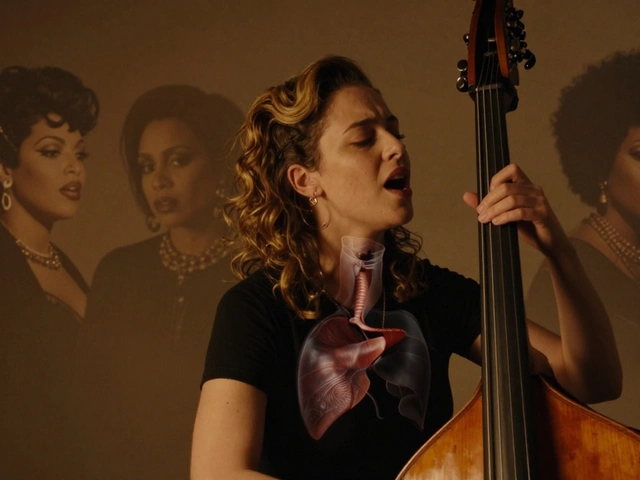
Once the body is relaxed, begin with breathing. Inhale through the nose for four counts, hold for two, and exhale through the mouth for six. Focus on expanding your ribs, not lifting your shoulders. This establishes the diaphragmatic control needed for long phrases. Transition into lip trills. Keep your lips loose and let the air vibrate them. Glide from your lowest comfortable note to your highest and back down. This exercise equalizes the vocal folds and prevents abrupt onset. Avoid pushing air too hard; if your face turns red, you’re overdoing it. Next, move to humming. Hum an 'Mmm' sound across your range. Feel the vibration in your mask (nose and cheekbones). This builds resonance without engaging the full weight of the vocal folds. Finally, introduce pitch. Use a simple five-note scale (do-re-mi-fa-sol) with a 'Nay' or 'Gee' sound. Keep it light. The goal here is clarity and ease, not volume. If you strain at any point, drop the octave and try again. Building trust in your instrument takes patience, but it pays off when you need to belt a chorus without losing control.

Emotional Tuning: The R&B Specifics
R&B is distinct from pop or rock because of its reliance on nuance, vibrato, and dynamic shifts. A pure pop singer might prioritize projection, but an R&B artist needs flexibility. Before hitting the first note, take a moment to visualize the emotional arc of your first song. Are you starting soft and building to a climax? Or are you beginning with power and pulling back for intimacy? This mental rehearsal primes your expressive muscles. Listen to a short snippet of your opening track in your headphones, focusing not on the lyrics, but on the breath patterns. Where does the singer take a quick sip of air? Where do they sustain a long note? Mimic these breath placements in your head. This cognitive mapping reduces the risk of running out of air mid-phrase during the actual performance. It turns the technical act of breathing into an artistic choice.
Common Pitfalls to Avoid
Even with a good plan, small mistakes can derail your readiness. One major trap is warming up too early. If you start your vocal routine more than 90 minutes before showtime, your voice may cool down or dry out by the time you step on stage. Aim to finish your final vocal exercises within 15 to 20 minutes of going on. Another common error is skipping hydration. Drink room-temperature water throughout the day, but avoid ice-cold drinks right before singing, as they can shock the vocal cords. Also, resist the urge to clear your throat. If you feel mucus, swallow instead. Throat clearing slams the vocal folds together, causing irritation. Finally, don’t compare your warmup to other performers. What works for a rock singer might destroy an R&B vocalist’s delicate top notes. Trust your own physiological needs.
| Aspect | Common Mistake | Best Practice |
|---|---|---|
| Timing | Starting 3+ hours before show | Finishing 15-20 mins before stage |
| Hydration | Ice water immediately before singing | Room temperature water consistently |
| Throat Clearing | Forceful clearing of mucus | Gentle swallowing to dislodge mucus |
| Intensity | Belling max volume during warmup | Focusing on ease and resonance |

Creating Your Personalized Routine
While the structure above provides a solid framework, your specific routine should reflect your unique vocal profile. If you struggle with high notes, spend extra time on descending scales after ascending ones. If your low end feels weak, incorporate more chest voice exercises. Write down what works for you. Keep a simple log after each show: Did you feel strained? Was your tone consistent? Adjust your routine based on these observations. Over time, you’ll develop a personalized toolkit that addresses your specific weaknesses. Remember, consistency beats perfection. Doing a shorter, effective routine every day is far better than a lengthy, sporadic one. The goal is to make the process so familiar that it becomes second nature, allowing your creativity to flow freely once the lights come up.
Frequently Asked Questions
How long should a pre-show vocal warmup take?
For most professional singers, a comprehensive warmup takes between 20 and 45 minutes. This includes physical stretching, breathing exercises, and gradual vocal introduction. The key is to finish the active vocal portion close to showtime to maintain peak readiness.
What is the best drink to consume before singing?
Room-temperature water is the gold standard. It keeps the mucous membranes lubricated without shocking the tissue. Herbal teas like chamomile can also be helpful for relaxation, provided they are caffeine-free and not too hot.
Why do I lose my voice if I warm up too early?
Vocal folds swell slightly with use and then return to their resting state. If you warm up several hours before a performance, the tissue may relax too much or dry out due to ambient conditions, leading to a loss of edge and power when you finally perform.
Do I need to sing scales every single time?
Not necessarily. Scales are useful for checking pitch accuracy, but other exercises like arpeggios or melodic fragments from your setlist can be equally effective. The goal is to engage the vocal mechanism smoothly, not to complete a specific mathematical sequence.
How does stress affect vocal performance?
Stress triggers the fight-or-flight response, which tenses the neck, shoulders, and jaw. This physical tension restricts airflow and causes the larynx to rise, making high notes difficult and low notes shallow. Breathing exercises help counteract this by activating the parasympathetic nervous system.