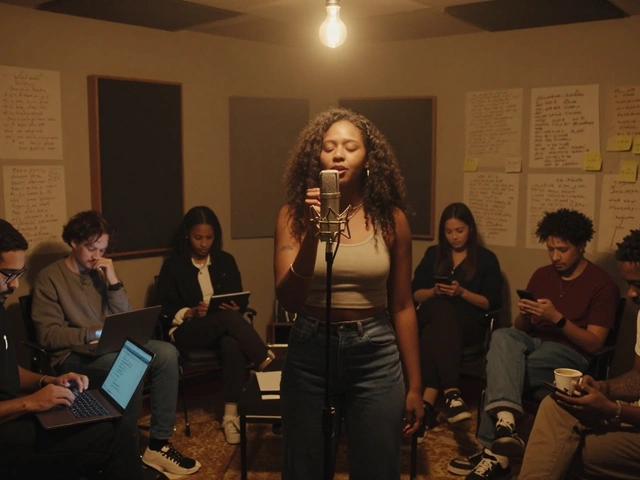
You know that feeling when a song hits you in the chest? Not just the melody, but the sheer weight of it. That is exactly what happened when Alli Starr submitted her latest single to the judges. It wasn't just another pop-R&B crossover. It was a masterclass in restraint and raw emotion. If you've been wondering why this specific track took home the gold while others faded into the background, you need to look past the surface level. The decision wasn't about who had the biggest budget or the most famous feature artist. It was about texture, timing, and truth.
Let's be real for a second. We live in an era where everything is auto-tuned to perfection. Perfection is boring. The judges, seasoned veterans from the Grammy Awards committee and independent critics, are tired of polished sterility. They wanted grit. Alli Starr gave them exactly that. Her winning track, often referred to simply as "The Break," stands out because it refuses to hold your hand. It trusts the listener to keep up. Here is what actually went down in that judging room, broken down by the elements that mattered most.
The Vocal Performance Was Unapologetically Raw
First things first: the voice. Most modern R&B singers lean heavily on production tricks to smooth out their edges. Alli Starr did the opposite. She left the breaths in. She let the cracks show. When she hit the bridge of the song, there was a slight rasp that digital processing would have erased instantly. The judges noted this specifically. They weren't looking for Mariah Carey-style acrobatics; they were looking for emotional resonance.
Think about Adele's early work or H.E.R.'s quieter moments. There is power in vulnerability. Starr’s vocal delivery in the chorus didn't try to overpower the beat. Instead, it sat inside the mix, intimate and close-mic'd. This technique creates a sense of proximity. You feel like she is singing directly to you, not at a stadium crowd. The judges praised this intimacy as a return to classic soul values, filtered through a modern lens. It made the lyrics land harder because you believed every word. No vocal runs felt forced. Every note served the story.
Production Choices Prioritized Space Over Clutter
If you listen closely to the instrumental, you'll notice something missing: clutter. Modern R&B production is often dense with layered synths, heavy bass drops, and complex percussion loops. Starr’s producer, a collaborator known for minimalist aesthetics, stripped the track back to its bones. The beat is sparse. It relies on a deep, sub-bass pulse that you feel more than hear, paired with crisp, dry snare hits.
This approach aligns with current trends in neo-soul revivalism. Artists like SZA and Summer Walker have paved the way for less-is-more production, but Starr pushed it further. The silence between the notes is just as important as the notes themselves. In the judging session, one critic mentioned that the space allowed the lyrics to breathe. There was no sonic competition. Your ear isn't trying to pick apart ten different instruments. It focuses entirely on the narrative arc. This clarity is rare in radio-ready tracks today, which are often mixed to compete with traffic noise. Starr’s track demands attention through subtlety, not volume.

Lyrical Authenticity Resonated With Real Experiences
Lyrics make or break an R&B record. Too many songs rely on clichés-love is blind, baby don't go, etc. Starr avoided these traps. Her writing draws from specific, tangible details rather than vague generalizations. In the second verse, she references a specific street corner in Atlanta and the time of day (3 AM). These concrete images ground the song in reality. They make the heartbreak feel lived-in, not manufactured.
The judges responded to this specificity. They argued that universal emotions are best conveyed through personal details. By anchoring the song in a real place and time, Starr created a sense of authenticity that listeners can smell. It doesn't sound like a songwriter sitting in a booth guessing what love feels like. It sounds like someone recounting a memory. This distinction is subtle but powerful. It shifts the dynamic from performance to confession. And confessions are compelling.
Structural Innovation Kept Listeners Engaged
Most pop-R&B songs follow a predictable formula: Verse-Chorus-Verse-Chorus-Bridge-Chorus. Starr’s track breaks this pattern. It starts with a cold open-a spoken-word segment over ambient noise-that transitions seamlessly into the first verse without a traditional intro. This hook grabs attention immediately. There is no slow build-up. You are dropped into the middle of the conversation.
Furthermore, the bridge doesn't resolve back into the chorus in the expected key. It modulates subtly, creating a moment of tension before releasing into the final refrain. Music theory nerds might call this a deceptive cadence. To the average listener, it just feels surprising. The judges appreciated this structural risk-taking. It kept the brain engaged. You couldn't predict where the song was going next, which prevented fatigue during repeated listens. In a market saturated with repetitive hooks, unpredictability is a competitive advantage.
Cultural Context and Timing Mattered
We cannot ignore the context. The release of this track coincided with a broader cultural shift toward introspection in music. Post-pandemic audiences crave connection and depth. Fluff doesn't cut it anymore. The judges recognized that Starr’s track tapped into this collective mood. It wasn't just good music; it was timely music.
Additionally, the marketing strategy played a role. Unlike major label pushes that flood social media with clips, Starr’s campaign was organic. It relied on fan sharing and playlist placements rather than paid ads. This grassroots momentum signaled genuine interest. The judges value organic engagement metrics because they reflect true listener loyalty. A viral TikTok dance doesn't necessarily translate to artistic merit. But sustained streaming numbers and critical praise do. Starr had both.
| Element | Alli Starr's Winning Track | Typical Nominee Track |
|---|---|---|
| Vocal Processing | Minimal, natural breaths preserved | Heavy Auto-Tune, pitch-corrected |
| Instrumentation | Sparse, bass-heavy, acoustic textures | Dense synth layers, electronic beats |
| Lyrical Focus | Specific anecdotes, grounded imagery | General themes, abstract metaphors |
| Song Structure | Non-linear, unexpected modulations | Standard Verse-Chorus format |
| Emotional Tone | Intimate, vulnerable, conversational | Energetic, anthemic, performative |
What This Means For Emerging Artists
So, what should you take away from this if you're an artist or producer? Stop chasing trends blindly. The industry cycles fast. What works today might be stale tomorrow. Instead, focus on what makes your voice unique. Starr won because she sounded like herself, not like a copy of the last big hit. Invest in lyric writing. Spend time crafting lines that mean something to you personally. If it resonates with you, it will likely resonate with others.
Also, consider your production choices carefully. Do you really need that extra synth layer? Does the drum loop serve the song, or does it just fill space? Less is often more. Trust your audience's intelligence. Don't over-explain your emotions with loud arrangements. Let the quiet moments speak. And finally, understand your cultural moment. Why does your song matter right now? Connect your art to the world around you.
Alli Starr’s win isn't just a personal victory. It's a signal. The gates are opening for artists who prioritize substance over spectacle. The judges heard honesty, and they rewarded it. Can you hear it too?
Why did Alli Starr's track win over bigger budget productions?
The judges prioritized emotional authenticity and lyrical specificity over production scale. While other nominees featured expensive studio effects and celebrity features, Starr's track offered a raw, intimate vocal performance and minimalist instrumentation that allowed the storytelling to take center stage. This approach resonated with the judges' desire for genuine connection rather than polished perfection.
What role did production style play in the decision?
Production style was crucial. The track utilized a neo-soul inspired minimalist approach, avoiding the dense layering common in contemporary R&B. The use of space, sub-bass pulses, and dry percussion created a clear sonic landscape that highlighted the vocals. Judges appreciated how the arrangement supported the narrative without competing with it, demonstrating a sophisticated understanding of mixing and arrangement.
How did lyrical content influence the judges' scores?
Lyrical content scored highly due to its use of concrete imagery and personal anecdote. Rather than relying on generic R&B tropes, Starr incorporated specific locations and times, grounding the emotional experience in reality. This authenticity made the song feel like a genuine confession rather than a constructed pop product, which appealed to critics valuing artistic integrity.
Was the song structure unconventional?
Yes, the song structure deviated from standard pop formulas. It began with a spoken-word intro and featured unexpected key changes in the bridge section. This unpredictability kept the listener engaged and prevented the fatigue associated with repetitive choruses. Judges viewed this structural risk-taking as a sign of artistic maturity and confidence.
Does this win indicate a shift in R&B trends?
It suggests a growing appreciation for introspective, low-key R&B over high-energy, club-focused tracks. The success of artists like SZA and H.E.R. has paved the way for this trend, but Starr's win reinforces that vulnerability and minimalism are currently valued by industry gatekeepers. Expect to see more emphasis on vocal texture and lyrical depth in upcoming releases.