You know that sinking feeling when you step on stage, the lights hit your face, and you realize the monitor mix is a muddy disaster? For Alli Starr, an emerging force in modern R&B known for her ethereal vocals and atmospheric production, this isn't just an annoyance-it's a dealbreaker. Her approach to soundcheck rituals transforms what many see as a tedious technical necessity into a critical creative session. If you've ever wondered how top-tier artists maintain vocal consistency while battling feedback loops and inconsistent venues, Alli's method offers a blueprint worth stealing.
Most musicians treat soundchecks like a race against time. They rush through levels, ignore the subtle frequencies that make or break a performance, and hope for the best. Alli doesn't. She treats the pre-show period as an extension of the studio, ensuring that the transition from recorded track to live performance feels seamless. This isn't about ego; it's about respect for the craft and the audience. Let's break down exactly how she does it, so you can stop guessing and start performing with confidence.
The Pre-Show Mental Reset
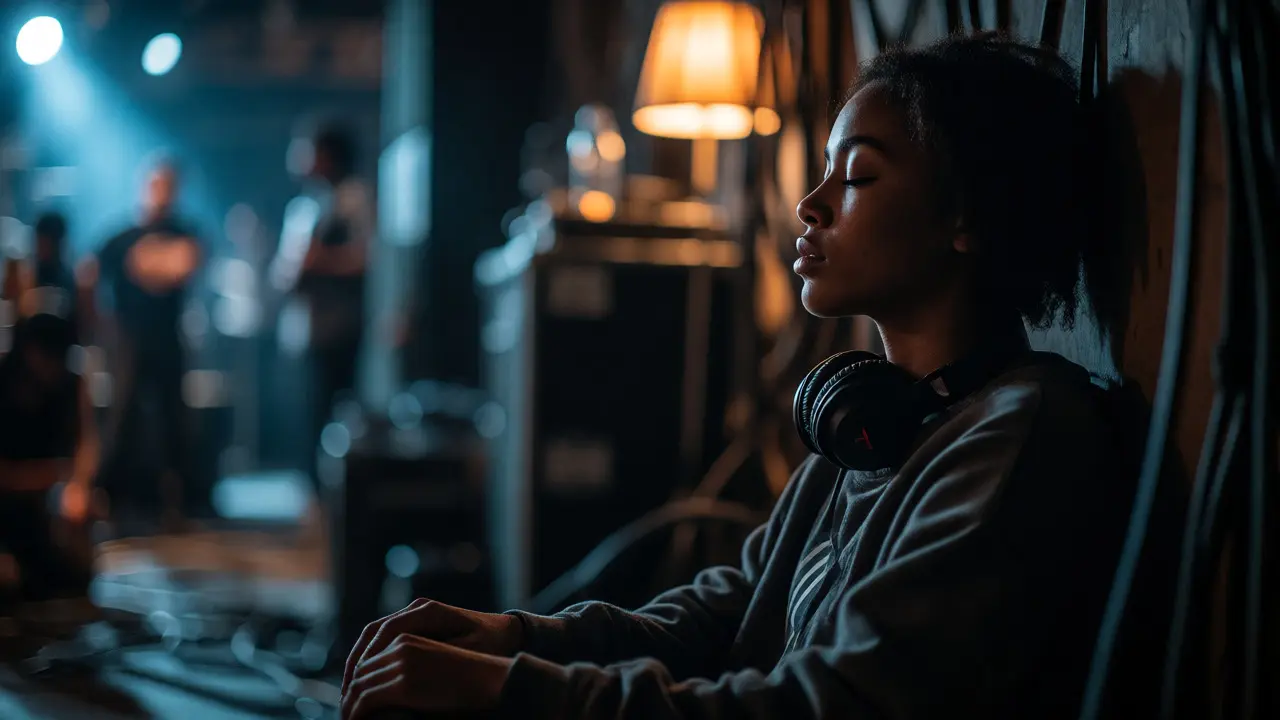
Before any cable gets plugged in, Alli starts with silence. It sounds counterintuitive, right? But in the chaos of load-in, where amps are humming and roadies are shouting, your ears get fatigued fast. Alli spends ten minutes in a quiet corner, doing nothing but listening to her own breathing. This resets her auditory baseline. When you step up to the mic, you need to hear nuances, not just volume. If your ears are already blown out by the house PA before you even speak, you're fighting a losing battle.
This mental reset also helps with anxiety. Live performance nerves can tighten your throat, affecting pitch accuracy. By grounding herself first, Alli ensures her vocal cords are relaxed before she tests them. It’s a small habit, but it pays off when you’re belting out high notes under hot stage lights.
Microphone Selection and Placement
One of the biggest mistakes artists make is using the same microphone setup regardless of the venue. Alli varies her mic choice based on the room's acoustics. In a dry, carpeted club, she might lean towards a dynamic microphone like the Shure SM7B, which rejects background noise and handles proximity effect well. In a large, reverberant theater, she might switch to a condenser for its sensitivity and detail retrieval.
| Venue Characteristic | Preferred Mic Type | Placement Technique | Why It Works |
|---|---|---|---|
| Small Club (Dry Acoustics) | Dynamic (e.g., Shure SM7B) | Close proximity (1-2 inches) | Maximizes signal-to-noise ratio; controls bass buildup. |
| Theater (High Reverb) | Condenser (e.g., Neumann KMS 105) | Slight angle off-axis | Captures vocal texture without picking up excessive room echo. |
| Festival Stage (Outdoor/Windy) | Hypercardioid Dynamic | Tight grip, windscreen essential | Rejects side noise; minimizes wind interference. |
Placement is just as crucial as selection. Alli practices consistent distance control. She marks her stand with tape if necessary, ensuring she never drifts too close (causing plosives) or too far (losing presence). This consistency allows the front-of-house engineer to set a stable EQ curve rather than chasing her movements all night.

The Monitor Mix: Building Your Own World
If there's one thing Alli insists on during soundcheck, it's controlling her own world via in-ear monitors (IEMs). Many artists rely solely on wedge monitors, but Alli prefers IEMs for their isolation and clarity. During soundcheck, she doesn't just ask for "more me." She builds a specific mix hierarchy.
- Vocals: The loudest element. She needs to hear every breath and inflection to stay in tune.
- Keys/Pads: Slightly lower than vocals. These provide the harmonic bed for her R&B melodies.
- Drums: Kick and snare are prominent for timing, but cymbals are dialed back to avoid ear fatigue.
- Bass: Present enough to feel the groove, but not so loud that it muddies the low-mid range where her voice sits.
She asks the monitor engineer to solo each instrument briefly. This lets her verify that everything is coming through clearly and that there's no phase cancellation happening between the DI boxes and the microphones. If the bass guitar sounds thin in the IEMs, she knows something is wrong with the source, not just her mix level.
Testing Dynamics, Not Just Volume
A common trap in soundchecks is testing at full volume only. Alli sings her quietest passages first. Why? Because compression and gating settings on the channel strip react differently to soft inputs. If the gate closes too aggressively, her whispers will disappear entirely. If the compressor kicks in too hard, her powerful choruses will sound squashed and lifeless.
She runs through a dynamic range test: starting with a soft hum, moving to a mid-range verse, and ending with a belt. She watches the engineer's meters closely. If the peak levels jump wildly between sections, she adjusts her singing technique or asks for gain staging adjustments. This proactive approach prevents the dreaded "feedback squeal" during the actual show, which often happens when an artist suddenly pushes harder than tested.

Acoustic Calibration and Feedback Hunting
R&B mixes often feature lush synth pads and deep sub-bass, both of which are prone to causing feedback in poorly treated rooms. Alli works with the FOH engineer to identify problem frequencies. They use a technique called "ringing out" the system. The engineer boosts the gain until feedback occurs, then cuts the specific frequency causing it.
For Alli, this means protecting the 2kHz-4kHz range, where human speech and vocal harmonics live. Too much boost here causes harshness; too little makes the voice sound distant. She listens critically for "boxiness" (around 300Hz) and "mud" (around 200Hz). If the room resonates at these frequencies, she might adjust her stance on stage. Moving just two feet left or right can drastically change how the sound waves reflect off walls and hit her ears.
The Post-Soundcheck Review
Once the technical checks are done, Alli doesn't immediately leave the stage. She records a short snippet of her test run on her phone. Later, in the green room, she reviews it. Does the vocal sit well with the instrumental? Is the tempo locked? This quick review helps her mentally prepare for the setlist order. If she notices a particular song transitions poorly in the mix, she might adjust her pacing or ask the band to add a brief pause before the next track.
This ritual turns soundcheck from a chore into a rehearsal. It builds trust between the artist and the crew. When the engineer sees an artist who is prepared, respectful, and communicative, they go the extra mile. Alli's flawless mixes aren't magic; they're the result of meticulous preparation and clear communication.
Why does Alli Starr prefer in-ear monitors over wedges?
In-ear monitors (IEMs) provide better isolation from ambient stage noise, allowing the artist to hear details in the mix without turning up volume to dangerous levels. This protects hearing and ensures a consistent mix experience regardless of venue size or acoustic quality.
How important is microphone placement consistency?
Consistency is vital because changes in distance affect the proximity effect (bass boost) and overall tonal balance. Keeping a steady distance allows the audio engineer to set accurate EQ and compression settings that remain effective throughout the entire performance.
What is "ringing out" the system?
Ringing out involves gradually increasing the gain on a microphone channel until feedback begins, then identifying and cutting the specific frequency causing the feedback with an equalizer. This process maximizes headroom and reduces the risk of unwanted noise during the show.
Can these rituals help amateur performers?
Absolutely. Even without professional gear, adopting habits like checking monitor levels carefully, maintaining consistent mic distance, and communicating clearly with the sound engineer can significantly improve live sound quality and reduce performance stress.
How long should a proper soundcheck take?
While time varies by venue, a thorough soundcheck for a solo artist with a band typically requires 30 to 45 minutes. Rushing this process often leads to unresolved issues that become glaringly obvious once the audience arrives.