When a body is prepared for burial, the room is quiet. The lights are low. The air smells like antiseptic and lavender. But in the corner, someone is playing a piano. Not for show. Not for tradition. For healing.
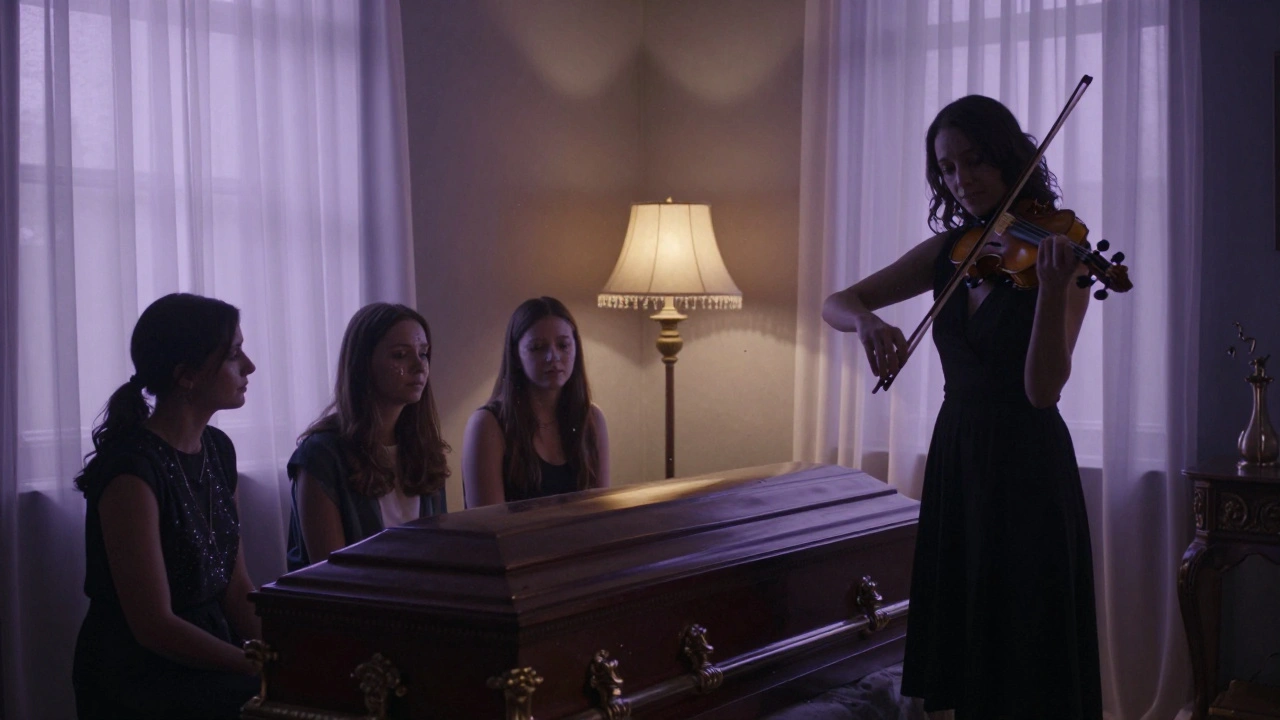
Alli Starr didn’t set out to be a music therapist. She trained as a mortuary science technician in Oregon, learning how to embalm, how to reconstruct, how to dress the dead with dignity. But after her third funeral in a week where a family sat silently, staring at the casket like it was a question they couldn’t ask, she started bringing her violin.
It wasn’t planned. She just played. A slow version of Clair de Lune. The daughter stopped crying. The father looked up. The priest paused mid-prayer. No one said a word. But for the first time that day, the room didn’t feel empty.
That was five years ago. Now, Alli works full-time with funeral homes across the Pacific Northwest. She doesn’t perform. She doesn’t lead choirs. She listens-first to the family, then to the silence between their words-and then she plays what the room needs.
What Music Does When Words Fail
Grief doesn’t follow a script. There’s no manual for how to cry at a funeral. Some people scream. Some don’t cry at all. Some laugh at a memory they just remembered. Alli noticed early on that music doesn’t ask for permission. It just shows up.
She’s played Adagio for Strings for a mother who lost her twin sons in a car crash. Played Let It Be for a man who couldn’t speak after his wife’s sudden heart attack. Played a folk song her own grandmother used to hum for a 12-year-old boy who died of cancer-his mom said it was the only thing that made her feel like she could breathe again.
It’s not about the song. It’s about the space between the notes. The pause after a long chord. The way a single violin note can hang in the air like a held breath. That’s when families start talking. Not about death. About the way he always sang off-key in the shower. About how she kept a playlist for every season.
How Music Changes the Mortuary Experience
Traditional funeral services often feel like rituals performed on autopilot. Caskets. Prayers. Hymns. Flowers. All of it important. But sometimes, it’s too rigid. Too rehearsed. Too distant from what the living actually need.
Alli works with funeral directors to shift that. Instead of a standard playlist of hymns, she asks: What did they love? What did they hate? What song made them feel alive?
One family brought her a burned CD from their dad’s truck. It had 17 songs-country, hip-hop, polka. She played them all, in order. No one expected it. But by the third track, people were dancing. Not because it was funny. Because it was true.
She’s recorded over 200 custom playlists now. One for a firefighter who loved Metallica. One for a librarian who wanted Bach’s cello suites. One for a woman who asked for Happy by Pharrell because she said, “I don’t want them to leave thinking I was sad.”
The Science Behind the Sound
Music doesn’t just comfort. It changes your body. Studies from the University of Oregon’s Center for Grief and Neurology show that slow-tempo music-around 60 to 80 beats per minute-lowers heart rate, reduces cortisol levels, and activates the parasympathetic nervous system. In other words, it tells your body it’s safe to relax.
That’s why Alli avoids fast songs at funerals. Even if they were someone’s favorite. A funeral isn’t a concert. It’s a moment where the nervous system is overloaded. The right music doesn’t distract. It anchors.
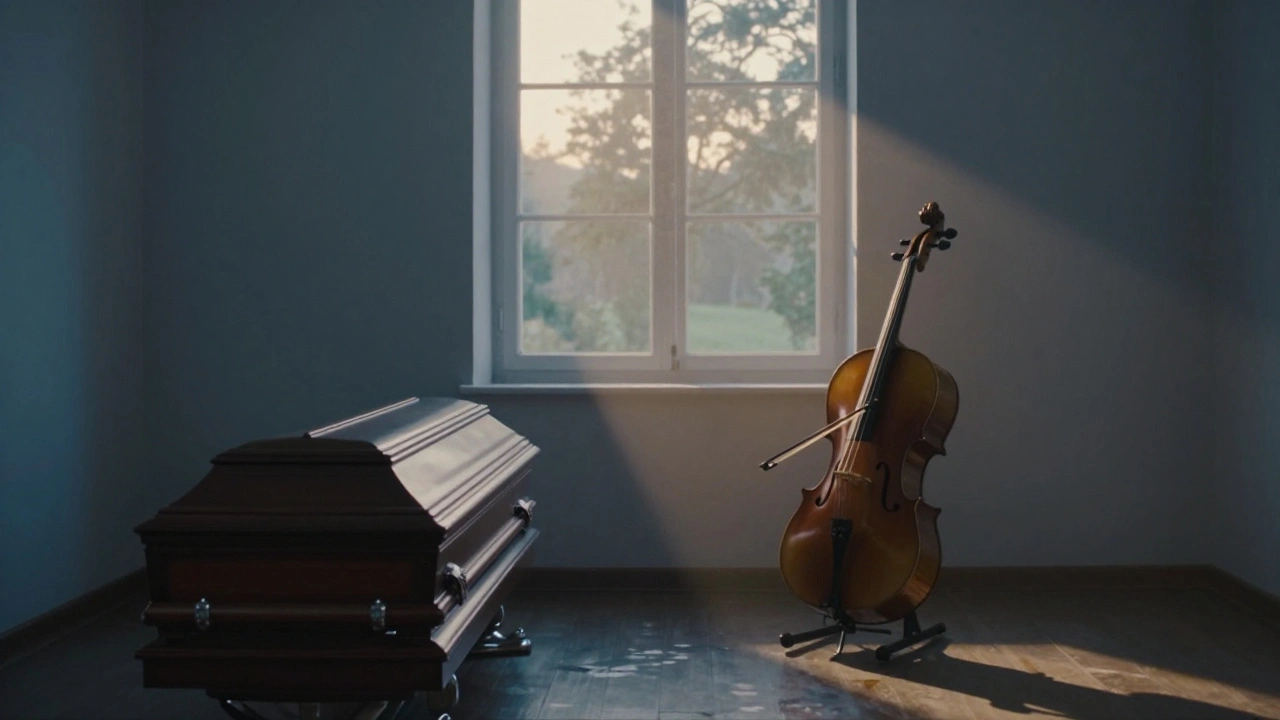
She uses live instruments when she can. A cello. A piano. A single flute. Live sound vibrates differently than speakers. It moves through the air. Through the floor. Through the chest of the person sitting next to you. That physical presence matters. It reminds people they’re not alone-even when the room feels empty.
How Families React When Music Is Personalized
Most families don’t know what to ask for. They think, “We’ll just play ‘Amazing Grace.’” Alli changes that.
She starts with a simple question: “Tell me about the last time you heard them sing, hum, or tap their foot.”
One man told her his wife used to whistle while washing dishes. He couldn’t remember the tune. So Alli sat with him for an hour, listening to stories. Then she played a melody she made up on the spot-simple, repetitive, warm. He cried. Then he smiled. “That’s it,” he said. “She always whistled that.”
Another woman came to Alli after her husband’s service. “I didn’t cry at the funeral,” she said. “But when you played that jazz piece he loved, I felt him beside me.”
These aren’t miracles. They’re human. Music bypasses the brain’s filters. It goes straight to memory. To emotion. To the part of us that remembers how someone laughed, not how they died.
Why This Matters in Mortuary Science
Mortuary science isn’t just about bodies. It’s about what’s left behind. The silence. The questions. The unfinished conversations.
Alli’s work is changing how funeral homes think about their role. It’s no longer just about preparing the body. It’s about preparing the living. And music is one of the most powerful tools they have.
She’s trained 14 funeral directors in Oregon and Washington to ask about music during the planning meeting. Not as an add-on. As part of the core service. One director told her, “I used to think music was a luxury. Now I see it as medicine.”
She doesn’t charge for her services. She asks families to donate to a local hospice. That’s how she pays for her violin strings. That’s how she keeps doing this.
What You Can Learn From Alli’s Approach
You don’t need to be a musician to use music this way. You don’t need to be at a funeral. If someone you love has died, and you’re struggling to feel close to them again-try this:
- Find one song they loved. Not the one everyone plays. The one they listened to alone.
- Play it on a real speaker, not headphones. Let it fill the room.
- Don’t try to feel anything. Just sit. Let the music do the work.
- After five minutes, ask yourself: What do I remember now that I didn’t before?
That’s what Alli does. She doesn’t fix grief. She makes space for it. And sometimes, that’s all anyone needs.
She still works in the same funeral home where she started. The same room. The same quiet. But now, when the lights go down, you might hear a violin. Or a piano. Or sometimes, just a single note. Lingering. Waiting. Letting go.
Can music really help people grieve in a funeral setting?
Yes. Research from the University of Oregon and the American Journal of Hospice and Palliative Care shows that personalized music reduces anxiety, lowers stress hormones, and helps families reconnect with memories of the deceased. Live music, especially slow and simple melodies, creates a calming physical sensation that spoken words often can’t match.
Is Alli Starr a licensed therapist?
No. Alli is a certified mortuary science technician, not a licensed music therapist. She doesn’t diagnose or treat. She observes, listens, and responds with sound. Her work is grounded in empathy, not clinical practice. Many funeral homes now partner with certified music therapists for deeper sessions, but Alli’s approach is different-it’s personal, not professional.
What kind of music works best for grieving families?
There’s no single answer, but music with a slow tempo (60-80 BPM), minimal lyrics, and warm tones works best. Classical pieces like Barber’s Adagio for Strings, cello solos by Bach, or ambient piano tracks are common. But the most powerful music is personal-a song the deceased loved, hummed, or danced to. Even a pop song or a jazz standard can be healing if it carries meaning.
Why does live music matter more than recorded music at funerals?
Live sound vibrates through the air, the floor, and even the bodies of people in the room. It creates a shared physical experience. Recorded music feels distant. A live violin or piano feels present. It invites connection. It doesn’t just play a song-it holds space. That’s why Alli insists on playing live whenever possible.
Can I use music like this at a home memorial?
Absolutely. You don’t need a funeral home to use music this way. Play a song your loved one cherished. Sit quietly with it. Let it fill the room. Don’t force emotion. Just be there. Many people report feeling closer to the person they lost after doing this-even months or years later. It’s not about perfection. It’s about presence.