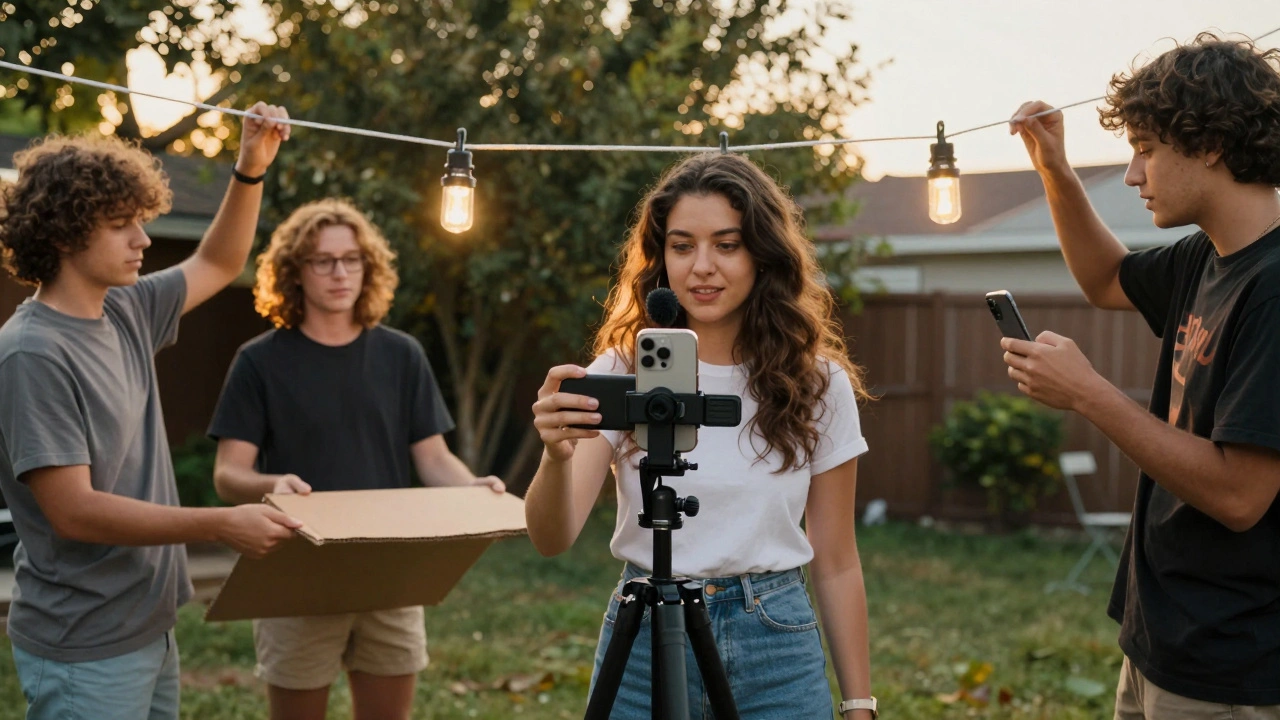
Most indie artists think making a music video means spending thousands-maybe tens of thousands-on crews, locations, and fancy gear. But that’s not true. Music video budgets don’t have to break the bank. Alli Starr, a director who’s helped over 200 indie artists turn $500 into viral visuals, says the secret isn’t more money-it’s smarter choices.
Start with the right mindset
Before you open your wallet, ask yourself: What does this video need to do? If your goal is to get noticed on TikTok or YouTube Shorts, you don’t need cinematic lighting or drone shots. You need energy, clarity, and something people want to watch twice. Alli’s rule: Every dollar must earn its place. A $2,000 video that gets 500,000 views beats a $10,000 video that gets 10,000 every time.
Many artists waste money on things that don’t move the needle. Think about it: Do you really need a professional actor to play your ex in the video? Or can your best friend, who’s got great facial expressions and zero acting experience, do it for free? Alli’s clients who used real people instead of hired actors saved 40% right off the top.
Location: Your best free tool
Locations cost money when you pay for permits, rentals, or insurance. But they don’t have to. Alli’s top three free locations for indie videos:
- Your apartment or house-especially if it has unique lighting, textures, or color schemes
- Public parks after closing time-no permits needed if you’re quiet and leave no trace
- Abandoned buildings or warehouses-ask the owner. Many are happy to let you film if you promise not to damage anything
One artist filmed her whole video inside a laundromat. The spinning dryers became part of the choreography. The video got 3 million views. No location fee. Just a $15 bag of quarters for the machines.
Gear: Borrow, don’t buy
You don’t need a RED camera. You don’t need a $3,000 lens. Most phones made in 2024 shoot 4K video with cinematic color profiles. Alli’s team uses iPhone 15 Pro and Google Pixel 8 Pro for 80% of shoots. Add a $30 tripod and a $25 lavalier mic, and you’re ahead of 90% of indie videos out there.
Need lighting? Use natural light. Shoot at golden hour-sunrise or sunset. If you need extra light, buy two LED work lights from Home Depot ($15 each). Hang them from a coat rack or duct tape them to a wall. Done.
One band saved $1,200 by borrowing a gimbal from a local film school. They offered to let the students use the final cut in their portfolio. Win-win.
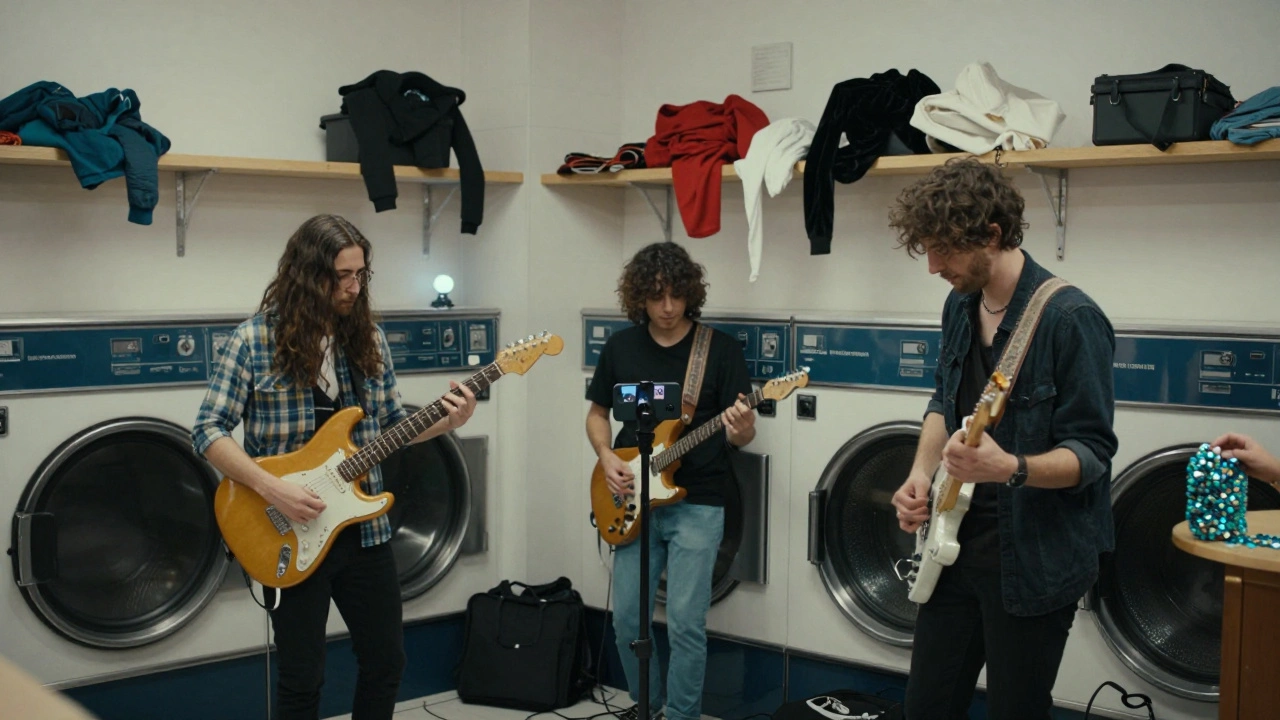
People: Use your network
Hiring a full crew? That’s $500 just for a camera operator and sound tech. Instead, train your friends. Alli teaches artists to do a 2-hour crash course on basic filming and editing. You can learn how to frame a shot, use manual focus, and sync audio in under an hour. YouTube tutorials are your crew.
Here’s what works:
- 1 person: Director/Producer (you)
- 1 person: Camera operator (your tech-savvy friend)
- 1 person: Sound and lighting (your roommate)
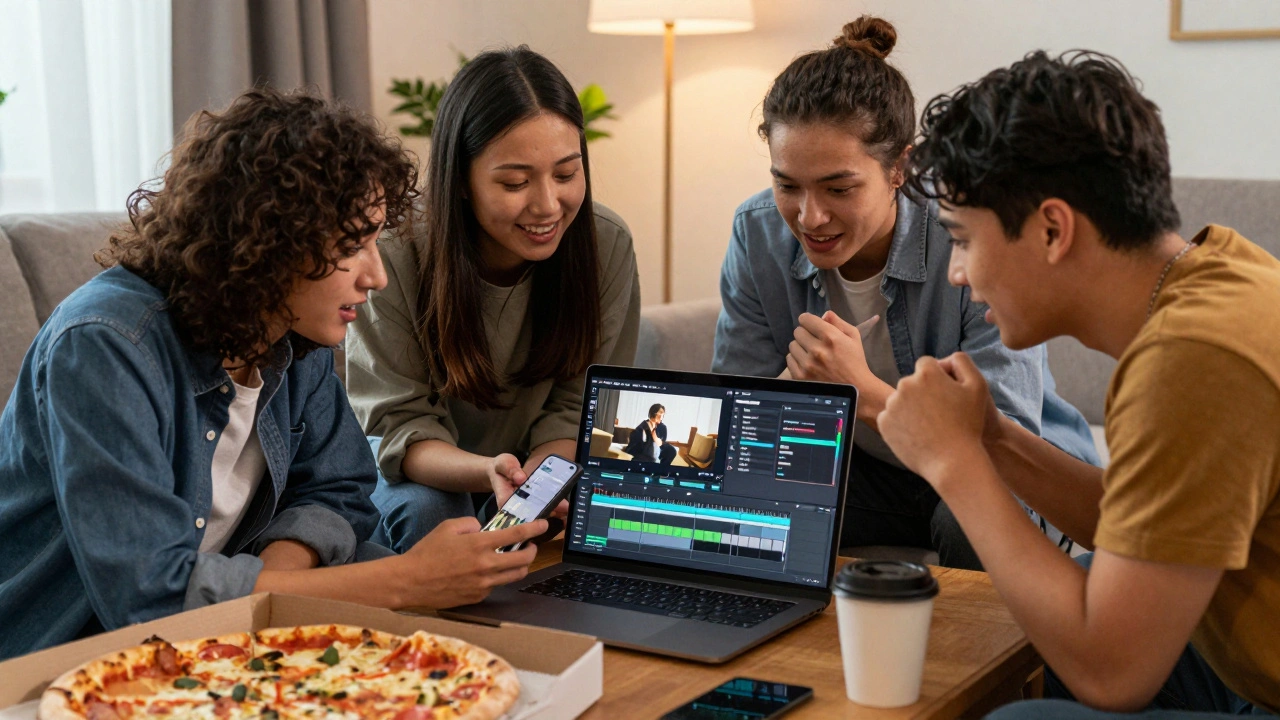
- 1 person: Editor (your cousin who edits TikTok videos)
That’s four people. Zero payroll. Just pizza and credit.
Editing: Free tools, professional results
You don’t need Adobe Premiere Pro. DaVinci Resolve is free, professional, and used by Netflix editors. CapCut works great for short-form edits. Alli’s clients who used these tools saved $800 on editing fees and still got cleaner cuts than some $10K videos.
Pro tip: Cut to the beat. Don’t over-edit. Most viral videos use simple cuts, jump cuts, or speed ramps. No need for fancy transitions. Keep it tight. Under 60 seconds? Even better.
What to skip
Here’s what Alli tells every artist to avoid:
- Costume changes-too many = too expensive
- Choreography with more than 3 people-hard to coordinate, hard to film
- Green screen-unless you’re in a studio with proper lighting, it looks fake
- Stock footage-audiences can tell. It’s not authentic
- Drone shots-unless you’re licensed and insured, the risk isn’t worth it
One artist spent $700 on a drone operator. The footage was shaky. The video flopped. She re-shot it with a handheld camera on a bridge. Got 10x more views.
Real example: 7 video that went viral
Let’s look at a real case. Indie singer Lena Rivera had $500 to spend. Here’s how she used it:
- $120: Food and gas for 3 days of shooting (her team of 4)
- $85: Two LED lights from Home Depot
- $60: Lavalier mic (borrowed from a friend, she paid $60 to replace it)
- $40: Backup SD cards
- $100: Color grading in DaVinci Resolve (hired a freelance editor for 3 hours)
- $82: A used tripod from Facebook Marketplace
She filmed in her backyard, her sister’s garage, and a local park at sunset. No permits. No crew. Just her, two friends, and a phone. The video hit 1.2 million views in 3 weeks. She got signed by a small indie label.
How to plan your own budget
Start with this simple formula:
50% People + 30% Gear + 20% Logistics
- People: Food, gas, small payments, thank-you gifts
- Gear: Lights, mics, memory cards, tripod, rental fees
- Logistics: Editing, backup storage, minor permits (if needed), insurance
Never go over $2,000 unless you’re sure you’ll get 10x the return. Most indie videos under $1,000 perform better than those over $5,000.
Final tip: Shoot more than one version
Alli always tells artists to film two cuts: one full-length (3-4 minutes) and one 15-60 second vertical cut for TikTok and Reels. That way, you’re not just making a video-you’re building a campaign. The short version often gets more plays, shares, and clicks than the long one. And it costs almost nothing extra to film both at the same time.
Think of your video as a tool-not a trophy. It’s not about how fancy it looks. It’s about how many people it reaches. And with the right approach, you can do that without a loan, a credit card, or a second job.
Can I make a music video with just my phone?
Yes. Modern smartphones shoot 4K video with excellent dynamic range. Use natural light, a cheap tripod, and a $25 lavalier mic. Edit in CapCut or DaVinci Resolve. Many viral videos were made this way. Alli Starr’s most successful indie video was shot entirely on an iPhone 14.
How much should I realistically spend on a music video?
For most indie artists, $500-$1,500 is enough. Anything over $2,000 should only happen if you’ve already built a fanbase and have a clear plan to monetize the video. The sweet spot is under $1,000-enough to look professional but not so much that you’re risking financial stress.
Do I need a director?
Not if you’re willing to learn. Alli trains artists to direct their own videos in a single afternoon. You just need to know how to frame shots, communicate with your team, and stay focused on the story. Many artists direct better than hired directors because they know their music better than anyone.
Is it worth hiring a crew?
Only if you’re confident you’ll recoup the cost. Most indie artists lose money hiring crews. Instead, train your friends. You’ll save hundreds, build stronger relationships, and get more creative control. If you do hire someone, pay them in credits, not cash-offer to feature them in your next video or on your socials.
What’s the biggest mistake indie artists make?
Trying to make a Hollywood-style video on a shoestring budget. That leads to rushed shots, bad lighting, and a final product that looks amateur. Instead, embrace the indie aesthetic. Raw, real, and personal videos connect better than polished ones. Authenticity beats production value every time.