There is a specific kind of magic that happens when a lead singer hits a high note and the room goes silent. But if you listen closely, really closely, you hear something else underneath that silence. You hear the breath. You hear the subtle hum of support. That is where Alli Starr lives. While she has built a respected career as a solo artist, her time backing up the late legend Bobby Womack was less about performance and more about education. It was a masterclass in how to tell a story without saying a word.
For many aspiring musicians, the idea of being a backup singer feels like a stepping stone-a waiting room for the real career. For Starr, it was the foundation. Working with Womack, a man who survived addiction, incarceration, and heartbreak only to produce some of the most poignant soul records of the 20th century, taught her that singing is not just about pitch. It is about truth. If you want to understand the mechanics of classic soul storytelling, you have to look at what happened behind the microphone during those sessions.
The Weight of the Room
When you step into a studio with someone like Bobby Womack, the dynamic shifts instantly. Womack was not just a singer; he was a survivor. His voice carried the weight of decades of struggle. For a backup vocalist, this creates a unique challenge. You cannot compete with that pain. You cannot try to out-sing the lead. Instead, you have to serve the song.
Alli Starr learned quickly that her job was to create a bed for Womack’s vocals to rest on. This requires immense discipline. In rock or pop, backup singers might add flourishes, ad-libs, or complex runs to show off their technical skill. In classic soul, particularly in the Womack style, every note must justify its existence. If a harmony does not move the narrative forward, it gets cut. Starr adopted a minimalist approach. She focused on locking in with the rhythm section, ensuring that her timing was so precise that the lead singer felt completely safe taking risks.
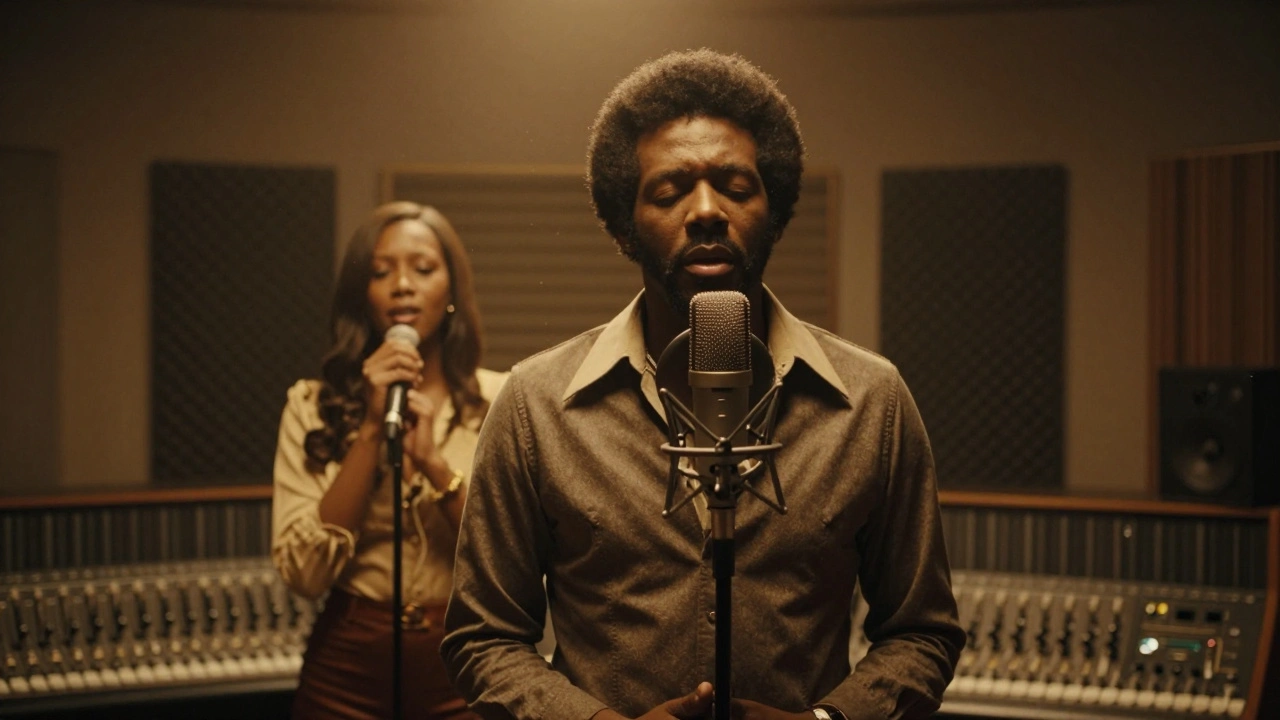
This concept of "serving the song" is often misunderstood by new artists. They think serving means staying quiet. It actually means listening harder. It means anticipating the emotional arc of the track before the lead singer even reaches it. Starr describes this as feeling the tension in the air. When Womack would lean into the microphone, eyes closed, pouring his heart into a line about betrayal or redemption, Starr knew exactly when to swell her voice to support him and when to pull back to let the rawness breathe.
Vocal Harmony as Emotional Architecture
Soul music relies heavily on the interplay between the lead and the background vocals. Think of the lead as the protagonist and the backups as the chorus in a Greek tragedy-they comment on the action, they amplify the emotion, but they do not take over the plot. Starr’s work with Womack illustrates this perfectly.
In tracks like "If You Think You’re Lonely Now," the emotional stakes are incredibly high. The lyrics deal with isolation and despair. A backup singer might be tempted to brighten the mood with major chords or upbeat harmonies. But that would betray the story. Starr learned to match the darkness of the lead while adding texture. She used close harmonies, stacking her voice just below or above Womack’s melody to create a thick, warm sound that felt like a hug rather than a spotlight.
This technique requires a deep understanding of music theory, but it also requires empathy. You have to understand why the singer is crying. Are they angry? Sad? Resigned? Your vocal tone changes based on that answer. Starr developed a chameleon-like ability to shift her timbre. She could go from a bright, gospel-infused shout to a whisper-soft murmur in the span of a single verse. This versatility is what separates good backup singers from great ones. Good singers hit the right notes. Great singers make the listener feel the right thing.
| Skill Area | Common Mistake | Starr's Approach |
|---|---|---|
| Vocal Placement | Singing too loudly or brightly | Matching the lead's intensity and tone |
| Rhythm & Timing | Rushing ahead to show energy | Locking in with the bass and drums |
| Emotional Delivery | Faking emotion for effect | Listening to the lyric's true meaning |
| Harmony Choice | Adding unnecessary complexity | Using simple, supportive intervals |

The Discipline of Listening
One of the most profound lessons Starr took away from her time with Womack was the power of silence. In a genre known for its lush arrangements, leaving space can be more powerful than filling it. Womack often spoke through pauses. He would hold a note, then stop, letting the echo hang in the air. A backup singer who rushes to fill that gap destroys the moment.
Starr learned to trust the arrangement. She understood that her presence was felt even when she wasn't singing. Her role was to be ready, poised, and connected to the band. This level of awareness transforms a musician from a performer into a collaborator. It builds a telepathic link with the other players in the room. When everyone is listening this intently, mistakes become rare because everyone is reacting to the same energy in real-time.
This discipline translates directly to solo work. When Starr performs her own material, she brings that same sense of economy and intention. She does not waste notes. Every phrase is chosen carefully. Every break serves the story. Fans of her solo work often comment on the maturity of her delivery, unaware that this polish was forged in the fires of supporting one of soul music’s toughest acts.
Storytelling Beyond the Lyrics
Classic soul is often called "the blues with a beat." It is deeply rooted in personal experience. Bobby Womack wrote songs that were essentially diary entries set to music. "Lookin' for a Love Again," "That's the Way I Feel About Cha," and "Crossfire" are not abstract concepts; they are specific moments in time captured in sound.
For a backup singer, connecting to these stories is essential. You cannot sing about heartbreak if you are thinking about your grocery list. Starr learned to immerse herself in the narrative of each song. She would study the lyrics, understand the context, and visualize the scene. This mental preparation allowed her to deliver lines with conviction. Even when she was singing a simple "oh" or "yeah," it carried the weight of the entire song’s theme.
This approach challenges the modern trend of treating vocals as just another instrument. In electronic dance music or hip-hop, backing vocals are often treated as texture-loops and samples designed to fill frequency ranges. In soul, the human element is paramount. The cracks in the voice, the slight rasp, the breathiness-these are features, not bugs. Starr embraced these imperfections. She understood that perfection is sterile. Vulnerability is what connects an artist to an audience.

From Support to Solo: Carrying the Torch
The transition from backup singer to solo artist is fraught with danger. Many former backups struggle to find their own voice after years of mimicking others. They either try to copy the lead singer they supported or swing too far in the opposite direction, trying to prove they are different. Starr avoided both traps.
She kept the humility and the focus on storytelling that she learned from Womack. She did not try to be the next Bobby Womack. She recognized that her own experiences, her own life, offered a different kind of story. Her solo work reflects a blend of that classic soul sensibility with contemporary influences. She uses modern production techniques but retains the organic, live-band feel that defined her early career.
This balance is difficult to achieve. It requires confidence in your own identity while respecting the traditions that shaped you. Starr’s success proves that backing up a legend is not a detour; it is a direct path to mastery. By learning how to support someone else’s vision, she gained the tools to articulate her own. She learned that the best way to stand out is to first learn how to blend in.
The Legacy of Collaboration
In today’s music industry, collaboration is often transactional. Artists feature each other to boost streaming numbers. Social media metrics dictate who works with whom. The deep, long-term mentorship that existed between Womack and Starr is rarer now. Yet, the value of such relationships remains undeniable.
Starr’s experience highlights the importance of apprenticeship in music. Young artists need to spend time in the trenches, learning the craft from those who have walked the path before them. They need to learn how to listen, how to wait, and how to serve the song. These are skills that cannot be taught in a conservatory. They are learned in the studio, in the club, and on the road.
Bobby Womack left behind a catalog of music that continues to resonate with listeners decades later. Part of that resonance comes from the people who stood beside him, adding their voices to his story. Alli Starr is one of those voices. Her contribution may not always be in the spotlight, but it is essential to the whole. And in doing so, she crafted a career that stands on its own two feet, rooted in the rich soil of classic soul.
What made Bobby Womack's style unique for backup singers?
Womack's style was intensely emotional and rooted in personal struggle. Backup singers had to match this vulnerability rather than compete with it. This required a minimalist approach where every note served the narrative, avoiding flashy runs or excessive volume in favor of tight, supportive harmonies that amplified the lead's pain and passion.
How did Alli Starr apply these lessons to her solo career?
Starr applied the lesson of "serving the song" to her own material. She focuses on lyrical truth and emotional authenticity over technical display. Her solo work maintains the organic, live-band feel of classic soul while incorporating modern production, demonstrating that the discipline of backup singing enhances rather than hinders individual artistry.
Why is listening considered more important than singing in soul music?
In soul music, the emotional arc of the song dictates the performance. Lead singers like Womack often used pauses and dynamics to convey meaning. Backup singers must listen intently to anticipate these shifts, providing support exactly when needed and pulling back when silence is more powerful. This creates a cohesive, emotionally resonant performance.
What is the difference between pop and soul backup singing?
Pop backup singing often prioritizes texture and catchy hooks, sometimes using complex harmonies or electronic effects. Soul backup singing prioritizes emotional connection and narrative support. It relies on close, warm harmonies that blend seamlessly with the lead, emphasizing the human element and the raw emotion of the lyrics.
Did working with Womack change Starr's view on fame?
Yes, it shifted her focus from external validation to artistic integrity. Seeing Womack’s journey through fame and hardship taught her that the music itself is the reward. This perspective allows her to pursue a sustainable career based on genuine connection with audiences rather than chasing trends or viral moments.