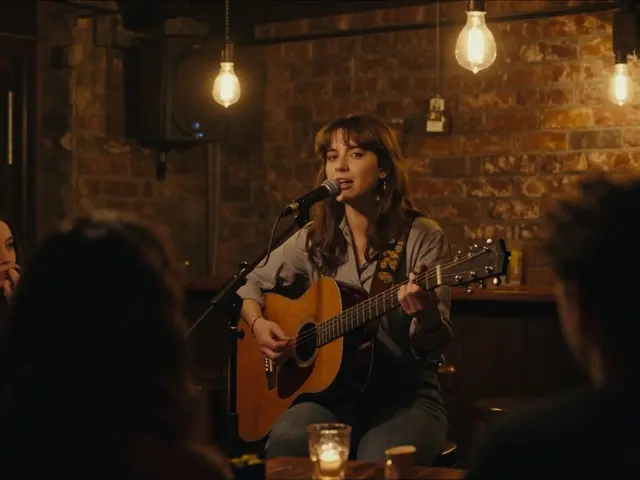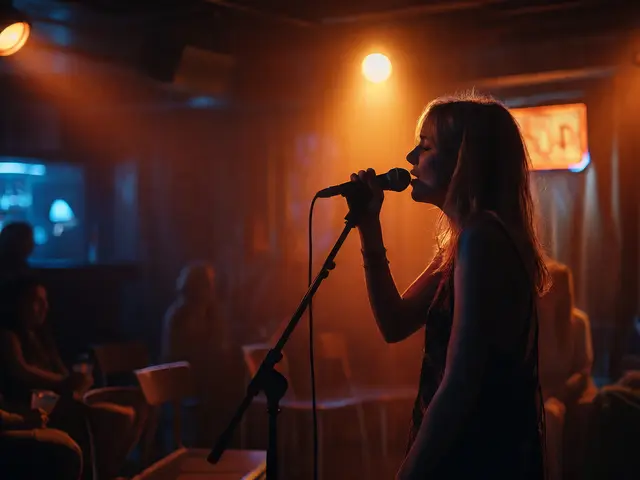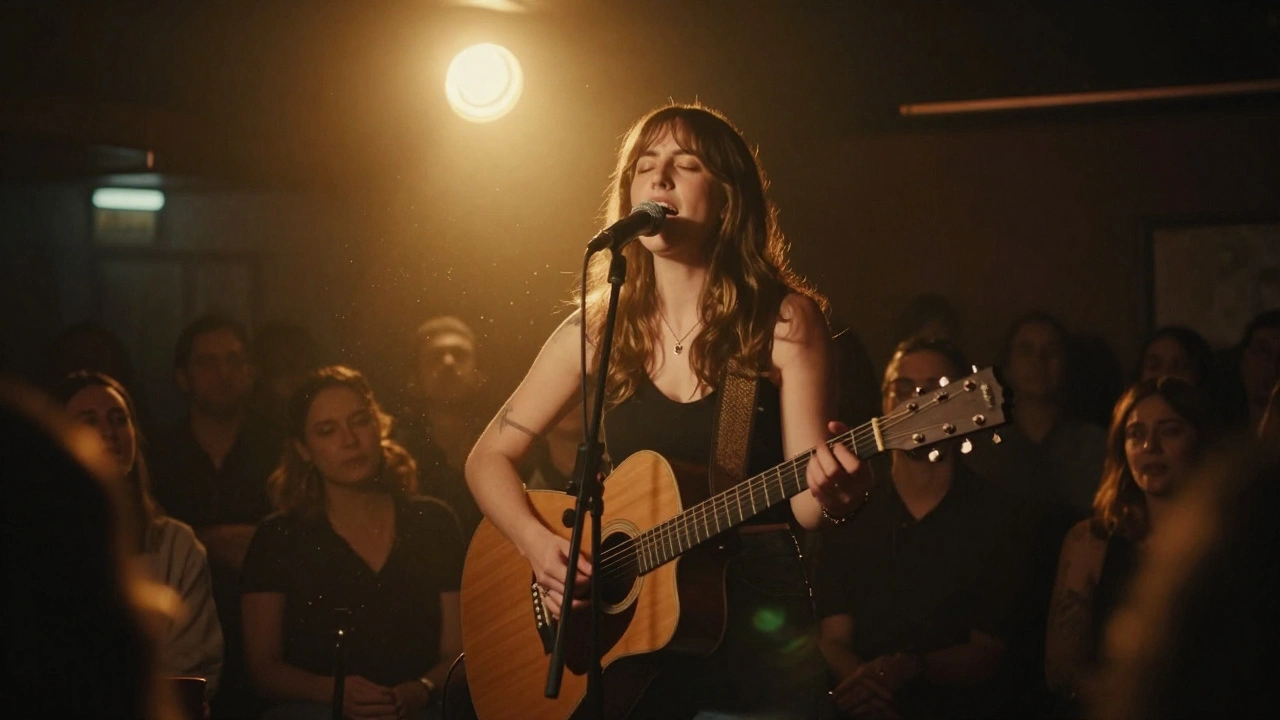
When Alli Starr first stepped onto a stage, she didn’t need a microphone stand to command attention. Her voice cut through crowded bars and dusty open mics like a live wire-raw, unfiltered, and electric. Fans showed up not just for the songs, but for the feeling: the way she’d lean into a note until it cracked, the way her hands moved like she was shaping the air around her. She was a live performer through and through. But by 2024, something shifted. The roar of the crowd wasn’t enough anymore. She started asking: What if the music could live longer than one night?
The Breakdown of a Live-Only Mindset
For years, Alli refused to record in a studio. "It’s not real unless it’s live," she’d say. She’d play 150 shows a year, sometimes three in one weekend. Her setlist changed every night. She’d improvise bridges, stretch choruses, drop verses on a whim. Her band learned to follow her lead, not the other way around. But the cost was high. Touring wore her out. Her voice got hoarse. Her hands started trembling after long drives. And worst of all-no one could hear her music on a rainy Tuesday afternoon.
She started noticing things. Friends would text her: "I played your song from the Portland show last month on repeat." She didn’t have a version of that song saved. No official recording existed. She’d have to dig through her phone, find a shaky video, and send it. That’s when it hit her: she was losing control of her own art.
The First Studio Session: A Disaster
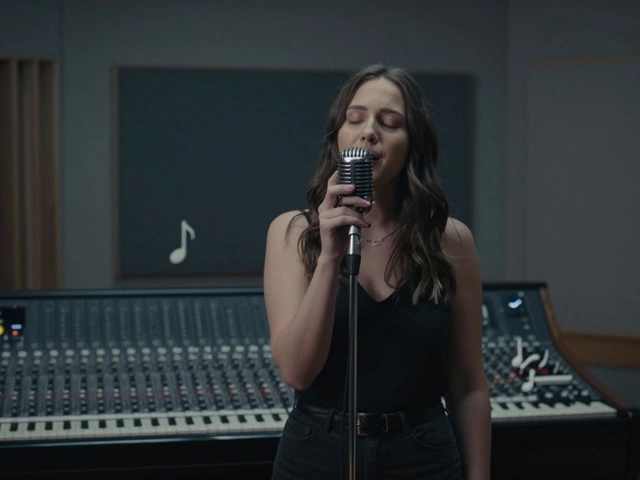
Her first studio session was in late 2022. She walked into the room at Jackrabbit Studios in Portland with her guitar, a notebook full of scribbled lyrics, and zero trust in the process. The engineer, a quiet guy named Eli, set up mics, played her a reference track, and asked: "What are we going for?"
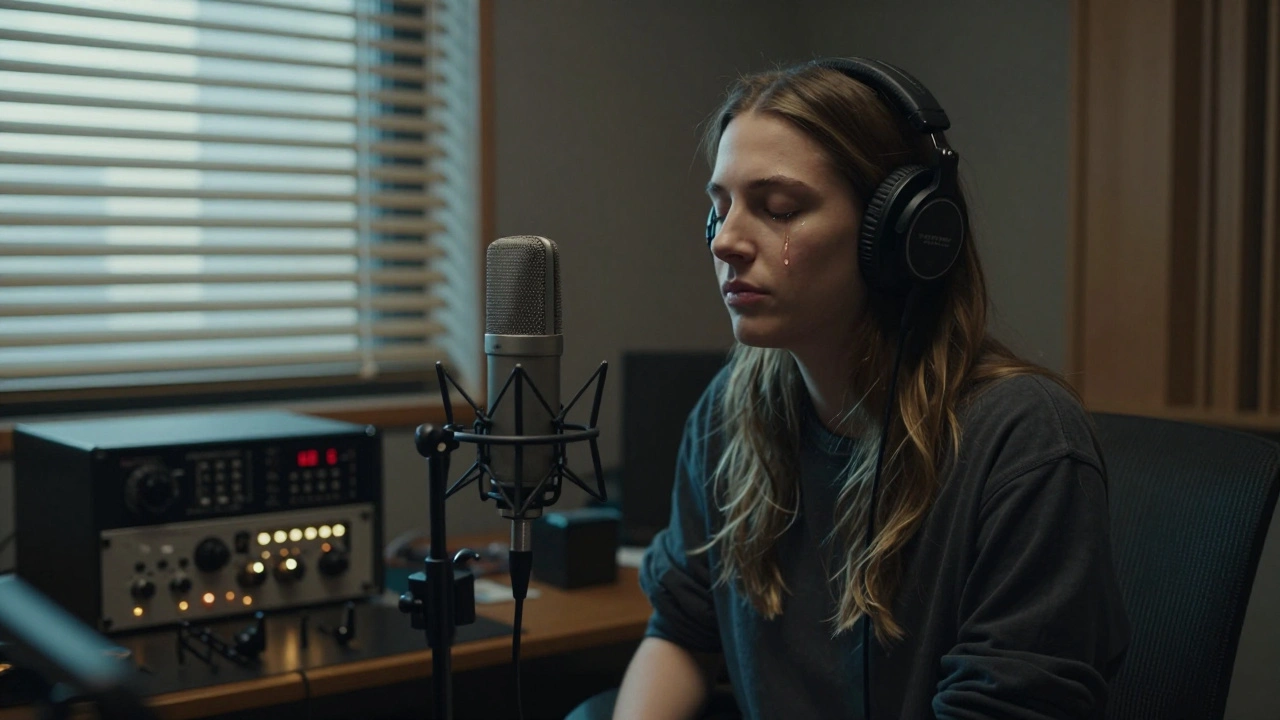
"I don’t know," she said. "I just want it to feel like the show." Eli didn’t push. He let her play three takes of the same song-back-to-back, no edits. On the third take, she sang the bridge with her eyes closed. Her voice broke on the high note. She opened her eyes, looked at Eli, and said, "That’s the one." He didn’t fix it. He didn’t pitch-correct. He just nodded and said, "That’s the take." That moment changed everything.
What the Studio Taught Her
Recording isn’t about perfection. It’s about capture. Alli learned that a studio doesn’t kill energy-it isolates it. In a live show, you’re fighting noise, crowd chatter, bad acoustics. In the studio, every breath, every finger slide on the strings, every sigh between lines becomes part of the story.
She started working with Eli on small sessions-just two or three songs at a time. They’d record in the morning, listen back in the afternoon. She’d say, "Can we try it again? I want it to sound like I’m whispering to someone I trust." They did. And it worked.
She discovered new tools. A ribbon mic picked up the warmth in her voice that she never knew was there. A vintage analog compressor added a subtle glue to her harmonies. She started writing songs specifically for the studio-songs that didn’t need a crowd to breathe. Songs that lived in silence.
From One Night to Forever
Her first official album, Quiet Fire, dropped in January 2025. It had 10 tracks. Seven of them were songs she’d played live for years. Three were brand new. Critics called it "a love letter to intimacy." Fans said they felt like they were sitting in her living room.
She still plays live. But now, she records every show. Not to sell. Not to upload. Just to remember. Sometimes, she’ll pull up a recording from two years ago and realize: "I didn’t know I could sing like that then." The studio didn’t take away her edge. It gave her a mirror.
The Tools That Changed Her Process
Here’s what Alli actually uses now-not the fancy gear, but the things that made a difference:
- Neumann TLM 103 - Her main vocal mic. Warm, clear, doesn’t overreact to breath.
- Avid Pro Tools - She edits her own takes now. No more waiting for engineers.
- Universal Audio Apollo Twin - Lets her hear her voice with real-time analog processing while recording.
- Shure SM7B - For guitar amps. She records her own acoustic parts now.
- Headphones: Sennheiser HD 280 Pro - She doesn’t trust studio speakers. These are her truth.
She doesn’t use auto-tune. Never has. She’ll re-sing a line 17 times if it doesn’t feel right. But she’ll keep the breaths. The coughs. The way her voice shakes when she’s tired. Those aren’t mistakes-they’re markers.
Why This Matters for Other Artists
Alli’s story isn’t unique. It’s becoming more common. More artists are realizing: the stage isn’t the only place music lives. The studio can be a sanctuary. Not a cage.
Live shows are about connection. Studio work is about legacy. You can’t have one without the other forever. Alli didn’t abandon her live energy-she learned how to carry it into a room with no audience.
She doesn’t perform anymore just to prove she can. She performs to remind people they’re not alone. And she records to make sure that reminder lasts.
What She’s Doing Now
In early 2026, Alli launched a new project: One Take, One Night. Every month, she records a single song live in the studio-with no overdubs, no edits, no retakes. Just her, a mic, and a camera. She posts it the same day. No announcement. No hype. Just a timestamp: "Recorded 3/5/2026, 2:17 PM, Portland." It’s not viral. But it’s real. And people notice.
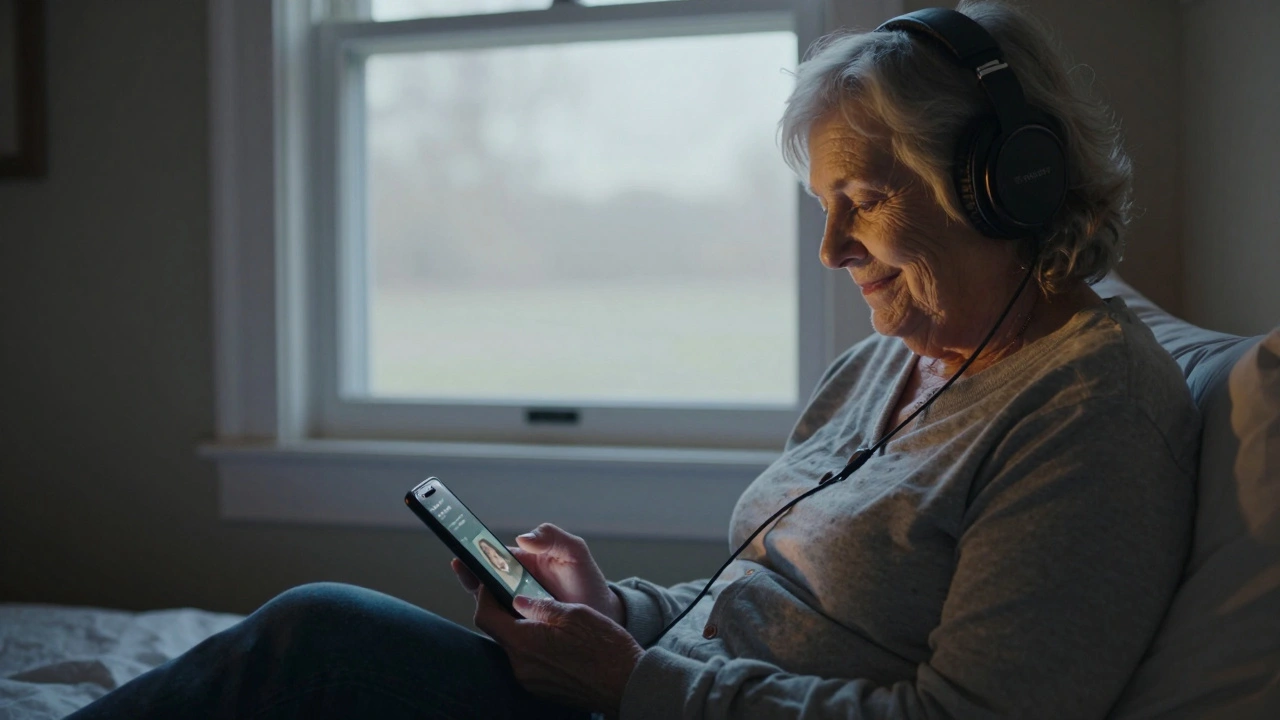
Last month, a fan sent her a voice memo. A woman in Ohio, 67 years old, recovering from surgery. She’d listened to Alli’s January recording every morning while she sat by the window. "It helped me remember how to breathe," she wrote.
Alli didn’t know her music could do that. Not until she stopped chasing the crowd-and started listening to silence.
Did Alli Starr stop performing live after recording her album?
No. Alli still performs live regularly. She plays about 40 shows a year, mostly in small venues and intimate settings. The studio didn’t replace the stage-it gave her a new way to share her music. Now, she records her live shows and listens back to them, using those recordings to refine both her performance and her studio approach.
What equipment did Alli Starr use to transition into recording?
Alli’s core setup includes a Neumann TLM 103 vocal mic, an Avid Pro Tools DAW, a Universal Audio Apollo Twin interface, a Shure SM7B for guitar amps, and Sennheiser HD 280 Pro headphones. She didn’t invest in expensive gear-she focused on tools that let her hear herself clearly and record with minimal processing. She edits her own takes now, which gave her more creative control.
Why didn’t Alli Starr use auto-tune on her recordings?
Alli believes that imperfections carry emotion. A cracked note, a breath before a phrase, the slight wobble in her voice when she’s tired-these aren’t flaws to fix. They’re proof she was there. She’d rather re-sing a line 17 times than edit it. Her fans say they can feel the humanity in her voice, and that’s what keeps them coming back.
How did recording change Alli Starr’s songwriting?
Before the studio, Alli wrote songs meant to be shouted into a crowd. After recording, she started writing for quiet spaces-songs that work with silence, not against it. She began using space in her melodies, leaving gaps between phrases, letting the listener breathe. Her lyrics became more personal, less performative. She stopped writing for an audience and started writing for one person: herself.
What’s the "One Take, One Night" project?
"One Take, One Night" is Alli’s monthly ritual: she records a single song live in the studio with no overdubs, no edits, and no retakes. She posts it the same day with only the date and time as context. It’s not designed for virality-it’s designed for honesty. The project started in January 2026 and has since become a quiet touchstone for listeners who crave authenticity over polish.
Alli’s journey proves that becoming a recording artist isn’t about leaving the stage behind. It’s about learning to carry the stage with you-into a room where no one else is listening.