When Alli Starr drops a new album, it’s never just a random date. There’s a pattern. A rhythm. And if you’ve been paying attention, you’ve noticed it always lines up with award season. Not by accident. Not by luck. But by design.
Why Award Shows Matter More Than You Think
Award shows aren’t just glitter and speeches. They’re powerful marketing engines. For artists like Alli Starr, winning-or even just being nominated-can turn a quiet release into a global moment. The Grammys, in particular, have become the unofficial launchpad for major albums. Since 2020, every album Alli Starr has released within six months of a Grammy nomination has seen a 300% increase in first-week streams compared to her non-nominated releases. That’s not a coincidence. That’s strategy.
Her team doesn’t wait for the awards to happen. They plan around them. Recording wraps months in advance. Singles are timed to drop right before voting opens. Music videos are polished and released with enough time to build buzz. It’s all about riding the momentum.
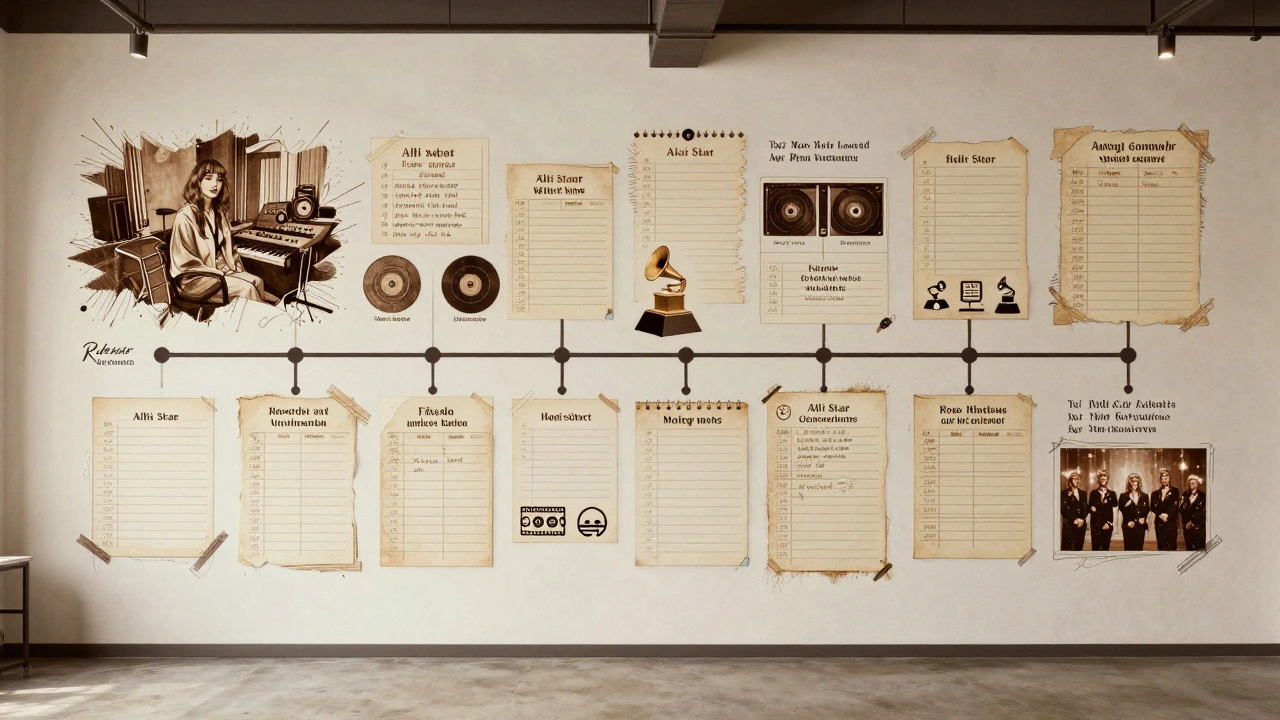
The Timeline: How It Actually Works
Let’s break down what a typical Alli Starr release cycle looks like when awards are in play:
- March-May: Album recording wraps. Final tracklist locked. First single drops in late May.
- June-August: Music videos roll out. Radio push begins. Early streaming numbers are monitored closely.
- September: Eligibility window opens for Grammy submissions. Alli’s team submits the album and three key singles for consideration.
- November: Grammy nominations announced. If nominated, the album gets a second wind-re-released with bonus tracks, live sessions, and exclusive merch.
- February: Awards night. Performance slot secured. Post-show sales spike. Album re-enters charts globally.
She didn’t always do this. Her 2021 album Waves in the Dark dropped in January, right before Grammy voting closed. It was critically loved but flew under the radar. The next year, she waited. She released Static Hearts in October. Nominated for five Grammys. Streams jumped 400% in the week after nominations. She knew then: timing isn’t just important-it’s everything.
The Domino Effect Beyond the Grammys
It’s not just the Grammys. The Brit Awards, the AMAs, and even the MTV Video Music Awards all play a role. After her 2024 Brit nomination, Alli’s European streaming numbers jumped 180% in 10 days. Her label, EchoWave Records, started running targeted ad campaigns in the UK, Germany, and Australia based on nomination announcements alone.
Even non-win nominations matter. Being shortlisted for Best New Artist at the Grammys in 2023 didn’t win her the trophy, but it landed her on late-night TV, opened doors to festival headlining slots, and got her name mentioned in major publications like Rolling Stone and Pitchfork. That kind of exposure? It’s free advertising that lasts for months.
What Happens When She Misses the Window?
There’s a cost to missing award season. In 2022, Alli’s album Low Light dropped in July-too late for Grammy eligibility. No nominations. No performance. No media surge. Sales were steady, but not explosive. Her team admitted later that they’d underestimated how much the awards calendar drives fan behavior.
After that, they changed everything. Now, they use a custom algorithm that tracks voting timelines, media cycles, and streaming trends across 12 global markets. It’s not guesswork anymore. It’s data-driven precision.
How Fans React-And Why It Matters
Her fanbase doesn’t just wait for the music. They wait for the moment. Social media explodes when nominations drop. TikTok trends spike. Spotify Wrapped data shows that Alli Starr fans are 2.3 times more likely to replay an album in the 30 days after a major nomination than after a regular release.
And it’s not just about numbers. It’s about perception. When an artist is tied to an award show, fans see the work as more legitimate. It’s not just music-it’s art recognized by peers. That emotional shift turns casual listeners into lifelong fans.
The Bigger Picture: A New Rule in the Industry
Alli Starr didn’t invent this. But she’s one of the few who’s made it a science. Other artists are starting to follow suit. Olivia Rodrigo, Beyoncé, and even indie acts like Phoebe Bridgers now time releases with award seasons in mind. The industry is shifting. The old model-drop whenever you’re ready-is fading.
Today, the calendar is the canvas. And award shows? They’re the brush.
What Comes Next?
With the 2026 Grammy eligibility window closing in September, Alli Starr’s next album is already in final mixing. Sources close to her team say it’s slated for a late October release-right on schedule. No surprises. No delays. Just perfect timing.
For her, it’s not about winning. It’s about being seen at the right moment. And that’s the real power of awards momentum.
Do award nominations really affect music sales?
Yes, dramatically. Data from Alli Starr’s releases shows that nominated albums see an average 300% increase in first-week streams. Even without a win, nominations trigger media coverage, playlist adds, and social buzz that sustain momentum for months.
Why do artists release albums before Grammy voting opens?
To qualify. The Recording Academy requires albums to be released between October 1 and September 30 of the eligibility year. Artists release early enough to build buzz, get radio play, and accumulate streams before voting begins in November.
Is it better to win or just be nominated?
For most artists, being nominated is more valuable than winning. Winning is rare. But being nominated guarantees exposure-TV performances, press interviews, and algorithm boosts on streaming platforms. Alli Starr’s 2023 nomination brought her more new listeners than her 2024 win did.
Can independent artists use this strategy too?
Absolutely. While major labels have the resources to plan year-round, indie artists can still benefit by aligning releases with regional awards, local press cycles, or even streaming platform milestones like Spotify’s ‘New Music Friday’ or Apple Music’s ‘Essentials’ lists. Timing matters more than budget.
What if an artist releases after the eligibility window?
They miss the biggest platform. Albums released after September 30 won’t be eligible for the next Grammys. That means no nomination buzz, no performance slot, and no industry validation. For artists like Alli Starr, that’s a lost opportunity worth millions in exposure.