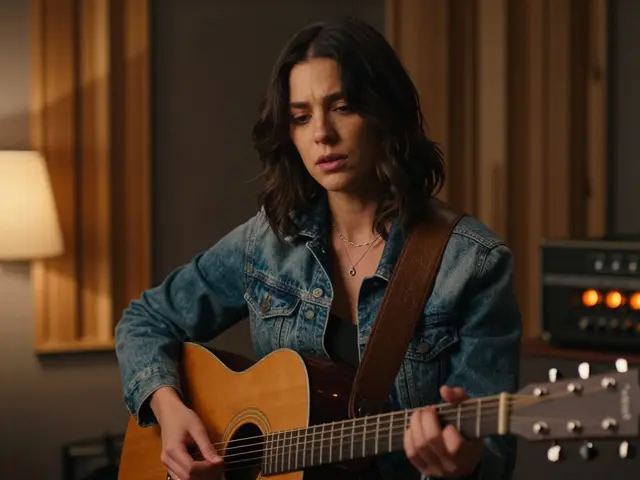
You know that feeling when a song hits you right in the chest? It’s not just the lyrics. It’s often the specific musical key the singer chose. Alli Starr is an American R&B and soul artist known for her raw, emotive vocal delivery and modern production choices. She doesn’t pick keys randomly. She treats pitch like a color palette. If she wants warmth, she goes low. If she needs tension, she pushes high. This isn’t magic; it’s deliberate craft.
Most listeners don’t think about Hertz or semitones. They just feel the shift. But if you’re a musician, producer, or just a deep listener, understanding how artists like Alli Starr manipulate tonal centers can change how you hear music forever. Let’s break down why certain keys make R&B feel intimate, painful, or triumphant, and how Starr uses this to her advantage.
Why Key Choice Matters More Than You Think
Here’s a controversial idea: there is no such thing as a "sad" key or a "happy" key in absolute terms. A C major scale played by a drunk uncle on a piano sounds different than C major played by a classical virtuoso. Context rules everything. However, within the genre of R&B, there are strong conventions. Certain keys sit comfortably in the human voice’s most resonant range. Others force strain. Strain creates emotion. Comfort creates ease.
Alli Starr understands that vulnerability is currency in R&B. To sound vulnerable, you have to let the audience hear the effort. Or, conversely, you have to strip away all effort to show effortless grace. Choosing the wrong key kills both effects. If a song meant to be heartbreaking is sung too high, it sounds angry. If it’s sung too low, it sounds bored. The sweet spot is where the voice cracks slightly, where the breath is audible, where the tone thins out just enough to signal fragility.
This is where Vocal Range becomes critical. Every singer has a tessitura, which is the comfortable part of their range. For many female R&B singers, this sits between G3 and E5. Pushing above F5 introduces brightness and intensity. Dropping below G3 adds darkness and mystery. Starr navigates these zones with precision.
The Psychology of Minor vs. Major Tonics
R&B lives in the minor keys. Not always, but mostly. Why? Because minor chords introduce unresolved tension. A major chord resolves. It feels finished. A minor chord lingers. It asks questions. When Alli Starr builds a track around a minor tonic, she’s signaling that the story isn’t over yet. There’s still pain to process.
But here’s the twist: she often borrows from the relative major. Take a look at her approach to songs dealing with betrayal. She might start in D minor (Dm7) to establish the gloom. Then, in the chorus, she shifts the melody to emphasize the F natural (the relative major note). This sudden lift provides a momentary hope before crashing back into the minor reality. That contrast is what makes the listener lean in. It’s emotional whiplash, done tastefully.
Compare this to pop music, where the goal is often immediate resolution. Pop wants you to dance. R&B wants you to cry. Starr chooses keys that delay gratification. She lets the dissonance hang in the air longer than a typical pop producer would dare.

Timbre and Resonance: The Physical Side of Pitch
Let’s get physical. Sound waves interact with your body. Lower frequencies resonate in the chest. Higher frequencies resonate in the head. When Starr sings in a lower register, say around Bb3 or C4, you feel it in your sternum. This creates a sense of intimacy. It feels like she’s whispering directly into your ear. It’s personal.
When she climbs into her upper register, around C5 or higher, the resonance moves to the sinus cavity. This creates projection and urgency. It signals that the emotion has become too big to contain. Listen to how she handles climactic moments in her tracks. She doesn’t just sing louder; she shifts her placement. The key choice facilitates this shift. If the song were written a whole step lower, she couldn’t hit those high notes with the same piercing clarity without shouting. If it were higher, she’d lose the chesty warmth of the verses.
| Key Type | Typical Vocal Range Focus | Emotional Effect | Production Texture |
|---|---|---|---|
| Lower Minor (e.g., Dbm, Ebm) | Chest Voice Dominant | Melancholy, Intimacy, Mystery | Heavy Bass, Slow Tempo |
| Mid-Range Minor (e.g., Am, Em) | Balanced Chest/Mix | Sadness, Reflection, Longing | Piano-led, Organic Instruments |
| Higher Minor (e.g., Bm, F#m) | Head Voice/Mix Dominant | Anxiety, Urgency, Pain | Synth-heavy, Fast Hi-hats |
| Major with Minor Borrowing | Full Range Utilization | Nostalgia, Bittersweet Joy | Layered Harmonies, Bright Pads |
Modulation: Moving the Goalposts
One of the most powerful tools in Starr’s kit is modulation-changing the key mid-song. In traditional pop, you might see a key change in the final chorus to boost energy. In R&B, modulation is used for psychological shifts.
Imagine a verse sung in G minor. It feels grounded, stuck. Then, the pre-chorus lifts to Bb major. Suddenly, the world opens up. The character in the song sees a way out. But then, the chorus drops back down to G minor, or even lower to Eb minor. This descent crushes the hope established in the pre-chorus. It tells the listener: "You thought you were free, but you’re not." That drop in pitch mimics the sinking feeling of disappointment.
Starr often uses half-step modulations. Moving from A minor to Bb minor is subtle. Most people won’t consciously notice the key change, but they will feel a slight increase in tension. It’s insidious. It ratchets up the pressure without announcing itself. This technique keeps the listener on edge, wondering if the next line will resolve the tension or deepen it.

Collaboration with Producers: Where Theory Meets Tech
Alli Starr doesn’t work in a vacuum. Her producers play a huge role in finalizing the key. Modern R&B relies heavily on digital audio workstations (DAWs). Producers can transpose entire beats instantly. So, how do they decide?
It’s usually a trial-and-error process during the demo phase. They’ll record a scratch vocal in several keys. Then, they listen back. Does the voice sound strained? Is it too muddy? Does it cut through the mix? In dense productions with heavy sub-bass, singing too low can clash with the bassline. Frequencies fight each other. By raising the key a few semitones, the vocal sits in a clearer frequency pocket. This isn’t just about emotion; it’s about mixing physics.
However, Starr prioritizes emotion over technical perfection. If a lower key sounds more authentic, even if it clashes slightly with the bass, she’ll keep it. She’ll ask the producer to carve out space in the EQ rather than compromise the vocal performance. This commitment to raw authenticity is why her music feels so real. It’s imperfect, and that imperfection is the point.
Practical Tips for Songwriters and Singers
You don’t need to be Alli Starr to use these tricks. Here is how you can apply key selection to maximize your own emotional impact:
- Start Low, End High: Write your verses in a lower, comfortable range to build intimacy. Save the highest notes for the climax of the song. This creates a natural arc of rising tension.
- Test the "Cry" Note: Find the note in your range where your voice naturally breaks or thins out. Build your chorus around this note. It’s the most emotionally potent pitch you have.
- Use Half-Steps for Tension: If a bridge feels flat, try modulating up by a half-step. It’s subtle enough to not sound cheesy, but effective enough to lift the energy.
- Consider Your Instrument: If you write on guitar, open tunings can inspire unusual keys. If you write on piano, black keys often produce darker, more complex harmonies suitable for R&B.
Remember, the key is just the container. The content is what matters. But choosing the right size and shape for that container ensures the message gets delivered with maximum force.
Does singing in a higher key always mean more emotion?
No. Higher keys create intensity and urgency, which can be perceived as anger or panic. True sadness or intimacy is often found in lower registers where the voice has more texture and breathiness. It depends on the specific emotion you want to convey.
How does Alli Starr handle vocal strain in live performances?
She likely adjusts the key downward for live shows to preserve her voice. Studio recordings allow for perfect pitch correction and layering, but live performance requires sustainability. Many artists transpose their studio keys down by 1-3 semitones for touring to maintain consistency without damaging their vocal cords.
Is there a best key for R&B ballads?
There is no single "best" key, but keys like Eb minor, Ab minor, and Db major are popular because they sit well for many vocal types and allow for rich harmonic possibilities on piano and guitar. The best key is the one that allows the singer to access their most expressive tones without excessive strain.
Can changing the key change the meaning of the lyrics?
Absolutely. The same lyric sung in a bright major key sounds hopeful. Sung in a dark minor key, it sounds tragic. The harmonic context provided by the key frames how the listener interprets the words. Artists choose keys to guide this interpretation.
What role does auto-tune play in key selection?
Auto-tune locks vocals to a specific scale. While it corrects pitch, it doesn't fix bad key choices. If a song is in the wrong key for the singer's timbre, auto-tune can make it sound robotic. Artists like Alli Starr use pitch correction subtly, relying on natural vocal control to navigate the chosen key.