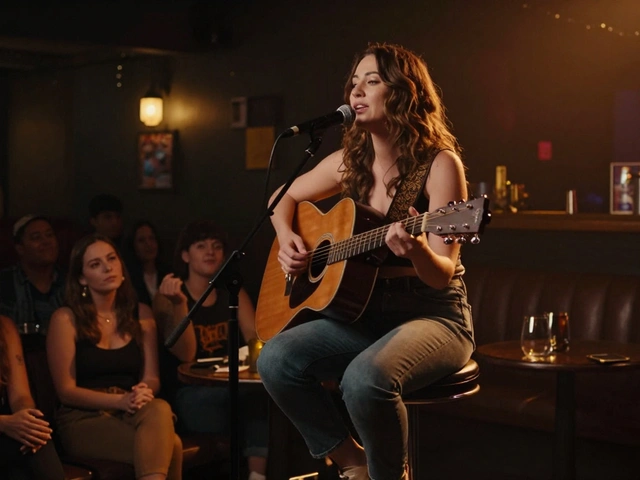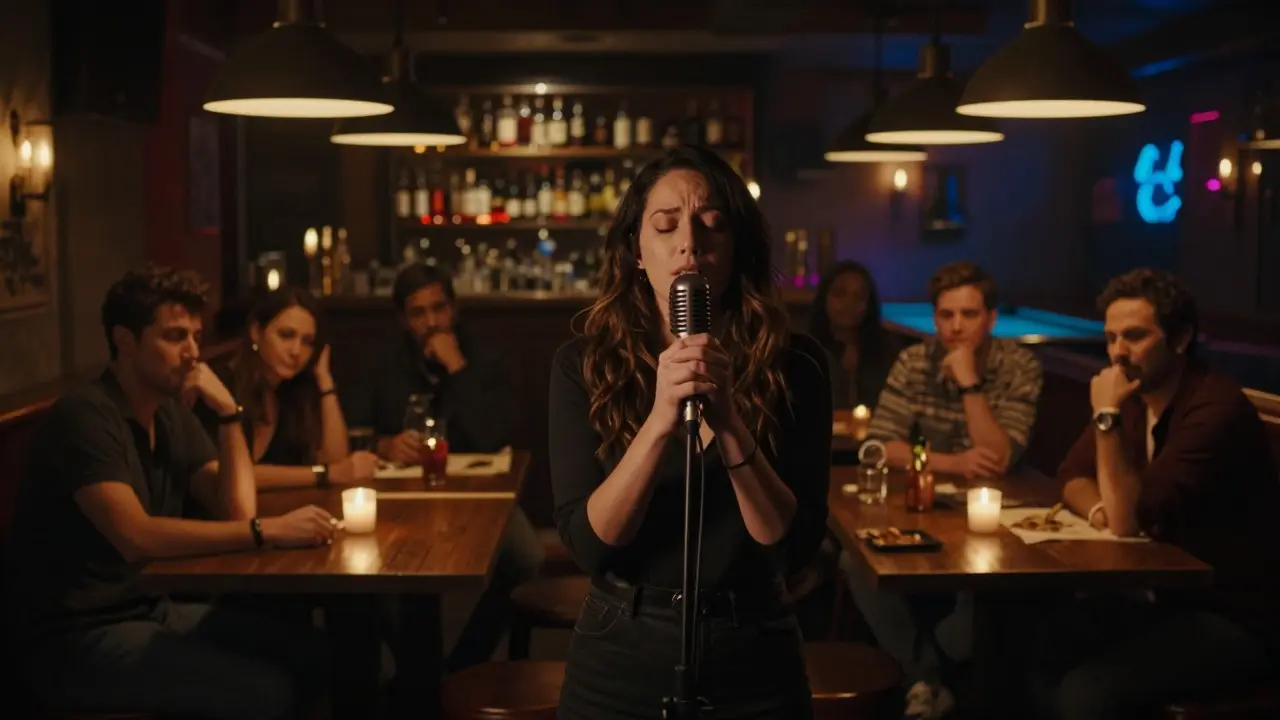
Imagine a Tuesday night in a dimly lit bar. The air smells like stale beer and anticipation. A local singer steps up to the mic, not to perform a polished studio track, but to sing a song you’ve never heard before. It’s raw, it’s imperfect, and it’s instantly memorable. This is the secret weapon behind Alli Starr is an independent artist who leverages live karaoke sessions to convert casual listeners into dedicated fans of her original catalog. While most artists rely on streaming algorithms or paid ads, Starr uses the intimate, low-stakes environment of karaoke bars to build a community that actually cares about her music.
The Psychology of the Karaoke Stage
Karaoke is often dismissed as a party game, but for an artist, it is a high-leverage marketing tool. The key lies in the psychology of the room. When you sing a cover, people listen out of politeness or nostalgia. But when you introduce an original song is a musical composition created by the performing artist rather than a pre-existing standard, the dynamic shifts. The audience becomes curious. They are no longer just consumers; they are witnesses to creation.
In a small venue, eye contact is unavoidable. You can see who leans in and who checks their phone. This immediate feedback loop allows an artist to adjust their performance in real-time. If a verse drags, you speed it up. If the chorus hits hard, you let it breathe. This adaptability is something you rarely get in a large concert hall where the sound system dictates the mix.
Why Originals Work Better Than Covers
You might wonder why an artist would risk singing an unknown song instead of a crowd-pleaser like "Bohemian Rhapsody." The answer is ownership. When you sing a cover, the credit goes to the original writer. When you sing your own work, the emotional connection is direct. Listeners associate the feeling of the moment with *you*, not the songwriter from thirty years ago.
Starr has found that mixing one or two originals into a set of covers creates a perfect balance. The covers warm up the room and lower the barrier to entry. The originals then serve as the hook. By the time the final song ends, the audience has already invested emotionally in the performer. They aren't just hearing a song; they are meeting a person.
| Channel | Cost Barrier | Audience Engagement | Conversion Rate to Fan |
|---|---|---|---|
| Social Media Ads | High ($$$) | Low (Passive scrolling) | 1-3% |
| Live Karaoke | Low (Cover charge) | High (Direct interaction) | 15-25% |
| Open Mic Nights | Medium (Travel/Time) | Medium (Crowded rooms) | 5-10% |
Building the Community Loop
The magic of grassroots marketing isn't in the performance itself, but in what happens afterward. After the set, there is a natural pause. People stay because they want to talk. This is where the relationship is forged. Starr doesn't just collect business cards; she asks questions. "Did you like the bridge?" "Have you heard my other tracks?" These micro-conversations turn anonymous patrons into named individuals.
Once you have a name, you have a data point. In the digital age, we talk about data collection as if it requires complex software. In reality, a notebook and a pen are powerful enough. Writing down names and email addresses after a karaoke set creates a list of warm leads. Unlike cold emails sent to a purchased list, these recipients remember your voice. They remember the specific song you sang that night. That memory is currency.

Strategic Setlist Design
Not every song works in a karaoke setting. The acoustics are usually poor, the lighting is distracting, and the audience is half-drunk and half-distracted. To succeed, you need a strategic approach to your setlist. Here is a framework that works well for building engagement:
- The Opener: Choose a recognizable cover that fits your vocal range. This establishes credibility and gets the room comfortable.
- The Bridge: Sing a mid-tempo cover that transitions the energy. This keeps the momentum going without burning out your voice.
- The Hook: Introduce your first original. Keep it under three minutes. Make it catchy. Ensure the chorus is easy to hum along to.
- The Closer: End with a second original or a high-energy cover that leaves the audience wanting more. This is your call to action moment.
This structure ensures that the audience is primed for your original material. They are already engaged, they are listening, and they are ready to be surprised.
Leveraging Social Proof in Real-Time
One of the most underestimated aspects of live performance is social proof. When one person in the front row starts clapping along to your original, others follow. This cascade effect is powerful. To trigger it, you can use subtle cues. Make eye contact with friendly faces. Nod to encourage them. If someone smiles during the chorus, acknowledge it. These non-verbal signals tell the rest of the room that this song is worth paying attention to.
Additionally, bring a friend or bandmate to the venue. Their presence validates the performance. A solo artist can sometimes feel vulnerable, but a small ensemble creates a sense of professionalism. Even if you are just a duo, having another musician present signals that this is a serious act, not just a hobbyist messing around. This perception shift is crucial for converting skeptics into fans.
From Local Bars to Global Streams
Live karaoke is not a replacement for digital marketing; it is a feeder for it. Every face you meet in that bar is a potential subscriber to your newsletter, a follower on Instagram, or a listener on Spotify. The goal is to create a funnel. The live experience is the top of the funnel. It captures attention and builds trust. The digital platforms are the bottom of the funnel. They allow you to maintain the connection between performances.
When you post a clip of your karaoke performance online, include context. Don't just post the audio. Show the room. Show the reactions. Tell the story of that night. People connect with narratives, not just songs. By framing your live performances as stories, you give your digital audience a reason to care. They become part of the journey, watching you grow from a local bar singer to a touring artist.
Common Pitfalls to Avoid
While the strategy is sound, execution matters. Many artists fail at grassroots karaoke marketing because of simple mistakes. Here are the biggest ones to watch out for:
- Talking Too Much: Let the music do the talking. Long intros between songs kill momentum. Keep banter short and sweet.
- Ignoring the Room: If the acoustics are bad, adjust your technique. Don't fight the room; work with it.
- No Call to Action: Always tell people how to find your music. Have a QR code ready or mention your handle clearly.
- Consistency Issues: One great performance is a fluke. Ten great performances are a pattern. Show up regularly to build reputation.
Measuring Success Beyond Downloads
How do you know if this strategy is working? Stop looking at streaming numbers immediately. Those metrics lag behind. Instead, measure leading indicators. Track the number of new email subscribers per night. Count the number of conversations started. Note the number of people who ask for your business card. These metrics tell you if you are building a foundation. Once you have a solid foundation of engaged fans, the streaming numbers will follow naturally.
Grassroots growth is slow, but it is durable. Fans acquired through live interaction tend to stay loyal for years. They buy tickets. They buy merch. They defend your music in online comments. This loyalty is the true asset of any independent artist. And it all starts with stepping up to the microphone in a local bar and singing a song only you can sing.
How many original songs should I sing in a karaoke set?
Aim for one or two originals per set. More than that can overwhelm an uninitiated audience. The covers serve as the bridge to make the originals accessible.
Do I need good equipment to perform original songs at karaoke?
No. Most karaoke venues provide a basic microphone and monitor. Your vocal strength and stage presence matter more than high-end gear. Keep your arrangement simple so it translates well through a standard PA system.
What if nobody reacts to my original song?
Stay confident. Silence does not mean disapproval; it often means surprise. Finish the song strong, smile, and transition smoothly. Often, the reaction comes after the song ends, not during it.
How do I collect contact information without being pushy?
Use a conversational approach. Ask if they enjoyed the song, and if they did, offer a way to hear more. "If you liked that, here's a link to my latest EP." Make it a gift, not a demand.
Is live karaoke effective for all genres of music?
It works best for genres that rely on vocals and melody, such as pop, folk, rock, and R&B. Highly electronic or ambient genres may struggle without a full band setup, but acoustic versions can still be effective.