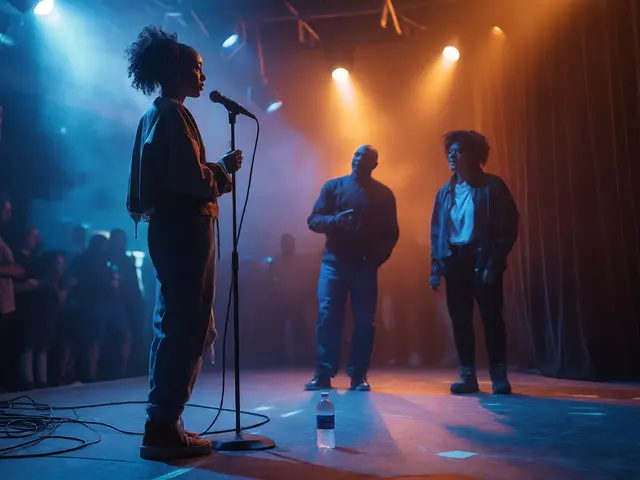
You hear it before you see the name on the marquee. That specific, chest-deep resonance that doesn’t just hit your ears but settles in your gut. It’s not just about hitting a high note; it’s about the weight behind it. Alli Starr is a contemporary R&B and pop artist known for blending traditional gospel vocal techniques with modern production aesthetics. While her tracks might feature trap beats or synth-heavy basslines, the architecture of her voice remains rooted in the church. This isn’t an accident or a marketing gimmick. It’s the foundation upon which her entire career stands.
If you’ve ever wondered why some singers sound technically perfect but emotionally hollow, while others feel like they’re telling you a secret even when the lyrics are generic, you’re witnessing the difference between training and upbringing. For Starr, the transition from Sunday morning choirs to Monday night studio sessions wasn’t a departure-it was a translation. She didn’t leave the gospel world behind; she carried its tools into a new landscape. Let’s break down exactly how those early roots continue to dictate her artistic choices today.
The Sonic Architecture of Spiritual Training
Gospel music isn’t just a genre; it’s a rigorous vocal discipline. Unlike classical training, which often prioritizes uniformity and control, gospel demands dynamic range and emotional immediacy. When Alli Starr sings, she utilizes what vocal coaches call "melismatic runs"-sequences of notes sung on a single syllable. But here’s the key: in gospel, these runs aren’t decorative. They are rhetorical. They serve to emphasize pain, joy, or urgency.
Starr applies this same logic to her R&B ballads. Listen closely to her phrasing. She rarely rushes a lyric. Instead, she stretches vowels, bending pitch to mirror the emotional contour of the sentence. This technique, inherited from mentors who learned from the greats of the Black church tradition, gives her modern tracks a timeless quality. It creates a bridge between the listener’s heart and the song’s narrative. You don’t need to be religious to feel the conviction in her delivery, because the technique itself is built on the premise of authentic expression over technical perfection.
From Choir Loft to Chart Toppers: The Transition
Moving from the sanctuary to the streaming era presents unique challenges. The acoustic environment changes drastically. In a church, you project to the back row without a microphone, relying on breath support and resonance. In a recording studio, every breath, every lip smack, and every slight pitch waver is captured by a condenser mic sensitive enough to pick up a pin drop.
Many artists struggle with this shift. They either over-sing, trying to replicate the power of a live performance in a dry booth, or they under-perform, losing the soulful grit that made them stand out. Starr navigated this by treating the studio as another form of worship space. She maintains the intensity of a choir soloist but adjusts her dynamics for intimacy. This results in vocals that feel close and personal, yet powerful enough to cut through dense electronic production.
| Feature | Traditional Gospel Context | Alli Starr’s R&B Adaptation |
|---|---|---|
| Vocal Power | Projected to fill large spaces without amplification | Controlled compression for intimate headphone listening |
| Improvisation | Spontaneous ad-libs driven by congregation response | Structured melodic variations planned during demo phase |
| Lyrical Focus | Divine praise, communal hope, spiritual warfare | Personal romance, self-worth, internal conflict |
| Production Style | Organic instruments (piano, organ, drums) | Synthesizers, 808s, digital effects |
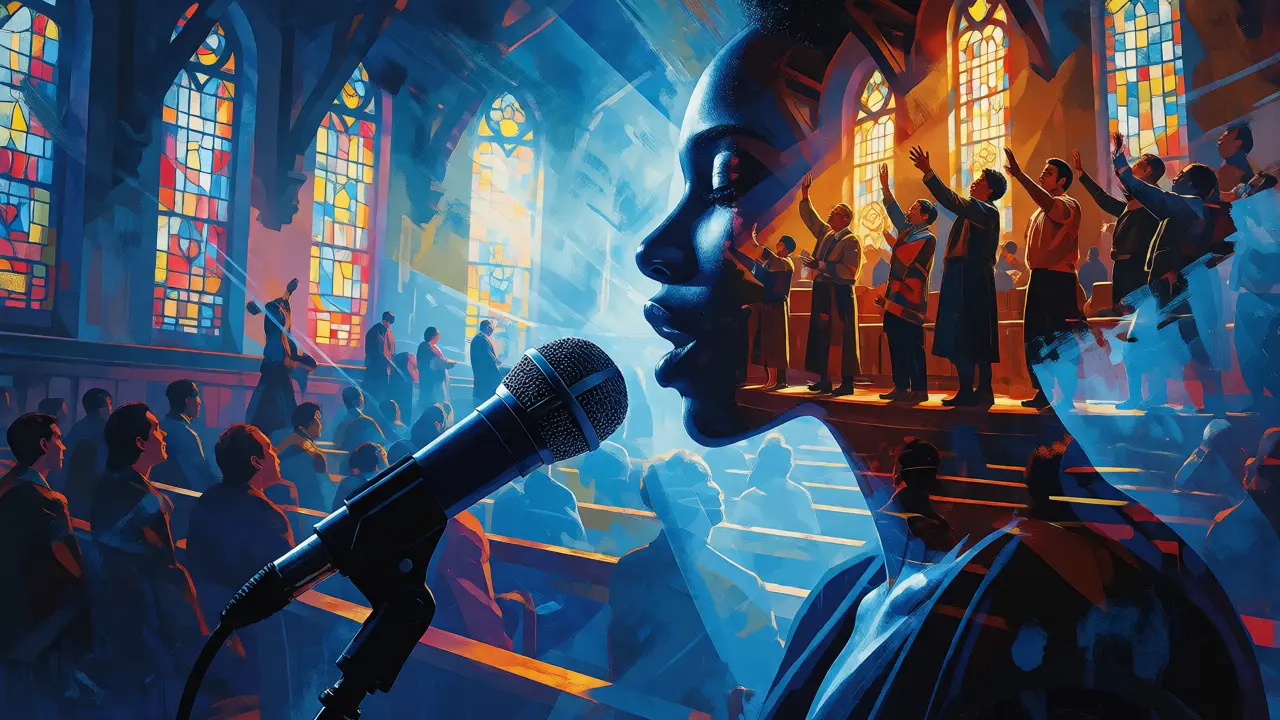
Emotional Authenticity as a Brand Identity
In an industry saturated with auto-tuned perfection, authenticity is the rarest commodity. Listeners can smell fabrication. Because Starr’s vocal habits are ingrained from childhood, her performances lack the artificial polish that plagues many pop-R&B crossovers. Her cracks, her breathiness, and her sudden shifts in volume feel earned rather than engineered.
This authenticity resonates deeply with Gen Z and Millennial audiences who value transparency. Social media clips of Starr singing stripped-back versions of her hits often go viral precisely because they reveal the raw mechanics of her talent. There’s no hiding behind heavy reverb or pitch correction. The gospel background provides a safety net of skill-if the tech fails, the voice holds. This reliability builds trust with fans, turning casual listeners into loyal advocates.
The Lyrical Shift: Secularizing Sacred Themes
One might assume that moving from gospel to R&B requires abandoning spiritual themes entirely. Not so. Starr’s lyrics often retain the moral seriousness and narrative clarity of hymns, even when discussing dating or heartbreak. Gospel storytelling is linear and direct; it moves from problem to resolution, or from lament to praise.
Apply this structure to a breakup song. Instead of vague metaphors, Starr might detail the specific moment of realization, the physical sensation of loss, and the eventual acceptance. This clarity makes her songs relatable. They don’t just describe a feeling; they narrate an experience. The "testimony" format of gospel sermons translates perfectly into the verse-chorus structure of pop radio. Each song becomes a small testimony of personal growth or resilience.

Collaborations and Production Choices
Who Alli Starr works with matters. Producers who understand the nuance of gospel-inflected R&B are crucial. They know when to step back and let the voice breathe. Many producers over-clutter mixes, burying the vocalist under layers of noise. Starr’s team likely prioritizes minimalism in the verses to highlight the intricate melodic lines, only bringing in full instrumentation for the chorus.
This dynamic contrast mirrors the call-and-response patterns found in church services. The tension and release create a rhythmic engagement that keeps listeners hooked. By respecting the source material, her collaborators help preserve the integrity of her sound while ensuring it fits contemporary playlists. It’s a delicate balance, but one that has defined her sonic signature.
Why This Matters for the Future of R&B
Alli Starr isn’t alone in this trajectory. Artists like H.E.R., SZA, and Summer Walker all draw heavily from black sacred traditions. However, Starr’s explicit acknowledgment of her roots sets her apart. She views gospel not as a past tense chapter, but as a present tense toolkit.
As AI-generated music floods the market, human imperfection becomes a premium asset. The slight wavering of a voice trained to project across a cathedral carries a humanity that algorithms struggle to replicate. By keeping these roots visible, Starr ensures her music remains relevant and distinct. She proves that tradition isn’t obsolete; it’s adaptable. The next generation of R&B stars will likely follow suit, digging deeper into their cultural histories to find sounds that resonate in a digital age.
How does gospel training differ from classical vocal training?
Classical training focuses on uniform tone, precise intonation, and strict adherence to written scores. Gospel training emphasizes improvisation, emotional expression, dynamic range, and the ability to lead a congregation. It encourages individual style and spontaneous melodic variation, whereas classical training often seeks a standardized ideal.
Does Alli Starr still perform gospel music?
While her primary output is secular R&B and pop, she frequently incorporates gospel elements into her live performances and occasional special releases. These moments serve as reminders of her origins and allow her to connect with audiences who appreciate both genres.
What specific vocal techniques from gospel are heard in her R&B songs?
Key techniques include melisma (singing multiple notes on one syllable), belting (projecting with chest voice), vibrato control, and call-and-response phrasing. She also uses dynamic swells, starting softly and building to a powerful climax, which is a hallmark of gospel ballads.
Is gospel influence common in modern R&B artists?
Yes, it is extremely common. Most prominent R&B artists, including Beyoncé, Adele, and Alicia Keys, have cited gospel or church music as foundational to their development. The emphasis on vocal prowess and emotional depth in R&B stems directly from these traditions.
How does production adapt to accommodate gospel-style vocals?
Producers often use cleaner mixes with less clutter to allow the complex vocal runs to shine. They may employ side-chain compression to ensure the vocals cut through the beat without being drowned out. Reverb settings are carefully chosen to maintain intimacy while adding warmth.