When a band hits the road for a world tour, the lights, screens, and projections don’t just follow them-they have to reinvent themselves for every new city. What works in Tokyo doesn’t always land in São Paulo. What feels electric in Berlin might fall flat in Mumbai. Alli Starr, a lead show designer with over 15 years of international touring experience, doesn’t just build visuals. She builds adaptations.
Starr’s work isn’t about fancy tech. It’s about cultural resonance. She’s designed for artists who play 50+ countries a year, from open-air festivals in rural Spain to sold-out arenas in Seoul. Her secret? She starts by asking: What does this audience already see? Not what they should see. Not what the artist wants. What they’re already used to.
Why One Size Doesn’t Fit All
Most tour visuals are built for a single market-usually North America or Western Europe. But when you’re playing Jakarta, Lagos, or Santiago, the context changes completely. In Jakarta, audiences are used to hyper-saturated neon colors from local pop concerts. In Lagos, rhythmic motion and repetitive patterns connect deeply with traditional drumming visuals. In Santiago, minimalist staging with bold shadows resonates more than flashy animations.
Starr remembers a tour where the main video wall showed slow-motion raindrops during a ballad. It worked in London. In Mexico City, fans started texting each other: "Is this a metaphor for the drought?" The artist hadn’t considered that droughts had been in the news for months there. Starr rewrote the sequence overnight-replaced rain with falling leaves, a symbol of renewal in Mexican folk art. The crowd’s reaction went from confused to emotional.
The Three Rules Alli Starr Swears By
She doesn’t have a fancy software suite. She has three rules she writes on every rider:
- Know the local visual language. What colors, symbols, and movements are already part of everyday life? In India, peacocks and temple motifs appear in everything from street art to wedding decor. In Germany, geometric clarity and industrial textures dominate public spaces. Starr studies local Instagram feeds, street photography, and even public transit ads before arriving.
- Build in fallbacks. Not every venue has 4K LED walls. Some stages are outdoors under daylight. Others have power limits that kill high-energy projections. Starr designs three versions of every visual: high-end, mid-tier, and stripped-back. The stripped-back version? Just moving silhouettes against a single color. It’s not glamorous, but it works when the power grid flickers in Manila.
- Let the audience co-create. She doesn’t just show visuals. She invites interaction. In Buenos Aires, she synced a section of the show to real-time tweets from fans using a local hashtag. In Seoul, she used facial recognition (with consent) to subtly shift lighting tones based on crowd energy. It wasn’t just tech-it was connection.
How Technology Serves Culture, Not the Other Way Around
People assume global show design means more screens, louder speakers, bigger lasers. Starr says no. She’s turned down contracts because the tech was too heavy, too expensive, or too fragile for local conditions.
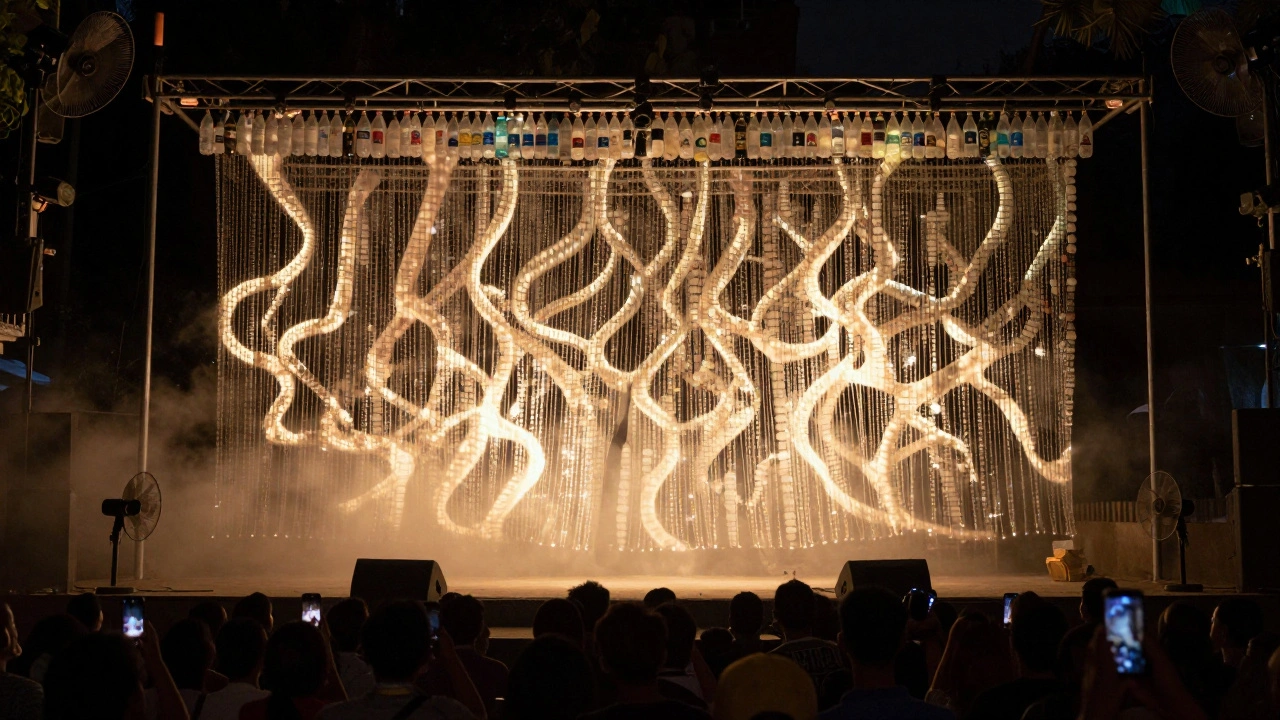
During a 2023 tour through Southeast Asia, she replaced a $200,000 projection system with a custom-built LED curtain made from recycled plastic bottles. The material was locally sourced, easy to repair, and had a subtle texture that caught light differently in humid climates. It cost $12,000. The artist’s team was skeptical. The crowd in Hanoi posted 12,000 videos of it. The curtain became part of the show’s identity.
She works with local technicians on every stop-not just to fix gear, but to learn. In Cairo, a stagehand taught her how to use traditional Islamic geometric patterns in motion graphics. In Nairobi, a lighting assistant showed her how to use flickering LED strips to mimic the rhythm of traditional kikuyu dance. These weren’t "add-ons." They became core elements.
The Hidden Cost of Ignoring Local Context
Not adapting isn’t just boring-it’s alienating. Starr once saw a European act use heavy red-and-gold visuals for a song about loss. In China, those colors mean celebration. Fans thought the band was mocking them. Social media backlash followed. The tour lost sponsorship in three countries.
Another act used a drone show over a temple in Bali. The drones flew too low. Locals saw it as disrespect. The artist didn’t mean harm. But Starr says: Intent doesn’t matter if the impact does. She now requires cultural consultants on every tour with more than five non-Western stops.
What Works Across Cultures
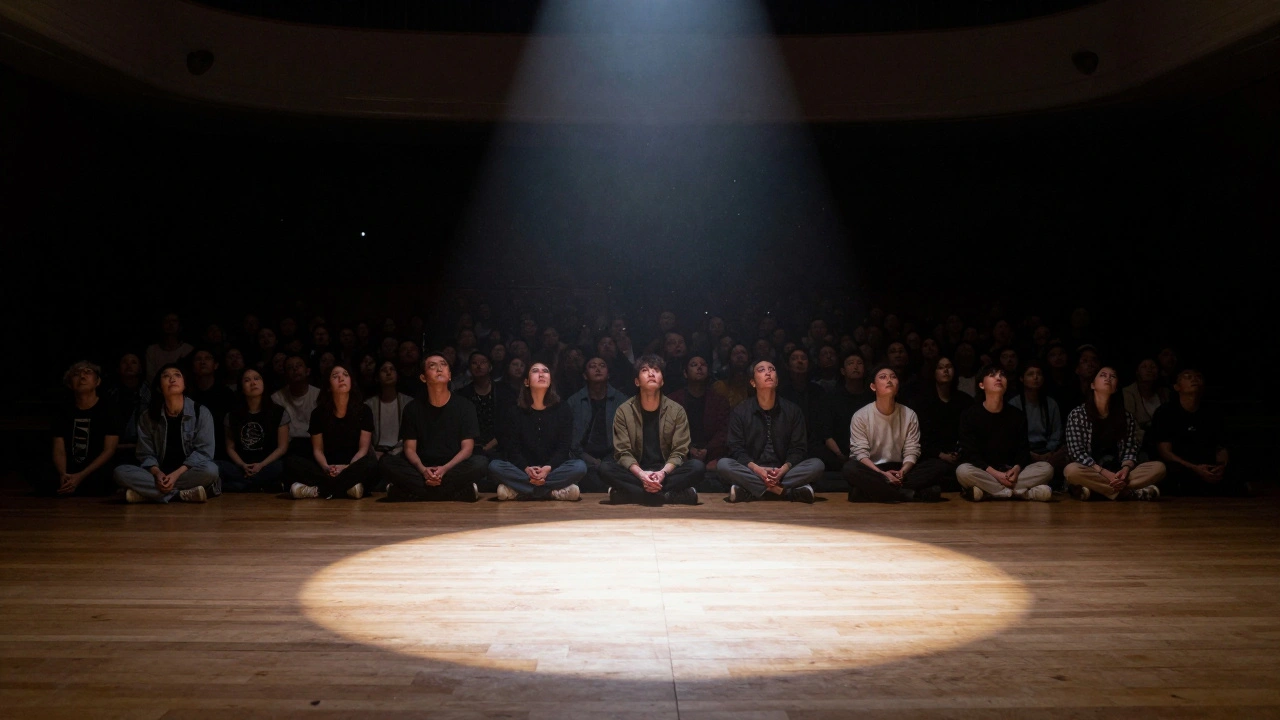
Not everything needs localization. Some visuals transcend borders. Movement. Light. Silence. Starr found that slow, rising light gradients-like dawn breaking over water-worked everywhere. So did the use of negative space. In a 2024 tour across 27 countries, the most viral moment wasn’t a flashy effect. It was 47 seconds of total darkness, followed by a single beam of light moving across the stage. No music. No words. Just presence.
She calls it "the universal pause." It’s not tech. It’s timing. And it’s something every culture understands: when to stop, when to listen.
How to Start Thinking Like Alli Starr
You don’t need a global tour to use her approach. If you’re designing a livestream, a local event, or even a brand campaign:
- Look at what’s trending on local social media-not global platforms.
- Ask: What’s something people here see every day that you could borrow?
- Test your visuals on someone from that culture before launch.
- Don’t assume your aesthetic is universal. It probably isn’t.
Starr’s most famous quote: "The world doesn’t need more lights. It needs more listening."
Her designs don’t shout. They lean in. And that’s why, year after year, artists keep asking her to take their shows global.
What tools does Alli Starr use for global show design?
Alli Starr doesn’t rely on expensive proprietary software. Instead, she uses open-source tools like TouchDesigner and Resolume, paired with custom-built scripts that adapt visuals based on real-time location data. She also works with local technicians to create hardware solutions-like LED panels made from recycled materials-that suit regional power and climate conditions. Her toolkit is flexible, low-cost, and repairable.
How does Alli Starr handle language barriers on international tours?
She avoids relying on spoken language entirely. Instead, she uses visual metaphors, motion, and color to communicate emotion. For example, instead of translating lyrics into subtitles, she creates abstract animations that match the song’s rhythm and mood. She hires bilingual cultural liaisons on each leg of the tour-not as translators, but as interpreters of local context. Their job is to tell her what visuals might be misunderstood, not what words mean.
Can small venues benefit from Alli Starr’s methods?
Absolutely. Her stripped-back visual approach works best in smaller spaces. A single moving light, a changing color gradient, or a simple silhouette against a solid backdrop can be more powerful than a full LED wall. She’s designed shows for pop-up stages in Bangkok alleyways and rooftop clubs in Oslo using just two projectors and a laptop. The key isn’t scale-it’s relevance.
What’s the biggest mistake artists make when going global?
They assume their home audience’s reactions will mirror others. A visual that feels emotional in Los Angeles might feel confusing, offensive, or even hilarious elsewhere. Starr’s rule: if you can’t explain why a visual works in three different cultures, it’s not ready. Testing isn’t optional-it’s part of the design process.
Does Alli Starr work with non-music acts?
Yes. She’s designed visuals for theater troupes touring in the Middle East, dance companies performing in Eastern Europe, and even corporate keynote speakers at global tech summits. Her approach stays the same: understand the audience’s visual environment, adapt the message, and leave room for silence. Music isn’t the point-connection is.