Standing in front of a crowd with a microphone in hand, heart pounding, voice shaking - that’s the moment most first-time karaoke singers fear. But for many, it’s also the moment they remember for years. Alli Starr, a veteran karaoke host and vocal coach from Portland, has seen thousands of nervous newcomers take the stage. She doesn’t teach perfect pitch. She teaches courage. And her tips aren’t about singing well - they’re about singing through the fear.
Start With Your Body, Not Your Voice
Most people think stage fright is about forgetting lyrics or hitting the wrong note. It’s not. It’s about your body going into survival mode. Your hands sweat. Your throat tightens. Your breath gets shallow. Alli’s first rule? Fix your body before you fix your voice. Before you even touch the mic, do this: Stand with your feet shoulder-width apart. Press your heels into the floor. Roll your shoulders back - not stiff, just loose. Take three slow breaths: in for four counts, hold for two, out for six. Do it right there in the wings. You’re not warming up your voice. You’re telling your nervous system, “We’re safe.” This isn’t fluff. A 2024 study from the University of Oregon found that just 30 seconds of grounded breathing cut performance anxiety by 68% in amateur singers.Forget the Song - Own the Moment
Alli tells new singers: “You’re not here to perform. You’re here to share.” That shift in mindset changes everything. You don’t need to nail every note. You just need to be real. Pick a song you love - not the one everyone expects you to sing. Maybe it’s a cheesy 90s ballad. Maybe it’s a punk song you scream in the car. That’s your song. When you start singing, don’t look at the crowd. Look at one person - someone smiling, someone you know, even if it’s just the bartender. Make eye contact with them. For three seconds. That’s your anchor. The rest of the room fades. You’re not singing to 20 people. You’re singing to one. And that one person? They’re probably rooting for you harder than you think.The 10-Second Rule
The biggest mistake first-timers make? They freeze after the first line. They wait for the crowd to react. They wait to feel confident. But confidence doesn’t come before the song - it comes during it. Alli’s trick? The 10-second rule. You have 10 seconds from the moment you start singing to fully commit. If you’re still hesitating after 10 seconds, you’ve already lost. So don’t wait. Launch. Even if you stumble. Even if you crack on a high note. Just keep going. That’s when the crowd leans in. Not because you’re perfect - because you’re brave. A lot of people think karaoke is about talent. It’s not. It’s about vulnerability. And people don’t judge vulnerability - they celebrate it.
Don’t Apologize. Don’t Explain.
“I’m not a good singer” is the most common thing you’ll hear before a first-time performance. Alli’s response? “Say it once. Then shut up.” Apologizing before you sing doesn’t soften the blow. It invites judgment. Saying “I’m nervous” or “This is my first time” turns your moment into a performance of self-doubt. The crowd doesn’t need to know you’re scared. They just need to see you singing anyway. If someone claps or cheers after you finish, smile. Say “Thanks.” That’s it. No explaining. No over-justifying. You didn’t fail. You showed up. That’s the win.Use the Mic Like a Friend
A lot of beginners hold the mic like it’s a weapon - too far, too tight, or too close. Alli says: treat it like a friend. Not a tool. A friend. Hold it loosely. Keep it about 2-3 inches from your mouth. Don’t press into your lips. Don’t twist it. Let it move with your voice. If you lean in, the mic leans with you. If you step back, it steps back. It’s not a microphone - it’s your voice’s partner. And here’s the secret: If you’re off-key, the mic doesn’t make it worse. If you’re quiet, it doesn’t magically fix you. It just carries what you give it. So don’t scream. Don’t whisper. Just speak - and let the mic do its job.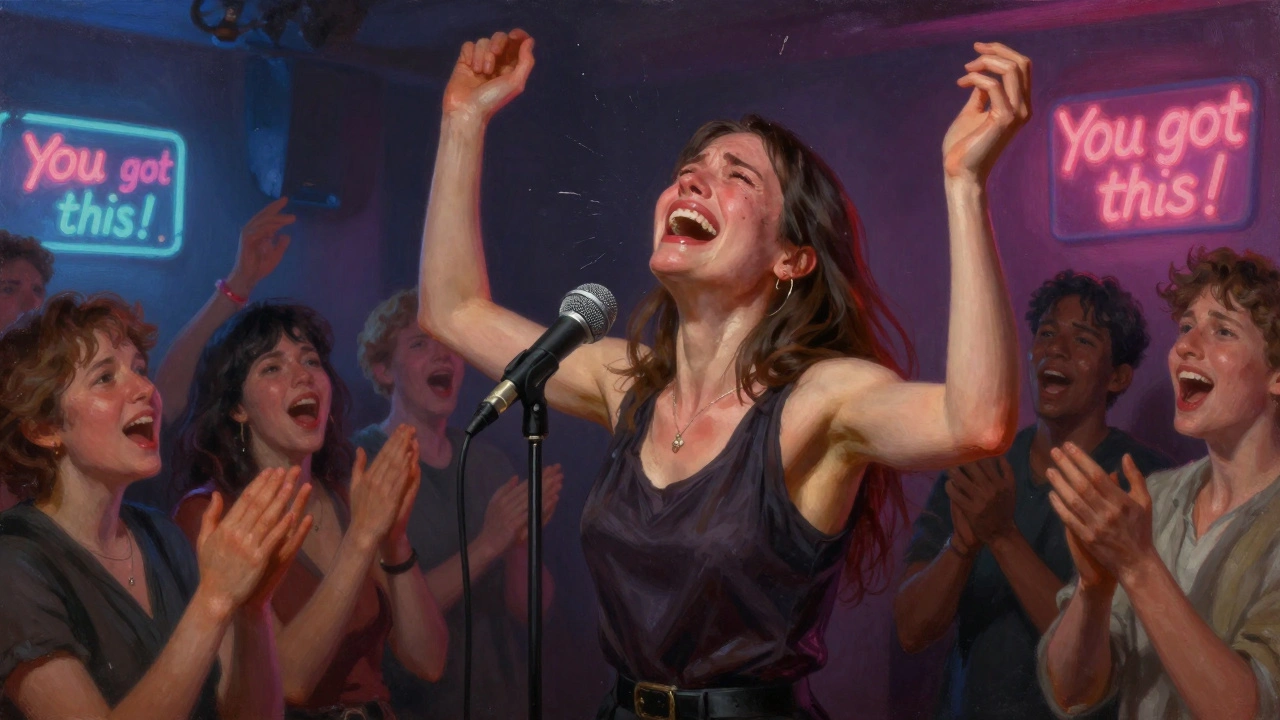
What Happens When You Fall Apart?
You’ll forget the lyrics. You’ll hit a note that sounds like a goat. You’ll laugh so hard you can’t sing. Alli says: good. Those moments? They’re the ones people remember. Not the flawless performances. The messy ones. The ones where someone laughed, then kept singing. That’s when the room becomes a team. Someone in the back yells, “You got this!” Another claps louder. The crowd doesn’t care if you’re perfect. They care if you’re real. Alli once had a woman sing “I Will Survive” - and completely lose the words after the first chorus. She stopped. Looked at the crowd. Smiled. Said, “I need a do-over.” The room erupted. She sang it again. And this time, she didn’t sing for the notes. She sang for the story. That’s the moment she became a karaoke legend - not because she was good, but because she was human.Practice the Way You Perform
Most people practice karaoke alone in the shower. Alli says: practice like you’ll perform. Sing in front of a mirror. Watch your face. Do you look tense? Relax your jaw. Smile a little. Even if you’re not happy. Your body believes your face. If you smile while singing, your voice opens up. It’s science. Record yourself. Not to critique. To observe. Watch how you stand. How you hold the mic. How you breathe. You’ll notice things you never knew - like how you tilt your head when you hit high notes. That’s not a flaw. That’s your signature. And here’s the kicker: practice in the same clothes you’ll wear on stage. Shoes, socks, everything. Your body learns movement, not just melody. If you’re used to singing in flip-flops, you’ll feel off-balance on stage. If you’re in a tight shirt, you’ll restrict your breath. Dress like you’re already there.Why This Works
Alli doesn’t have a degree in psychology. She doesn’t use fancy apps or vocal warm-up routines. She’s just seen what sticks. And what sticks is this: People don’t need perfect singing. They need authentic courage. Karaoke isn’t a talent show. It’s a ritual. A shared human moment. When you step on that stage, you’re not asking for applause. You’re offering a piece of yourself. And that’s something no one can take away. The best singers aren’t the ones with the most range. They’re the ones who didn’t quit. Even when they were shaking. Even when they forgot the words. Even when they laughed through tears. You don’t need to be great. You just need to show up.What if I forget the lyrics during my first karaoke performance?
If you forget the lyrics, pause, smile, and say something simple like, “I’m singing this in my head - give me a second.” Most crowds will cheer you on. You can also hum the melody or repeat the last line you remember. The audience isn’t judging your memory - they’re rooting for your effort. Alli Starr says the most memorable karaoke moments are the ones where singers recovered - not the ones where everything went perfectly.
Should I pick a popular song or something more personal for my first time?
Go with what moves you. A personal song - even if it’s obscure - will give you more emotional energy than singing a chart-topper you don’t connect with. Alli Starr’s rule: if you can’t sing it with feeling, you won’t sing it well. Your authenticity will outshine any technical flaw. A heartfelt rendition of a deep cut often gets louder cheers than a flawless pop hit.
Is it okay to use a backing track with vocals on it?
Avoid tracks with lead vocals. Most karaoke systems offer “vocal remove” or “instrumental only” versions. If the track has singing in the background, you’ll compete with it - and it’ll throw off your timing and pitch. Stick to clean instrumentals. If you’re unsure, ask the host. A good karaoke bar will have a library of clean tracks ready. Alli says: your voice should be the only one in the room.
How can I calm my nerves before I go on stage?
Use the 30-second body reset: stand with feet flat, shoulders loose, take three slow breaths - inhale for four, hold for two, exhale for six. Don’t try to think positive thoughts. Just focus on your feet on the floor. That grounds your nervous system. Alli Starr says this trick works better than any mantra. And if you’re still shaky? That’s okay. Nervous energy turns into stage presence when you start singing. You don’t need to be calm - just committed.
What should I do if people laugh during my performance?
If someone laughs, don’t stop. Smile, keep going, and don’t take it personally. In karaoke culture, laughter often means “I relate” - not “I’m mocking you.” Most of the time, people laugh because they’ve been there. Alli Starr says the best response is to lean into it. If you crack a joke or sing a line with extra sass, you turn the moment into a shared laugh. The crowd doesn’t want perfection. They want connection.