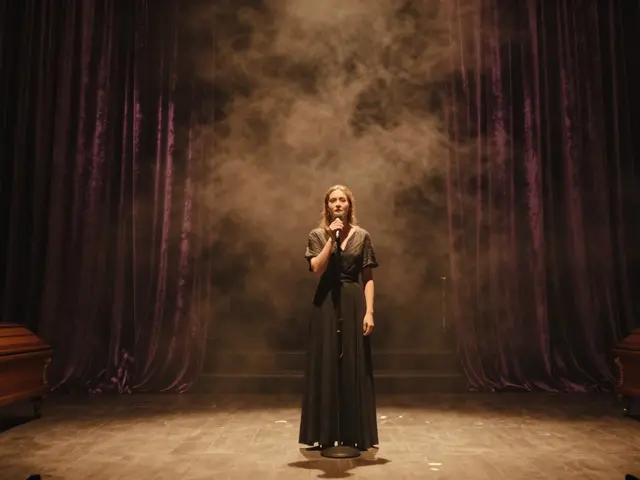
At 16, Alli Starr didn’t have a manager, a record deal, or even a social media following. She had a worn-out pair of sneakers, a choir folder full of sheet music, and a daily 45-minute bus ride from her neighborhood to Henderson High School in Reno, Nevada. But by 18, she was standing on a Grammy stage, singing lead on a track that won Best Choral Performance. How did a girl from a public high school with a $12,000 annual arts budget end up there? It wasn’t luck. It was consistency.
The Choir That Didn’t Have a Name
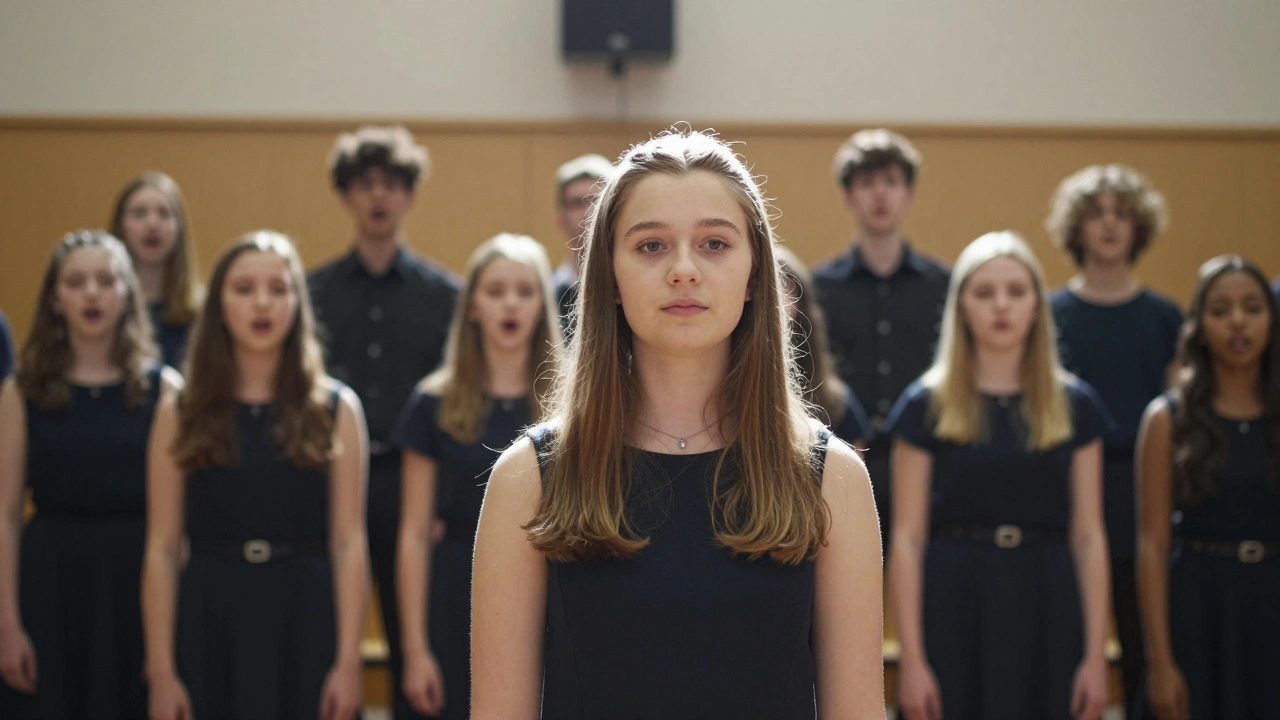
Henderson High’s choir program was barely on the map. The school didn’t have a dedicated rehearsal space, so they practiced in the cafeteria after lunch. The director, Mr. Delgado, taught three other subjects and spent his own money on sheet music. But he had one rule: no one quit. Not because he was strict, but because he believed music was the only thing that kept some kids coming back to school.
Alli joined in freshman year after her mom lost her job and the family couldn’t afford private lessons. The choir was free. It was also the only place she felt heard. She didn’t have a perfect voice-she sang flat sometimes, especially when nervous. But she showed up. Every day. Rain, snow, or a bad test grade. She’d sit in the back row, eyes closed, listening to how the tenors blended with the altos. She memorized every harmony, every breath cue, every pause in the music.
The Song That Changed Everything
In spring of her junior year, Mr. Delgado found an old recording of “A Song for the Earth”-a 1970s choral piece by composer Elena Ruiz. It was complex, layered, and emotionally raw. He told the choir, “If we can sing this right, we might move someone. Not just sound pretty. Move them.”
Alli was assigned the opening solo. She had never sung alone in front of more than 20 people. She practiced in the empty gym at 6 a.m., using her phone to record herself. She’d listen back, cringe, and try again. She learned to breathe from her diaphragm, not her chest. She studied how the notes moved, how silence could be louder than sound. By the time they performed it at the state competition, she wasn’t nervous. She was ready.
The audience stood up before the last note faded. A college recruiter from Berklee came up to Mr. Delgado after and said, “I’ve heard 12,000 high school choirs. That was the first one that made me cry.”

The Call from Los Angeles
The video of that performance went viral-not because of fancy editing, but because it felt real. A girl in a faded hoodie, voice trembling slightly at first, then soaring like a storm breaking. By summer, she had over 800,000 views. A producer from the Grammy-winning ensemble Choralis reached out. They were working on a new album, Voices of Tomorrow, and wanted to record “A Song for the Earth” with young voices.
Alli didn’t know what a Grammy was. She thought it was a trophy you won at a talent show. When they asked her to fly to LA for the session, she thought they meant a weekend workshop. She packed one suitcase. Her mom cried when she left.
The studio was quiet. No flashy lights. No cameras. Just microphones, a grand piano, and 17 other teens from across the country. Alli was the youngest. She didn’t speak much. She listened. She sang. When they recorded the final take, the engineer said, “That’s it. We don’t need another.”
What Happened After the Grammy
The win didn’t make her famous overnight. No talk shows. No brand deals. But it changed everything. She got a full scholarship to Juilliard. She still lives at home. She still takes the bus to Henderson High every Tuesday to help lead the choir. She says, “I didn’t win because I was the best. I won because I never gave up on the people who didn’t give up on me.”
The school’s choir budget doubled last year. A local donor funded new risers and a sound system. The choir now has 92 members. Last spring, they performed “A Song for the Earth” again-with Alli, now 19, standing in the back row, singing harmony, just like she did when she was 15.
Why This Story Matters
Most breakthrough stories focus on prodigies-kids who play piano at three or write songs at five. Alli’s story is different. She didn’t have a gift. She had grit. She didn’t get discovered because she was perfect. She got noticed because she showed up, day after day, even when no one was watching.
Her journey proves that talent isn’t always loud. Sometimes, it’s quiet. It’s the girl who stays late to fix a wrong note. The one who hums in the hallway. The one who doesn’t quit when the lights go off.
Music doesn’t need a spotlight to matter. It just needs someone who refuses to walk away.
How did Alli Starr get discovered?
Alli was discovered after a video of her solo performance of "A Song for the Earth" at the state choir competition went viral. The raw emotion and technical control in her voice caught the attention of a producer from the Grammy-winning ensemble Choralis, who reached out to invite her to record for their upcoming album.
Did Alli Starr go to college after winning a Grammy?
Yes, Alli received a full scholarship to Juilliard after her Grammy win. She continues to study voice while still working with her high school choir in Reno, returning every Tuesday to mentor younger students.
What school did Alli Starr attend before becoming famous?
Alli Starr attended Henderson High School in Reno, Nevada. The school’s choir program was underfunded, with no dedicated rehearsal space, but it became the foundation for her musical development.
Was Alli Starr’s choir program well-known before the Grammy win?
No, Henderson High’s choir was not well-known. It operated on a tight budget, practiced in the cafeteria, and had no national recognition. The choir’s breakthrough came solely from the emotional power of their performance of "A Song for the Earth," which was recorded and shared online.
What role did Mr. Delgado play in Alli’s success?
Mr. Delgado, the choir director at Henderson High, was the one who introduced Alli to "A Song for the Earth" and pushed the choir to aim for emotional depth over technical perfection. He believed in consistency over talent, and his refusal to let students quit created the environment where Alli’s dedication could flourish.