When you go to a live show, what do you really want? Not just to hear the songs you know. Not just to hear something new. You want to feel like the artist is playing just for you. That’s what Alli Starr does best-she balances covers and originals in a way that doesn’t feel like a playlist, but like a conversation.
Why Covers Aren’t Just Nostalgia
Many artists avoid covers. They worry fans will think they’re not original enough. But Alli Starr doesn’t see covers as filler. She sees them as entry points. When she opens a show with a stripped-down version of "Hallelujah", it’s not because she’s running out of ideas. It’s because that song, in her voice, becomes a shared moment. People in the crowd sing along before she even hits the third line. That’s the power of a familiar melody used right.
She doesn’t pick covers just because they’re popular. She picks ones that fit her story. A cover of "I Will Always Love You" doesn’t come after a breakup ballad-it comes after a song she wrote about losing her grandmother. The emotional bridge between original and cover becomes invisible. The audience doesn’t notice the switch. They just feel it.
Originals Need Room to Breathe
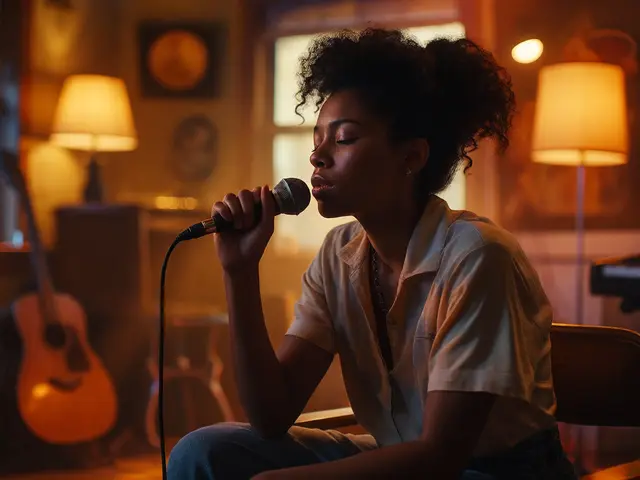
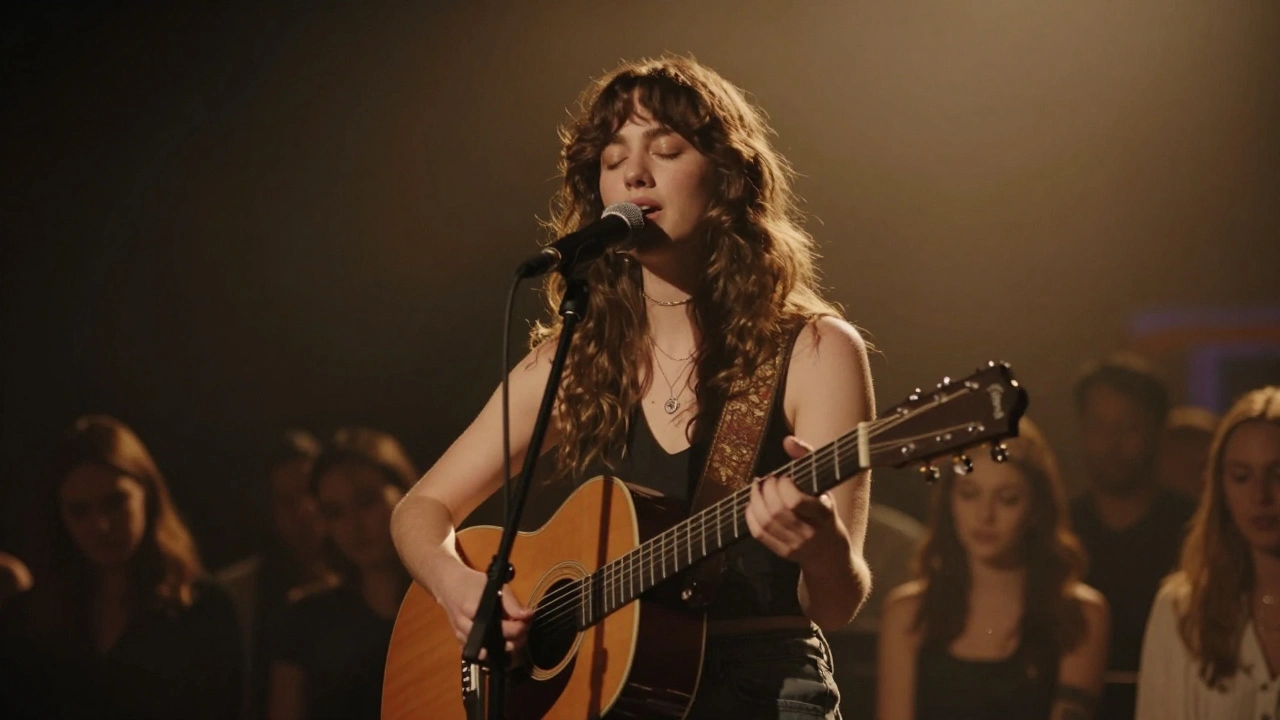
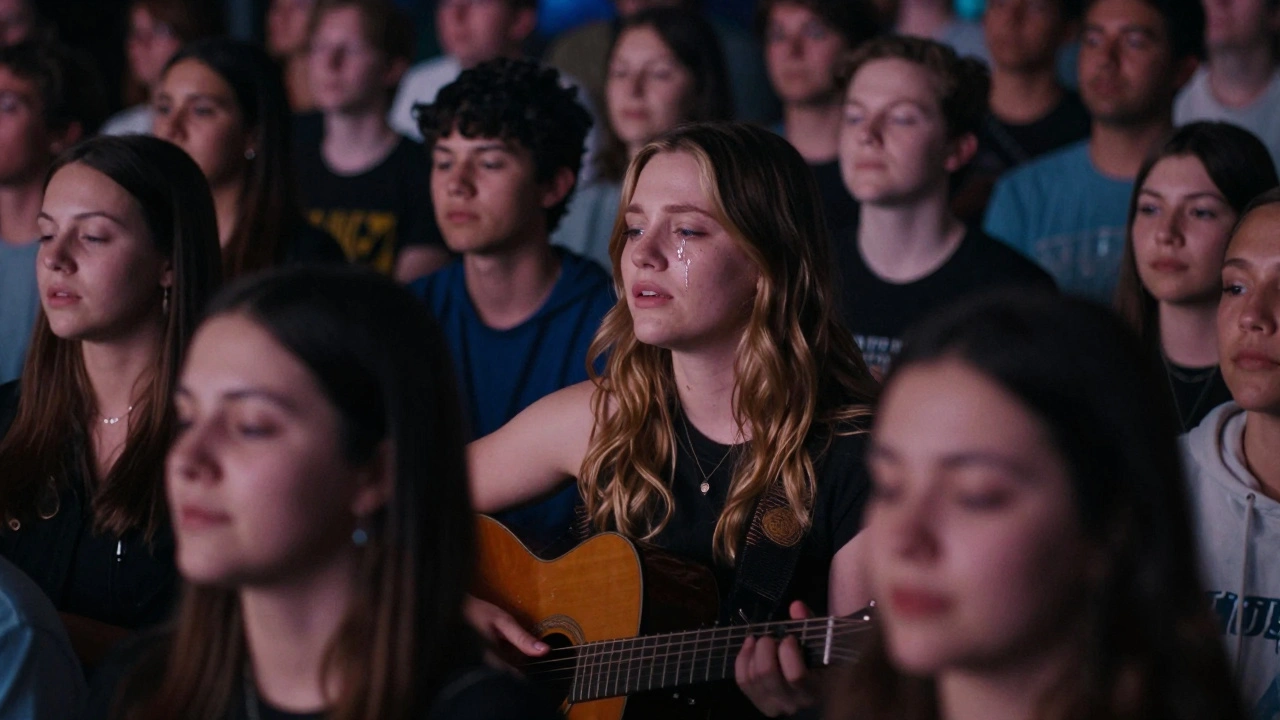
Too many artists bury their new songs in the middle of a set. They play three covers first, then drop two originals back-to-back like they’re apologizing for them. Alli Starr does the opposite. She lets her originals stand on their own. One of her newer songs, "Portland Rain", is played as the third song of the night. No buildup. No fanfare. Just her, a guitar, and a single spotlight.
That’s risky. What if no one knows it? What if people talk through it? She’s done it enough times to know: if the song’s honest, people listen. She’s watched strangers stop scrolling, put down their drinks, and lean in. One fan told her after a show, "I didn’t know I needed to hear that tonight." That’s the goal-not to impress, but to connect.
The Setlist Isn’t a Script. It’s a Flow.
Alli doesn’t use a fixed setlist. She reads the room. If the crowd is quiet, she starts with a soft cover-something like "The Boxer" by Simon & Garfunkel. If they’re loud and dancing, she opens with her own "Fast Car" (not the Tracy Chapman song-her own, with the same title). She changes the order every night. Sometimes she plays an original first. Sometimes she saves it for the encore.
She uses a simple rule: every original must be followed or preceded by a cover that shares its mood. If she sings a dark, slow original about loneliness, she’ll follow it with "Blackbird"-a cover that turns isolation into hope. If she plays an upbeat, sarcastic original about dating apps, she’ll follow it with "I Want to Hold Your Hand"-a reminder that connection used to be simpler.

Why Fans Stay Coming Back
It’s not just the songs. It’s the way she talks between them. She doesn’t say, "This next one is from my new album." She says, "I wrote this after I got kicked out of my apartment and slept in my car for two weeks. I didn’t tell anyone. But I needed to say it out loud." Then she plays "No Key, No Door".
That’s the magic. Fans don’t just remember the music. They remember the moment. They remember where they were when they heard it. One woman told her, "I was in the hospital after my surgery. I played your version of "Let It Be" on repeat. It was the first thing that made me feel like I’d be okay."
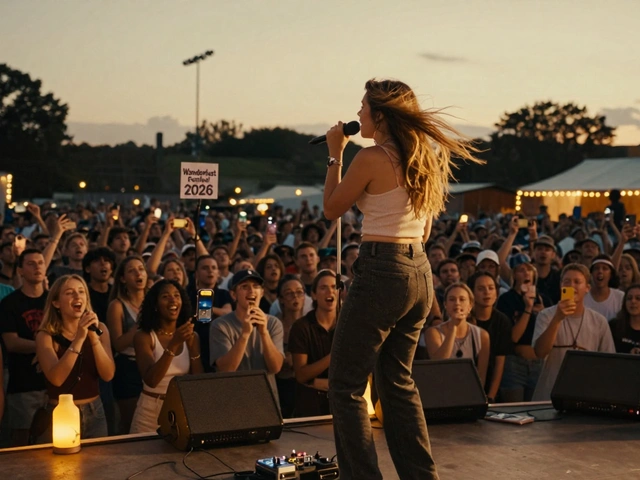
That’s why her shows sell out. Not because she’s got the best voice. Not because she’s got the most followers. It’s because she makes people feel like they’re part of the story. Her originals aren’t just songs-they’re invitations. Her covers aren’t just nostalgia-they’re bridges.
What You Can Learn From Her Approach
You don’t have to be a professional musician to use this trick. If you’re a podcaster, play a classic song before your most personal story. If you’re a speaker, quote a famous line before sharing your own experience. If you’re a writer, reference a well-known book before revealing your own truth.
The pattern is simple:
- Start with something familiar-it lowers the guard.
- Lead into something personal-it builds trust.
- Let the two blend so the audience doesn’t notice the shift.
Alli Starr doesn’t rehearse her transitions. She feels them. And that’s what makes her shows feel alive.
How She Decides What to Play
Here’s how she picks her covers:
- Does it have a story I can tell? (Not just "I like this song.")
- Can I change the tempo or key to make it feel like mine?
- Does it fit the emotional arc of the night?
- Will someone in the room connect with it differently than I do?
And for originals?
- Have I played it live at least five times?
- Did someone react without me asking?
- Does it still give me chills after 50 performances?
She doesn’t care about streaming numbers. She cares about silence in the room. When the crowd stops talking, stops texting, stops moving-that’s when she knows she’s got it right.
The Real Secret: It’s Not About the Songs
Alli Starr’s secret isn’t her voice. It’s not her guitar. It’s not even her songwriting. It’s that she treats every show like a gift-not a performance.
She doesn’t play covers to please the crowd. She plays them to honor the people who taught her to love music. She doesn’t play originals to prove she’s an artist. She plays them because she needs to say them out loud.
And that’s why fans keep coming back. Not because they want to hear the next hit. But because they want to feel seen.