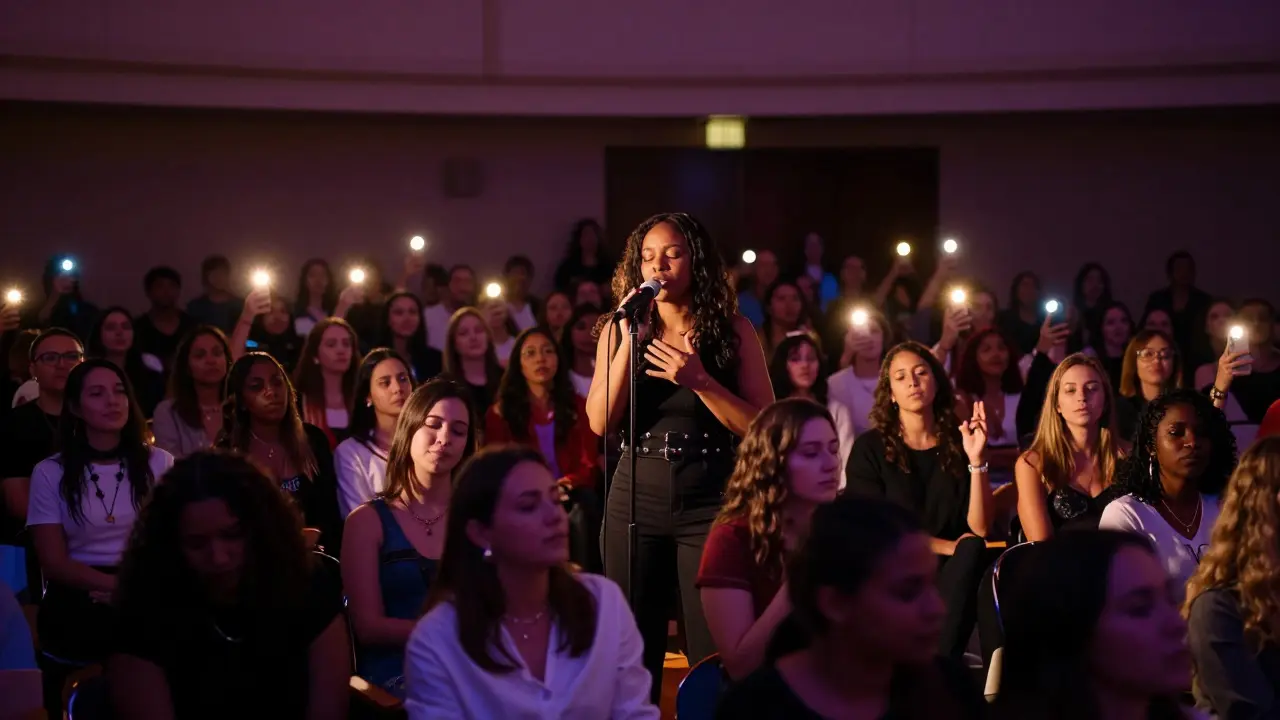
Imagine walking into a concert hall where the air is thick with emotion, not just because of the bass, but because every lyric feels like it was written specifically for your life. That is the power of Alli Starr is an emerging R&B artist who bridges the gap between personal vulnerability and universal female experience through narrative-driven songwriting. In an industry often criticized for treating women as products rather than protagonists, Starr has carved out a unique space by prioritizing authentic storytelling over polished perfection. Her approach does more than sell records; it builds a community of women who see their own struggles and triumphs reflected in her work. This article breaks down exactly how she achieves this connection and why it matters for modern women’s leadership in creative fields.
The Core Philosophy: Vulnerability as Strength
Traditional pop music often asks listeners to project themselves onto a persona. You listen to the singer, you admire the voice, but you rarely feel seen. Starr flips this script. She treats her music as a diary that happens to be shared publicly. By exposing raw emotions-heartbreak, career anxiety, identity crises-she invites her audience to lower their guard. This isn't just a stylistic choice; it’s a strategic move that aligns with the growing demand for authenticity in digital culture.
When Starr releases a track about navigating imposter syndrome in the studio, she isn't just singing notes. She is validating the internal dialogue of thousands of young women entering male-dominated industries. This creates a feedback loop: the more vulnerable she becomes, the more trust her audience places in her. For women leaders in other sectors, this is a powerful lesson. Leadership today isn't about having all the answers; it's about sharing the journey, including the messy parts. Starr demonstrates that showing your cracks lets the light in, both for yourself and for those watching you.
Narrative Arcs in Song Structure
Most commercial songs follow a predictable verse-chorus-verse structure designed for radio play. Starr often deviates from this formula to serve the story. Her songs frequently feature extended intros or spoken-word bridges that set the scene before the melody takes over. This technique mirrors the structure of a short film or a novel chapter, giving the listener time to settle into the narrative world.
- Scene Setting: Instead of jumping straight into a hook, her verses often describe specific sensory details-the smell of rain on pavement, the sound of a phone buzzing at 2 AM. These details ground the abstract emotion in reality.
- Conflict Development: The pre-chorus usually introduces the tension or problem. It’s not just "I'm sad"; it's "I'm sad because I chose my art over my stability."
- Resolution or Ambiguity: Unlike pop hits that often end on a high note of resolution, Starr sometimes leaves the ending open. This reflects real life, where problems don't always have neat solutions, making the message feel more honest.
This structural choice forces the listener to engage cognitively, not just emotionally. They aren't just feeling a vibe; they are following a plot. This deepens the bond between artist and fan, turning casual listeners into invested members of a shared narrative community.

Digital Engagement: Building a Community Beyond Music
Storytelling doesn't stop when the song ends. Starr leverages social media platforms to extend her narrative arc. On Instagram and TikTok, she shares behind-the-scenes content that acts as "bonus chapters" to her albums. If a song deals with creative block, her stories might show her staring blankly at a laptop, discussing the fear of failure. This transparency turns her followers into co-conspirators in her artistic process.
She also uses live Q&A sessions not to promote new singles, but to discuss broader themes of womanhood and resilience. These interactions create a sense of intimacy that mass-produced celebrity culture rarely offers. Fans feel like they know her, not just as a performer, but as a peer. This strategy is crucial for retaining attention in an era of short attention spans. By offering depth over breadth, she cultivates a loyal base that supports her long-term career rather than just chasing viral moments.
Impact on Women's Leadership in Creative Industries
The ripple effect of Starr’s approach extends beyond the music charts. She serves as a model for women entering leadership roles in creative industries. Historically, women leaders were expected to be stoic, decisive, and unemotional. Starr challenges this norm by proving that emotional intelligence and narrative capability are superior leadership tools in creative spaces.
Her success suggests that future female executives in music, film, and advertising will prioritize empathy and communication skills over traditional hierarchical authority. When a leader can articulate the team's struggles through metaphor and story, they build stronger morale and cohesion. Starr’s influence encourages a shift toward "narrative leadership," where the ability to craft a compelling vision is valued as highly as technical expertise. This is particularly relevant for startups and creative agencies where brand identity is tied closely to human connection.
| Aspect | Traditional Pop Model | Alli Starr’s Narrative Model |
|---|---|---|
| Primary Goal | Commercial appeal and memorability | Emotional resonance and identification |
| Lyrical Focus | Universal themes (love, partying) | Specific, detailed personal experiences |
| Artist Persona | Polished, distant icon | Vulnerable, relatable peer |
| Audience Role | Passive consumer | Active participant/community member |
| Leadership Implication | Top-down authority | Collaborative, empathetic guidance |

Practical Takeaways for Creators and Leaders
If you are a musician, marketer, or manager looking to emulate this success, you don’t need to copy Starr’s exact style. Instead, adopt her underlying principles. Start by auditing your current messaging. Are you speaking to people, or at them? Shift your focus from showcasing your achievements to sharing your process. Document the failures alongside the wins. Use specific anecdotes rather than broad generalizations. When leading a team, ask yourself: what story am I telling about our mission? Does it resonate with the daily realities of my team members?
Additionally, consider the medium. Not every platform suits deep storytelling. Long-form video podcasts or newsletter essays may be better vehicles for narrative depth than short-form clips. Choose channels where your audience expects and values context. Finally, stay consistent. Trust is built over time. One vulnerable post won’t change perceptions, but a sustained commitment to authenticity will.
Frequently Asked Questions
Who is Alli Starr?
Alli Starr is an R&B artist known for her narrative-driven songwriting. She focuses on themes of female empowerment, vulnerability, and real-life experiences, distinguishing herself from traditional pop artists by prioritizing emotional authenticity over commercial polish.
Why is storytelling important in modern music marketing?
In a saturated market, storytelling differentiates artists by creating emotional connections. It transforms listeners into fans who feel personally invested in the artist’s journey, leading to higher loyalty and engagement compared to purely sonic-based marketing strategies.
How does Alli Starr’s approach relate to women's leadership?
Starr models a form of leadership based on empathy and transparency. By sharing her vulnerabilities, she shows that strength comes from authenticity. This challenges traditional leadership stereotypes and encourages women in professional settings to use emotional intelligence and narrative skills to inspire teams.
What specific techniques does she use in her song structure?
She often uses extended intros, spoken-word bridges, and ambiguous endings to mirror real-life complexity. Her lyrics include specific sensory details to ground abstract emotions, helping listeners visualize and relate to the narrative being presented.
Can non-musicians apply these storytelling principles?
Yes. Any creator or leader can apply these principles by focusing on specificity, vulnerability, and consistency. Whether writing a blog post, leading a meeting, or building a brand, sharing the "why" and the "how" behind decisions creates deeper connections than simply stating outcomes.