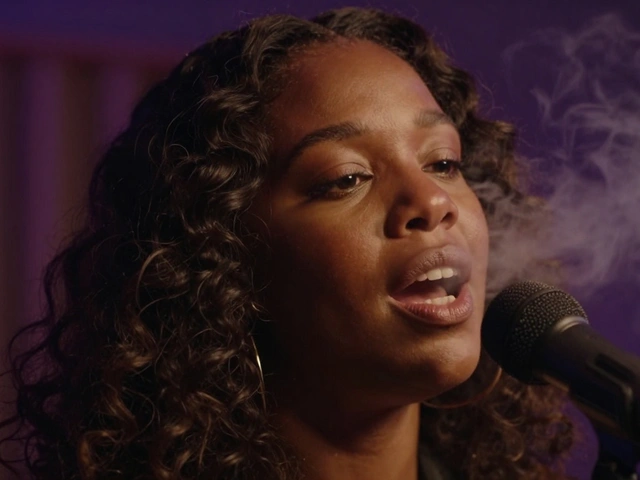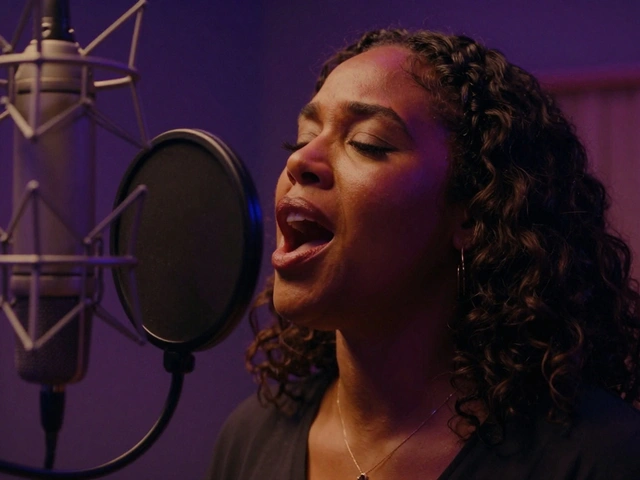
When you hear Alli Starr sing, it’s not just the notes that grab you-it’s the way she stretches a phrase like taffy, holds a note until your ribs ache, and slides between tones like she’s whispering secrets to the microphone. Her voice doesn’t just sound good. It feels alive. And if you ask her where that came from, she won’t point to a vocal coach or a studio session. She’ll tell you it was choir.
Choir Wasn’t Just Practice. It Was Survival.
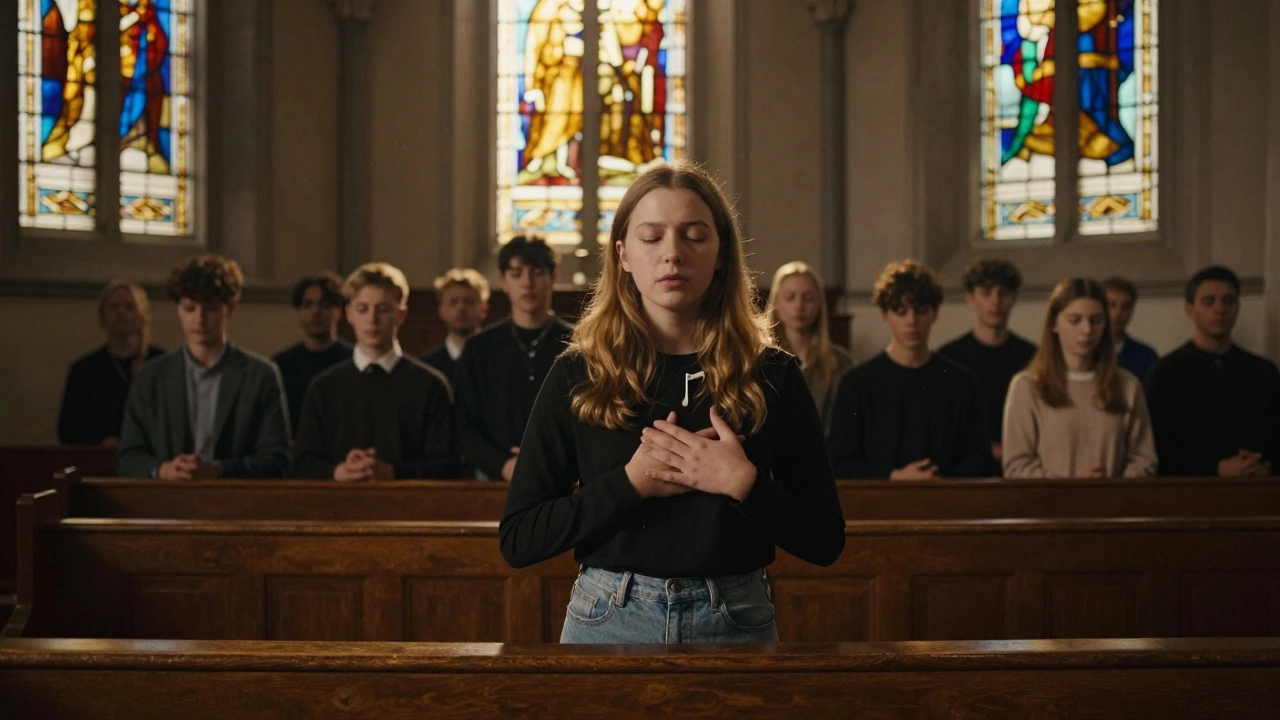
Alli Starr grew up in a small town in North Carolina where the church was the heartbeat of the community. At age seven, she was pulled into the youth choir by her grandmother, who said, "You sing like the wind through the pines. Don’t let it die." That wasn’t poetry. It was a demand. Every Wednesday and Sunday, Alli showed up. No exceptions. No refunds. No solo spots-not yet.
The choir director, Mrs. Lillian Graves, didn’t care about talent. She cared about discipline. Every rehearsal started with breathing exercises. Not the kind you see on TV-inhale for four, hold for four, exhale for four. No. Mrs. Graves made them hold a single note for a full minute. No wobble. No gasp. Just air, steady as a metronome. If you dropped, you stayed after. If you cheated, you sang the same line until your throat burned.
"Breath isn’t a tool," she’d say. "It’s the foundation. You don’t sing with your throat. You sing with your belly. Your ribs. Your whole damn body."
How Choir Taught Her to Control Air Like a Pro
Most singers think breath control is about taking big breaths. Alli learned it was about using every drop. Choir training forced her to sing long phrases without stopping. In hymns like "Amazing Grace," the lines stretched over 12 seconds. No punctuation. No breath. Just one continuous stream of sound.
She didn’t realize it then, but those hours built something rare: diaphragmatic endurance. By 14, she could hold a sustained note for 22 seconds-longer than most professional R&B singers. That’s not magic. That’s repetition. That’s choir.
She also learned how to breathe quietly. No loud inhales between phrases. No gasps that ruin the groove. In choir, every breath had to be invisible. That skill became her secret weapon in R&B. When she sings "I’m still here" in her breakout single "Hold Me Like the Rain," the listener doesn’t hear her catch air-they just feel the emotion deepen. That’s choir training.
R&B Phrasing Didn’t Come From Marvin Gaye. It Came From Hymns.
People assume R&B phrasing is about soul, runs, and melismas. Alli says it’s about silence. Choir taught her the power of the pause.
In gospel music, a single note can carry a whole emotion. A held "Aaaah" after a line isn’t just a note-it’s a sigh. A cry. A prayer. Alli absorbed that. She didn’t learn to sing runs from listening to Whitney Houston. She learned them from singing "There Is a Balm in Gilead," where the choir would stretch one syllable into seven distinct pitches, each one heavier than the last.
That’s where her signature style came from. Her runs aren’t fast. They’re deliberate. Each note lands like a heartbeat. She doesn’t rush. She lingers. That’s not a stylistic choice. That’s muscle memory from 10 years of singing in unison, listening, adjusting, and waiting for the next breath.
She once told a producer, "I don’t sing runs. I sing silence between them." He laughed. Then he played back her demo. He didn’t laugh after.
Why Choir Training Beats Vocal Coaching for R&B
Many vocal coaches focus on technique: pitch, tone, resonance. Alli had all that. But what choir gave her was something deeper: group listening.
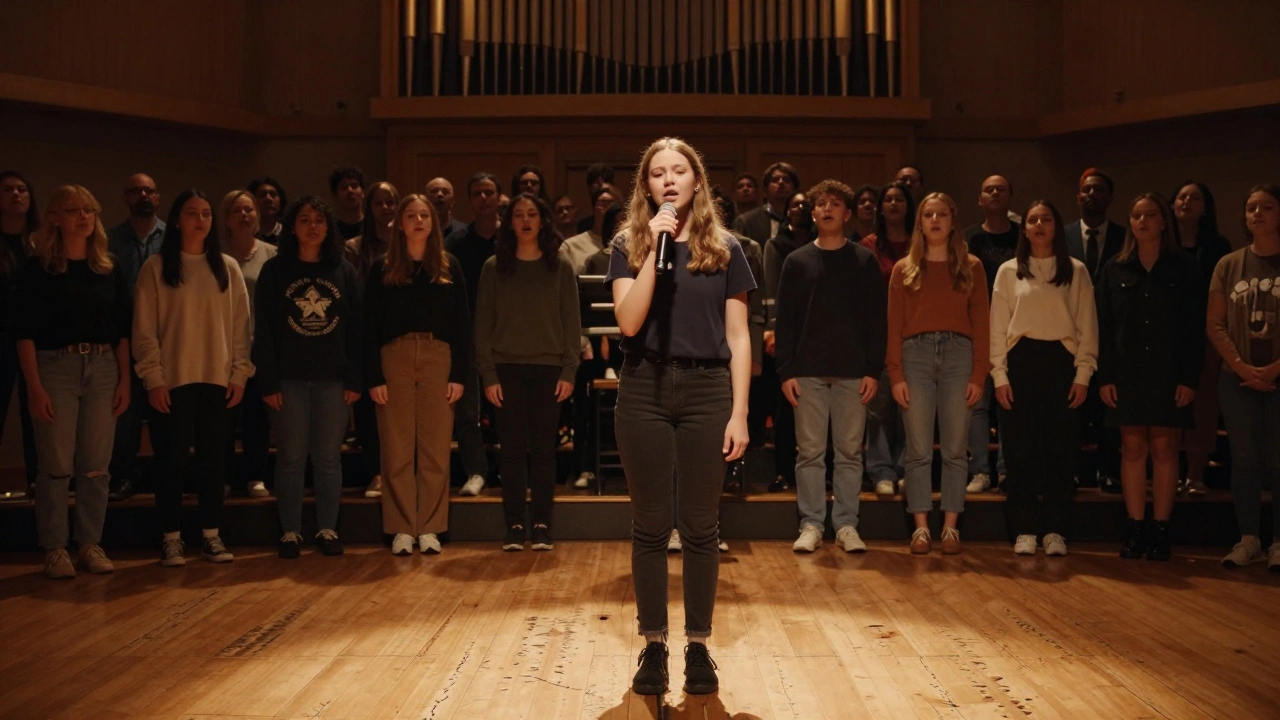
In a choir, you don’t sing to be heard. You sing to blend. You listen to the person beside you. You match their vibrato. You adjust your timing to the person behind you. You learn to breathe as one body. That’s rare in solo singing.
When Alli started recording R&B, she didn’t need to fake groove. She already had it. She knew how to ride the beat because she’d spent years syncing with 40 other voices. She could feel the space between the snare and the bass. She didn’t have to count-she listened.
She also learned dynamics without a metronome. Choir doesn’t use click tracks. You adjust volume by ear. Soft when the organ fades. Loud when the congregation rises. That’s how she sings with such natural swells-no auto-tune, no volume automation. Just instinct.
The Unseen Cost
It wasn’t all glory. Choir was exhausting. She lost her voice three times. She cried after rehearsals. She missed school dances. Her friends thought she was weird. She didn’t care. She knew what she was building.
By 16, she could sing a full 10-minute gospel anthem without stopping. She could hold a low note while walking across the stage. She could sing harmony while crying. That’s not talent. That’s discipline.
When she finally left choir at 18, she didn’t say goodbye. She whispered, "Thank you," into the empty sanctuary. And then she walked out-not to become a star, but to finally sing for herself.
What Choir Taught Her That No Studio Could
- How to breathe without thinking-because she’d done it thousands of times
- How to listen before she sang-because she had to match 40 other voices
- How to make silence speak-because gospel music lives in the gaps
- How to sing through pain-because Mrs. Graves didn’t let her quit
- How to be part of something bigger-and then use that to stand out
Today, Alli Starr doesn’t credit producers, studios, or producers. She credits Mrs. Graves. She credits the church basement. She credits the hymnals and the cracked pews and the 12-year-old girl who showed up every week, even when she didn’t want to.
Her voice isn’t just trained. It’s forged.
Did Alli Starr have formal vocal training after choir?
Alli did take private lessons after high school, but she says they were mostly about refining what choir already built. Her coach told her, "You don’t need to learn how to breathe. You need to unlearn how to fake it." She spent her first year unlearning bad habits she picked up from pop singers-not learning new ones.
Can choir training help modern R&B singers today?
Absolutely. Choir builds breath stamina, dynamic control, and listening skills that even the best vocal coaches can’t replicate. Singers who train in choir learn to sustain long phrases, match pitch in group settings, and use silence as an instrument-all essential for authentic R&B. Many top vocalists, including Adele and Beyoncé, have cited choral experience as foundational.
How long did it take Alli Starr to develop her signature phrasing?
It took her 11 years of weekly choir rehearsals-about 500 hours total-before she started hearing her own voice in the music. She didn’t notice the change until she sang a solo in college and realized she wasn’t trying to sound like anyone else. The phrasing came naturally because her body remembered the rhythm of the hymns.
Is gospel choir the only path to this kind of vocal control?
No. Any choir that emphasizes sustained notes, harmonic blending, and dynamic control can build similar skills. But gospel choir is uniquely effective because it demands emotional honesty as much as technical precision. The music doesn’t allow for empty notes-you have to mean it. That’s what shaped Alli’s sound.
What’s the biggest myth about vocal training for R&B singers?
That you need to be born with a "natural" voice. Alli’s voice wasn’t special at 12. It was hoarse, shaky, and off-key. What made her different was consistency. She showed up. She listened. She breathed. That’s what built her voice-not talent, not luck, but repetition.