Most musicians think the best way to get better at performing is to practice in a room until their fingers bleed. But for a drummer like Alli Starr is a world-renowned drummer and percussionist known for her versatility across jazz, rock, and gospel, the real growth didn't happen in a studio. It happened when she stepped off a plane in a city where she didn't speak the language and had to play for a crowd that didn't know her name. There is a specific kind of psychological shift that occurs when you realize that a rhythmic groove translates across every border, regardless of the local dialect.
Quick Highlights: The Global Growth Effect
- Adaptability: Facing unpredictable venues forces a musician to think on their feet.
- Cultural Resonance: Discovering that music is a universal language reduces performance anxiety.
- Technical Resilience: Playing with varying gear and acoustics builds sonic flexibility.
- Mental Toughness: Navigating the chaos of travel creates a "nothing can shake me" mindset on stage.
Breaking the Comfort Zone through Global Travel
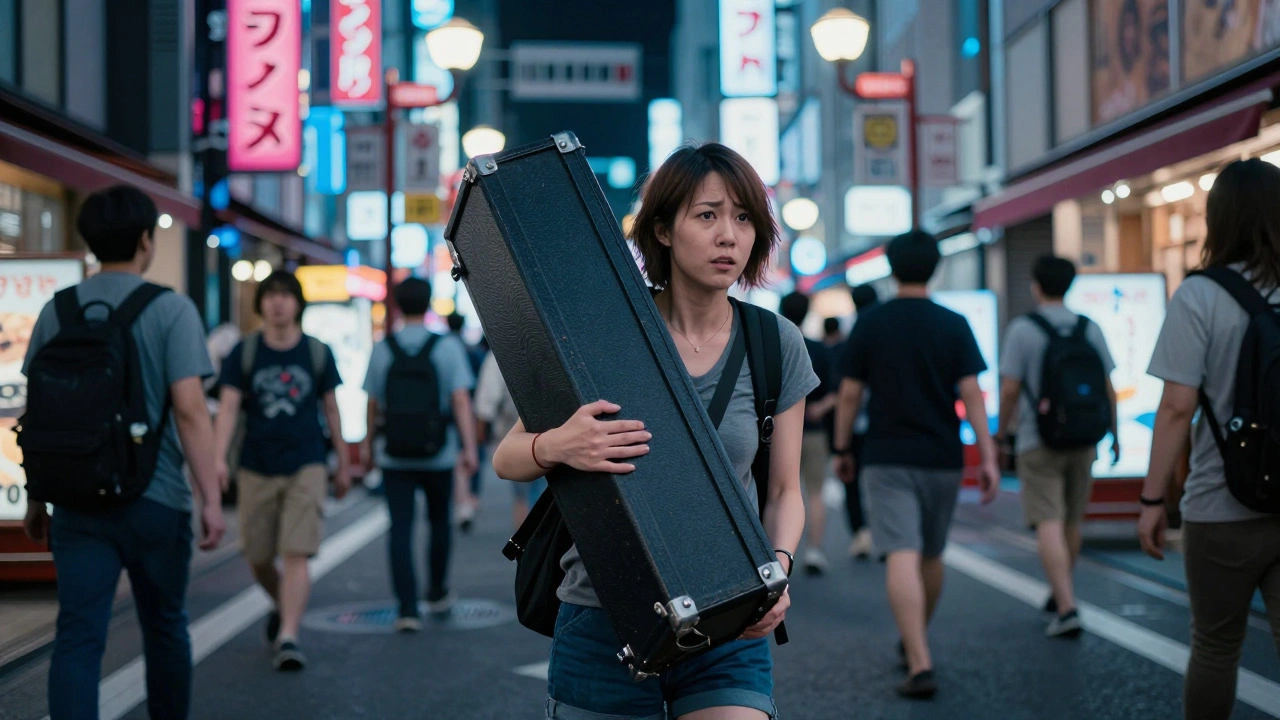
Staying in your hometown is safe. You know the acoustics of the local clubs, you have your favorite gear, and the audience is often made up of friends. When Alli Starr took her act to the international stage, that safety net vanished. International touring is the process of performing music in multiple different countries over a set period, and it acts as a pressure cooker for personal development. Imagine landing in a city like Tokyo or Berlin, hauling a drum kit through a narrow backstage corridor, and realizing the monitor mix is completely off. You can't call your technician or go home. You just have to play.
This environment strips away the ego. When you are a stranger in a strange land, you stop worrying about whether you look "cool" and start focusing on whether the music is communicating. For Alli, this shift was pivotal. The anxiety of "what if I mess up?" was replaced by a curiosity of "how will they react to this beat?" By shifting the focus from self-judgment to external connection, her international touring experience turned the stage from a place of judgment into a place of exploration.
The Psychology of the Universal Groove
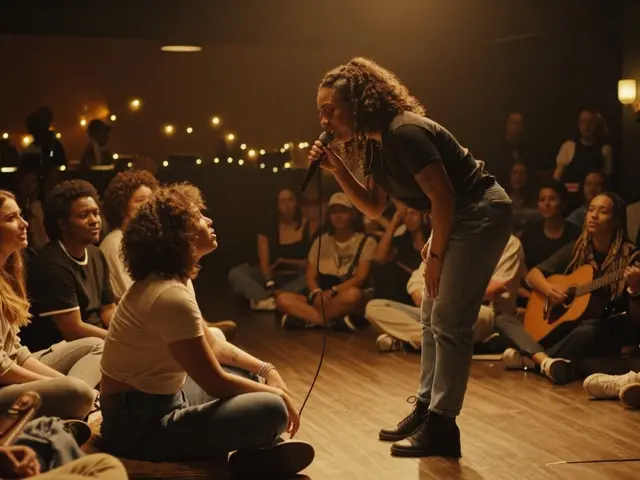
There is a fascinating phenomenon that happens when a drummer plays in a foreign country. While lyrics can be lost in translation, a syncopated beat is an absolute. Rhythm is the systematic arrangement of musical sounds, according to duration and stress, and it hits the human brain in a way that bypasses the linguistic center. When Alli played in diverse regions, she noticed that the crowd's physical response-the nodding heads, the foot-tapping-was the same whether she was in New York or Nairobi.
This realization is a massive confidence booster. It proves to the performer that their core skill has a global value. Every time a crowd in a different hemisphere reacted positively to a complex polyrhythm, it reinforced her belief in her own ability. This isn't just about applause; it's about the validation of a craft. When you see that your art works everywhere, the fear of failing in any one specific place starts to disappear. You realize that as long as you have your sticks and a surface to hit, you are home.

Dealing with the Chaos of Variable Environments
Let's talk about the grit. International touring isn't all five-star hotels and cheering crowds. It's often about surviving 12-hour flights, dealing with humidity that warps drum heads, and playing on stages that feel like they're made of trampolines. Acoustics, the properties of a room or building that determine how sound is transmitted in it, vary wildly from a concrete warehouse in Europe to an open-air plaza in South America.
For a drummer, these variables are a nightmare if you're rigid. But if you embrace them, they become a training ground. Alli had to learn how to adjust her dynamics on the fly. If the room was too echoey, she had to tighten her playing. If the stage was absorbing all the sound, she had to play with more aggression. This constant adjustment period built a level of sonic awareness that you simply cannot get in a controlled studio environment. By the time she returned to familiar stages, those stages felt easy. The "chaos" of the road had become her baseline, making any local challenge feel insignificant.
| Factor | Local Gigs | International Tours |
|---|---|---|
| Audience Expectation | Personal connection, known history | Purely based on the immediate performance |
| Gear Reliability | Consistent, owned equipment | Backline rentals, variable quality |
| Mental State | Comfortable, potentially complacent | High alert, adaptive, resilient |
| Risk Factor | Social reputation in local scene | Professional reputation on a global scale |
Building a Toolkit for Stage Presence
Confidence isn't a feeling; it's a muscle. You build it by doing things that scare you until they don't scare you anymore. For Alli, the "scary" part was the unknown. International touring forces you to manage a dozen different crises simultaneously: a missed flight, a broken cymbal, a language barrier with the sound engineer, and the pressure of the performance itself. When you manage those crises and still deliver a great show, your brain records a win.
These wins accumulate. After ten cities and twenty shows, the act of walking onto a stage becomes a routine rather than a risk. She developed a toolkit for Stage Presence, which is the ability of a performer to command the attention of an audience through movement and energy. She learned how to read a room without hearing a word of the local language. She used eye contact, body language, and the sheer energy of the drums to bridge the gap. This level of communication is the peak of confidence-knowing you can connect with anyone, anywhere, regardless of the barriers.

The Long-Term Impact on Artistry
When a musician returns from a global tour, they aren't the same person who left. The exposure to different musical traditions-like the polyrhythms of West Africa or the precision of European jazz-seeps into their playing. But the biggest change is internal. The internal critic, that voice that says "you aren't good enough," gets drowned out by the memory of a thousand strangers cheering in a dozen different languages.
Alli's confidence became rooted in a sense of global competence. She didn't just feel like a "good drummer"; she felt like a musician who could survive and thrive in any environment on earth. This mental shift allows for more creative risk-taking. When you aren't afraid of the stage, you're more likely to try a daring solo or a weird time signature because the fear of failure has been replaced by the thrill of the experiment.
Does international touring actually help with anxiety?
Yes, through a process called exposure therapy. By repeatedly facing the "worst-case scenarios" of touring-like bad gear or confused audiences-the brain stops triggering a fight-or-flight response, leading to a calmer and more confident stage presence.
How do drummers handle different equipment on the road?
Most touring professionals bring their own "breakables" (cymbals, snare drum, and pedals) but rely on local "backline" rentals for the larger drums. This forces the drummer to adapt their touch and feel to different brands and tensions, which actually improves their versatility.
What is the most challenging part of global touring for a musician?
Beyond the physical exhaustion, the most challenging part is often the mental fatigue of constant adaptation. Navigating different cultural norms and communication styles while maintaining a high level of artistic performance requires significant mental energy.
Why is rhythm considered a universal language?
Rhythm is tied to basic human biological functions, such as the heartbeat and breathing. Because these are universal, the visceral reaction to a beat is shared by humans across all cultures, making it the most direct form of musical communication.
How can a beginner build stage confidence without touring?
You can mimic the "touring effect" by playing in unfamiliar venues, collaborating with musicians from different genres, and intentionally putting yourself in low-stakes but uncomfortable performance situations, such as open mics in a different part of town.
Next Steps for Growing Your Confidence
If you are a musician looking to build the same kind of resilience Alli Starr found on the road, you don't necessarily need a plane ticket to start. Begin by stepping out of your bubble. Play a gig in a city where you don't know anyone. Swap genres with a friend for a night. The goal is to introduce a manageable amount of unpredictability into your performance. When you stop trying to control every single variable and instead learn how to react to the unexpected, that is when your true confidence begins to grow.